Source Thermal Insulated Bubble Delivery Bag for Food, Pharma, and Cold Chain
Compare 30 Thermal Insulated Bubble Delivery Bag options from verified Chinese suppliers. Buyers can evaluate features like cold retention time, material layers, and customization for food delivery, pharmaceuticals, and cold chain transportation needs.
Key considerations
Products List


New Commercial Insulated Thermal Cooler Bag, Customized Food Delivery Bag
$19.00 - $23.00
MOQ: 300 Pieces


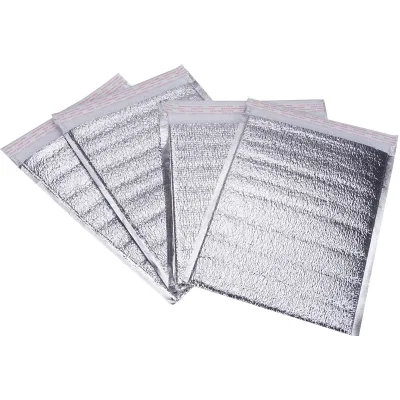

Cheap Price Bags Takeout Insulation Thermal Insulated Food Delivery Bag
$0.01 - $0.03
MOQ: 10000 Pieces


Comprehensive Sourcing Guide
Strategic Sourcing Guide for Thermal Insulated Bubble Delivery Bags
Understanding Product Architecture and Material Composition
The Thermal Insulated Bubble Delivery Bag represents a specialized packaging solution designed to maintain internal temperatures during transit, particularly for cold chain logistics and food delivery applications. When evaluating this product category, buyers must first distinguish between the structural layers that define performance. The core construction typically involves a multi-layer composite where the outer shell provides durability and the inner lining offers thermal retention. Based on observed specifications, the material composition often includes a combination of PA (Polyamide), VMPET (Vacuum Metallized Polyester) with aluminum foil, and LDPE (Low-Density Polyethylene). This tri-layer structure is critical; the VMPET and aluminum foil layers serve as the primary barrier against heat transfer, while the LDPE layer ensures flexibility and sealing integrity.
In addition to the primary insulation layers, the product may feature a functional layer of aluminum (AL) and a base layer of BOPET (Biaxially Oriented Polyethylene Terephthalate). The presence of these materials dictates the bag's hardness and transparency. While some listings indicate a soft hardness profile, others specify opaque characteristics, which are essential for blocking light and maintaining the integrity of light-sensitive contents. The "bubble" aspect of the delivery bag often refers to an air-filled layer that provides shockproof capabilities, protecting fragile items during the rough handling typical of express delivery services. Buyers should verify that the specific model number, such as RSPT134 or ACD6-204, aligns with the intended industrial use, whether for food, agriculture, apparel, or pharmaceuticals. The distinction between disposable and non-disposable variants is also paramount; while some bags are designed for single-use thermal insulation, others, particularly those with zipper closures and higher bearing capacities, are engineered for multiple uses in food delivery operations.
Technical Specifications and Performance Metrics
Performance validation for thermal insulated bags relies heavily on quantifiable metrics regarding temperature retention, physical dimensions, and load-bearing capabilities. A critical specification for buyers is the "cold time," which indicates how long the bag can maintain a specific temperature range without external cooling. Observed data points to a cold retention capability ranging from 4 to 6 hours for standard models, while premium variants designed for extended logistics chains may offer retention exceeding 6 hours. This metric is not merely a marketing claim but a functional requirement that must be verified against the specific transit duration of the supply chain.
Physical dimensions and weight are equally significant. The standard size for these bags often adheres to a specification of 424247cm, though customization is widely available to fit unique product profiles. The gross weight of the packaging itself varies, with observed figures ranging from over 1.5 kg to approximately 3.02 kg for larger, more robust units. The bearing capacity is another vital technical parameter; high-performance bags are rated to support loads exceeding 10 kg, ensuring that the insulation does not compromise the structural integrity when heavy items are transported. The surface treatment is also a key technical consideration, with some models featuring surfaces designed to ensure labels and self-stick stamps adhere securely, a necessity for accurate logistics tracking.
The sealing mechanism defines the bag's usability and reusability. Options include self-adhesive strips, ziplock closures, or open styles. For reusable food delivery bags, a zipper closure is often preferred to allow for repeated opening and closing while maintaining the thermal seal. The thickness of the material is typically customized to meet specific insulation needs, and the printing craft, such as flexo, offset, or copperplate printing, allows for branding without compromising the barrier properties of the aluminum and foil layers.
Compliance, Certification, and Safety Standards
When sourcing thermal insulated bags for sensitive industries like pharmaceuticals and food, compliance with safety and hygiene standards is non-negotiable. While specific certification names are not universally mandated in all regions, buyers must verify that the materials used in the construction—specifically the PA, VMPET, and LDPE layers—are food-grade and safe for direct or indirect contact with consumables. The industrial use classification often includes "Food" and "Pharmaceutical," implying that the materials should not leach harmful substances into the contents.
Buyers should request documentation confirming that the aluminum foil and plastic layers meet relevant international safety standards for food packaging. Although specific certification bodies are not listed in the general product data, the presence of a "Functional Layer" of AL suggests a need for barrier integrity testing. For cold chain applications, the bag must demonstrate that it does not introduce contaminants during the temperature fluctuations inherent in shipping. The "Basic Level" of BOPET and the "Heat Seal" properties of LLDPE must be consistent with food safety regulations in the destination market.
Furthermore, the manufacturing origin, often cited as Jiangsu or Guangzhou in China, should be cross-referenced with the supplier's quality management system certifications. While the provided data does not list specific ISO numbers, the existence of a "prod_standard" and "prod_model" implies a structured production process. Buyers should ensure that the supplier can provide evidence of compliance with local and international food safety laws, particularly regarding the migration limits of plastics and metals used in the bag's construction.
Cost Drivers and Pricing Dynamics
The pricing of thermal insulated bubble delivery bags is influenced by a complex interplay of material costs, customization requirements, and order volume. The observed price range in the market spans from $0.01 to $24 per unit, a wide variance that reflects differences in material thickness, layer count, and functional features. The inclusion of aluminum foil and VMPET significantly increases the base cost compared to standard plastic bags. Additionally, the "Customized Size" and "Customized Color" options introduce variable costs, as they require dedicated production runs and tooling adjustments.
Order volume is a primary driver of unit cost. The Minimum Order Quantity (MOQ) varies significantly, with some suppliers accepting small orders starting at 2 units, while others require bulk purchases of 5,000 pieces or more. For buyers seeking the lower end of the price spectrum, meeting the higher MOQ thresholds is often necessary. The "Small Orders: Accepted" attribute suggests flexibility for trial runs, but the unit price for these smaller quantities will likely be higher due to the lack of economies of scale.
Lead times also impact the total cost of procurement. A standard lead time of 10-15 working days after design confirmation is typical. Rush orders or those requiring complex customizations may incur additional premiums. The payment terms, often cited as T/T (Telegraphic Transfer), and the availability of samples can also influence the financial negotiation. Buyers should calculate the total landed cost, including shipping and potential tariffs, rather than focusing solely on the unit price, as the high bearing capacity and thermal performance of these bags often justify a higher initial investment for long-term operational efficiency.
Supplier Evaluation and Operational Capabilities
Selecting a reliable supplier for thermal insulated bags requires a rigorous evaluation of their manufacturing capabilities and operational stability. The "prod_origin" data indicates that suppliers are primarily located in Jiangsu and Guangzhou, China. Buyers should verify the specific factory location to assess logistics efficiency and potential supply chain risks. The ability to offer "Customization" is a key differentiator; suppliers must demonstrate proficiency in producing bags with specific dimensions, colors, and sealing methods like the "Backpack" style or "Delivery Bag" configurations.
The "Sample: Accept" attribute is a critical indicator of supplier confidence and quality. Buyers should always request physical samples to test the "Cold Time," "Bearing Capacity," and "Sealing" integrity before committing to a large order. The supplier's capacity to handle "Oem Customized" models, such as the ACD6-204 or RSPT134, demonstrates their flexibility in adapting to client-specific needs. Additionally, the "prod_packing" method, whether standard or customized, affects the efficiency of the buyer's own logistics. Suppliers offering "One Bag One Polybag" packing ensure that the product arrives in pristine condition, ready for immediate use.
It is also essential to evaluate the supplier's communication and responsiveness. The acceptance of "Small Orders" suggests a willingness to accommodate new clients, but the "MOQ" of 5,000 PCS for larger runs indicates a focus on volume. Buyers should assess whether the supplier can scale production to meet fluctuating demand without compromising quality. The "Lead Time" of 10-15 days should be treated as a baseline, with contingency plans for potential delays in raw material sourcing or production scheduling.
Quality Control and Long-Term Procurement Strategy
Implementing a robust quality control (QC) protocol is essential for maintaining the performance of thermal insulated bags. Buyers should establish clear acceptance criteria based on the observed specifications, such as the "Gross Weight," "Cold Time," and "Bearing Capacity." Regular testing of the "Heat Seal" integrity and the "Transparency" or "Opacity" of the material ensures that the bags meet the required functional standards. For cold chain applications, periodic thermal testing is necessary to verify that the "Cold Time" remains consistent over the product's lifecycle.
Long-term procurement strategies should focus on building a stable supply chain relationship. The "Customization: Available" feature allows for continuous improvement of the packaging design to better suit evolving logistics needs. Buyers should consider the "Reusable" nature of certain models to reduce waste and operational costs over time. The "Industrial Use" classification spanning food, agriculture, and pharmaceuticals suggests that the bags must be versatile and durable.
Finally, buyers should maintain a dynamic view of the market, monitoring changes in material costs and lead times. The "Standard Packaging or Customized" options provide flexibility in inventory management. By adhering to the technical specifications and verifying supplier capabilities, buyers can ensure a steady supply of high-performance thermal insulated bubble delivery bags that meet the rigorous demands of modern logistics and cold chain transportation.
FAQs
What materials are used in thermal insulated bubble delivery bags?
These bags typically use a composite of PA, VMPET with aluminum foil, and LDPE. This tri-layer structure ensures thermal retention and durability for cold chain logistics.
How long can the bag maintain cold temperatures during transit?
Standard models retain cold for 4 to 6 hours, while premium variants can exceed 6 hours. This duration depends on the specific insulation layers and external conditions.
Can I order custom sizes and colors for these delivery bags?
Yes, customization is available for both size and color to meet specific branding needs. Buyers should confirm design details before production begins to ensure accuracy.
What is the minimum order quantity for these insulated bags?
Minimum order quantities vary, with some suppliers accepting small orders while others require 5000 pieces. Buyers should check specific supplier terms for their desired volume.
How long does it take to receive an order after design confirmation?
The standard lead time is 10 to 15 working days after the design is confirmed. This timeline applies to most suppliers offering these custom packaging solutions.
Which sealing methods are available for reusable delivery bags?
Available sealing options include self-adhesive strips, ziplock closures, or open styles. Zipper closures are often preferred for reusable food delivery applications to ensure repeated sealing.
What is the maximum weight capacity of these insulated bags?
High-performance bags are rated to support loads exceeding 10 kg. This capacity ensures structural integrity is maintained even when transporting heavy items during delivery.