Source Thermal Flow Switch for Water Systems, HVAC and Pumps
Browse 30 Thermal Flow Switch listings from suppliers, with CE-certified models and options in stainless steel housings, IP65/IP67 protection, and PNP, NPN, or relay outputs. Compare specifications, customization availability, and pricing to match liquid and gas monitoring applications.
Key considerations
Products List


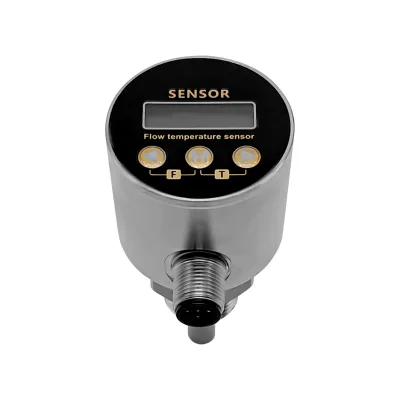


Electronic Thermal Flow Switch PNP NPN Relay Output Compact Flow Switch
$80.00 - $100.00
MOQ: 1 Pieces

Comprehensive Sourcing Guide
Thermal Flow Switch Sourcing Guide
Selecting the right Thermal Flow Switch requires a disciplined approach to verifying technical compatibility, regulatory compliance, and supplier reliability. These devices are critical for monitoring fluid dynamics in industrial systems, providing reliable detection of liquid or gas flow through thermal dispersion principles. Buyers must navigate a complex landscape of specifications, from housing materials and ingress protection ratings to output signal types and operating temperature ranges. This guide synthesizes observed market data and trusted category knowledge to help procurement professionals make informed decisions without relying on unverified claims.
The following sections provide a structured framework for evaluating thermal flow switches. By focusing on observable listing signals, technical verification steps, and commercial due diligence, buyers can mitigate risks associated with mismatched specifications or non-compliant products. The guidance emphasizes evidence-based decision-making, ensuring that every procurement choice is grounded in verifiable facts rather than marketing assertions. This approach is essential for maintaining system integrity and operational efficiency in demanding industrial environments.
Product Scope and Observed Listing Signals
The current market for thermal flow switches exhibits a wide variance in pricing and minimum order quantities, reflecting the diversity of applications and component quality. Observed listing prices range from $0.18 to $300 USD, indicating that buyers can find options for both high-volume, cost-sensitive applications and specialized, high-performance industrial uses. This broad price spectrum necessitates careful evaluation of what is included in the base price, such as connector types, housing materials, and calibration standards. Buyers should not assume that lower-priced items meet the same durability or accuracy requirements as premium models, especially when dealing with critical process control applications.
Minimum order quantities (MOQs) typically range from 1 to 1,000 units, offering flexibility for both prototyping and large-scale deployment. This range allows small businesses to test specific models like the FS-E01 or HFM500 without committing to excessive inventory, while larger enterprises can leverage bulk pricing for standardized installations. The availability of customization options, including OEM support and varied housing materials such as SUS304 stainless steel, plastic, or aluminum, further expands the scope of potential applications. Buyers should identify their specific needs for medium compatibility, such as water or gas, and verify that the supplier can accommodate these requirements within their MOQ structure.
Technical Specifications to Verify
Technical verification begins with confirming the physical and electrical characteristics of the Thermal Flow Switch to ensure compatibility with existing infrastructure. Key attributes to validate include the ingress protection rating, which is frequently observed as IP67 or IP65, ensuring resistance to dust and water ingress in harsh environments. The housing material, often specified as 304 stainless steel or other alloys, must be compatible with the process medium to prevent corrosion and ensure longevity. Additionally, the operating temperature range, typically spanning from -20°C to 80°C or higher, must be checked against the actual process conditions to avoid premature failure or inaccurate readings.
Electrical specifications are equally critical, with output signals varying between PNP, NPN, relay, and analog options. Buyers must verify the wiring method, such as M12 connectors, and the contact capacity, which may be rated for 24VDC or 220VAC at specific current limits like 100mA. The initialization time, observed to be around 8 seconds for some models and 18 seconds for others, impacts system startup procedures and should be accounted for in control logic design. Furthermore, the measuring range, which can vary for different media like water or oil, must be confirmed to ensure the switch operates within its optimal detection window, preventing false triggers or missed detections.
Compliance and Safety Documentation
Regulatory compliance is a non-negotiable aspect of sourcing thermal flow switches, particularly for equipment used in regulated industries. Certifications such as CE and ISO are commonly listed, indicating adherence to European safety and quality standards. However, buyers must request and verify the actual certification documents to ensure they are valid and applicable to the specific model being purchased. The presence of RoHS standards suggests compliance with restrictions on hazardous substances, which is crucial for environmental sustainability and worker safety. Relying solely on listing claims without documentary proof can expose the buyer to legal and operational risks.
Safety documentation should also include detailed information on withstand voltage and insulation resistance, which are critical for preventing electrical faults in high-voltage environments. The product’s ability to handle specific voltage levels, such as 100bar or 50bar pressure ratings, must be clearly documented and verified against the system’s maximum operating pressure. Buyers should ensure that the supplier provides comprehensive technical datasheets that outline these safety parameters, along with any relevant testing reports. This due diligence helps in selecting switches that not only perform well but also meet the stringent safety requirements of the installation site.
Cost Drivers and Commercial Terms
Understanding the factors that influence the cost of thermal flow switches is essential for effective budgeting and negotiation. The primary cost drivers include the housing material, with stainless steel models generally being more expensive than plastic or aluminum alternatives. The complexity of the output signal, such as analog versus simple relay outputs, also impacts the price, as does the level of customization required, including OEM branding or specific connector configurations. Buyers should analyze these variables to determine the true value of each quote, ensuring that they are not paying for features that are not necessary for their application.
Commercial terms, including warranty periods and packing standards, play a significant role in the total cost of ownership. A standard one-year warranty is commonly offered, providing a baseline for product reliability and supplier support. The packing method, often standard carton packing, should be evaluated for its ability to protect the units during transit, especially for international shipments. Buyers should negotiate clear terms regarding returns, replacements, and support services to mitigate the risk of defective products. Transparent commercial terms help in establishing a reliable supply chain and reducing unexpected costs associated with product failures or logistical issues.
Supplier Qualification and Quality Control
Supplier qualification is a critical step in ensuring the long-term reliability of Thermal Flow Switch procurement. Buyers should verify the supplier’s place of origin, with many manufacturers based in regions like Liaoning, China, known for their industrial manufacturing capabilities. However, geographic location alone is not a guarantee of quality; buyers must assess the supplier’s production processes, quality control measures, and track record. Requesting samples for testing is a prudent step to verify the actual performance of the switches against the claimed specifications, such as initialization time and measuring range.
Quality control should extend to the supplier’s ability to provide consistent product quality across batches. Buyers should inquire about the supplier’s testing protocols, including how they verify ingress protection ratings and electrical output consistency. The availability of customized support, such as OEM services, indicates a supplier’s flexibility and commitment to meeting specific client needs. Establishing a strong relationship with a qualified supplier ensures that future orders will meet the same high standards, reducing the risk of variability in product performance and enhancing overall supply chain stability.
Long-Term Procurement Checks
Long-term procurement success depends on continuous monitoring of supplier performance and product reliability. Buyers should establish key performance indicators (KPIs) to track metrics such as defect rates, delivery times, and responsiveness to technical queries. Regular audits of the supplier’s quality control processes can help identify potential issues before they impact production. Additionally, staying informed about updates in industry standards and regulations ensures that the procured thermal flow switches remain compliant and suitable for evolving operational requirements.
Feedback loops between the procurement team and the end-users in the field are essential for capturing real-world performance data. This information can be used to refine future purchasing decisions, such as adjusting specifications or switching suppliers if necessary. Buyers should also maintain a comprehensive database of product models, certifications, and performance data to facilitate quick and informed decision-making for future projects. By adopting a proactive and data-driven approach to procurement, organizations can optimize their supply chain, reduce costs, and ensure the reliable operation of their industrial systems.
FAQs
What certifications do thermal flow switches typically have?
Many thermal flow switches carry CE and ISO certifications. Some models also meet RoHS standards for environmental compliance. These certifications ensure the devices meet international safety and quality requirements for industrial applications.
Which materials are used for the housing of these switches?
Housing is commonly made from SUS304 stainless steel or 304ss. Some units also utilize plastic or aluminum materials. This selection ensures durability and resistance to corrosion in various industrial environments.
Can these switches operate in extreme temperature conditions?
Yes, they function within a range of -20 to 80 degrees Celsius. Certain models support temperatures up to 110 degrees Celsius. This wide range allows for reliable operation in diverse thermal environments.
What output signals are available for thermal flow switches?
Available output signals include PNP, NPN, Relay, and Analog options. Some units feature Reed switches that are normally open. These varied outputs allow integration with different control systems and monitoring setups.
How is the product packed for shipping?
Products are typically packed in standard cartons. Some listings specify carton packing as the standard method. This ensures safe transport and protection of the sensitive electronic components during delivery.
What is the typical lead time for customization?
Customization is available for many Thermal Flow Switch models. Specific lead times vary by manufacturer and order volume. Buyers should contact suppliers directly to confirm current production schedules for custom requirements.
Which flow media can these switches measure?
These switches can measure water, gas, and oil. Specific measuring ranges differ based on the medium type. For instance, water flow ranges from 1 to 150 cm per second while oil ranges from 3 to 300 cm per second.