Source Top Grade Used Leather Babouche for Travel, Events, and Daily Wear
Explore 30 listings for Top Grade Used Leather Babouche suitable for travel, events, and daily wear. Buyers can compare mixed sizes, colors, and bale packaging options from suppliers in China.
Key considerations
Products List


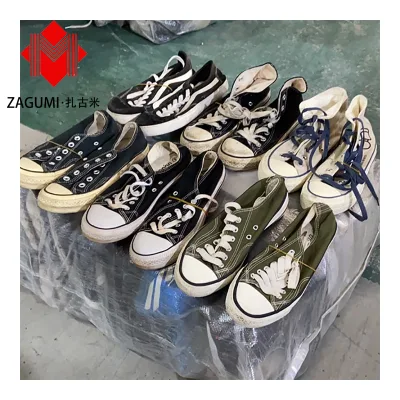
Wholesale Second Hand Shoes Supplier to Africa Container Mixed Used Shoe
$1400.00 - $1600.00
MOQ: 10 Tons


Professional Factory Used Leather for Men Second Hand Shoes High Heels
$1300.00 - $1600.00
MOQ: 13 Tons


Comprehensive Sourcing Guide
Strategic Sourcing Guide for Top Grade Used Leather Babouche
Understanding the Product Category and Market Reality
Sourcing "Top Grade Used Leather Babouche" requires a precise understanding of the global second-hand footwear market, which operates under distinct logistical and quality parameters compared to new retail goods. The core keyword implies a specific style of traditional slipper, often characterized by a soft, flexible sole and a leather upper, originating from regions where such footwear is culturally prevalent. However, in the context of international B2B trade, the term "babouche" often falls under the broader umbrella of "mixed used shoes" or "used shoe bales." The available market data indicates that the primary product offering is not typically a curated, single-style item but rather a bulk commodity known as "Used Shoes Bales" or "Mixed Used Shoes." These bales are sourced from China First-Tier Cities and are characterized by a "Grade a Quality" or "Grade AAA" classification, depending on the specific supplier's sorting criteria.
Buyers must recognize that the "top grade" designation in this sector is relative. It generally refers to items that have been cleaned and sorted to a high standard of wearability, often described in product attributes as having a condition of "Clean / 90%." This suggests that the leather uppers, which may include materials like genuine leather, suede, or canvas, are free from major structural defects, though they retain the patina of previous use. The market for these goods is heavily concentrated in regions such as Africa, Southeast Asia, the Middle East, and South America, where the demand for affordable, durable footwear is significant. The "babouche" style, if present, would be found within these mixed assortments rather than as a standalone SKU. Consequently, procurement strategies must focus on the bale structure and the sorting methodology rather than expecting a factory-direct order of a single specific shoe model.
Technical Specifications and Material Composition
When evaluating potential shipments of used leather babouche or mixed used footwear, the technical specifications are critical for determining the end-use viability and the resale value in the target market. The supplied data reveals a diverse range of materials used in the upper construction of these products. Buyers should expect to encounter a mix of Plastic, Canvas, Suede, Fabric, Rubber, and Leather. For a specific focus on "leather babouche," the presence of "Leather" and "Suede" in the upper material list is the primary indicator of the desired quality tier. The inside material is frequently noted as "Oxford," which provides a specific texture and breathability profile, though this may vary depending on the specific bale's composition.
The physical dimensions and packaging standards are equally important for logistics planning. The standard export packaging for these goods is typically 25kg per bale, with a specific compressed size of 73CM60CM32CM. This density is crucial for calculating container utilization. A single 20-foot container (1*20FT Container) is the standard Minimum Order Quantity (MOQ) for these bulk shipments. However, some listings indicate a more flexible MOQ of 1 unit, suggesting that smaller trial orders might be possible, though the container load remains the most cost-effective volume for international shipping. The product models are often generic, labeled simply as "used shoe," "used shoe bales," or specific codes like "FS-0140," which may refer to a specific sorting batch rather than a distinct design.
| Attribute | Typical Specification | Relevance to Babouche Sourcing |
|---|---|---|
| Product Name | Mixed Used Shoes / Used Shoes Bales | Indicates bulk nature; specific styles are mixed. |
| Condition | Clean / 90% | Defines the "top grade" status; high wearability. |
| Upper Material | Leather, Suede, Canvas, Fabric | Leather/Suede confirms babouche potential. |
| Inside Material | Oxford | Affects comfort and breathability. |
| Packaging | 25kg/Bale (73x60x32cm) | Critical for container loading calculations. |
| MOQ | 1*20FT Container | Standard bulk entry point for international trade. |
| Origin | China First-Tier Cities | Source of the sorting and export logistics. |
| Quality Standard | Grade a Quality / Grade AAA | The primary metric for "top grade" verification. |
Compliance, Certification, and Quality Verification
In the realm of second-hand goods, formal certifications are often less standardized than in new manufacturing, yet verification remains a non-negotiable aspect of procurement. The supplied facts mention a "Quality Standard" of "Grade a Quality" and "Grade AAA Used Bags" (noting that bag standards often mirror shoe sorting protocols). Buyers must verify that the "Grade a" designation is backed by a rigorous sorting process that separates items by condition, material, and style. The condition is explicitly stated as "Clean / 90%," which implies a pre-shipment cleaning process. However, buyers should not assume this is a universal guarantee without on-site inspection or third-party verification.
Compliance with international shipping regulations is another critical area. The products are shipped from China, and the logistics provider often offers a "Rent-Free Period" of 21 days for Pil/Msk (likely referring to specific shipping lines or ports). This logistical window is vital for inventory planning. Furthermore, the "Quality Standard" must be aligned with the import regulations of the destination country. While the text mentions "Standard Size in quality used bags," buyers must confirm that the specific bale composition meets the sanitary and safety standards of their local market. There is no mention of specific chemical certifications (like REACH or ISO) in the provided data; therefore, buyers must explicitly request test results regarding the leather treatment, dyes, and adhesives used in the original manufacturing to ensure they do not violate local environmental or safety laws.
Cost Drivers and Pricing Dynamics
The pricing for Top Grade Used Leather Babouche is not linear and is heavily influenced by the bulk nature of the transaction. The observed listed price range in the market data spans from $0.3 to $1600 USD. This wide variance reflects the difference between a single pair or a small sample versus a full container load. The "top grade" designation, specifically the "Clean / 90%" condition and "Grade a Quality" status, will command a price at the higher end of the spectrum. However, the base unit cost is often calculated per kilogram or per bale, making the 25kg bale the fundamental pricing unit.
Several factors drive the final cost. First, the "Capacity" of the supplier, noted as "100 Container Each Month" or "Super Capacity," suggests that high-volume suppliers may offer better rates due to economies of scale. Second, the customization options, such as "Logo & Package: Can Be Customized," add a layer of cost if the buyer requires specific branding on the bales or the shoes themselves. Third, the "Shipment" terms, including the 21-day rent-free period, affect the total landed cost; delays beyond this period incur demurrage charges that can significantly erode profit margins. Buyers should also consider the "Mixed Color" and "Mixed Size" nature of the product. While this reduces the risk of unsold inventory, it also means the price per pair is an average, and the specific "leather babouche" pairs within the bale may have a different value density than the canvas or synthetic pairs.
Supplier Evaluation and Capacity Assessment
Evaluating a supplier for used leather babouche requires a focus on their sorting capabilities and logistical reliability rather than traditional manufacturing metrics. The data indicates that the "Source" is "China First-Tier Cities," which suggests a mature infrastructure for collecting, sorting, and exporting second-hand goods. A key metric for supplier evaluation is the "Capacity," listed as "100 Container Each Month." This volume indicates a supplier capable of handling large-scale B2B contracts, which is essential for buyers looking to stock retail chains or wholesale markets in Africa or Southeast Asia.
When assessing a supplier, buyers should verify the consistency of their "Grade a Quality" claims. Since the product is "Mixed Used Shoes," the proportion of high-quality leather items within the bale is a critical variable. A supplier with "Super Capacity" may have a more robust sorting line, ensuring a more consistent ratio of "top grade" items. Buyers should also inquire about the "Customization" capabilities. The ability to customize the "Logo & Package" and the "prod_packing" (25kg Per Bale) is a strong indicator of a supplier's flexibility and professionalism. Additionally, the "Seasonal" attributes, which include "Spring, Summer, Autumn, Winter," suggest that the supplier maintains a year-round inventory, reducing the risk of supply interruptions. However, buyers must be cautious of suppliers who claim "All Seasons" availability without demonstrating a consistent supply chain for specific styles like babouche, which may be seasonal in demand.
Quality Control and Long-Term Procurement Strategy
Implementing a robust quality control (QC) protocol is essential when sourcing mixed used footwear. Given that the product is "Clean / 90%" and "Grade a Quality," the QC process should focus on verifying the cleanliness and structural integrity of the leather uppers. Buyers should establish a sampling protocol where a percentage of bales from a container are opened and inspected for the presence of the specific "leather" and "suede" materials required for the babouche style. The "Hardness" attribute, listed as "Soft," is a key characteristic of babouche; QC should verify that the soles and uppers maintain this flexibility and are not brittle or cracked.
For long-term procurement, the relationship with the supplier should be built on consistency and transparency. The "MOQ" of 1*20FT Container is a significant commitment, so buyers should start with a trial container to validate the "Grade a" claims. Over time, the "Customization" of the packaging and the "Logo" can be used to build a unique brand identity in the target market. The "Market" data indicates strong demand in "Africa, Southeast Asia, Middle East, South America," so buyers should align their procurement strategy with the specific fashion preferences of these regions. For instance, the "Fashion Element" of "Candy Color" or "Retro" styles may be more or less relevant depending on the local market. Finally, buyers must monitor the "Lead Time" and "Shipment" terms, particularly the 21-day rent-free period, to ensure that their inventory turnover matches the logistics timeline. By maintaining a disciplined approach to QC and supplier evaluation, buyers can secure a steady supply of top-grade used leather babouche that meets the high standards of their end consumers.
FAQs
What condition are the used leather babouche shoes in?
The shoes are classified as Clean / 90% condition, indicating high wearability. This grade ensures major structural defects are absent while retaining the patina of previous use.
Which materials are included in the upper construction of these shoes?
The upper materials include Plastic, Canvas, Suede, Fabric, Rubber, and Leather. Buyers seeking leather babouche should verify the specific ratio of leather and suede within the mixed bale.
How are the used shoes packaged for international shipping?
Products are packed in 25kg per bale with a standard compressed size of 73CM by 60CM by 32CM. This density is critical for calculating container utilization during logistics planning.
Can the logo and packaging be customized for my brand?
Yes, logo and package customization are available for these used shoe bales. Buyers can request specific branding on the bales or the shoes themselves to build a unique identity.
What is the minimum order quantity for a container shipment?
The standard minimum order quantity is one 20-foot container. While some listings suggest an MOQ of 1 unit, the container load remains the most cost-effective volume for trade.
Which markets have the highest demand for these used shoes?
The primary markets include Africa, Southeast Asia, the Middle East, and South America. These regions show significant demand for affordable, durable footwear like mixed used shoe bales.