Source Tunnel Car Wash Machine with High Pressure Cleaning for Auto Shops, Dealerships, and Service Centers
Source 28 Tunnel Car Wash Machine with High Pressure Cleaning units featuring electric power and customizable frames. Compare specifications including water consumption, cleaning duration, and certifications like CE and RoHS for automotive beauty shops and service centers.
Key considerations
Products List




Comprehensive Sourcing Guide
Strategic Sourcing Guide for Tunnel Car Wash Machines with High Pressure Cleaning
The global automotive care sector is increasingly demanding automated solutions that balance efficiency with surface preservation. For procurement officers and business owners, the core keyword "Tunnel Car Wash Machine with High Pressure Cleaning" represents a significant capital investment requiring rigorous due diligence. This guide synthesizes available market data and technical realities to provide a structured approach for sourcing these complex industrial systems. The focus remains on evidence-based evaluation, ensuring that buyers can navigate the nuances of high-pressure technology, certification requirements, and operational specifications without relying on unverified marketing claims.
Technical Architecture and High-Pressure Specifications
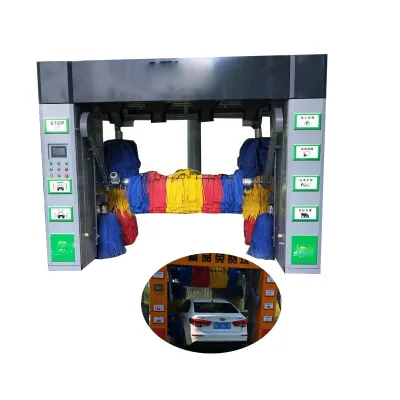
Understanding the mechanical architecture of a tunnel car wash is the first step in effective sourcing. Unlike self-service units, tunnel systems are designed for continuous throughput, often utilizing a conveyor mechanism to move vehicles through a series of cleaning bays. The defining characteristic of the high-pressure variant is the application of water at extreme pressures to remove contaminants without physical contact that could damage the vehicle's paintwork.
Based on observed product attributes, high-pressure tunnel systems often integrate "Micro High Pressure Water Cleaning" as a primary function. This technology is frequently paired with additional capabilities such as high-power vacuuming, polishing wax application, and LED light illumination for final inspection. The pressure specifications are critical; observed data indicates rinse water pressures ranging from 80 to 100 MPa. This level of pressure is substantial and necessitates robust pump systems and reinforced piping to handle the stress safely.
The cleaning process in these units can vary. While some systems utilize solvent cleaning, others are designed for cold water cleaning, which may be preferred for specific environmental regulations or energy efficiency goals. The fuel source for the machinery itself is consistently electric, requiring a stable power supply. For instance, specific models indicate a mains voltage requirement of 3-phase AC380V/50Hz, with total power consumption figures reaching up to 34.82 kW for larger units. Buyers must verify that their facility infrastructure can support these high-voltage, three-phase requirements before finalizing a purchase.
Operational Metrics and Throughput Efficiency
When evaluating a tunnel car wash machine, throughput is a primary determinant of return on investment. The system must balance cleaning quality with the speed of service. Observed specifications suggest that a standard tunnel unit can handle a capacity of 45 to 55 cars per hour. This throughput is achieved within a car washing duration of 5 to 8 minutes per vehicle, depending on the selected cycle and the specific model configuration.
Resource consumption is another vital operational metric. High-pressure systems are water-intensive, yet efficiency is a key selling point. Data indicates water consumption rates between 100 and 140 liters per vehicle for certain models, while other configurations report approximately 150 liters per car. Similarly, chemical usage is tightly controlled; wax consumption may range from 12 ml per car, and shampoo consumption around 7 ml per car. These figures are adjustable, with some systems offering liquid consumption settings between 20 ml and 100 ml, allowing operators to fine-tune costs based on water availability and cleaning intensity.
The physical footprint of the machine is equally important for site planning. The overall dimensions for a typical tunnel unit can reach 9500 mm in length, 3800 mm in width, and 3440 mm in height. The assembly range may extend to 11600 mm, accommodating the necessary conveyor length and cleaning bays. The system is designed to accommodate various vehicle types, including cars, jeeps, and coaches with up to 10 seats, fitting within a maximum available car size of 5200 mm by 2150 mm by 2200 mm. Buyers must ensure their facility has sufficient clearance and floor load-bearing capacity to house these substantial structures.
Compliance, Certification, and Safety Standards
In the B2B procurement of industrial machinery, compliance is non-negotiable. The safety of operators and the reliability of the machine are paramount. Observed product listings frequently cite a range of international certifications, including CE, RoHS, GS, UR, ETL, and CB. The CE marking, in particular, indicates conformity with health, safety, and environmental protection standards for products sold within the European Economic Area. RoHS compliance ensures that the machinery does not contain restricted hazardous substances, which is crucial for environmental regulations in many jurisdictions.
Safety standards also extend to the electrical systems. The requirement for 3-phase electricity (380V) necessitates that the installation be performed by qualified personnel in accordance with local electrical codes. The "GS" certification, often associated with German safety standards, and "ETL" certification, recognized in North America, suggest that the equipment has undergone rigorous testing for electrical safety and performance. Buyers should request current certification documents for the specific model they intend to purchase, as these can vary by production batch and region.
Furthermore, the construction materials must meet durability standards. The main body frame is often constructed from hot-dip galvanized steel to prevent rust and corrosion, a critical feature given the constant exposure to water and cleaning chemicals. Some models also feature stainless steel components, which offer superior resistance to corrosion and hygiene. The presence of a "Rust / Corrosion Inhibitor" feature in the cleaning process further protects the vehicle and the machine's internal components.
Cost Drivers and Financial Considerations
The price of a tunnel car wash machine is influenced by a complex array of factors, including the level of automation, the intensity of the high-pressure system, and the breadth of additional features. The observed price range in the market spans from $380 to $99,000 USD. This wide variance reflects the difference between smaller, perhaps semi-automated units and fully automated, high-capacity tunnel systems with advanced features like polishing wax and LED illumination.
The minimum order quantity (MOQ) for these industrial machines is typically low, often ranging from 1 to 3 units, which allows for flexibility in procurement. However, the total cost of ownership extends beyond the initial purchase price. Energy consumption is a significant ongoing cost; with electricity consumption rates ranging from 0.5 to 1 kWh per cycle or specific power ratings like 0.60 kWh per car, the operational electricity bill can be substantial. Buyers should calculate the expected annual energy costs based on their projected throughput.
Installation and setup costs are also major cost drivers. The "Install" attribute often states "Please Consult," indicating that professional installation is required. This may involve site preparation, electrical hookups, plumbing modifications, and structural reinforcement. The packaging method, typically standard plywood crates for sea freight or carton and foam for smaller components, adds to the logistics cost. Buyers should budget for freight, customs duties, and the specialized labor required for assembly, which can take considerable time depending on the complexity of the tunnel system.
Supplier Evaluation and Quality Assurance
Selecting the right supplier is as critical as selecting the right machine. The supply chain for tunnel car wash machines is global, with production centers located in regions such as Hubei, China. When evaluating potential suppliers, buyers should look for transparency regarding the product origin and manufacturing standards. The "Standard Specifications or Customized" attribute suggests that suppliers may offer tailored solutions, but this requires clear communication of requirements.
Quality control should be a central part of the supplier evaluation process. Buyers must verify the consistency of the manufacturing process, particularly for the frame construction and the high-pressure pump systems. The "Condition" of the product is listed as "New," but buyers should insist on factory acceptance tests (FAT) to ensure the machine operates at the specified pressure and throughput before shipment. Documentation regarding the "Cleaning Process" and the specific materials used, such as stainless steel or galvanized steel, should be provided to verify durability claims.
Supplier reliability is also measured by their ability to support the "Customization" needs of the buyer. Whether it is adjusting the brush number, which can be up to 14 pieces in some models, or modifying the dimensions to fit a specific bay, the supplier's engineering capability is key. Buyers should also inquire about the availability of spare parts and the lead time for restocking, as downtime in a car wash operation can be costly.
Long-Term Procurement and Maintenance Strategy
Procuring a tunnel car wash machine is a long-term commitment that requires a strategic approach to maintenance and lifecycle management. The "Type" of the machine, often classified as "Tunnel" or "Self-Service" depending on the configuration, dictates the maintenance schedule. High-pressure systems require regular inspection of nozzles, seals, and pumps to prevent leaks and maintain pressure integrity.
The "Feature" of being "Residue Free" is desirable, but it relies on the proper functioning of the rinse cycles and the quality of the water filtration system. Buyers should plan for regular water quality testing and filter replacements to ensure the machine continues to deliver a spotless finish. Additionally, the "Operation Type" being "Fixed" means that the machine is stationary, and the wear and tear on the conveyor system and brushes will be continuous.
Future-proofing the procurement decision involves considering the adaptability of the system. As environmental regulations tighten, the ability to adjust water and chemical consumption becomes more valuable. The "Customization" availability allows for future upgrades, such as adding more advanced drying systems or integrating smart monitoring technologies. Buyers should also consider the "Product Name" and "Keywords" associated with the machine, such as "Touchless Automatic Car Wash Machine," to ensure the technology aligns with market trends and customer expectations for non-contact cleaning.
In conclusion, sourcing a tunnel car wash machine with high-pressure cleaning capabilities requires a meticulous approach that balances technical specifications, regulatory compliance, and financial planning. By focusing on verified data regarding pressure, power, and dimensions, and by rigorously evaluating supplier credentials and certification status, buyers can secure a reliable asset that enhances their automotive service operations. The complexity of these systems demands a partnership with a supplier who can provide not just a machine, but a comprehensive solution for long-term operational success.
FAQs
What certifications do tunnel car wash machines typically have?
These machines commonly hold CE, RoHS, GS, UR, ETL, and CB certifications. Buyers should verify specific documents for the model, as certifications ensure compliance with safety and environmental standards for international markets.
How much water does a tunnel car wash machine consume per car?
Water consumption ranges from 100 to 140 liters per vehicle, with some models using up to 150 liters. Adjustable settings allow operators to fine-tune usage between 20 and 100 milliliters for specific cleaning cycles.
What is the power requirement for operating these machines?
The system requires a 3-phase AC 380V/50Hz power supply with a total power rating up to 34.82 kW. Electricity consumption is approximately 0.60 kWh per car, necessitating robust facility infrastructure for installation.
Can the machine handle large vehicles like coaches?
Yes, the system accommodates cars, jeeps, and coaches with up to 10 seats. The available car size fits within dimensions of 5200 by 2150 by 2200 mm, ensuring versatility for different vehicle types.
What is the typical washing duration for one vehicle?
A complete wash cycle takes between 5 to 8 minutes per vehicle. This duration supports a throughput capacity of 45 to 55 cars per hour, balancing efficiency with thorough cleaning performance.
How is the machine constructed to prevent corrosion?
The main body frame is built from hot-dip galvanized steel or stainless steel. A rust and corrosion inhibitor feature is included in the cleaning process to protect both the vehicle and the machine components.
What is the rinse water pressure level for these units?
Rinse water pressure operates between 80 and 100 MPa for effective cleaning. This high-pressure micro water cleaning technology removes contaminants without physical contact, preserving the vehicle's paintwork.