Source Underground High Voltage Power Cable for Power Stations, Industrial Sites, and Construction
Find 30 options for Underground High Voltage Power Cable suitable for power stations, industrial facilities, and construction projects. Compare specifications including rated voltage, conductor material, and insulation types to identify the right supplier.
Key considerations
Products List


High Voltage Underground Power Cable for Reliable Energy Distribution
$8.00 - $189.00
MOQ: 1000 Meters


High-Quality Medium Voltage Underground Power Cable with XLPE Insulation
$0.01 - $50.00
MOQ: 2000 Pieces

High-Quality Low Voltage Outdoor Power Cable for Reliable Performance
$0.01 - $100.00
MOQ: 2000 Pieces


Underground Low and Medium Voltage 16mm Armoured Power Multi Core Cable
$0.60 - $50.00
MOQ: 500 Meters

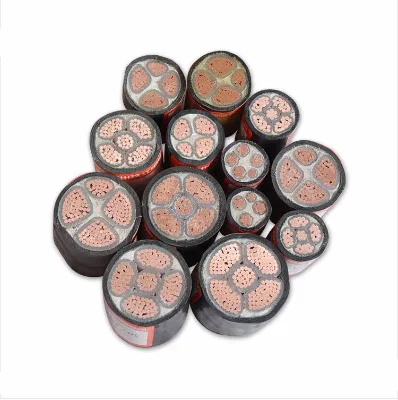


Comprehensive Sourcing Guide
Strategic Sourcing Guide for Underground High Voltage Power Cables
Procuring underground high voltage power cables requires a rigorous approach that balances technical performance, regulatory compliance, and supply chain reliability. These critical infrastructure components are designed to transmit electrical energy beneath the earth's surface, where they face unique environmental and mechanical stresses. Buyers must navigate a complex landscape of material specifications, voltage ratings, and international standards to ensure long-term grid stability. This guide outlines the essential factors for evaluating products and suppliers, focusing on the specific attributes observed in the current market for XLPE-insulated cables.
Technical Specifications and Material Composition
The foundation of a reliable underground cable lies in its material composition and technical design. The most prevalent insulation material observed in high-voltage applications is Cross-Linked Polyethylene (XLPE). This material offers superior thermal stability and electrical properties compared to traditional PVC, making it ideal for underground transmission lines. The conductor material is typically either Copper (Cu) or Aluminum (Al), with the choice often dictated by specific project requirements regarding conductivity, weight, and cost. The conductor shape is consistently round wire, which facilitates efficient stranding and cable flexibility.
Voltage ratings are a primary differentiator in this category. Market data indicates a wide range of rated voltages, from 8.7/15 kV and 12/20 kV up to 26/35 kV. These ratings determine the cable's ability to withstand electrical stress without breakdown. The number of cores varies significantly, with options ranging from single-core (1 core) configurations to multi-core setups (up to 5 cores), with 3-core being a common standard for three-phase power transmission. The nominal sectional area of the conductor is equally critical, with observed ranges spanning from 1.5 mm² to 1000 mm², and specific high-voltage models often falling between 35 mm² and 630 mm².
The sheath and jacket materials also play a vital role in protection. Polyethylene (PE) and Polyvinyl Chloride (PVC) are standard jacket materials, providing resistance against moisture, chemicals, and physical damage. For underground applications where mechanical protection is paramount, armor options such as Steel Wire Armor (SWA) or Steel Tape Armor (STA) are frequently specified. The working temperature is a key performance metric, with cables designed to operate at temperatures up to 90°C, while some standard variants may be rated for 70°C. The service life of these cables is engineered to last as long as 25 years, provided they are installed and maintained according to manufacturer guidelines.
Compliance and Certification Verification
Ensuring that cables meet international and local safety standards is non-negotiable for underground infrastructure projects. Buyers must verify that products carry recognized certifications. The most frequently observed certifications in this sector include CCC (China Compulsory Certification) and CE (Conformité Européenne). Additionally, ISO and RoHS certifications are common indicators of quality management and environmental compliance. Some high-performance models also carry VDE certification, which is particularly relevant for European markets.
Standards compliance is equally critical. The products in this category often reference IEC 60502-2, which governs extruded insulated power cables with rated voltages from 1 kV (Um = 1.2 kV) up to 30 kV (Um = 36 kV). Other relevant standards include GB/T 5023-2008 and Jb/T 8734-2016, which cover specific requirements for cable construction and testing. It is important to note that while some background information mentions IEC 60840, this standard should be treated with caution and verified against the specific product datasheet, as it pertains to higher voltage ranges (30 kV to 150 kV) and may not apply to all listed products.
Buyers should demand test reports that validate the cable's adherence to these standards. The verification process should include checking the "Refer Standard" and "Executive Standard" fields on product documentation. For underground applications, the cable must also meet specific laying temperature requirements, typically stating that the ambient temperature must be no less than 0°C during installation to prevent damage to the insulation and sheath.
Cost Drivers and Pricing Variables
The pricing of underground high voltage cables is influenced by several dynamic factors. The observed price range in the market is substantial, spanning from $0.01 to $520 per unit, though this wide range often reflects differences in unit measurement (e.g., per meter vs. per drum) and cable specifications. The primary cost driver is the raw material content, specifically the weight of copper or aluminum used in the conductor. As the cross-sectional area increases from 1.5 mm² to 1000 mm², the material cost rises proportionally.
Voltage rating is another significant cost factor. Cables rated for 26/35 kV generally command a higher price than those rated for 8.7/15 kV due to the increased thickness of insulation and more complex manufacturing processes required to ensure dielectric strength. The number of cores also impacts cost; a 3-core cable requires more conductor material and insulation than a single-core equivalent, though it may offer installation efficiencies in certain configurations.
Packaging and logistics are additional cost components. Products are typically supplied on wooden drums or steel drums, with options for all-iron drums or iron-wooden combinations. The choice of packaging affects shipping costs and handling requirements. Furthermore, the Minimum Order Quantity (MOQ) varies widely, from 1 unit to 2000 units. Buyers with smaller project needs may face higher per-unit costs due to MOQ constraints, while large-scale infrastructure projects can leverage bulk purchasing to reduce unit prices. Customization is available for many suppliers, which can introduce additional costs but allows for tailored solutions regarding color, jacket material, and specific dimensional requirements.
Typical Applications and Installation Requirements
Underground high voltage cables are primarily deployed in power stations, industrial facilities, and underground transmission networks. The specific application dictates the cable's configuration. For instance, cables with a rated voltage of 12/20 kV or 26/35 kV are often designated for underground transmission lines in high-voltage environments. These cables are essential for connecting power generation sources to distribution grids, ensuring reliable energy delivery with minimal visual impact.
Installation conditions are strict. The laying temperature must be maintained at or above 0°C to prevent the insulation from becoming brittle and cracking during the bending and laying process. The cables are designed for underground burial, requiring robust armor (SWA or STA) to protect against soil pressure, rodent damage, and excavation risks. The color of the cable is typically black, though custom colors can be requested to meet specific site identification requirements.
The service life of these cables is a critical consideration for long-term infrastructure planning. With a design life of up to 25 years, the initial investment must be weighed against the total cost of ownership, including maintenance and potential replacement. The ability to handle both DC and AC currents adds versatility, allowing these cables to be used in various power systems, including those with renewable energy integration that may utilize DC transmission.
Supplier Evaluation and Origin Considerations
When selecting a supplier, buyers should prioritize manufacturers with a proven track record in the power cable industry. The origin of the products is a key indicator of manufacturing capability. A significant portion of the market data points to Jiangsu, China, as a major production hub for these cables. This region is known for its concentration of electrical equipment manufacturers and established supply chains.
Suppliers should be evaluated based on their ability to provide comprehensive documentation, including detailed product models (such as N2XSRY, NA2XSRY, YJV, and N2XSEBY series) and adherence to the stated standards. The availability of customization is a strong positive indicator, suggesting a flexible manufacturing process capable of meeting unique project specifications. Buyers should verify the supplier's capacity to handle the required MOQs and their logistics capabilities for shipping large drum loads.
It is crucial to avoid suppliers who cannot provide clear evidence of their certifications (CCC, CE, ISO, RoHS, VDE). The presence of these certifications should be verified against the specific product batch, as they are not automatically guaranteed for all items from a supplier. Additionally, the supplier's ability to support the full lifecycle of the product, from initial design to after-sales service, is a vital factor in ensuring project success.
Quality Control and Long-Term Procurement Strategy
Quality control is the final line of defense against infrastructure failure. Buyers must implement a rigorous inspection regime that includes pre-shipment testing and post-delivery verification. This involves checking the physical dimensions, insulation resistance, and dielectric strength of the cables. The "Standard" field in product specifications, such as 50-630 mm² or 1.5-500 mm², should be cross-referenced with the actual delivered goods to ensure consistency.
Long-term procurement strategies should focus on building relationships with suppliers who demonstrate reliability and technical expertise. Given the 25-year service life of the cables, the procurement process should include provisions for warranty claims and technical support. Buyers should also consider the availability of spare parts and the supplier's ability to provide rapid response in case of emergencies.
The use of standardized models like YJV, YJLV, and YJV22 can simplify the procurement process, as these are well-understood configurations with established performance characteristics. However, for specialized applications, the availability of custom models like N2XSEBY or N2XSERY may be necessary. In all cases, the buyer must ensure that the cable's rated current, voltage, and core count align perfectly with the project's electrical design to prevent overloading or underutilization.
Summary of Key Product Attributes
To assist buyers in quickly identifying suitable products, the following table summarizes the key attributes observed in the market for underground high voltage power cables. This comparison highlights the variability in specifications and the importance of matching the right product to the specific application.
| Attribute | Common Observations | Critical Verification Points |
|---|---|---|
| Insulation Material | XLPE | Verify cross-linking degree and thermal rating (90°C/70°C). |
| Rated Voltage | 8.7/15 kV, 12/20 kV, 26/35 kV | Ensure voltage rating matches system design. |
| Conductor Material | Cu or Al | Confirm material grade and purity. |
| Number of Cores | 1, 3, or 1-5 Cores | Match core count to phase requirements. |
| Cross-Sectional Area | 1.5 - 1000 mm² (varies by model) | Verify exact mm² against load calculations. |
| Certifications | CCC, CE, ISO, RoHS, VDE | Check validity and scope of certificates. |
| Standards | IEC 60502-2, GB/T 5023-2008 | Confirm specific standard version and applicability. |
| Application | Power Station, Underground, Industrial | Ensure suitability for the specific environment. |
| Origin | Jiangsu, China | Verify factory location and audit status. |
| Packing | Wooden Drum, Steel Drum | Confirm drum integrity for transport. |
By adhering to these guidelines and rigorously verifying the technical and compliance details, buyers can secure high-quality underground high voltage power cables that meet the demanding requirements of modern electrical infrastructure. The focus must remain on evidence-based selection, avoiding assumptions about performance, and ensuring that every component of the supply chain is aligned with the project's long-term objectives.
FAQs
What certifications do underground high voltage power cables typically have?
These cables typically carry CCC, CE, ISO, RoHS, and VDE certifications. Buyers must verify that specific products match these documented standards before purchase to ensure regulatory compliance for underground infrastructure projects.
Which insulation material is used for these underground power cables?
Cross-Linked Polyethylene (XLPE) is the standard insulation material observed for these cables. This material provides superior thermal stability and electrical properties required for safe underground transmission lines operating at high voltages.
Can these cables operate in both DC and AC systems?
Yes, the available models support both DC and AC current applications. This versatility allows the cables to be used in various power systems, including those integrating renewable energy sources that may utilize DC transmission.
What is the rated voltage range for these underground power cables?
The rated voltage ranges from 8.7/15 kV up to 26/35 kV. Specific models are designed for different grid requirements, ensuring dielectric strength is maintained across low and medium voltage underground transmission networks.
How long is the expected service life of these power cables?
The service life can be as long as 25 years under proper conditions. This longevity is achieved when cables are installed and maintained according to manufacturer guidelines regarding temperature and mechanical protection.
What is the minimum order quantity for these underground cables?
The minimum order quantity ranges from 1 to 2000 units depending on the supplier. Buyers should check specific product listings to find options that match their project scale and budget constraints.
Where are these high voltage power cables manufactured?
These cables are primarily manufactured in Jiangsu, China. This region is a major production hub for electrical equipment, offering established supply chains for industrial and power station applications.