Source USB Bluetooth Audio Receiver for PC, PDA, and Desktop
Explore 30 listings for the USB Bluetooth Audio Receiver compatible with PC, PDA, and desktop setups. Buyers can compare features like Bluetooth versions 2.1+EDR and 5.4, transmission distances, and interface types to find suitable options for wireless audio streaming.
Key considerations
Products List


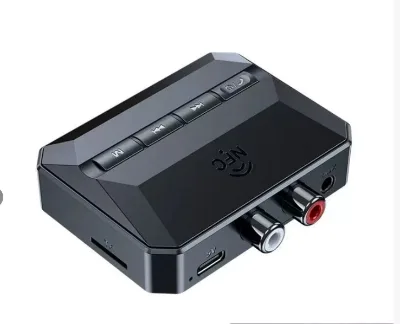


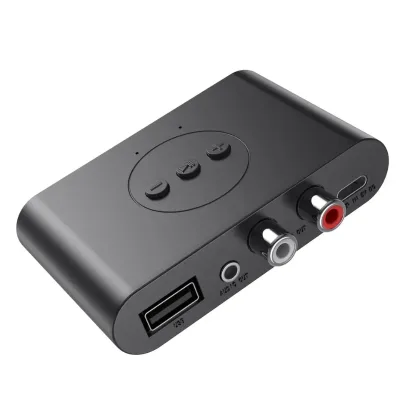

NFC Bluetooth Audio Receiver - Aux 3.5mm/RCA, USB Playback, Wireless Dongle
$6.06 - $6.55
MOQ: 1 Pieces


Comprehensive Sourcing Guide
Strategic Sourcing Guide for USB Bluetooth Audio Receivers
Understanding Technical Specifications and Core Functionality
When sourcing a USB Bluetooth Audio Receiver, the primary objective is to identify a device that bridges legacy audio equipment with modern wireless standards. The market offers a diverse array of units, ranging from simple passive adapters to active receivers with integrated amplification. Based on current product data, buyers must distinguish between devices that support data transmission and those dedicated solely to audio streaming. Many units in the current inventory are explicitly categorized as having "Without Data Transmission Function," indicating they are designed strictly for audio signal transfer rather than data exchange. This distinction is critical for applications involving car stereos, desktop speakers, or home theater systems where data integrity is not a requirement.
The Bluetooth version is a pivotal specification that dictates compatibility and performance. The observed market includes devices operating on older standards such as Bluetooth 2.1+EDR and Bluetooth 5.4. The 2.1+EDR variant typically supports a transmission rate of 3 Mbps and operates within the 2.4GHz-2.4835GHz frequency band, utilizing the A2dp profile for high-quality audio streaming. In contrast, newer iterations like the Bluetooth 5.4 model offer enhanced stability and potentially lower latency, though specific performance claims must be verified against the supplier's datasheet. The interface type is predominantly DC, with USB connectivity serving as the primary power source, often delivering a 5V DC output. This USB power mode simplifies installation, as the device draws power directly from the host computer or a USB port on a car stereo, eliminating the need for external power adapters.
Connectivity options vary significantly across the product range. While some models feature a standard USB connector, others integrate a 3.5mm port for direct audio output to auxiliary inputs. The transmission distance is another variable; observed data suggests ranges of approximately 10 meters to 20 meters, with some products claiming Class 1 capabilities for extended reach up to 1100 meters under ideal conditions. However, practical usage in cluttered environments often reduces this effective range. Buyers should verify the specific transmission distance claims against their intended use case, as wall density and interference can impact the actual performance. The signal-to-noise ratio (SNR) is also a key metric, with some units boasting an SNR greater than 60dB, ensuring clear audio output without significant background hiss.
Compliance, Certification, and Regulatory Standards
Navigating the regulatory landscape is essential for B2B procurement, particularly when importing electronics from manufacturing hubs like China and Guangdong. The primary certification observed in the current product pool is the CE mark, which indicates conformity with health, safety, and environmental protection standards for products sold within the European Economic Area. While CE is a standard requirement for many electronic components, buyers must ensure that the certification is valid and applicable to the specific model being purchased. The presence of RoHS compliance is also noted in background data, suggesting that manufacturers are adhering to restrictions on hazardous substances, though this should be confirmed via the supplier's test reports rather than assumed.
Beyond certifications, the product standards and origin play a significant role in compliance. The products listed originate from regions such as Guangdong, China, a major hub for electronics manufacturing. The "prod_standard" attribute observed in the data indicates a specific internal or industry standard (noted as "6" in the dataset), which buyers should request clarification on to ensure it aligns with international safety norms. For B2B buyers targeting global markets, relying solely on the CE mark may be insufficient; additional certifications such as FCC for the United States or KC for South Korea might be necessary depending on the destination. It is imperative to verify that the supplier can provide valid, up-to-date certification documents that match the exact model number, such as the JBR-375 or GR01, as certifications are often model-specific.
Cost Drivers and Pricing Dynamics
The pricing structure for USB Bluetooth audio receivers is influenced by several factors, including the Bluetooth version, build quality, and packaging. The observed price range in the market spans from $0.20 to $55.00 USD, reflecting a vast disparity between basic, generic adapters and premium, feature-rich receivers. The lower end of the spectrum typically corresponds to units with older Bluetooth versions (e.g., 2.1+EDR), basic ABS plastic construction, and minimal packaging. These units are often sold in bulk with high Minimum Order Quantities (MOQs), which can range from 1 to 1400 units. Conversely, the higher price points are associated with newer versions like Bluetooth 5.4, enhanced audio processing capabilities, and specialized packaging such as "Gift Package" or "Color Box" designs that appeal to retail consumers.
MOQ flexibility is another significant cost driver. While some suppliers accept small orders as low as 5 pieces, others require substantial volume commitments, with MOQs reaching up to 1400 units. This variability allows buyers to tailor their procurement strategy based on their inventory needs and budget constraints. For startups or small businesses, suppliers accepting small orders are preferable, whereas large-scale distributors may negotiate better unit economics by committing to higher volumes. The material composition, typically ABS plastic, also impacts cost, as does the inclusion of additional features like switches or specific channel configurations (e.g., 2.0 channels). Buyers should analyze the total cost of ownership, including shipping and potential tariffs, rather than focusing solely on the unit price, as the lowest price point may come with hidden costs related to quality inconsistencies or lack of support.
Typical Applications and Use Cases
The versatility of USB Bluetooth audio receivers makes them suitable for a wide range of applications, from automotive upgrades to desktop audio enhancements. One of the most common use cases is the conversion of wired car stereos to wireless systems. These receivers often connect via the USB port to power the device and the 3.5mm auxiliary port to transmit audio to the car's amplifier. The "Connect: PC" and "Connect: PDA" attributes indicate that these devices are also designed for desktop and mobile computing environments, allowing users to stream audio from laptops or smartphones to external speakers or soundbars. The "Desktop wireless receiver" designation highlights their suitability for office or home office setups where a clean, wireless connection is preferred over tangled cables.
In the automotive sector, the "usb bluetooth car receiver" model is specifically engineered to integrate with vehicle audio systems. These units often feature a compact design to fit within dashboard compartments and are powered directly by the car's USB port. The ability to support A2dp ensures that high-fidelity audio is transmitted without compression artifacts, enhancing the listening experience for music and podcasts. Additionally, the "Universal" attribute suggests that these devices are compatible with a broad spectrum of audio equipment, making them a flexible solution for various legacy systems. The "Switch" feature found in some models allows users to manually toggle the connection or power state, adding a layer of control that is beneficial in shared or public environments. Whether for personal use in a vehicle or professional deployment in a corporate setting, the core functionality remains consistent: bridging the gap between digital sources and analog audio outputs.
Supplier Evaluation and Procurement Strategy
Selecting the right supplier requires a rigorous evaluation process that goes beyond the initial product listing. Buyers should prioritize suppliers who demonstrate transparency regarding their manufacturing capabilities and quality control measures. The "Quality: High" attribute observed in the data is a positive indicator, but it must be substantiated by the supplier's track record and customer feedback. Since the products are "Non-Customized" in many cases, buyers should verify if the supplier offers any level of customization, as the "Customization: Available" attribute suggests that some manufacturers may accommodate specific branding or functional requirements. However, the "private mold: No" note implies that many units are produced using standard molds, which may limit the ability to create unique product designs.
When evaluating suppliers, buyers should request samples to test the actual performance against the claimed specifications. Key areas to test include the Bluetooth pairing stability, audio quality, and the reliability of the USB power connection. The "Small Orders: Accepted" attribute is a favorable sign for initial testing, allowing buyers to validate the product without a significant financial commitment. Additionally, the "prod_packing" details, such as "Color Box" or "Gift Package," should be reviewed to ensure they meet the branding and presentation standards required for the target market. Suppliers who can provide detailed single package sizes, such as 12x7x5 cm, help in logistics planning and cost estimation for shipping. It is also crucial to verify the "Transfer Protocol" and "Profile" details to ensure compatibility with the buyer's existing ecosystem, as mismatches can lead to operational failures.
Quality Control and Long-Term Procurement Considerations
Maintaining product quality over time is a critical aspect of long-term procurement. Buyers should establish clear quality control protocols that include pre-shipment inspections and post-delivery testing. The "Snr: >60dB" specification serves as a benchmark for audio clarity, but buyers must ensure that this metric is consistently met across all units in a production batch. Regular audits of the manufacturing process can help identify potential issues with the "Material: abs" or the "Bluetooth Sound Processing: A2dp" implementation. For suppliers in Guangdong, China, buyers should consider engaging third-party inspection agencies to verify that the production standards align with the agreed-upon specifications.
Long-term procurement also involves managing the relationship with the supplier to ensure continuity of supply. The "MOQ: 5Pcs" flexibility is advantageous for maintaining a steady flow of inventory without overstocking, but buyers should negotiate terms that allow for volume scaling as demand grows. The "Customized: Non-Customized" status suggests that the supply chain is optimized for mass production, which can lead to faster lead times but less flexibility for urgent changes. Buyers should also consider the lifecycle of the product; as Bluetooth technology evolves, older models like the 2.1+EDR may become obsolete, necessitating a transition to newer versions like 5.4. Planning for this transition involves monitoring market trends and maintaining a relationship with suppliers who can provide up-to-date models. Finally, ensuring that the "Certification: CE" and other regulatory requirements remain valid is essential for avoiding compliance issues in international trade. By focusing on these strategic elements, buyers can build a resilient supply chain that supports their business objectives while delivering high-quality audio solutions to their customers.
FAQs
What is the primary function of this USB Bluetooth receiver?
The primary function is audio streaming without data transmission. These devices connect to PCs or PDAs to stream music via the A2dp profile, ensuring high-quality sound output through a 3.5mm port or USB power.
Which Bluetooth versions are available for this product?
Available versions include Bluetooth 2.1+EDR and Bluetooth 5.4. The older 2.1+EDR model offers a 3 Mbps transmission rate, while the newer 5.4 version provides enhanced stability for wireless audio connections.
Can I order small quantities of this receiver?
Yes, small orders are accepted with a minimum of 5 pieces. While some suppliers require up to 1400 units, flexible options exist for buyers needing low-volume inventory for testing or small-scale distribution.
What certifications do these receivers typically hold?
Most units carry the CE certification for European compliance. Buyers should verify specific model documents, as certifications like RoHS may also apply but require confirmation from the supplier for each batch.
How is the device powered and what is the range?
The device is powered via USB output at 5V DC. Transmission distance varies, with some models supporting about 10 meters and others claiming up to 20 meters or Class 1 capabilities under ideal conditions.
What packaging options are available for these receivers?
Packaging options include Color Box and Gift Package. The single package size is typically around 12x7x5 cm, suitable for retail display or bulk shipping depending on the specific supplier and model selected.
Are customization options available for these products?
Customization is available for some models, though many are non-customized. Buyers should check if private molds are used, as most units utilize standard molds which limits unique design modifications.