Source UV Resistant Fishing Lead Rope for Marine Packing Mooring
Compare 30 listings of UV Resistant Fishing Lead Rope from verified Chinese manufacturers. Buyers can evaluate specifications like diameter, strand count, and certifications to find suitable options for marine packing, mooring, and boat rope applications.
Key considerations
Products List




Comprehensive Sourcing Guide
UV Resistant Fishing Lead Rope Sourcing Guide
Sourcing UV-resistant fishing lead ropes requires a careful balance between material durability and specific performance metrics observed in the current market. While the core keyword emphasizes UV resistance, the available product data indicates a diverse range of materials including Polypropylene (PP) and Nylon, which offer different baseline resistances to environmental degradation. Buyers must recognize that "UV resistant" is often a performance outcome of specific manufacturing processes or additives rather than a default property of the base polymer, necessitating a deeper inquiry into the specific formulation used by the supplier.
The procurement landscape for these ropes reveals significant variation in product configurations, from standard twisted ropes to complex braided structures with multiple strands. Listings show diameters ranging from 1mm to 160mm and lengths that can be customized or fixed at specific metrics like 220 meters. This variability means that a single specification sheet rarely covers the entire market, and buyers must clearly define their operational requirements regarding strand count, diameter, and length before engaging with potential vendors to ensure the selected product meets the rigorous demands of marine and fishing applications.
Product Scope and Observed Listing Signals
The observed product scope for fishing lead ropes encompasses a wide array of structural designs, including twist ropes and braided variants with 3, 4, 6, 8, 12, 16, or even 32 strands. These structural differences directly influence the rope's flexibility, strength, and abrasion resistance, which are critical factors for lead ropes that must withstand heavy loads and harsh marine environments. The market data indicates that while some products are marketed specifically for fishing and marine mooring, others are versatile enough for agricultural, security, and general packaging applications, requiring buyers to verify the specific application intent of the listed item.
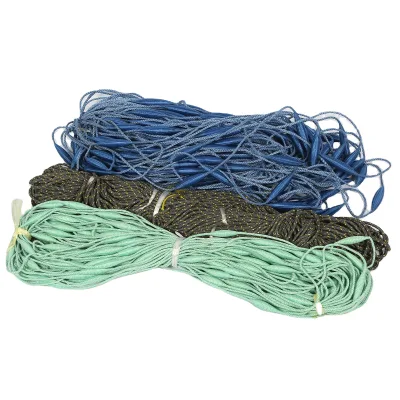
Listing signals regarding packaging and customization suggest a highly flexible supply chain capable of adapting to diverse buyer needs. Products are frequently offered with customizable colors, lengths, and packing methods, ranging from simple bags to coils wrapped in PP bags. The availability of OEM and ODM services further indicates that suppliers are prepared to tailor the product to specific branding or functional requirements. However, buyers should treat these customization options as variables that may impact lead times and unit costs, ensuring that the final specification aligns with the intended use case without compromising the rope's structural integrity.
Technical Specifications to Verify
Verifying the technical specifications of UV-resistant fishing lead ropes begins with a rigorous assessment of the material composition, as the supplied data highlights both Polypropylene and Nylon as primary options. While Nylon is known for its high tenacity and elasticity, Polypropylene offers buoyancy and cost-effectiveness, but neither inherently guarantees UV resistance without specific treatment or additives. Buyers must explicitly request data on UV stabilizers or carbon black content, as the base material alone may degrade under prolonged sun exposure, leading to premature failure in critical fishing or mooring scenarios.
Diameter and strand configuration are equally critical parameters that define the rope's load-bearing capacity and handling characteristics. The market offers diameters from 1mm up to 160mm, with specific listings noting ranges like 3-30mm or 12-36mm, alongside strand counts that vary from 3 to 32. A buyer must match these specifications to the intended load and environmental conditions; for instance, a high-strand count braided rope may offer superior wear resistance and flexibility compared to a twisted rope of the same diameter. It is essential to confirm that the listed diameter and strand count correspond to the actual physical product, as discrepancies can lead to safety hazards in high-stress applications.
Compliance and Safety Documentation
Compliance and safety documentation for fishing lead ropes often include a mix of international and industry-specific certifications, though the availability of these documents varies by supplier. The observed data lists certifications such as GS, CE, CCS, ABS, GL, DNV, LR, and ISO9001:2008, which indicate a supplier's adherence to quality management systems and specific safety standards. However, buyers should not assume that every listed product carries all these certifications; instead, they must request specific test reports or certificates of conformity that validate the rope's performance against relevant marine safety standards and material safety requirements.
Safety documentation must also address the specific risks associated with UV degradation and mechanical failure in marine environments. While some listings mention "High Strength" and "Very Good" wear resistance, these are qualitative attributes that require quantitative backing through third-party testing. Buyers should verify that the supplier can provide evidence of tensile strength tests, elongation at break, and UV aging tests to ensure the rope will maintain its integrity over time. Without this documentation, the risk of relying on unverified performance claims increases, potentially leading to equipment failure and safety incidents during fishing or mooring operations.
Cost Drivers and Commercial Terms
Cost drivers for UV-resistant fishing lead ropes are heavily influenced by material selection, manufacturing complexity, and the degree of customization required. The use of high-tenacity Nylon or specialized UV-stabilized Polypropylene typically commands a higher price point compared to standard variants, while complex braided structures with high strand counts add to the production cost. Additionally, the observed price range of $0.18 to $6 per unit suggests that factors such as diameter, length, and packaging method significantly impact the final cost, requiring buyers to analyze the total cost of ownership rather than just the unit price.
Commercial terms, including Minimum Order Quantity (MOQ) and lead times, vary widely across the market and must be negotiated based on the buyer's volume and urgency. The observed MOQ ranges from 10 to 4000 units, indicating that suppliers cater to both small-scale buyers and large industrial purchasers. Lead times are noted as approximately 30 days for standard orders, but this can fluctuate based on the complexity of the customization and the supplier's current production capacity. Buyers should clarify these terms early in the negotiation process to avoid delays and ensure that the supply chain can meet their operational timelines.
Supplier Qualification and Quality Control
Supplier qualification for fishing lead ropes should focus on verifying the manufacturer's location, production capabilities, and quality control processes. The data indicates that many suppliers are based in China, with specific origins noted in regions like Baoying, Jiangsu, and Guangdong, which are known hubs for rope manufacturing. Buyers should assess the supplier's ability to maintain consistent quality across batches, particularly when dealing with customized specifications, and verify their adherence to ISO9001 standards if such certification is claimed.
Quality control measures must extend beyond the final product inspection to include raw material verification and in-process monitoring. Given the critical nature of UV resistance and strength, buyers should request details on the supplier's internal testing protocols, such as regular checks on tensile strength and UV stability. It is also advisable to conduct third-party inspections or audits, especially for large orders, to ensure that the delivered products match the agreed-upon specifications and that the manufacturing process is robust enough to prevent defects that could compromise safety.
Long-Term Procurement Checks
Long-term procurement checks for UV-resistant fishing lead ropes involve establishing a framework for continuous performance monitoring and supplier relationship management. Buyers should implement a system for tracking the performance of the ropes in real-world conditions, noting any signs of UV degradation, abrasion, or strength loss over time. This data is crucial for validating the supplier's claims and making informed decisions about future orders, ensuring that the selected products continue to meet the demanding requirements of fishing and marine applications.
Regular re-evaluation of supplier performance is essential to maintain a reliable supply chain and mitigate risks associated with quality inconsistencies. Buyers should schedule periodic reviews of the supplier's delivery times, product quality, and responsiveness to issues, using these insights to adjust procurement strategies as needed. By maintaining a proactive approach to supplier management and continuously verifying product performance, buyers can ensure the long-term reliability and safety of their fishing lead rope inventory, safeguarding their operations against potential failures.
FAQs
What materials are used for fishing lead ropes?
Fishing lead ropes are typically constructed from high-tenacity nylon or polypropylene (PP) materials. These synthetic fibers provide the necessary strength and durability for marine applications. The choice between nylon and PP depends on specific usage requirements such as buoyancy and abrasion resistance. Manufacturers often offer these materials in various strand configurations to meet diverse fishing and mooring needs.
Can I customize the color of the fishing rope?
Yes, customization of the rope color is available for most orders. Buyers can request specific colors or opt for standard options like white or custom coloration. This flexibility allows for better visibility in water or alignment with brand requirements. Suppliers typically accommodate these requests as part of their customization services, ensuring the product meets specific aesthetic or functional preferences.
What certifications are required for marine fishing ropes?
Marine fishing ropes often require certifications such as CCS, ABS, GL, DNV, LR, GS, and CE. These standards ensure the rope meets international safety and quality benchmarks for maritime use. Additionally, ISO9001 certification indicates adherence to quality management systems. Buyers should verify specific certification requirements based on their target market and intended application to ensure compliance and safety.
What is the typical lead time for production?
The typical lead time for production is approximately 30 days. This duration allows for manufacturing, quality control, and preparation for shipment. Buyers should plan their procurement schedules accordingly to avoid delays. Expedited options may be available depending on the supplier's capacity and the specific order details, but standard processing generally follows this timeframe.
What diameter sizes are available for braided ropes?
Braided fishing ropes are available in a wide range of diameters, typically from 1mm to 160mm. Specific product lines may offer narrower ranges, such as 3mm to 30mm or 12mm to 36mm. This variety allows buyers to select the appropriate strength and thickness for their specific fishing or mooring applications. Custom diameters may also be available upon request.
How are the ropes packaged for shipping?
Ropes are commonly packaged in coils with PP bags or individual PP bags. This packaging method protects the product from moisture and damage during transit. Some suppliers offer packing as per the buyer's request to accommodate specific logistical needs. The packaging ensures the ropes remain clean and organized, facilitating easy handling and storage upon arrival at the destination.