Source Vapor Barrier Aluminum Foil Insulation for Food, Agriculture, and Interior Tiles
Compare 30 listings of Vapor Barrier Aluminum Foil Insulation featuring heat insulation and fire resistance. Buyers can evaluate specifications like thickness, reflectivity, and usage for food, agriculture, and tile applications.
Key considerations
Products List


Thermal Foil Aluminum Foil Laminated Fiberglass Cloth for Insulation Board
$0.27 - $1.58
MOQ: 100 Square Meters


Used to Resists Conductive Heat Transmission Vapor Barrier Aluminum Foil
$0.25 - $0.31
MOQ: 5000 Square Meters

Heat Resistant Aluminum Foil Vapor Barrier Aluminum Foil Double Sided Foil
$0.25 - $0.31
MOQ: 5000 Square Meters

Excellent Fire Resistant Thermal Barrier Foil Aluminum Thermal Reflective Foil Insulation
$0.25 - $0.31
MOQ: 5000 Square Meters

Most Pupular Heat Resistant Aluminum Foil Vapor Barrier Aluminum Foil Double Foil Insulation
$0.25 - $0.31
MOQ: 5000 Square Meters


Reinforced Thermal Control Aluminum Insulation Foil Vapor Barrier
$0.25 - $0.60
MOQ: 10000 Square Meters

Reinforced Thermal Control Aluminum Insulation Foil Vapor Barrier
$0.25 - $0.60
MOQ: 10000 Square Meters

Reinforced Aluminum Vapor Barrier Foil Thermal Insulation for Walls and Roofs
$0.25 - $0.60
MOQ: 10000 Square Meters

Aluminum Insulation Foil Reinforced Thermal Control Vapor Barrier
$0.25 - $0.60
MOQ: 10000 Square Meters

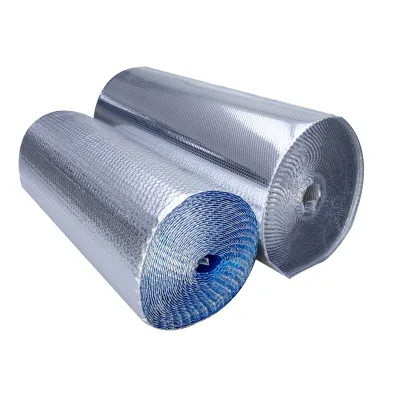


Radiant Barrier Aluminium Foil Roof Insulation Heat Shield Foil Bubble Insulation
$0.75 - $0.86
MOQ: 1000 Square Meters



Comprehensive Sourcing Guide
Vapor Barrier Aluminum Foil Insulation Sourcing Guide
Procuring Vapor Barrier Aluminum Foil Insulation requires a disciplined approach to material verification, as the product category spans diverse construction and industrial applications. Buyers must distinguish between basic reflective barriers used for thermal control and high-performance vapor retarders designed for moisture management in building envelopes. The core value proposition of these materials lies in their ability to reflect radiant heat while simultaneously blocking water vapor transmission, making them critical components in energy-efficient construction and industrial processing. Sourcing decisions should be driven by a clear understanding of the specific environmental conditions the insulation will face, including temperature extremes, humidity levels, and mechanical stress during installation.
This guide focuses on evidence-based procurement strategies for aluminum foil fiberglass fabric and related composite materials. It draws upon observed market data and trusted industry knowledge to help buyers navigate the complexities of material specifications, compliance requirements, and supplier qualification. By adhering to the principles outlined herein, procurement teams can mitigate risks associated with substandard materials, ensure regulatory compliance, and optimize total cost of ownership. The following sections provide a structured framework for evaluating suppliers, verifying technical performance, and establishing robust commercial terms for long-term supply agreements.
Product Scope and Observed Listing Signals
The market for Vapor Barrier Aluminum Foil Insulation includes a wide range of composite structures, typically consisting of aluminum foil laminated to a substrate such as fiberglass cloth, kraft paper, or scrim. Observed listings indicate that common constructions involve layers like 7-micron aluminum foil bonded to 200g E-fiberglass cloth, providing a balance of reflectivity and tensile strength. These materials are often available in various widths, ranging from 1 to 1.5 meters, and lengths that can extend up to 2000 meters or more, depending on the specific product model and application requirements. Buyers should note that the "basic level" layered construction often refers to simple laminates, whereas more complex structures may include additional functional layers like VMPET for enhanced barrier properties.
Listing signals also reveal significant variation in product features, including heat insulation capabilities, fire resistance ratings, and surface treatments such as lamination or coating. Some products are marketed with high reflectivity rates, up to 99%, which is crucial for radiant barrier applications, while others emphasize their role as vapor barriers with specific permeance ratings. The observed price range is broad, reflecting differences in material quality, thickness, and customization options. Buyers must carefully review product attributes to ensure that the listed specifications, such as grammage ranging from 100 to 500 GSM, align with their project’s structural and thermal performance needs.
Technical Specifications to Verify
When evaluating technical specifications, buyers should prioritize the verification of material composition and structural integrity. Key attributes to confirm include the thickness of the aluminum foil, which can vary from 7 to 32 microns, and the weight of the underlying substrate, such as fiberglass cloth or kraft paper. The tensile strength of the material is critical for installation durability, and buyers should request data on both tri-way and two-way scrim reinforcements if high mechanical strength is required. Additionally, the refractoriness of the material, often cited between 200-450°C for fiberglass-based products, should be verified to ensure suitability for high-temperature environments.
Other essential technical parameters include the R-value, which indicates thermal resistance, and the apparent density, which affects the material’s weight and handling characteristics. Buyers should also verify the surface treatment process, whether it is lamination or coating, as this impacts adhesion and durability. The presence of perforations, if required for specific ventilation or acoustic applications, should be clearly specified. It is also important to confirm the standard dimensions, such as width and length, and any custom sizing options, as these directly influence logistics and installation efficiency.
Compliance and Safety Documentation
Compliance with fire safety standards is a non-negotiable aspect of sourcing vapor barrier insulation. Buyers must verify that the product meets recognized fire resistance classifications, such as Class A, and is tested against standards like ASTM E84 or BS 476. These tests evaluate the flame spread and smoke developed indices, which are critical for building code compliance. Documentation should include detailed test reports from accredited laboratories, confirming that the material’s fire performance claims are substantiated by empirical data. Buyers should also check for certifications like ASTM, which may indicate adherence to specific material testing protocols.
In addition to fire safety, buyers should inquire about environmental and health certifications, although specific claims should be treated with caution unless explicitly supported by the supplier. While some suppliers may reference ISO 9001 or CE marking, these should be verified as current and applicable to the specific product line. Buyers should also assess the material’s potential for off-gassing or other environmental impacts, particularly for interior applications. Requesting a Material Safety Data Sheet (MSDS) is essential to understand the handling, storage, and disposal requirements for the insulation material.
Cost Drivers and Commercial Terms
The cost of Vapor Barrier Aluminum Foil Insulation is influenced by several factors, including the raw material prices for aluminum and fiberglass, the complexity of the lamination process, and the volume of the order. Observed MOQs range from 1 to 100,000 units, indicating that suppliers are flexible in accommodating both small and large orders. Buyers should negotiate pricing based on total volume, considering that larger orders may qualify for discounts. It is also important to clarify whether the quoted price includes packaging, such as shrink film, cartons, or pallets, as these can add to the overall cost.
Commercial terms should also address lead times, payment conditions, and warranty provisions. While specific lead times are not provided in the observed data, buyers should establish clear expectations for delivery schedules to avoid project delays. Warranties, which may range from 3 to 10 years depending on the product, should be explicitly stated in the contract. Buyers should also consider the cost of customization, such as logo printing or specific dimensional requirements, as these can impact the final price. Understanding the total cost of ownership, including installation and maintenance, is crucial for making informed procurement decisions.
Supplier Qualification and Quality Control
Supplier qualification begins with a thorough assessment of their manufacturing capabilities and quality management systems. Buyers should verify that the supplier has a proven track record in producing aluminum foil fiberglass fabrics and related insulation materials. Requesting samples for independent testing is a critical step to validate the supplier’s claims regarding material properties, such as reflectivity, tensile strength, and fire resistance. Buyers should also assess the supplier’s ability to provide consistent quality across batches, which is essential for large-scale projects.
Quality control processes should be transparent and well-documented. Buyers should inquire about the supplier’s inspection protocols, including in-process checks and final product testing. The use of standardized testing methods, such as those referenced in ASTM or other relevant standards, should be confirmed. Additionally, buyers should evaluate the supplier’s customer service and technical support capabilities, as these can be valuable resources during the installation and troubleshooting phases. Establishing a clear communication channel with the supplier can help resolve issues quickly and maintain project momentum.
Long-Term Procurement Checks
Long-term procurement success depends on continuous monitoring of supplier performance and market trends. Buyers should establish key performance indicators (KPIs) to track metrics such as on-time delivery, product quality, and responsiveness to issues. Regular audits of the supplier’s facilities and quality control processes can help ensure ongoing compliance with agreed-upon standards. Buyers should also stay informed about changes in building codes and industry standards that may affect the requirements for vapor barrier insulation.
Building a strong relationship with the supplier can lead to better pricing, priority service, and access to new product innovations. Buyers should consider diversifying their supplier base to mitigate risks associated with supply chain disruptions. Regular reviews of contract terms and performance data can help identify opportunities for improvement and cost savings. By maintaining a proactive approach to supplier management, buyers can ensure a reliable supply of high-quality Vapor Barrier Aluminum Foil Insulation for their projects.
FAQs
What is the fire resistance rating of this insulation?
The product achieves Class A fire resistance and meets ASTM E84 and BS 476 standards. This ensures high safety for interior and exterior tile applications while maintaining structural integrity under heat exposure.
Can I customize the logo and dimensions of the foil?
Yes, customization is available for logos and specific dimensions like width and length. You can request sizes ranging from 1.2 meters wide up to 500 meters long with tailored aluminum foil thickness options.
What is the reflective capability of the aluminum foil layer?
The reflective capability reaches up to 99% for heat insulation purposes. This high reflectivity is achieved through a construction featuring aluminum foil laminated onto fiberglass cloth for optimal thermal performance.
Which certifications does the vapor barrier insulation hold?
The product holds ASTM certification and complies with fire proof standards like ASTM E84. These verified attributes ensure the material meets international safety and quality requirements for industrial and agricultural uses.
How is the product packed for shipping and delivery?
Packaging options include shrink film, cartons, pallets, or loose rolls depending on order size. This flexible packing ensures safe transport while accommodating various industrial use cases and logistics requirements.
What is the warranty period for this fiberglass fabric?
The product comes with a warranty period of 3 to 10 years depending on the specific configuration. This coverage reflects the durability of the aluminum foil and fiberglass cloth structure used in construction.