Source VDE Certified Multi Core Cable for industrial, power, and telecommunication
Compare 30 listings of VDE Certified Multi Core Cable from verified Chinese manufacturers. Buyers can evaluate copper stranded conductors, PVC or rubber insulation, and voltage ratings ranging from 300/500V to 450/750V for diverse applications.
Key considerations
Products List


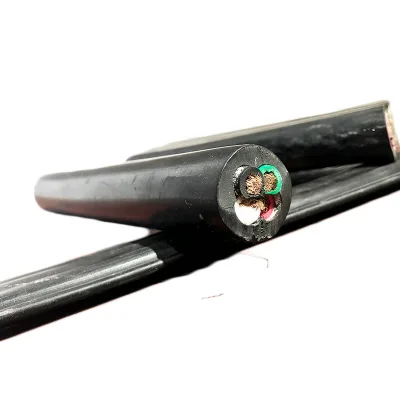
H05rr-F VDE Certified IEC 53 Rubber Insulated and Sheath Multi Cores Cable
$0.31 - $7.87
MOQ: 500 Meters

VDE Approved Robust 215 C UV Resistance TPE Coated Multicores Control Cable
$0.26 - $6.89
MOQ: 500 Meters




Comprehensive Sourcing Guide
Strategic Sourcing Guide for VDE Certified Multi-Core Cable
Navigating the global market for VDE certified multi-core cable requires a disciplined approach that balances technical performance with rigorous compliance verification. For procurement professionals, the term "VDE certified" serves as a critical filter, indicating that the product meets specific German safety and performance standards, which often exceed general international baselines. The sourcing landscape for these cables is diverse, with manufacturers offering a wide array of configurations ranging from low-voltage internal wiring to heavy-duty industrial power transmission. This guide outlines the essential factors buyers must evaluate to ensure the acquisition of high-quality, compliant, and cost-effective cabling solutions.
Technical Specifications and Conductor Architecture
The foundational element of any multi-core cable is its conductor architecture. In the context of VDE certified products, the conductor material is predominantly copper, selected for its superior conductivity and flexibility. Buyers should verify whether the cable utilizes stranded conductors, which are essential for applications requiring flexibility, such as internal wiring of electronic and electrical equipment or mobile machinery. The stranding process allows the cable to withstand repeated bending without breaking, a crucial attribute for dynamic applications.
Insulation and sheath materials are equally critical in defining the cable's operational envelope. While some variants utilize silicone rubber for high-temperature resistance, others rely on crosslinking materials or PVC for general-purpose applications. The rated voltage is a primary specification that dictates the cable's suitability for specific power systems. Common configurations include ratings of 300/500 V for general control and signal applications, as well as 450/750 V for more robust power distribution tasks. The physical shape of the wire is typically round, and the number of cores can vary significantly, with options ranging from 2 cores up to 4 cores or more, depending on the specific model designation such as H05SS-F or H03VVH2-F.
Compliance Verification and Certification Protocols
When sourcing VDE certified multi-core cable, the verification of certification status is the most critical step in the procurement process. The VDE (Verband der Elektrotechnik) mark is a recognized standard in Europe, but it is often accompanied by other certifications such as CE, RoHS, and ISO. A compliant product should display a certification profile that includes these markers, ensuring that the cable meets both safety and environmental requirements. Buyers must be aware that certifications like CCC (China Compulsory Certification) may also be present, particularly for products originating from China, indicating compliance with local and international safety norms.
The standard of production is another vital compliance metric. Manufacturers should adhere to standards such as RoHS and Reach, which restrict the use of hazardous substances. Furthermore, the factory management standard, often cited as ISO9001:2008 or similar iterations, indicates a commitment to consistent quality control processes. It is important to note that while some product listings may claim "VDE, RoHS, CE, ISO" certifications, buyers must request valid, up-to-date documentation for each specific batch. The absence of a valid certificate for a specific model, even if the supplier claims general compliance, can lead to significant regulatory hurdles during importation.
Cost Drivers and Pricing Variables
The pricing of multi-core cable is influenced by a complex interplay of material costs, manufacturing complexity, and order volume. The primary cost driver is the conductor material; since copper is a commodity with fluctuating market prices, the weight and cross-sectional area of the copper cores directly impact the final unit price. For instance, cables with larger cross-sections, such as those ranging from 1.5mm² to 35mm², will inherently cost more per meter than thinner gauges due to the higher volume of copper required.
Order quantity plays a significant role in determining the final cost. The observed Minimum Order Quantity (MOQ) in the market typically ranges from 100 to 10,000 units, depending on the supplier and the specific product configuration. Buyers purchasing in smaller quantities may face higher per-unit costs, while those committing to larger volumes can negotiate more favorable pricing tiers. Additionally, customization options, such as specific color requirements or unique sheath materials, can introduce additional costs. While the general price range in the market spans from 0.01 to 999 USD, this wide variance reflects differences in cable length, core count, and material quality rather than a single standardized price point.
Typical Applications and Performance Requirements
Multi-core cables certified to VDE standards are versatile and find applications across a broad spectrum of industries. In the telecommunications sector, these cables are used for data transmission and signal integrity, requiring low signal loss and high flexibility. In the construction industry, they serve as the backbone for internal wiring in buildings, where fire resistance and durability are paramount. Industrial applications often demand cables capable of withstanding harsh environments, including exposure to oils, chemicals, and mechanical stress.
The rated temperature of the cable is a key performance indicator for these applications. Many VDE certified cables are rated for temperatures up to 180°C, making them suitable for high-heat environments such as power stations or near industrial heating elements. The color coding of the cables, available in options like white, black, red, brown, yellow, and blue, aids in identification and safety during installation. Furthermore, the flame retardant properties of the insulation and sheath materials are essential for applications in public spaces or enclosed areas where fire safety is a regulatory requirement.
Supplier Evaluation and Operational Capacity
Selecting the right supplier involves more than just verifying certifications; it requires an assessment of their operational capacity and reliability. A key metric is the annual production capacity, which for established manufacturers can reach 300,000 kilometers. This capacity ensures that the supplier can meet large-scale demand without significant delays. Buyers should also evaluate the supplier's lead times for both sample delivery and mass production. Typical lead times for samples range from 3 to 5 days, while mass production delivery can vary from 15 to 30 days, or in some cases, 3 to 15 working days, depending on the order volume and complexity.
Packaging is another aspect of supplier evaluation that impacts logistics and product integrity. Cables are typically packed in cartons, reels, spools, or drums, with options for wooden or steel wooden drums for heavy-duty transport. The packaging must be robust enough to prevent damage during shipping, especially for long lengths such as 1000 feet per spool. Additionally, the availability of Original Design Manufacturing (ODM) services indicates a supplier's flexibility in customizing products to meet specific buyer requirements, a valuable attribute for specialized procurement needs.
Quality Control and Long-Term Procurement Considerations
Ensuring long-term reliability requires a robust quality control framework. Buyers should look for suppliers who conduct rigorous testing, including test voltage checks such as Core/Core: 4000 V and Core/Screen: 2000 V. These tests verify the insulation integrity and the cable's ability to withstand electrical stress without breakdown. The warranty period is another indicator of quality confidence; reputable suppliers often offer warranties of at least 10 to 15 years for proper use, reflecting their assurance in the product's durability.
Long-term procurement considerations also include the supplier's ability to maintain consistent quality over time. This involves monitoring the consistency of raw materials, such as the purity of the copper and the quality of the insulation compounds. Buyers should establish clear communication channels for addressing any quality issues that may arise post-delivery. Furthermore, the standard of production, including adherence to ISO9001:2008, ensures that the manufacturing process is standardized and repeatable, reducing the risk of defects.
Comparative Analysis of Cable Configurations
To assist in decision-making, the following table compares common multi-core cable configurations based on the provided specifications. This comparison highlights the differences in voltage ratings, materials, and certifications to help buyers select the most appropriate product for their specific needs.
| Feature | Configuration A (General Purpose) | Configuration B (High Temp/Industrial) | Configuration C (Telecom/Signal) |
|---|---|---|---|
| Model Designation | H05SS-F | H03VVH2-F | 1.5mm²-35mm² |
| Rated Voltage | 450/750 V | Low and Medium Voltage | 300/500 V |
| Insulation Material | Silicone Rubber | Rubber | Crosslinking |
| Sheath Material | PVC | Crosslinking | PVC |
| Conductor Type | Stranded | Flexible Conductor | Flexible Conductor |
| Certifications | RoHS, CE, ISO | CCC, CE, ISO, RoHS, VDE | VDE, RoHS, CE, ISO |
| Typical Application | Internal Wiring | Power Station, Industrial | Telecommunication, Computer |
| Warranty Period | At Least 10 Years | 15 Years At Least | Not Specified |
| Lead Time (Mass) | 15-30 Days | 3-15 Working Days | 15-30 Days |
This comparative overview underscores the importance of matching specific technical requirements with the correct cable configuration. While Configuration A offers a robust solution for general internal wiring with high-temperature resistance, Configuration B is better suited for demanding industrial environments with its crosslinking sheath and extended warranty. Configuration C, with its specific voltage rating and focus on signal integrity, is ideal for telecommunications and computer applications.
In conclusion, sourcing VDE certified multi-core cable requires a meticulous evaluation of technical specifications, certification validity, and supplier capabilities. By focusing on these core areas, buyers can mitigate risks and ensure the acquisition of high-quality cabling solutions that meet the rigorous demands of modern electrical and electronic systems. The integration of standardized testing, clear communication of requirements, and a thorough understanding of the supply chain dynamics will lead to successful procurement outcomes.
FAQs
What certifications are available for VDE Certified Multi Core Cable?
VDE Certified Multi Core Cable typically carries certifications including VDE, RoHS, CE, ISO, and CCC. These markers indicate compliance with German safety standards and environmental regulations, ensuring the product meets rigorous international norms for electrical safety and material purity.
Which conductor materials are used in these cables?
The conductor material is predominantly copper, often in a stranded configuration for flexibility. This choice ensures superior conductivity and allows the cable to withstand repeated bending, making it suitable for internal wiring of electronic equipment and dynamic industrial applications.
How is the insulation material selected for different applications?
Insulation materials vary by application, with options including silicone rubber for high temperatures up to 180°C and rubber for general use. Some variants utilize crosslinking materials or PVC sheaths to provide flame retardancy and durability for construction or power station environments.
Can I customize the color and packaging for bulk orders?
Yes, customization is available for colors such as white, black, red, and blue, as well as packaging formats like reels, spools, or drums. Suppliers often offer ODM services to meet specific buyer requirements for unique configurations and logistical needs.
What are the typical lead times for mass production?
Mass production delivery times generally range from 3 to 30 days depending on the order volume and complexity. Some suppliers offer faster turnaround of 3 to 15 working days, while standard production may take up to 30 days to ensure quality control.
What is the minimum order quantity for these cables?
The minimum order quantity typically ranges from 100 to 10,000 units, varying by supplier and specific product configuration. Buyers should verify the exact MOQ with the manufacturer, as larger volumes often secure more favorable pricing tiers and production slots.