Source Virgin 3D Printing PETG for Medical, Automotive, and Home Goods
Find 30 listings for Virgin 3D Printing PETG suitable for medical, automotive, and home goods applications. Buyers can compare specifications like diameter, temperature range, and packaging options from verified Chinese manufacturers offering ISO and GRs certifications.
Key considerations
Products List



Comprehensive Sourcing Guide
Strategic Sourcing Guide for Virgin 3D Printing PETG
The procurement of Virgin 3D Printing PETG (Polyethylene Terephthalate Glycol Modified) represents a critical decision point for manufacturers seeking a balance between mechanical strength, thermal stability, and processability. Unlike standard PET, the glycol modification introduces amorphous structures that enhance clarity and reduce brittleness, making it a preferred material for engineering applications where ABS might fail due to warping or PLA might fail due to low heat resistance. For buyers in the B2B sector, sourcing this material requires a disciplined approach that distinguishes between raw polymer pellets, filament spools, and specialized grades. The following guide outlines the essential technical, compliance, and operational factors necessary to secure a reliable supply chain for virgin PETG.
Technical Specifications and Material Attributes
Understanding the precise physical and chemical properties of virgin PETG is the foundation of any successful procurement strategy. The material is fundamentally a thermoplastic, meaning it softens upon heating and hardens upon cooling, a property that dictates its processing methods. In the context of 3D printing, the primary forming technology utilized is Fused Deposition Modeling (FDM). This process requires the material to be extruded into a filament with a highly consistent diameter, typically 1.75mm, to ensure smooth feeding through the printer nozzle.
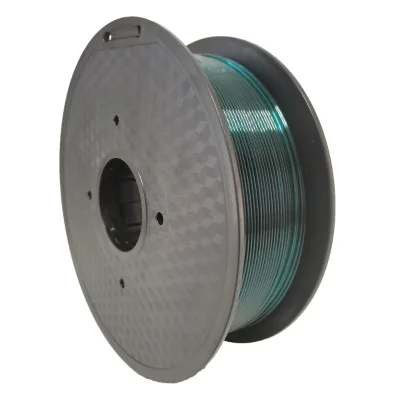
Buyers must verify that the specific product they are sourcing matches the required state for their application. While some raw materials may arrive as powder or in bulk bags, 3D printing applications almost exclusively require the material in a coiled filament state. The surface treatment of the filament should be smooth to prevent friction issues within the extruder. Key performance indicators for virgin PETG include high strength and heat resistance, which are superior to many standard thermoplastics. The material is often characterized by its transparency and impact resistance, alongside excellent processability.
When evaluating product models, buyers should look for specific identifiers that confirm the grade. For instance, models such as EFG-501 or generic designations like PETG 3D Filament indicate the specific formulation. The printing temperature range is a critical technical parameter; for high-quality virgin PETG, this typically falls between 170°C and 230°C. Deviations outside this range can lead to poor layer adhesion or thermal degradation. Furthermore, the material grade should be confirmed as "A Grade" to ensure the absence of recycled contaminants that could compromise the structural integrity of the final printed part.
Compliance, Certification, and Standard Verification
In the B2B environment, compliance is not merely a regulatory checkbox but a risk management tool. Buyers must rigorously verify the certifications held by potential suppliers to ensure the material meets industry standards. The most common certification observed in this sector is ISO, which indicates adherence to international quality management systems. However, for applications involving medical devices, automotive components, or consumer goods, additional certifications may be required.
Suppliers may claim compliance with standards such as PCR (Post-Consumer Recycled), PIR (Post-Industrial Recycled), or GRS (Global Recycled Standard). It is vital for buyers to understand that "virgin" material, by definition, does not contain recycled content. Therefore, if a supplier markets a product as virgin PETG but lists GRS or PCR certifications, the buyer must request clarification on the specific product batch. These certifications are typically relevant for recycled grades, and their presence on a virgin product listing may indicate a misunderstanding of the product category or a mislabeling of the inventory.
Product standards also encompass physical specifications. The diameter of the filament is a critical standard, with 1.75mm being the industry norm for most desktop and industrial printers. Packaging standards are equally important; the material is often supplied in 25kg bags, 800kg bags, or 1000kg jumbo bags for raw pellets, while filament is often boxed. Buyers should verify that the packaging protects the hygroscopic nature of PETG, which can absorb moisture from the air and degrade print quality. The origin of the product, often cited as China or specifically Jiangsu, should be cross-referenced with the supplier's ability to maintain consistent quality control across different batches.
Cost Drivers and Pricing Structures
The pricing of Virgin 3D Printing PETG is influenced by a complex interplay of raw material costs, processing complexity, and logistical factors. The observed price range for these products can vary significantly, from as low as $1 to as high as $1540, depending on the form factor, volume, and specific grade. This wide disparity is not indicative of quality variance alone but reflects the difference between bulk raw pellets, specialized engineering grades, and pre-packaged filament spools.
The Minimum Order Quantity (MOQ) is a primary driver of unit cost. The market observes MOQs ranging from 1 unit to 1000 units. For small-scale prototyping or R&D departments, an MOQ of 1 allows for low-risk testing but results in a higher per-unit cost. Conversely, large-scale manufacturing operations can leverage higher MOQs to negotiate better rates. Buyers must calculate the total cost of ownership, which includes not just the purchase price but also storage costs for bulk materials and the potential waste associated with filament spools that may degrade if not used quickly.
Payment terms also play a role in the financial structure of the procurement. Standard terms often include T/T (Telegraphic Transfer), which requires buyers to have established credit lines or upfront capital. The weight of the product, such as 1000g per spool or 14kg per roll, directly impacts shipping costs, which can be a significant portion of the total expense for international buyers. Buyers should request detailed quotes that break down the cost per kilogram or per unit to accurately compare suppliers. It is essential to note that prices are subject to market fluctuations in crude oil and petrochemical feedstocks, which are the primary inputs for PETG production.
Typical Applications and Industry Use Cases
Virgin PETG is a versatile material suitable for a broad spectrum of applications, ranging from general household items to specialized engineering components. The material's combination of toughness, clarity, and chemical resistance makes it ideal for applications where ABS is too brittle or PLA is too heat-sensitive. In the 3D printing industry, it is frequently used for prototyping functional parts that must withstand mechanical stress or moderate heat.
The industry applications for virgin PETG are diverse. In the medical sector, it is used for non-invasive devices and housing components that require sterilization compatibility. The automotive industry utilizes PETG for interior trim, prototypes, and non-structural components due to its impact resistance. For home goods and crafts, the material's ability to be printed with high detail and its aesthetic clarity make it a favorite for decorative items and custom fixtures.
A comparison of typical use cases highlights the material's adaptability:
| Application Sector | Key Requirements | Why PETG is Selected |
|---|---|---|
| Medical | Sterilization, Biocompatibility, Clarity | High chemical resistance and transparency allow for clear, durable housings. |
| Automotive | Impact Resistance, Heat Stability | Superior toughness compared to PLA and better heat deflection than standard ABS. |
| Consumer Goods | Aesthetics, Durability | Smooth surface finish and ability to be painted or glued easily. |
| Engineering | Precision, Layer Adhesion | Consistent extrusion properties ensure tight tolerances in functional prototypes. |
Buyers should also consider the "Specialty Plastics" category, where PETG may be modified with additives for specific properties like UV resistance or flame retardancy. The "General Plastics" category covers standard applications where cost and availability are the primary drivers.
Supplier Evaluation and Quality Control
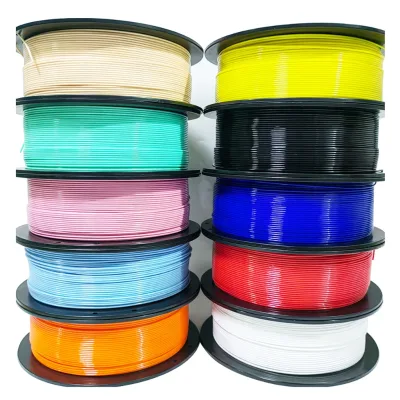
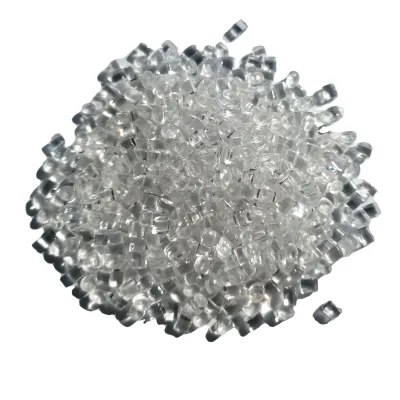
Selecting the right supplier is as critical as selecting the right material. Buyers should evaluate suppliers based on their ability to provide consistent product attributes. The "State" of the material is a key quality indicator; virgin PETG filament should be coiled and free of tangles, while raw pellets should be uniform in size and color. The color is typically white, but custom colors may be available. Buyers must verify that the "Surface Treatment" is smooth, as rough filaments can cause clogging in high-speed printers.
Quality control processes should be a prerequisite for any supplier engagement. Buyers should request documentation that confirms the material is indeed virgin and not a blend with recycled content, unless explicitly stated. The "Feature" of the material, such as being biodegradable or heat-resistant, must be verified through test data rather than marketing claims. For instance, if a supplier claims the material is biodegradable, this is a significant deviation from standard virgin PETG, which is generally not biodegradable. Such claims require immediate validation.
The "Customization" availability is another factor to consider. Some suppliers offer custom packaging, such as 25kg bags or 1000kg jumbo bags, while others provide pre-cut spools. Buyers should assess whether the supplier can meet specific packaging requirements to minimize waste and handling time. The "Net Weight" of the product must be accurate; discrepancies in weight can lead to production delays and cost overruns. Additionally, the "Industry" focus of the supplier, such as crafts or industrial manufacturing, can indicate their level of expertise in handling specific material grades.
Long-Term Procurement Considerations
Sourcing virgin PETG is not a one-time transaction but a long-term relationship that requires ongoing management. Buyers must consider the stability of the supply chain, particularly regarding the "Origin" of the product. Products originating from regions like Jiangsu, China, are common, but buyers should ensure that the logistics network can handle the lead times and potential disruptions. The "Lead Time" for production and shipping should be clearly defined to avoid stockouts.
Inventory management is crucial for thermoplastic materials like PETG, which are hygroscopic. Buyers must implement strict storage protocols to prevent moisture absorption, which can lead to print failures. The "Package" type, whether it is a box, PP packing, or a jumbo bag, should be suitable for long-term storage conditions. Buyers should also consider the "Pay" terms and their impact on cash flow, ensuring that the payment structure aligns with the company's financial policies.
Finally, buyers should plan for scalability. As production needs grow, the ability to increase order volumes without compromising quality or increasing costs significantly is essential. The "MOQ" flexibility of the supplier will play a major role in this scalability. By maintaining a disciplined approach to verification, quality control, and supplier evaluation, buyers can secure a reliable supply of Virgin 3D Printing PETG that meets the rigorous demands of modern manufacturing.
FAQs
What is the typical printing temperature range for Virgin 3D Printing PETG?
The printing temperature typically ranges from 170 to 230 degrees Celsius. This range ensures proper layer adhesion and prevents thermal degradation during the FDM forming process.
Which certification is commonly associated with virgin PETG suppliers?
ISO certification is commonly observed for these suppliers. This indicates adherence to international quality management systems, though specific recycled certifications may apply to different grades.
Can buyers find virgin PETG with customizable packaging options?
Yes, customization is available for packaging requirements. Suppliers offer options such as 25kg bags, 800kg bags, or 1000kg jumbo bags to suit different volume needs.
How is the filament state described for 3D printing applications?
The material is typically supplied in a coiled state for 3D printing. This form ensures smooth feeding through the extruder nozzle during the FDM process.
What is the standard diameter for virgin PETG 3D filament?
The standard diameter is 1.75mm. This dimension is the industry norm for most desktop and industrial 3D printers to ensure consistent extrusion.
Which product origin is frequently listed for virgin PETG materials?
Products are frequently listed as originating from China, specifically Jiangsu. Buyers should verify logistics capabilities when sourcing from these specific regional locations.