Source Walking Dinosaur Toy for promotions, gifts, and education
Compare 30 Walking Dinosaur Toy options from Shantou suppliers with features like battery power, sound, and light. These cartoon animal toys suit ages 3-8 and include OEM services for diverse promotional needs.
Key considerations
Products List


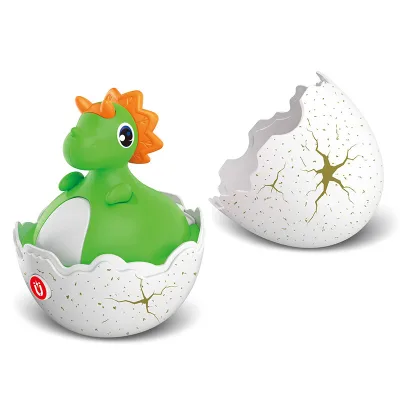
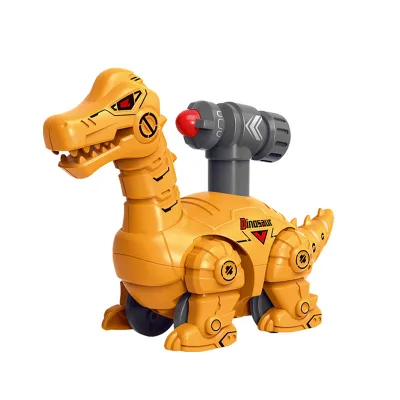


Wholesale Remote Control Dinosaur Animal Toy Walking Dinosaur T-Rex Toys with Spray
$10.60 - $10.80
MOQ: 50 Pieces


Comprehensive Sourcing Guide
Strategic Sourcing Guide for Walking Dinosaur Toys
The global market for interactive children's toys remains robust, with specific demand for animated figures that mimic biological movement. When sourcing a Walking Dinosaur Toy, buyers must navigate a complex landscape of mechanical engineering, safety compliance, and supply chain logistics. This guide provides an evidence-based framework for procurement professionals to evaluate potential suppliers and products, focusing on the specific attributes observed in current market listings while adhering to strict verification protocols.
Technical Specifications and Mechanical Design
The core functionality of a Walking Dinosaur Toy relies on the integration of power sources, motor systems, and structural design. Based on observed product data, the market offers a diverse range of mechanical configurations. Some units are explicitly non-power-operated, suggesting they may rely on pull-back mechanisms or manual manipulation, while others are battery-powered, utilizing specific configurations such as two AAA batteries which are often included in the package. The presence of "Multiple Movable Joints" is a critical technical specification for high-quality models, allowing for a more realistic gait and articulation that enhances the "Funny" and "Promotion" usage scenarios observed in current listings.
Size varies significantly across the product spectrum, ranging from compact dimensions like 623cm to large-scale figures measuring up to 653475cm. The material composition is predominantly plastic, a standard choice for durability and cost-efficiency in mass production. However, the specific density and type of plastic used are not universally standardized in the provided data, requiring buyers to request material safety data sheets (MSDS) for each batch. The product models identified, such as RFD420885, RFD261024, and NH700667, indicate a high volume of SKUs, suggesting that customization is a standard capability for suppliers in this sector. The "Style" of these toys often leans towards "Cartoon Toy" or "Chinese" aesthetic designs, with specific "Animal" shapes and "Dinosaur" types being the primary categories.
Compliance and Certification Verification
Safety compliance is the most critical factor in the procurement of toys intended for children aged 3-8 years. The observed listings frequently cite "CE" certification, which is a mandatory requirement for products entering the European Economic Area. Furthermore, some product entries explicitly mention "ENASTM,CE" as a combined certification status, indicating adherence to both European (EN) and American (ASTM) safety standards. It is vital to distinguish between general claims and verified test reports. While background knowledge often references ASTM F963 and EN71 as the governing standards for toy safety, the specific product data provided confirms the presence of these certifications in specific listings but does not guarantee that every unit in a supplier's catalog meets them without independent verification.
Buyers must verify that the "Standard" listed in product descriptions, such as "0.256/cbm" or "10522cm," refers to packaging volume or physical dimensions rather than a safety standard. Confusion between packaging metrics and safety compliance is a common pitfall. The "Toy Department" classification often targets "Girls," but the "Dinosaur" type appeals to a broad demographic. When evaluating a supplier, procurement teams should request current test reports from accredited laboratories that specifically validate the mechanical safety of the walking mechanism, ensuring that no small parts can be detached during the "Pressed/Sound/Light" functions. The "Service" options listed, including "OEM Service" and "Design Service," imply that suppliers can tailor the product to meet specific regional regulatory requirements, but the final certification must always be confirmed for the specific batch being ordered.
Cost Drivers and Pricing Structures
The pricing for walking dinosaur toys exhibits a wide variance, with observed ranges spanning from $0.03 to $18.00 USD. This significant spread is driven by several key factors, primarily the complexity of the mechanical design, the scale of the unit, and the level of customization. The lower end of the price spectrum likely corresponds to smaller, simpler units with basic functionality, such as the NH700667 model with dimensions of 4.52.54.5cm. In contrast, the higher price points are associated with larger, more complex units like the RFD349213, which has a box size of 916261cm and features advanced functions like sound and light.
Minimum Order Quantity (MOQ) is another substantial cost driver, with observed ranges from 10 to 15,000 units. Suppliers with lower MOQs may charge a premium per unit to cover setup costs, while high-volume orders benefit from economies of scale. The "Customization" attribute being available suggests that buyers can negotiate pricing based on branding requirements, such as "Buyer Label Service," which may incur additional fees. Packaging costs also influence the final price; options range from simple "OPP Bag" to more premium "Display Box" or "Carton" packaging. The origin of the products, consistently listed as "Shantou" or "China," indicates a concentration of manufacturing in a specific region known for toy production, which can affect logistics costs and lead times. Buyers should analyze the total landed cost, including shipping, duties, and insurance, rather than focusing solely on the unit price.
Typical Applications and Market Segmentation
Walking dinosaur toys serve multiple applications beyond simple play. The "Usage" attribute explicitly lists "Funny" and "Promotion," highlighting their dual role as entertainment products and marketing tools. In the promotional sector, these toys are often used as giveaways at trade shows, children's events, or as part of brand campaigns. The "Style" and "Shape" attributes, such as "Cartoon Toy" and "Animal," make them highly adaptable for various branding initiatives. The "Age" range of 3-8 years defines the primary target demographic, ensuring that the product is suitable for early childhood development and play.
The "Toy Department" classification of "Girls" suggests a specific marketing angle, though the "Dinosaur" type often transcends gender stereotypes. The "Function" of "Pressed/Sound/Light" adds an interactive layer that increases engagement and perceived value. For retailers, these features are essential for driving sales in competitive toy aisles. The "Service" options, including "Design Service," allow companies to create exclusive models that differentiate their offerings from generic competitors. Whether used for personal gifting, retail sales, or corporate branding, the versatility of the Walking Dinosaur Toy makes it a valuable asset in the toy industry.
Supplier Evaluation and Operational Capabilities
Evaluating a supplier for walking dinosaur toys requires a deep dive into their operational capabilities and track record. The availability of "Customization" and "OEM Service" indicates that suppliers are capable of adapting their production lines to meet specific buyer requirements. However, buyers must verify the supplier's capacity to handle large volumes, given the observed MOQs up to 15,000 units. The "prod_packing" methods, ranging from "OPP Bag" to "Display Box," suggest flexibility in packaging solutions, which is crucial for logistics and retail presentation.
The "prod_origin" being consistently "Shantou" or "China" points to a specific manufacturing hub. Buyers should investigate the specific factory location within this region to assess logistics efficiency and potential risks. The "Standard" of "ENASTM,CE" for some models indicates a commitment to international quality standards, but this must be verified for the specific supplier. The "Feature" of "Multiple Movable Joints" requires a supplier with precise molding and assembly capabilities. Buyers should request samples to test the durability of the joints and the reliability of the "Battery" system, specifically the "AAA*2" configuration mentioned in some listings.
Quality Control and Long-Term Procurement
Maintaining quality in the production of walking dinosaur toys is essential to prevent product failures and safety incidents. The "Function" involving "Sound/Light" and "Pressed" mechanisms introduces electronic components that can fail if not properly tested. Quality control protocols should include rigorous testing of the "Battery" compartment for secure closure and the "Movable Joints" for wear and tear. The "Standard" of "0.256/cbm" or similar volumetric data highlights the importance of consistent packaging to optimize shipping costs and prevent damage during transit.
Long-term procurement considerations involve building a relationship with suppliers who can maintain consistent quality over multiple production runs. The "Service" options like "Buyer Label Service" suggest that suppliers are open to long-term partnerships involving branding and design collaboration. Buyers should establish clear quality acceptance criteria based on the observed specifications, such as the "Size" categories of "Light" or "Small." Regular audits and third-party inspections are recommended to ensure that the "Certification" status remains valid and that the "Material" quality does not degrade over time. By focusing on these critical areas, buyers can secure a reliable supply chain for walking dinosaur toys that meets both safety standards and market demands.
Comparative Analysis of Product Attributes
To facilitate decision-making, the following table summarizes key attributes observed in the current market data for walking dinosaur toys. This comparison highlights the diversity in specifications and helps buyers identify products that align with their specific procurement needs.
| Attribute Category | Observation A | Observation B | Observation C |
|---|---|---|---|
| Product Model | RFD420885 | RFD349213 | NH700667 |
| Dimensions | 10522cm | Box: 916261cm | 623cm |
| Power Source | Not Power-Operated | Battery (AAA*2) | Battery (AAA*2) |
| Certification | CE | ENASTM, CE | CE |
| Packing | Carton | Box | OPP Bag |
| Usage | Funny | Funny, Promotion | Funny |
| Target Age | 3-8 Years | 3-8 Years | 3-8 Years |
| Origin | Shantou | China | China |
This table illustrates that while the core function remains consistent, the execution varies widely. Buyers must select the model that best fits their budget, target audience, and logistical constraints. The presence of "CE" and "ENASTM" across different models suggests a baseline for safety, but the specific dimensions and power requirements will dictate the final selection. By carefully analyzing these attributes, procurement professionals can make informed decisions that balance cost, quality, and compliance.
FAQs
What certifications do walking dinosaur toys have?
Many models carry CE certification, while some listings explicitly state ENASTM and CE compliance. Buyers must verify specific test reports for each batch rather than assuming all units meet these standards without independent validation.
Which power options are available for these toys?
Products range from non-power-operated models to battery-powered units using two AAA batteries. The specific configuration, such as included batteries, varies by model and should be confirmed before ordering to ensure functionality.
Can suppliers customize these walking dinosaur toys?
Yes, customization is available including OEM services, design assistance, and buyer label services. Suppliers can adapt packaging and branding, but specific MOQs and lead times will vary based on the level of customization required.
How does the price range vary for these toys?
Prices span from 0.03 to 18 USD depending on size, complexity, and customization. Smaller units like the 6*2*3cm model cost less, while larger figures with sound and light features command higher prices.
What is the typical age range for these toys?
The primary target demographic is children aged 3 to 8 years. This age group aligns with the safety standards and mechanical design features observed in the current product listings for walking dinosaur toys.
Which packaging types are used for these products?
Packaging options include OPP bags, display boxes, and cartons depending on the specific model. The choice affects shipping costs and retail presentation, so buyers should specify their preferred packaging method during the sourcing process.