Source Waterproof Fireproof Stone Wall Panel for offices, hotels, and homes
Explore 30 listings for the Waterproof Fireproof Stone Wall Panel suitable for offices, hotels, and residential renovations. Buyers can compare specifications like thickness, dimensions, and fire resistance ratings to find the right solution for their projects.
Key considerations
Products List


Waterproof Fireproof PVC Siding Panel Interior Wall PVC Stone Plastic Wall Panel
$1.80 - $2.50
MOQ: 1000 Square Meters

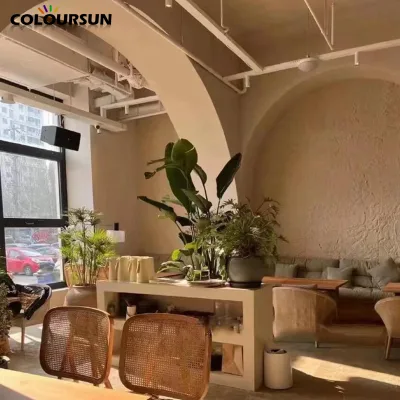


Waterproof and Flame-Retardant Flexible Stone Travertine Wall Panels
$7.10 - $8.30
MOQ: 200 Square Meters


Waterproof Flexible Stone Wall Panel for Exterior Building Cladding
$2.63 - $4.90
MOQ: 200 Square Meters


Comprehensive Sourcing Guide
Strategic Sourcing Guide for Waterproof Fireproof Stone Wall Panels
The global construction and interior design markets have witnessed a significant shift toward high-performance cladding materials that combine aesthetic versatility with rigorous safety standards. Among these, waterproof fireproof stone wall panels have emerged as a critical solution for commercial and residential projects requiring durability, moisture resistance, and flame retardancy. Sourcing these panels requires a disciplined approach that distinguishes between genuine engineered stone composites and standard PVC alternatives, while carefully navigating the complex landscape of technical specifications, supplier capabilities, and compliance requirements. This guide provides a structured framework for buyers to evaluate potential suppliers and select products that meet specific project demands without relying on unverified marketing claims.
Understanding Material Composition and Technical Specifications
The foundation of a successful procurement strategy lies in a precise understanding of the material composition. The term "stone wall panel" in the current market often refers to two distinct categories: flexible stone composites and rigid PVC panels. It is essential to verify the specific material formulation before proceeding. High-confidence data indicates that some products are manufactured from "stone powder and modified clay-made" materials, offering a unique balance of flexibility and structural integrity. These panels are characterized by a thickness range of 4-6mm, which allows for installation on curved surfaces without cracking, a feature described as "soft, anti-crack, good, 3d ceramic wall tile."
Conversely, other products in the same category may utilize PVC as the primary matrix. These panels often feature thicknesses ranging from 16mm to 80mm, with specific models available in dimensions such as 1200mm by 600mm. The thickness variation is a critical cost and performance driver; thinner panels (4-6mm) are typically designed for decorative overlays, while thicker variants (16-80mm) may serve as structural or heavy-duty cladding. Buyers must scrutinize the "prod_model" and "prod_standard" fields to ensure the dimensions align with the project's architectural requirements. For instance, standard sizes like 1220620300mm or 600x1200mm are common, but customizable lengths are also available in the market. The "Cross Section" of the panel, often described as "Square Hole Wallboard," can significantly impact insulation properties and acoustic performance, necessitating a review of the cross-sectional profile before finalizing an order.
Compliance, Certification, and Safety Standards
Safety compliance is non-negotiable when sourcing fireproof and waterproof building materials. The core keyword explicitly demands fire resistance, and verified product attributes confirm that many panels possess "Flame Retardant Properties" and are explicitly marked as "Fireproof." However, buyers must not assume that all listed products meet international safety benchmarks without verification. While background information mentions certifications such as CE, RoHS, and FSC, these should be treated as potential attributes rather than guaranteed facts for every supplier.
Procurement teams must request specific test reports from the supplier to validate fire resistance claims. The "Performance" attribute often cites "Flame Retardant Properties," but the specific rating (e.g., Class A, B1, or equivalent local standards) must be confirmed. Similarly, the "Waterproof" and "Moisture-Proof" characteristics are critical for applications in high-humidity environments like bathrooms, kitchens, or exterior facades. Buyers should verify that the "Characteristic" list includes "Waterproof+Eco-Friendly" and that the material does not degrade under prolonged moisture exposure. When evaluating suppliers, ask for documentation proving that the "Fire-Resistance" claim is backed by third-party testing results, as this is a primary differentiator in the market. Do not rely solely on the "Advantage" field listing "Light Weight, Fireproof+Waterproof" as a substitute for certified test data.
Cost Drivers and Pricing Dynamics
The pricing of waterproof fireproof stone wall panels is influenced by a complex interplay of material costs, manufacturing complexity, and order volume. The observed market price range spans from $0.40 to $33.00 USD per unit, a variance that reflects differences in material composition, thickness, and brand positioning. Thinner, flexible stone panels (4-6mm) generally occupy the lower end of the price spectrum, while thicker, rigid PVC panels or those with specialized 3D effects command higher prices.
The Minimum Order Quantity (MOQ) is another significant cost driver, with observed ranges extending from 10 to 5,000 units. Suppliers with lower MOQs may charge a premium per unit due to the inefficiencies of small-batch production, whereas larger orders often benefit from economies of scale. Buyers must also consider the "prod_packing" method; options range from "Carton Packing" to "Standard Pakage" and specific configurations like "50pieces one cartons." Efficient packaging reduces shipping costs and minimizes the risk of damage during transit, which can indirectly affect the total landed cost. Additionally, the "Project Solution Capability" offered by some suppliers, such as providing a "Total Solution for Projects," may include design services or installation guidance, which can add value but also influence the overall price structure.
Typical Application Scenarios and Design Versatility
The versatility of these panels makes them suitable for a wide array of application scenarios. The data indicates usage in "Office/Hotel/Household/Public/Renovation" settings, highlighting their adaptability to both new construction and retrofit projects. The "Design Style" is predominantly "Modern," often featuring "3D" special effects that add depth and texture to interior spaces. This aesthetic flexibility allows architects to achieve high-end looks without the weight and cost of natural stone.
Specific applications include "Apartment" renovations and public spaces where fire safety is paramount. The "Function" of being "Moisture-Proof" makes these panels ideal for wet areas, while the "Light Weight" characteristic reduces the structural load on building frames. For commercial projects, the "After-Sale Service" of "Online Technical Support" ensures that installation issues can be resolved quickly, minimizing downtime. The "Stone Name" being "Flexible Stone" suggests that these panels can be used on curved walls or columns, expanding the design possibilities beyond flat surfaces. Buyers should match the panel's "Application Scenarios" with their specific project needs, ensuring that the chosen thickness and finish are appropriate for the intended environment.
Supplier Evaluation and Operational Capabilities
Evaluating suppliers requires a focus on their operational capabilities and geographic location. The "Place of Origin" is a key indicator, with major manufacturing hubs identified in "Linyi, Shandong" and "Guangdong, China." These regions have established supply chains for building materials, but buyers should verify the specific factory's capacity to meet their volume and timeline requirements. The "Brand Name" (e.g., COLOURSUN) can be a proxy for quality consistency, but it should not be the sole deciding factor.
Suppliers offering "Customization" or "Non-Customized" options provide different levels of flexibility. For unique projects, "Customized" panels with specific dimensions or colors (15 available colors) may be necessary. However, customization often leads to longer lead times and higher costs. Buyers should assess the supplier's "Project Solution Capability" to determine if they can handle complex orders. The availability of "Online Technical Support" and "Other" after-sale services indicates a commitment to customer satisfaction. When comparing suppliers, prioritize those with a proven track record in the specific material type (stone powder vs. PVC) and those who can provide clear communication regarding production status and shipping logistics.
Quality Control and Long-Term Procurement Considerations
Ensuring long-term value requires a robust quality control (QC) strategy. Buyers must verify that the "Thickness" is consistent across the batch, as variations can affect the installation process and final appearance. The "Single package size" of 120x60x0.6 cm is a standard metric that should be checked against shipping constraints. Quality control should also extend to the "Cross Section" and "Stone Form," ensuring that the "Big Slab" or flexible forms are free from defects such as cracks or delamination.
Long-term procurement considerations include the durability of the "Fire-Resistance" and "Waterproof" properties over time. While initial tests may show compliance, buyers should inquire about the material's resistance to UV degradation, temperature fluctuations, and chemical exposure. The "Characteristic" of being "Eco-Friendly" is a growing concern for modern projects, and suppliers should be able to provide data on the environmental impact of their production processes. Finally, the "After-Sale Service" should include warranty terms that cover potential defects, ensuring that the investment is protected over the lifespan of the building. By focusing on these critical areas, buyers can secure a reliable supply of high-quality waterproof fireproof stone wall panels that meet both immediate project needs and long-term performance expectations.
FAQs
What materials are used for waterproof fireproof stone wall panels?
Some panels are made from stone powder and modified clay, while others use PVC as the primary matrix. The material choice determines flexibility and thickness, with options ranging from 4mm to 80mm depending on the specific product model and application requirements.
Which thickness options are available for these wall panels?
Thickness varies significantly between product types, with flexible stone panels typically ranging from 4mm to 6mm. Rigid PVC variants offer thicker options including 16mm, 30mm, 50mm, 60mm, and 80mm to suit different structural and decorative needs.
Can these panels be customized for specific project dimensions?
Yes, customization is available for certain models, allowing for specific lengths and widths tailored to project needs. However, some standard models like S-01 or JHPU26 are offered in fixed dimensions such as 1200mm by 600mm without modification.
What are the standard packaging methods for these wall panels?
Packaging typically involves carton packing, with some suppliers offering standard packages or specific configurations like 50 pieces per carton. The exact packing method depends on the supplier and the specific product model being ordered.
Where are these waterproof fireproof stone wall panels manufactured?
Manufacturing locations are primarily in China, with specific hubs identified in Linyi, Shandong, and Guangdong. Buyers should verify the exact place of origin for each supplier to ensure alignment with logistics and quality expectations.
What fire resistance properties do these panels possess?
Many panels explicitly feature flame retardant properties and are marketed as fireproof. While this is a common attribute, buyers must request specific third-party test reports to verify the exact fire resistance rating for their specific project safety requirements.
What is the price range for these wall panels?
The observed market price range spans from 0.40 to 33.00 USD per unit. This wide variance reflects differences in material composition, thickness, brand positioning, and order volume, with thinner flexible panels generally costing less than thicker rigid options.