Source Waterproof Hard Retractable Tonneau Cover for Ford, Nissan, and GWM
Explore 30 listings for the Waterproof Hard Retractable Tonneau Cover compatible with Ford Ranger, Nissan, and GWM models. Buyers can compare aluminum and PVC options, installation methods, and lead times from verified Chinese manufacturers.
Key considerations
Products List


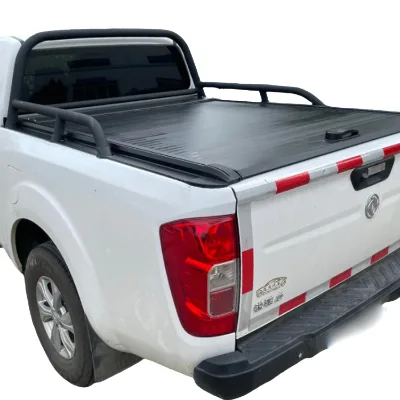


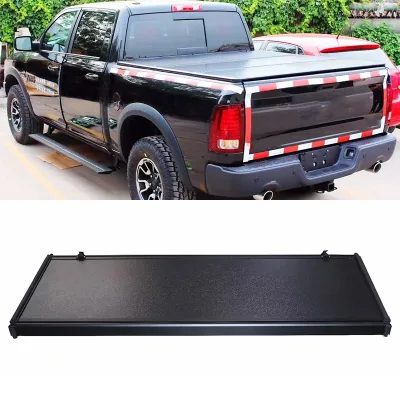
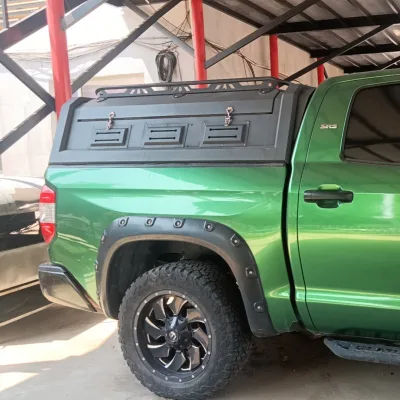


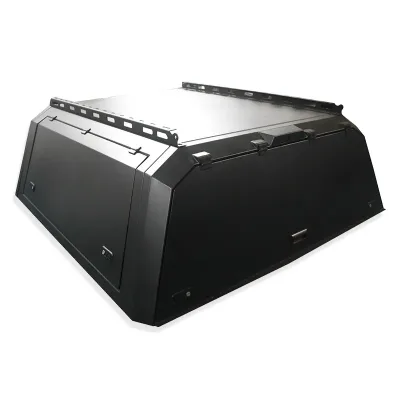
Comprehensive Sourcing Guide
Strategic Sourcing Guide for Waterproof Hard Retractable Tonneau Covers
The global automotive aftermarket continues to demand robust, weather-resistant protection for pickup truck beds, with waterproof hard retractable tonneau covers emerging as a premium segment. For B2B procurement professionals, navigating this market requires a disciplined approach to verifying technical claims, understanding supply chain variables, and ensuring compliance with international standards. The following guide synthesizes observed market data and product attributes to provide a framework for sourcing these specific components without relying on unverified marketing assertions.
Technical Specifications and Material Composition
When evaluating waterproof hard retractable tonneau covers, the primary differentiator lies in the material composition and the mechanical operation of the unit. Based on available product data, the market offers distinct variations in construction. A significant portion of hard retractable units utilizes Aluminum or Aluminum Alloy as the primary structural material. This choice is critical for balancing weight reduction with the rigidity required to maintain a watertight seal under pressure. In contrast, other segments of the market may feature PVC-coated fabrics or soft rolling mechanisms, which, while offering flexibility, do not meet the specific "hard" classification required for maximum security and durability in harsh environments.
The operational mechanism is another vital specification. The observed data indicates that these units often feature a manual operation system, where the user physically retracts the cover into a canister at the front of the truck bed. This contrasts with electric or automated systems, which introduce additional points of failure and higher cost structures. The "Hard Tri Fold" and "Retractable" designations suggest specific folding geometries. Buyers must verify whether the unit is a true retractable design that rolls into a canister or a folding design that stacks, as the waterproofing integrity differs significantly between these two mechanical approaches. The presence of a "Hard Type" classification implies a rigid shell, which is essential for the "Waterproof" and "UV Protection" functions observed in the product attributes.
Compliance, Certification, and Safety Standards
In the B2B sector, certification is not merely a marketing badge but a prerequisite for market access and liability protection. The supply chain for tonneau covers in this category demonstrates a mix of recognized international certifications. Observed data points to the presence of TUV, ISO, and CE certifications among various listings. TUV certification often indicates rigorous testing for safety and quality, while ISO standards suggest adherence to systematic quality management processes. The CE mark is particularly relevant for products intended for the European market, signifying compliance with health, safety, and environmental protection standards.
However, procurement teams must exercise caution. The presence of a certification claim on a product listing does not guarantee that every unit in a specific batch meets that standard. Buyers should request valid, current certificates from the supplier and verify the scope of the certification. For instance, does the ISO certification cover the manufacturing facility or just the product design? Similarly, while "CE" is listed, the specific directive (e.g., Low Voltage Directive, Machinery Directive) must be confirmed. Relying solely on the presence of these keywords without documentary proof exposes the buyer to regulatory risks. Additionally, the "OEM Service Accepted" and "Support OEM" attributes indicate that suppliers are capable of customizing products to meet specific regulatory requirements of the buyer's target market, but this must be explicitly defined in the contract.
Cost Drivers and Economic Variables
The pricing structure for waterproof hard retractable tonneau covers is influenced by several dynamic factors, primarily material costs, customization levels, and order volume. The observed price range in the market spans from $1 to $2,100 USD, a variance that reflects the difference between basic soft covers and high-end, fully custom hard retractable systems. For a specific "Hard Retractable" unit made of Aluminum Alloy, the cost will naturally be higher than a PVC-coated soft cover due to the raw material expense and the complexity of the mechanical assembly.
Minimum Order Quantity (MOQ) is a critical economic variable. Data indicates a wide range of MOQs, from as low as 1 Set or 1 PCS for sample orders to 3,000 units for bulk industrial procurement. The standard MOQ for many suppliers appears to be around 5 Sets, though some vendors offer single-unit entry points. This variability allows buyers to test the market with low risk before committing to large inventory. Furthermore, customization adds a layer of cost. While "Customization" and "Color" are listed as available, specific requests like custom logos often carry their own MOQ thresholds, such as 30 or 50 pieces. Buyers must factor these thresholds into their total cost of ownership, as small batch customizations may carry a disproportionately high per-unit cost.
Typical Applications and Vehicle Fitment
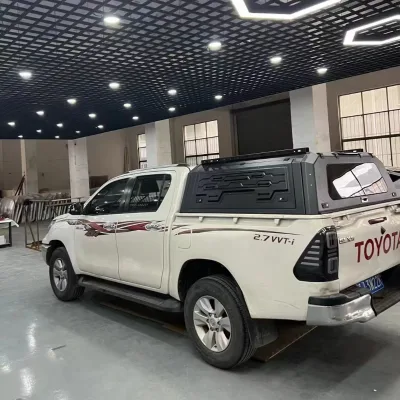
The utility of a Waterproof Hard Retractable Tonneau Cover is defined by its compatibility with specific vehicle platforms. The observed product data highlights fitment for major pickup truck models, including the Ford Ranger, Nissan, GWM (Great Wall Motor), and Dmax variants. This diversity suggests that the supply chain is segmented by vehicle make and model. A "Hard Tri Fold Retractable Tonneau Cover for Ford U" indicates that specific engineering is required to ensure the cover fits the bed dimensions and rail systems of the Ford U series.
The "Car Fitment" attribute is not generic; it requires precise matching of the truck bed length, width, and rail configuration. Buyers sourcing for a specific fleet or retail channel must ensure that the supplier has the technical drawings for the exact model year and trim level. The "4X4" designation in the product specifications further narrows the application, suggesting these covers are designed for off-road or rugged utility vehicles where weather protection is paramount. The "Waterproof" and "UV Protection" functions are particularly relevant for these applications, protecting cargo from rain, dust, and sun damage during transport. Whether for commercial logistics or personal use, the cover must maintain its seal under vibration and movement, which is a key performance metric for 4X4 applications.
Supplier Evaluation and Operational Capabilities
Selecting a reliable supplier requires a deep dive into their operational capabilities beyond the product listing. The "Place of Origin" data reveals that the majority of these products originate from China, with specific hubs in Henan, Guangdong, and Jiangsu. While these regions are known for automotive component manufacturing, buyers should verify the specific factory's capacity and history. The "Lead Time" is a critical operational metric; observed data shows a standard lead time of 35 days, while some suppliers offer an estimated time of 5 days. This discrepancy likely reflects the difference between stock items and custom-manufactured orders. A 35-day lead time suggests a production cycle that includes material sourcing, assembly, and quality checks, whereas a 5-day estimate may apply only to pre-stocked inventory.
Packing and logistics are also essential components of supplier evaluation. The "Product Packing" is described as "Carton Box," "Strong Carton," or "Standard Carton Packing," with options for "Air or Sea Freight." For heavy items like aluminum hard covers, the "Gross Weight" (observed at 30.3kg for some units) and "Packing Size" (e.g., 1775815155cm) are vital for calculating shipping costs and warehouse space requirements. Buyers should confirm that the packaging is robust enough to prevent damage during long-haul sea freight, as the "Waterproof" claim is compromised if the product arrives damaged. Additionally, the "Advantage: Professional Service" attribute suggests that suppliers may offer technical support, but the extent of this service must be clarified in the service level agreement (SLA).
Quality Control and Long-Term Procurement Considerations
Ensuring long-term value requires a robust quality control (QC) strategy. The "Warranty" attribute, observed as 12 Months, provides a baseline expectation for product durability. However, a warranty is only as good as the supplier's ability to honor it. Buyers should verify the warranty terms, including what constitutes a defect versus normal wear and tear, and the process for claims. The "No-drilling Installation" feature is a significant quality indicator, as it implies a precision-engineered mounting system that does not compromise the vehicle's structural integrity. This is a key selling point for B2B clients who value vehicle preservation.
For long-term procurement, consistency is key. The "Customized Logo" options allow for branding, but the consistency of the logo application across batches must be monitored. The "OEM Service Accepted" status implies that the supplier can adapt to changes in design or specifications, which is crucial for maintaining a stable supply chain over years. Buyers should establish a clear specification sheet that defines the material (Aluminum vs. Aluminum Alloy), the operation (Manual vs. Electric), and the certification requirements (TUV, ISO, CE) to ensure every shipment meets the original standard. Regular third-party inspections during production and pre-shipment checks are recommended to verify that the "Waterproof" and "UV Protection" claims hold up under actual testing conditions, rather than relying solely on the supplier's internal reports.
Summary of Key Procurement Variables
To facilitate decision-making, the following table summarizes the critical variables observed in the market for waterproof hard retractable tonneau covers. This comparison highlights the range of options available and the specific attributes buyers must verify.
| Variable | Observed Range / Options | Procurement Verification Requirement |
|---|---|---|
| Material | Aluminum, Aluminum Alloy, PVC | Verify material grade and thickness; confirm "Hard" classification. |
| Certification | TUV, ISO, CE | Request valid certificates; check scope and validity dates. |
| MOQ | 1 Set to 3,000 Units | Confirm tiered pricing; check custom logo MOQ (30-50 PCS). |
| Lead Time | 5 Days to 35 Days | Distinguish between stock and production lead times. |
| Operation | Manual, Retractable | Verify mechanism type; confirm "No-drilling" installation. |
| Fitment | Ford Ranger, Nissan, GWM, Dmax | Match exact truck model year and bed dimensions. |
| Warranty | 12 Months | Clarify claim process and coverage exclusions. |
| Origin | China (Henan, Guangdong, Jiangsu) | Assess factory capacity and logistics capability. |
By adhering to these structured evaluation criteria, B2B buyers can mitigate risks associated with unverified claims and secure a supply chain that delivers high-quality, waterproof hard retractable tonneau covers that meet the rigorous demands of the automotive aftermarket. The focus must remain on verifying the tangible attributes of the product and the reliability of the supplier, ensuring that the final procurement decision is grounded in evidence rather than marketing promises.
FAQs
What materials are used for waterproof hard retractable tonneau covers?
These covers typically use Aluminum or Aluminum Alloy for structural rigidity. Some variations may feature PVC-coated fabrics, but hard types prioritize metal for durability and weather resistance.
Which certifications are commonly available for these tonneau covers?
Common certifications include TUV, ISO, and CE marks. Buyers should verify the scope of these certificates to ensure compliance with safety and quality standards for their target markets.
Can I get a custom logo on the tonneau cover?
Yes, customization is available, but it requires meeting specific minimum order quantities. Custom logos typically require an order of at least 30 to 50 pieces depending on the supplier.
How long does it take to receive the product after ordering?
Lead times vary between 5 days for stock items and 35 days for production orders. The duration depends on whether the unit is pre-manufactured or requires custom assembly.
What is the minimum order quantity for these covers?
Minimum order quantities range from 1 set for samples to 3000 units for bulk procurement. Standard orders often start at 5 sets, though single-unit entry points exist.
Which truck models are compatible with these retractable covers?
These covers fit various models including Ford Ranger, Nissan, GWM, and Dmax. Buyers must match the specific bed dimensions and rail configuration for proper installation.
Are these covers easy to install without drilling?
Yes, many models feature no-drilling installation systems. This design preserves vehicle integrity while ensuring a secure fit for the truck bed.