Source Waterproof Reusable Tyvek Tote Bag for Shopping, Retail, and Events
Compare 30 Waterproof Reusable Tyvek Tote Bag options from verified Chinese suppliers. Evaluate features like eco-friendly materials, customization, and closure types for daily usage, shopping, and advertising needs.
Key considerations
Products List


Customable Washable Printed Waterproof Folding Customizable Nylon Tote Bag
$1.80 - $2.30
MOQ: 200 Pieces


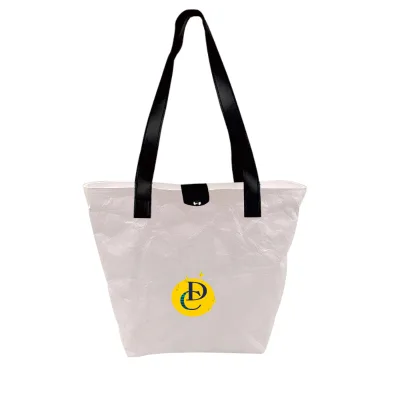


Stylish Reusable Non-Woven Tote Bag for Sustainable Shopping Adventures
$0.38 - $1.88
MOQ: 1000 Pieces
Comprehensive Sourcing Guide
Strategic Sourcing Guide for Waterproof Reusable Tyvek Tote Bags
The global shift toward sustainable packaging has elevated the demand for durable, reusable alternatives to single-use plastics. Among these, the waterproof reusable tote bag stands out as a critical procurement category for businesses seeking to balance functionality with environmental responsibility. While the core keyword often references "Tyvek," a specific brand of high-density polyethylene (HDPE) flash-spun material, the broader market encompasses a variety of non-woven fabrics, including PLA (polylactic acid) and recycled PET (RPET), that offer similar water-resistant properties. For procurement professionals, navigating this landscape requires a disciplined approach to verifying material composition, understanding cost drivers, and ensuring that supplier claims align with actual product specifications. This guide provides a structured framework for sourcing these bags, focusing on evidence-based evaluation rather than marketing assertions.
Material Composition and Technical Specifications
The foundation of a successful procurement strategy lies in the precise definition of material composition. The supplied data indicates a diverse range of raw materials available in the market, including 100% Biodegradable Materials, 100% PLA, PP (polypropylene), RPET, and Non-Woven Fabric. While the search term specifies "Tyvek," buyers must recognize that many suppliers offer PLA-based non-woven bags that are marketed as eco-friendly alternatives with waterproof capabilities. The distinction is critical: Tyvek is inherently water-resistant due to its unique fiber structure, whereas PLA bags rely on specific manufacturing processes to achieve water resistance.
When evaluating technical specifications, buyers should look for explicit statements regarding the "Waterproof" attribute. The observed product data presents a dichotomy; some listings explicitly state "Waterproof," while others note "Not Waterproof." This variance suggests that water resistance is not a universal standard for all non-woven totes but rather a specific feature dependent on the lamination process or the specific polymer blend used. For applications requiring protection against moisture, such as outdoor events or grocery shopping in rainy conditions, the buyer must demand verification of the waterproof claim. Furthermore, the "Hardness" attribute varies from "Partial Hard" to "Medium Soft," influencing the bag's structural integrity and its ability to stand upright when filled. The "Closure Type" is predominantly identified as a "Zipper," which adds a layer of security and weather protection compared to open-top designs.
Compliance, Certification, and Environmental Claims
Sourcing eco-friendly products requires rigorous verification of compliance and certification. The market data highlights specific certifications such as Sedex and TUV, which are vital indicators of supply chain transparency and product safety. Sedex membership often implies adherence to ethical trading practices, while TUV certification typically relates to product testing and material safety. However, the presence of these certifications does not automatically validate all environmental claims made by a supplier.
Buyers must be particularly cautious with terms like "Eco-friendly," "Bio-Based & Compostable," and "Biodegradable." The supplied facts confirm that some products are made from 100% PLA, a bio-based material derived from renewable resources like corn starch. While PLA is compostable under industrial conditions, it does not necessarily degrade in a home compost or natural environment. The distinction between "Bio-Based" and "Biodegradable" is often blurred in marketing materials. A product labeled as "Eco-friendly" may simply mean it is reusable, whereas "Biodegradable" implies a specific end-of-life pathway. To ensure compliance with corporate sustainability goals, procurement teams should request third-party test reports that verify the specific degradation conditions and timelines. Additionally, the "QC Inspection" process is noted as "100% Manual Inspection" in some listings, which is a positive indicator for quality consistency, though it should be complemented by standardized testing protocols for material durability.
Cost Drivers and Pricing Dynamics
Understanding the cost structure of waterproof reusable totes is essential for budgeting and negotiation. The observed price range in the market spans from $0.02 to $11.90 USD, a significant variance that reflects differences in material quality, customization complexity, and order volume. The primary cost drivers include the raw material type (e.g., 100% PLA vs. standard PP), the complexity of the printing process (Screen Print, Offset Print, Flexo Printing, or Heat Transfer), and the manufacturing method (Manual Sewing or Ultrasonic Welding).
The Minimum Order Quantity (MOQ) is another critical factor influencing unit cost. The data shows an MOQ range of 100 to 5000 units, with specific listings indicating an MOQ of 2000. Higher MOQs generally correlate with lower unit prices due to economies of scale in material procurement and production setup. However, the market also accommodates "Small Orders," with some suppliers accepting orders as low as 100 units, albeit likely at a higher per-unit cost. Buyers should also consider the cost of customization, including logo design and graphic printing. The availability of "Customized/Psd/Pdf/Ai/Pantong" file formats suggests a flexible design process, but complex multi-color printing or specialized finishes like lamination will increase the final price. When evaluating quotes, procurement professionals should ensure that the price includes all customization costs and that the MOQ aligns with their inventory requirements to avoid overstocking or stockouts.
Typical Applications and Usage Scenarios
The versatility of waterproof reusable tote bags makes them suitable for a wide array of industrial and commercial applications. The supplied data lists usage scenarios ranging from "Daily usage" and "Shopping" to specific industrial uses like "Business & Shopping," "Garment," "Advertising," and "Promotions." The "Product Name" variations, such as "PLA Non Woven Bag" and "Wine Bag," indicate that these products are tailored for specific niches. For instance, a "Wine Bag" likely requires a specific shape and size to accommodate bottles securely, while a "Shopping Bag" prioritizes large capacity and durability.
The "Shape" attribute, noted as "Square" in some listings, and the "Size" options, including "Middle" and "Accept Customized Size," allow for customization based on the intended use. Bags used for "Electronic Products," "Jewelry," "Cosmetic," or "Gifts" often require a more refined aesthetic and potentially a smaller size, whereas bags for "Supermarket Retail" or "Advertising" benefit from a larger capacity and high visibility. The "Waterproof" feature is particularly valuable for applications involving food, cosmetics, or outdoor events where moisture resistance is a functional necessity. Buyers should match the bag's specifications, such as "Large capacity" and "Lightweight," to the specific demands of their target market to ensure the product meets end-user expectations.
Supplier Evaluation and Quality Assurance
Evaluating suppliers requires a focus on their manufacturing capabilities and quality control processes. The data indicates that manufacturing processes include "Manual Sewing" and "Ultrasonic Welding." Manual sewing often results in a more traditional, robust finish, while ultrasonic welding offers a seamless, water-resistant bond without the need for thread, which can be advantageous for waterproof applications. The "Origin" of the products is listed as "China," a major manufacturing hub for non-woven bags, but buyers should verify the specific factory location and capacity to ensure reliable supply chain management.
Quality assurance is paramount, especially when dealing with waterproof claims. The "QC Inspection" process of "100% Manual Inspection" is a strong indicator of a supplier's commitment to quality, but it should be part of a broader quality management system. Buyers should inquire about the supplier's track record for handling "Custom Orders" and their ability to maintain consistency across large batches. The "Packing" method, identified as "Carton," is standard for protecting bags during transit, but buyers should confirm if additional protective measures are available for fragile or high-value items. Furthermore, the "Hardness" and "Weight" attributes (<0.5 Kg) should be verified against the supplier's technical data sheets to ensure the bags meet the required durability standards for their intended use.
Long-Term Procurement Considerations
Sourcing waterproof reusable tote bags is not merely a one-time transaction but a strategic decision that impacts long-term brand image and sustainability goals. The availability of "Customization" and "Custom Order" options allows businesses to align the product with their brand identity through logos and graphic designs. However, buyers must consider the lifecycle of the product. While "Reusable" and "Eco-Friendly" are key selling points, the actual environmental impact depends on the frequency of use and the end-of-life disposal method.
Buyers should also consider the scalability of their supply chain. The "Small Orders: Accepted" feature provides flexibility for testing new designs or responding to sudden market demands, but long-term contracts should focus on suppliers who can consistently meet high-volume requirements without compromising quality. The "Model Number" variations, such as TD-TYHB5055 and PRK-468, suggest a wide range of product configurations, and buyers should establish a clear specification sheet to ensure consistency across future orders. Finally, the "Standard" of the product is listed as "customized," meaning there is no universal industry standard for all non-woven bags. Buyers must define their own quality standards and ensure that suppliers adhere to them through clear contractual agreements and regular audits.
Comparative Analysis of Product Attributes
To facilitate decision-making, the following table summarizes key attributes observed in the market data, highlighting the variations that buyers must navigate.
| Attribute | Observed Variations | Procurement Implication |
|---|---|---|
| Raw Material | 100% PLA, PP, RPET, Non-Woven Fabric | Verify material composition to ensure eco-claims match actual content. |
| Waterproof | Waterproof / Not Waterproof | Essential for outdoor or liquid-heavy applications; demand test proof. |
| Hardness | Partial Hard / Medium Soft | Determines structural rigidity and load-bearing capacity. |
| MOQ | 100 - 5000 (Specific: 2000) | Align order volume with budget and storage capacity. |
| Printing | Screen, Offset, Flexo, Heat Transfer | Complex printing increases cost; verify color accuracy requirements. |
| Certification | Sedex, TUV | Verify validity and scope of certifications for compliance. |
| Closure | Zipper | Adds security and weather protection; check zipper durability. |
| Origin | China | Standard manufacturing hub; verify factory audit status. |
In conclusion, sourcing waterproof reusable tote bags requires a meticulous approach to verifying material properties, certifications, and supplier capabilities. By focusing on the specific attributes outlined in this guide, procurement professionals can make informed decisions that align with their operational needs and sustainability objectives. The market offers a wide array of options, but success lies in the ability to distinguish between marketing claims and verified product facts.
FAQs
What raw materials are used for these bags?
The bags are made from 100% Biodegradable Materials, 100% PLA, PP, RPET, or Non Woven Fabric. Buyers must verify the specific material composition to ensure it matches their sustainability goals, as options range from fully biodegradable PLA to standard non-woven fabrics.
Are all listed bags waterproof?
No, waterproof status varies by product listing. Some items are explicitly marked as waterproof while others are not. Procurement teams must verify the waterproof attribute for each specific model before ordering to ensure suitability for moisture-heavy applications.
What certifications do these products hold?
Some products hold Sedex and TUV certifications indicating supply chain transparency and product safety. These certifications are vital for verifying ethical trading practices and material safety, though they do not automatically validate all environmental degradation claims made by suppliers.
Can I customize the size and logo?
Yes, customization is available for size, logo, and graphic design. Suppliers accept customized sizes and various file formats like Psd, Pdf, Ai, and Pantong. This allows businesses to align the product with their brand identity through specific dimensions and printed graphics.
What is the typical minimum order quantity?
The minimum order quantity ranges from 100 to 5000 units depending on the supplier. Specific listings indicate an MOQ of 2000, while others accept small orders. Higher volumes generally correlate with lower unit prices due to economies of scale in production.
How are these bags manufactured?
Manufacturing processes include Manual Sewing and Ultrasonic Welding. Manual sewing offers a traditional finish, while ultrasonic welding provides a seamless, water-resistant bond. The choice of process impacts the bag's structural integrity and its ability to withstand moisture.