Source Waterproof Thermal Cooler Bags for Wine, Food, and Beach
Find and compare 30 waterproof thermal cooler bags suitable for wine, food, and beach parties. Buyers can evaluate options with varying cold retention times, bearing capacities, and customization features to meet specific sourcing needs.
Key considerations
Products List


Factory Customized Waterproof Cooler Bag with Pocket Insulated Thermal Bag
$9.68 - $11.00
MOQ: 500 Pieces


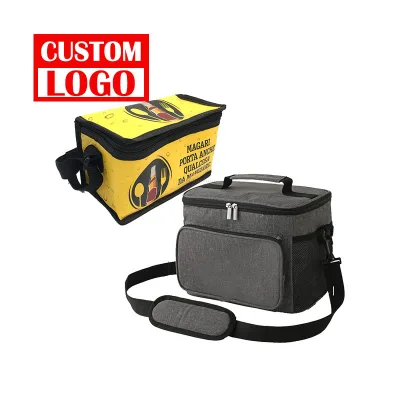


Cooler Backpack 35 Can Backpack Cooler Leakproof Insulated Soft Cooler Bag
$9.00 - $10.00
MOQ: 100 Pieces

Comprehensive Sourcing Guide
Strategic Sourcing Guide for Waterproof Thermal Cooler Bags
The global demand for portable thermal storage solutions has surged, driven by the need for efficient food preservation during transit, outdoor recreation, and promotional campaigns. For procurement professionals, the Waterproof Thermal Cooler Bag represents a critical category where material science, logistical efficiency, and brand customization intersect. Sourcing this specific product requires a disciplined approach to verify that the thermal performance, structural integrity, and waterproof capabilities align with operational requirements. This guide synthesizes available product attributes and industry standards to provide a framework for evaluating suppliers and selecting the optimal solution for B2B needs.
Technical Specifications and Material Performance
The foundational requirement for any thermal cooler bag is its ability to maintain internal temperatures against external variables. In the current market, the core material for these units is predominantly polyester, selected for its durability and resistance to moisture. A critical attribute observed in high-performing units is the waterproof classification. Buyers must verify that the product specification explicitly states "Waterproof" rather than merely "water-resistant," as the former implies a higher barrier against liquid ingress, which is essential for preventing condensation damage or external water contamination.
Thermal retention is another pivotal technical specification. The market data indicates a variance in cold time capabilities, with specific models offering a retention period of 4-6 hours, while advanced iterations claim a duration of greater than 6 hours. When evaluating a supplier, the procurement team must request specific test data or manufacturer guarantees regarding these timeframes under defined ambient conditions. The distinction between these two performance tiers often correlates with the thickness of the insulation layer and the quality of the thermal lining.
Structural integrity is defined by the bearing capacity and weight limits of the bag. Observed specifications range from a capacity of 3-10 kg to models capable of supporting loads exceeding 10 kg. For heavy-duty applications involving bulk food or beverage transport, the weight limit specification is a non-negotiable metric. Additionally, the physical dimensions vary significantly; standard configurations include sizes such as 42x17x25 cm, 25.5x17.5x24 cm, and 30x40 cm, with a growing trend toward fully customized sizing to fit specific inventory or branding needs. The closure mechanism, typically a zipper, must be robust enough to maintain the thermal seal without failing under the stress of repeated opening and closing cycles.
Compliance, Certification, and Environmental Standards
While specific certification statuses like BSCI or ASTM C177 are noted in broader industry contexts, they should not be assumed as inherent properties of every listed product without explicit verification. Procurement teams must treat certifications as active verification steps rather than passive attributes. The primary environmental consideration for modern sourcing is the "Eco-Friendly" designation. This claim requires validation through the supplier's documentation regarding the recyclability of the polyester material or the absence of harmful chemical treatments in the manufacturing process.
Standardization in the industry often revolves around the product model and origin. Many units originate from China, a major manufacturing hub for textile and thermal goods. Buyers should be aware that "Standard" dimensions like 42x17x25 cm are common, but "Customized" standards are increasingly available to meet specific logistical constraints. When assessing compliance, the focus should be on the manufacturing process, such as the use of laminating for printing, which can affect the material's longevity and chemical composition.
Buyers must also scrutinize the "Quality" claims. Terms like "High Quality" are subjective without supporting evidence. The procurement strategy should involve requesting third-party test reports that validate the thermal retention claims and the waterproof integrity. Furthermore, the "Disposable" attribute is a key differentiator; the market data indicates a strong preference for "Non-Disposable" units, which aligns with sustainability goals and long-term cost efficiency. Ensuring the product is designed for repeated use rather than single-use applications is a critical compliance checkpoint for corporate social responsibility (CSR) initiatives.
Cost Drivers and Pricing Dynamics
The pricing landscape for waterproof thermal cooler bags is influenced by a complex interplay of material costs, customization levels, and order volume. The observed price range in the market spans from $0.05 to $13.00 USD. This wide variance is primarily driven by the complexity of the design, the thickness of the insulation, and the extent of branding customization. Lower-priced units typically adhere to standard dimensions and offer minimal customization, while higher-priced units often feature enhanced thermal retention (e.g., >6 hours), custom sizing, and premium packaging.
The Minimum Order Quantity (MOQ) is a significant cost driver. The market observes an MOQ range between 50 and 10,000 units. A specific model may have an MOQ of 500 pieces, which can impact the unit cost for smaller buyers. Buyers should negotiate based on volume tiers, understanding that higher volumes often yield a lower per-unit cost but require a larger upfront capital commitment. The packaging method also influences cost; options range from simple OPP bags to individual OPP bags or custom boxes. Custom packaging adds a layer of cost but is often necessary for retail-ready products or corporate gifting.
Lead times and sample availability are additional financial factors. The sample time is typically cited as 5-7 days, which allows for rapid prototyping and quality verification before committing to a full production run. However, the actual production lead time is not explicitly defined in the provided data and must be confirmed with the supplier. Delays in production can disrupt supply chains, so buyers should factor in buffer time when planning procurement cycles. The "OEM/ODM" capability of the supplier is also a cost variable; accepting original equipment manufacturing or design modifications usually incurs additional setup fees but offers greater product differentiation.
Typical Applications and Usage Scenarios
The versatility of the Waterproof Thermal Cooler Bag allows it to serve diverse applications across multiple sectors. The primary usage categories identified include food storage, beverage transport (wine, cans, drinks), and promotional activities. The "Wine Box" application suggests a specific niche where the bag must protect delicate glass bottles while maintaining temperature. Similarly, the "Medical Cooler" and "Ice Cream" usage points indicate a need for higher thermal stability, often requiring the >6-hour cold time specification.
The target demographic for these products is broad, ranging from "Unisex" personal use to specific group sizes. Models are categorized by capacity for "2 Persons," "3-4 Persons," or general "Food" storage. The "Shoulder Bag" and "Hand Bag" styles cater to personal mobility, making them ideal for beach parties, picnics, and outdoor events. The "Tote Bag for Advertising" pattern type highlights the product's utility in marketing campaigns, where the bag serves as a mobile billboard for corporate logos.
In the context of "Promotion," the bag acts as a high-value giveaway. The "Logo Printing" feature, available with customized logos, is essential for brand visibility. The "Simplicity" style and "Pure Colour" patterns offer a clean canvas for branding, ensuring that the corporate message is not obscured by complex designs. The "Folded" type attribute is particularly valuable for logistics, as it allows for efficient storage and shipping of empty units before they are filled with product.
Supplier Evaluation and Quality Control Protocols
Selecting a reliable supplier for waterproof thermal cooler bags requires a rigorous evaluation process that goes beyond price comparison. The first step is verifying the supplier's capability to meet the "Customization" requirements. The market data confirms that customization is available for logos, sizes, and packaging. Buyers should assess the supplier's "OEM/ODM" acceptance and their ability to handle specific design requests, such as the "Laminating" printing process which ensures durability.
Quality control is paramount, especially given the "High Quality" claims found in the market. Buyers should implement a multi-stage inspection protocol. First, verify the material composition to ensure it is indeed polyester and meets the "Eco-Friendly" criteria. Second, test the waterproof integrity by subjecting samples to water exposure tests. Third, validate the thermal performance by measuring the cold time under controlled conditions to ensure it matches the claimed 4-6 hours or >6 hours. The "Gross Weight" of the product, ranging from <0.5 kg to >0.3 kg, should also be verified to ensure it meets shipping weight constraints and does not compromise the bearing capacity.
The "prod_packing" method is another area for quality scrutiny. Whether the product is packed in an OPP bag, individual OPP bag, or a box, the packaging must protect the item during transit. For custom orders, the "Box" packaging option should be inspected for structural strength. Additionally, the "Sample Time" of 5-7 days should be monitored to ensure the supplier can deliver prototypes quickly for approval. Buyers should also check the "Quality" assurance processes, looking for evidence of consistent production standards rather than relying solely on the "High Quality" label.
Long-Term Procurement and Supply Chain Considerations
Sourcing waterproof thermal cooler bags is not merely a transactional exercise but a strategic decision that impacts long-term supply chain resilience. The "Disposable" attribute being "Non-Disposable" is a crucial factor for sustainability. Buyers should prioritize suppliers who offer durable, reusable products to align with corporate environmental goals and reduce waste. The "Customized" nature of many products means that once a design is finalized, it can become a staple in the company's inventory, necessitating a reliable long-term partnership with the supplier.
Inventory management is another consideration. The "Bearing Capacity" and "Size" specifications must be optimized for storage efficiency. Folded units offer significant space savings, but the "Standard" sizes like 42x17x25 cm must be compatible with existing warehouse racking systems. The "MOQ" of 500 pieces or higher requires careful demand forecasting to avoid overstocking or stockouts. Buyers should negotiate flexible MOQ terms or consignment arrangements if possible to mitigate inventory risks.
Finally, the "Logo" and "Pattern" customization options allow for brand evolution. As marketing strategies shift, the ability to update designs without changing the core product structure is valuable. The "Accept Customized Logo" feature ensures that the product can adapt to changing brand identities. However, buyers must ensure that the "Printing Process" remains consistent to maintain quality across different production runs. By focusing on these long-term factors, procurement teams can build a supply chain that is not only cost-effective but also adaptable, sustainable, and aligned with the company's strategic objectives.
FAQs
What material is used for waterproof thermal cooler bags?
These bags are predominantly made from polyester, selected for its durability and moisture resistance. This material ensures the bag maintains structural integrity while providing a waterproof barrier against liquid ingress during transit.
How long do these bags maintain cold temperatures?
Cold retention varies by model, with specific units offering 4-6 hours of insulation. Advanced iterations claim a duration greater than 6 hours, depending on the thickness of the insulation layer and thermal lining quality.
Can buyers request customized logos and sizes?
Yes, customization is available for logos, sizes, and packaging methods. Buyers can specify dimensions like 42x17x25 cm or request fully customized standards to fit specific inventory or branding needs for promotional campaigns.
What is the typical minimum order quantity for these bags?
The market observes an MOQ range between 50 and 10,000 units, with some models requiring 500 pieces. This volume requirement impacts the unit cost and requires careful demand forecasting to avoid overstocking.
Are these bags designed for single-use or repeated use?
The products are classified as non-disposable, designed for repeated use rather than single applications. This aligns with sustainability goals and long-term cost efficiency for corporate social responsibility initiatives.
What are the weight limits for these cooler bags?
Bearing capacity ranges from 3-10 kg to models capable of supporting loads exceeding 10 kg. Buyers must verify the weight limit specification for heavy-duty applications involving bulk food or beverage transport.
How are these bags typically packaged for shipping?
Packaging options range from simple OPP bags to individual OPP bags or custom boxes. The chosen method must protect the item during transit while meeting retail-ready or corporate gifting requirements.