Source Weather-Resistant Wrought Iron Gate for Garden, Village, Residential
Source a weather-resistant wrought iron gate from 30 verified listings suitable for garden, village, and residential applications. Buyers can compare specifications, prices, and customization options to find the ideal security and decorative solution.
Key considerations
Products List


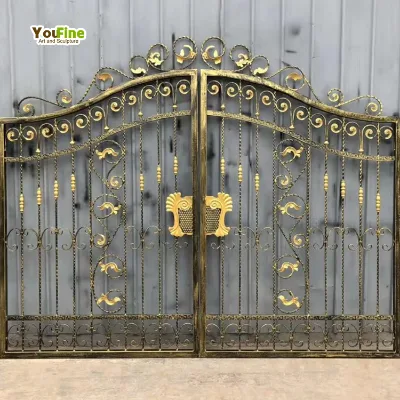


High Quality Wrought Iron Gate Design Iron Gates Wrought Iron Gate Outdoor Designs
$408.00 - $428.00
MOQ: 6 Square Meters


Comprehensive Sourcing Guide
Strategic Sourcing Guide for Weather-Resistant Wrought Iron Gates
Understanding Technical Specifications and Material Integrity
When sourcing a weather-resistant wrought iron gate, the primary objective is to identify products that combine structural durability with aesthetic longevity. The core material composition is the first critical factor to evaluate. Available market data indicates that high-performance units often utilize metal and iron as the primary structural components, with specific references to steel and metal frames. The integrity of the gate relies heavily on the frame material, which must be robust enough to withstand external environmental stressors. In the context of modern manufacturing, the frame finishing process is equally vital. Evidence suggests that effective weather resistance is achieved through a combination of Hot DIP Galvanizing and Powder Coating. This dual-layer approach ensures that the underlying metal is protected from corrosion while the outer powder coat provides a durable, color-fast finish.
The manufacturing technique also plays a significant role in the final product's resilience. Many premium options are described as being hand-made and hand-forged. This artisanal approach often results in tighter tolerances and a more uniform density in the metal, which can enhance resistance to warping or cracking over time. The design style, ranging from ornate lion statues to modern classical themes, does not compromise the material's inherent strength when executed correctly. Buyers should verify that the specific model, such as those identified by codes like WIG-01 or YFSHIG-15, adheres to these rigorous material standards. Furthermore, the product cycle for these custom items typically ranges between 35 to 45 days, reflecting the time required for precise forging and finishing processes.
Compliance, Certification, and Safety Standards
Ensuring that a wrought iron gate meets international safety and quality standards is a non-negotiable aspect of B2B procurement. While specific certification bodies vary by region, the presence of ASTM standards in product documentation serves as a baseline for material quality and safety. Buyers must verify that the supplier can provide documentation confirming compliance with relevant ASTM specifications for wrought iron and steel products. This verification is crucial for projects in residential, garden, or village settings where security ratings are a priority.
Security ratings are another critical compliance metric. Market observations show a spectrum of ratings, with some units achieving a rating of "A" for high-security applications, while others are rated "B" for general residential use. The distinction between these ratings often relates to the thickness of the metal, the complexity of the locking hardware, and the overall structural rigidity. Additionally, the product standard is frequently listed as "Customized" or "Custom," indicating that the gate is tailored to specific site requirements rather than adhering to a rigid, off-the-shelf standard. This customization allows for precise alignment with local building codes and security needs.
Buyers should also consider the insurance aspects of the procurement. Some suppliers offer coverage for all risks during the transport phase, which is a significant value-add for international orders. The transportation method is predominantly by sea, which necessitates robust packaging to prevent damage during transit. The observed packing methods include wooden boxes and wooden pallets bound securely, ensuring that the finished gate arrives in the condition intended. Verifying that the supplier adheres to these packaging and insurance protocols is essential for mitigating logistical risks.
Cost Drivers and Pricing Dynamics
The pricing structure for weather-resistant wrought iron gates is influenced by a complex array of factors, including material costs, labor intensity, and customization levels. The observed price range in the market is substantial, spanning from approximately $12.99 to $3,327.44. This wide variance is not indicative of quality differences alone but rather reflects the scope of the order, the specific design complexity, and the scale of production. Lower-priced items may represent smaller, simpler units or single-item selling units, whereas higher-priced figures likely correspond to large, custom-engineered gates with extensive ornate detailing and advanced finishing processes.
The Minimum Order Quantity (MOQ) is another significant cost driver. The observed MOQ range varies from 1 to 100 units. For buyers seeking a single custom gate for a private residence, an MOQ of 1 is highly advantageous. However, for commercial projects or large-scale developments, an MOQ of 100 may be required to achieve economies of scale. The lead time, typically observed between 25 to 30 days or 35 to 45 days depending on the specific product cycle, also impacts the overall cost structure. Longer lead times may be associated with more intricate hand-forging processes or complex powder coating requirements, which can increase the unit price.
Additionally, the choice of color and finish affects the final cost. Options such as black, white, bronze, golden, and dark grey are available, with custom colors often commanding a premium. The "Style: Classic" or "Modern" design choices also influence pricing, as certain styles may require more labor-intensive hand-forging techniques. Buyers should be aware that the "Renewable Sources" feature mentioned in some product attributes may also contribute to the cost profile, reflecting sustainable sourcing practices in the supply chain.
Typical Applications and Functional Requirements
Weather-resistant wrought iron gates are versatile solutions suitable for a wide range of applications, from private residential driveways to public garden entrances. The primary usage categories identified include garden, village, residential, and home environments. These gates serve a dual function: providing security and enhancing decoration. The security function is paramount, with the gate acting as a physical barrier that deters unauthorized access. The decoration function is equally important, as the ornate lion statue designs and classical themes contribute significantly to the aesthetic appeal of the property.
The position of the gate is almost exclusively exterior, meaning it must be engineered to withstand direct exposure to rain, sun, wind, and temperature fluctuations. The "Open Style" is predominantly swing-based, which is a traditional and reliable mechanism for gate operation. However, the specific hardware, including hinges, door locks, and thresholds, must be selected to ensure smooth operation even after years of exposure to the elements. The "Sound Insulation" feature, noted in some contexts, suggests that certain models may offer additional benefits in noise reduction, which is particularly valuable in residential areas near busy roads or in village settings.
For commercial or high-traffic areas, the "Security Rating" becomes a critical selection criterion. A rating of "A" is recommended for high-security zones, while a "B" rating may suffice for standard residential driveways. The "Use" category also extends to fencing and trellis applications, indicating that these gates can be integrated into larger perimeter security systems. The "Theme" of a wrought iron front gate often dictates the architectural style of the entire property, making it essential to choose a design that complements the existing building aesthetics.
Supplier Evaluation and Geographic Considerations
When evaluating potential suppliers, geographic origin is a key indicator of production capabilities and logistical efficiency. The primary production hubs identified for these products are located in China, specifically in regions such as Foshan, Hebei, and Guangdong. These regions are known for their established metalworking industries and expertise in wrought iron fabrication. Suppliers from Foshan, for instance, may offer a blend of traditional craftsmanship and modern manufacturing techniques, while those from Hebei and Guangdong might provide competitive pricing and large-scale production capabilities.
The "advantage" of a supplier often includes over 30 years of experience, which is a strong indicator of reliability and technical proficiency. Buyers should prioritize suppliers who can demonstrate a long track record in the industry. Additionally, the availability of value-added services such as 3D modeling and graphic carton design is a significant differentiator. These services allow buyers to visualize the final product before production begins, ensuring that the custom design meets their exact specifications. The "Service" attribute highlights the importance of pre-sales support in the procurement process.
Transportation logistics are another critical factor. The primary mode of transport is by sea, which requires careful planning for international shipments. Buyers should verify the supplier's experience with sea freight and their ability to handle the "Packed on Wooden Pallet Bound" or "Wooden Box" packaging requirements. The "Shippin Time" of 25-30 days is a standard benchmark, but buyers should confirm this with the specific supplier to avoid delays. Finally, the "Brand name" such as YouFine can serve as a reference point for reputation, though buyers should conduct independent due diligence to ensure the brand aligns with their quality expectations.
Quality Control and Long-Term Procurement Strategy
Maintaining quality control throughout the procurement lifecycle is essential for ensuring the longevity of weather-resistant wrought iron gates. The "Surface Finishing" process, which includes the "Finished" state and the specific application of powder coating, must be rigorously inspected. Buyers should request samples or detailed photos of the finishing process to verify the uniformity and thickness of the coating. The "Pressure treated wood type" mentioned in some contexts, specifically "Heat Treated," suggests that some gates may incorporate wooden elements that require special treatment to resist rot and insect damage.
Long-term procurement considerations involve assessing the maintenance requirements of the gate. While the "Hot DIP Galvanizing + Powder Coating" finish provides excellent protection, regular inspections are necessary to identify any signs of wear or damage. The "Installation" process is described as "Easy to Install," which reduces the initial labor costs and potential for installation errors. However, the "Hardware" components, such as hinges and locks, should be of high quality to ensure smooth operation over decades. The "Design" being "Classical" or "Modern" does not affect the maintenance schedule, but the complexity of the design may influence the ease of cleaning and upkeep.
Buyers should also consider the "Product Cycle" of 35-45 days as a planning factor for future orders. This timeline allows for the customization and finishing processes to be completed without rushing, which can compromise quality. The "Standard" being "Customized" means that each order is unique, requiring a tailored quality control approach. Finally, the "Insurance" coverage for all risks during transport provides a safety net for the buyer, ensuring that any damage incurred during shipping is addressed promptly. By focusing on these quality control and long-term strategy elements, buyers can secure a reliable supply of weather-resistant wrought iron gates that meet their specific needs.
FAQs
How are weather-resistant wrought iron gates finished for durability?
These gates undergo hot dip galvanizing followed by powder coating to ensure corrosion resistance. This dual-layer process protects the metal frame from environmental stress while providing a durable, color-fast finish suitable for exterior garden and residential use.
What certifications do these wrought iron gates meet?
Products typically comply with ASTM standards for material quality and safety. Buyers should verify that specific units meet these specifications, especially for projects requiring high security ratings in residential or village settings.
Which customization options are available for gate dimensions?
Gate sizes and models are fully customized to fit specific site requirements. The product standard is listed as customized, allowing for tailored dimensions and designs like ornate lion statues or modern themes to match architectural styles.
Can buyers find gates with specific security ratings?
Yes, gates are available with security ratings ranging from B for general residential use to A for high-security applications. The rating depends on metal thickness, locking hardware, and overall structural rigidity of the frame.
How long does the production cycle take for custom gates?
The product cycle typically ranges between 35 to 45 days for custom orders. This timeline accounts for the hand-forging techniques and finishing processes required to achieve the specified quality and design complexity.
What packaging methods are used for shipping these gates?
Gates are packed in wooden boxes or bound on wooden pallets to prevent transit damage. This robust packaging is essential for sea freight, ensuring the finished product arrives in the intended condition for installation.
Where are these wrought iron gates manufactured?
Production originates from key manufacturing hubs in China, including Foshan, Hebei, and Guangdong. These regions offer established metalworking industries with over 30 years of experience in wrought iron fabrication and supply.