Source Weathering Resistant Corten Steel Plate for Boiler, Ship, and Construction
Find 30 listings for Weathering Resistant Corten Steel Plate suitable for boiler plates, ship plates, and construction projects. Buyers can compare specifications like thickness, grades, and certifications from verified suppliers in China.
Key considerations
Products List

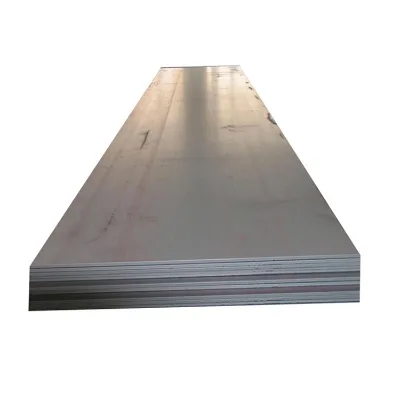
Customized Corten Steel Plate A588 Corten a Weather Resistant Steel Plate
$500.00 - $1000.00
MOQ: 10 Tons


ASTM A588 Corten a B Metal Weathering Resistant Steel Sheet with Cold Rolled Steel Coil
$500.00 - $1000.00
MOQ: 10 Tons




Comprehensive Sourcing Guide
Strategic Sourcing Guide for Weathering Resistant Corten Steel Plate
Understanding Product Specifications and Technical Attributes
When sourcing Weathering Resistant Corten Steel Plate, buyers must first establish a clear understanding of the technical specifications that define the material's performance and suitability for specific industrial applications. The core product category is identified as a steel plate, specifically designed for high durability in outdoor environments. The material composition often includes grades such as Corten A and Corten B, alongside international standards like ASTM A588, A242, and A606, as well as S355J0WP. These grades are critical for ensuring the steel possesses the necessary corrosion resistance properties that distinguish it from standard carbon steel.
The physical dimensions of the plate vary significantly depending on the supplier's inventory and production capabilities. Observed thickness ranges span from 0.5mm up to 300mm, with specific listings noting a thickness of 20mm as a common stock item. Width specifications typically range from 1000mm to 3000mm, while length can extend from 1 meter to 12 meters. This variability allows for customization, which is a key attribute available in the market. Buyers should verify that the specific thickness and width they require align with the supplier's standard production capabilities, as some vendors may list a broad range but only stock specific dimensions.
The mechanical properties are equally vital for structural integrity. Yield strength is a primary metric, with observed values around 235 MPa for certain grades, while tensile strength can reach levels of 1200 MPa or higher for specialized wear-resistant variants. The manufacturing technique is predominantly hot rolled, though some suppliers also offer cold rolled options. Surface treatment plays a significant role in the final application; plates may be supplied with a black surface or undergo coating processes. Tolerance levels are generally tight, with observed specifications indicating a tolerance of +/- 0.05mm, which is crucial for precision engineering applications.
Compliance, Certification, and International Standards
Compliance with international standards is non-negotiable when procuring weathering resistant steel for construction and industrial projects. The market supports a wide array of recognized standards, including AISI, ASTM, BS, DIN, GB, and JIS. Buyers must ensure that the supplier explicitly states which standard the product meets, as the specific grade (e.g., Corten B) must align with the project's engineering requirements. For instance, ASTM A588 is a common standard for high-strength low-alloy structural steel, while GB standards are prevalent for domestic Chinese manufacturing.
Certification serves as a third-party validation of the product's quality and adherence to safety and environmental regulations. High-confidence data indicates that products in this category often carry certifications such as IBR, ISO, and RoHS. These certifications confirm that the manufacturing process meets international quality management systems and restricts the use of hazardous substances. Furthermore, independent testing agencies like BV and SGS are frequently cited as the entities performing quality verification. Buyers should request current test reports from these agencies to validate the chemical composition and mechanical properties of the steel before finalizing an order.
The origin of the product is a critical compliance factor. The majority of the observed supply originates from the Shandong region of China Mainland. While this region is a major hub for steel production, buyers must verify that the specific batch of steel meets the destination country's import regulations. The trade terms, such as Ex-Work, FOB, CNF, CFR, and CIF, dictate the point at which responsibility and risk transfer from the seller to the buyer, which impacts the overall compliance burden regarding shipping and customs clearance.
Cost Drivers and Pricing Dynamics
The pricing of Weathering Resistant Corten Steel Plate is influenced by a complex interplay of raw material costs, manufacturing techniques, and order volume. The observed price range in the market is extensive, spanning from $15 to $2,600 USD. This wide variance is not indicative of a single product but rather reflects differences in thickness, grade, surface treatment, and order quantity. Thicker plates and those requiring specialized surface treatments like coating will naturally command higher prices per unit.
Minimum Order Quantity (MOQ) is a significant driver of unit cost. Suppliers typically enforce MOQs ranging from 5 tons to 25 tons, with some flexibility down to 1 ton for specific custom orders. Larger orders generally benefit from economies of scale, reducing the per-ton cost. However, buyers must balance the desire for lower unit prices against the need for inventory management. Holding large quantities of steel incurs storage costs and ties up capital, so the optimal order size must be calculated based on project timelines and storage capacity.
Additional cost factors include the payment terms and logistics. Common payment methods include T/T (Telegraphic Transfer) and L/C (Letter of Credit), which can affect the final negotiated price. Suppliers may offer discounts for upfront payments or favorable payment structures. Transportation costs are also substantial, as the steel is heavy and requires sea-worthy packaging. The "Transport" attribute notes that packages are designed to be sea-worthy, often wrapped in waterproof paper to prevent corrosion during transit. Buyers should factor in the cost of specialized packaging and freight when calculating the total landed cost of the material.
Typical Applications and Usage Scenarios
Weathering Resistant Corten Steel Plate is engineered for a diverse range of applications where exposure to the elements is a primary concern. The "Special Use" attributes highlight its suitability for wear-resistant applications, silicon steel components, and cutting tools. However, its primary market is in construction and heavy industry. The "Application" field lists specific uses such as boiler plates, container plates, flange plates, ship plates, and mold & dies. This versatility makes it a preferred choice for infrastructure projects that require long-term durability without the need for frequent painting or maintenance.
In the construction sector, the material is widely used for structural steel where its natural patina provides both aesthetic appeal and functional corrosion protection. The "Usage" category explicitly identifies it as construction steel. This includes applications in bridges, outdoor sculptures, architectural facades, and retaining walls. The ability of Corten steel to form a stable rust-like appearance that inhibits further corrosion makes it ideal for environments with high humidity or salt exposure, such as coastal regions.
Beyond construction, the steel finds critical use in the manufacturing of containers and shipping equipment. The "Container Plate" application indicates its role in building freight containers that must withstand harsh handling and weather conditions. Similarly, "Ship Plate" usage underscores its importance in marine engineering, where resistance to saltwater corrosion is paramount. The high tensile strength observed in some grades (>=1200 MPa) also supports its use in heavy machinery and wear-resistant components, where the material must withstand significant mechanical stress and abrasion.
Supplier Evaluation and Manufacturing Capabilities
Evaluating a supplier for Weathering Resistant Corten Steel Plate requires a deep dive into their manufacturing capabilities and operational stability. The "Manufacturing Technique" is a key differentiator, with most suppliers offering hot rolled and cold rolled processes. Buyers should verify which techniques are available and whether the supplier can accommodate specific surface treatments like coating or black finishes. The "Stock" attribute reveals that some suppliers maintain inventory (Stock), while others operate on a made-to-order basis (Not Stock). This distinction impacts lead times and availability.
The production location is another critical evaluation metric. The majority of the supply chain is centered in Shandong, China. Buyers should assess the logistical advantages of this location, including proximity to major ports for export. The "Delivery Time" is typically cited as 15-20 days after deposit, but this can vary based on order complexity and current production loads. Suppliers with a "Stock" status may offer faster delivery, whereas custom orders will require the full manufacturing cycle.
Quality assurance processes are essential for verifying supplier reliability. The presence of "Test" capabilities by agencies like BV and SGS is a strong indicator of a supplier's commitment to quality. Buyers should request samples or mill test certificates (MTC) to verify that the chemical composition and mechanical properties match the stated specifications. Additionally, the "Product Packing" standards, such as standard export packages or waterproof paper wrapping, should be reviewed to ensure the material arrives in pristine condition. A supplier's ability to customize packing requirements based on specific project needs is also a valuable attribute.
Quality Control and Long-Term Procurement Strategy
Effective quality control is the backbone of a successful procurement strategy for weathering resistant steel. The "Tolerance" of +/- 0.05mm indicates a high level of precision required in the manufacturing process. Buyers must implement rigorous inspection protocols to ensure that the delivered plates meet these dimensional standards. Visual inspection for surface defects, such as cracks or uneven coating, should be conducted upon receipt. Furthermore, mechanical testing, including yield and tensile strength verification, should be performed to confirm that the material meets the specified performance criteria.
Long-term procurement considerations involve building a sustainable relationship with suppliers who can consistently deliver high-quality materials. The "Trade Term" flexibility, offering options like Ex-Work, FOB, and CIF, allows buyers to manage their supply chain logistics more effectively. Establishing clear communication channels regarding payment terms, such as T/T or L/C, helps mitigate financial risks. Buyers should also consider the "Standard" compliance, ensuring that the supplier adheres to the latest versions of AISI, ASTM, BS, DIN, GB, and JIS standards to avoid obsolescence issues.
Sustainability and environmental compliance are increasingly important in steel procurement. The presence of RoHS certification suggests that the supplier is mindful of environmental regulations regarding hazardous substances. For buyers in regulated markets, this is a critical factor. Additionally, the "Special Use" of the steel in wear-resistant applications implies a longer service life, which reduces the frequency of replacement and contributes to overall sustainability. By selecting suppliers who prioritize quality and compliance, buyers can ensure that their projects meet both performance and environmental goals.
Final Procurement Considerations and Verification Steps
As buyers finalize their procurement strategy, it is essential to conduct a comprehensive verification of all product attributes. The "Product Name" and "Material" specifications must align perfectly with the project requirements. For example, a project requiring "Corten B Weathering Resistant Corten Steel Plate" must be matched with a supplier who explicitly lists this grade. The "Specification" details, including thickness, width, and length, should be cross-referenced with the supplier's catalog to ensure availability.
Buyers should also verify the "Delivery Time" and "MOQ" constraints to ensure they fit within the project timeline and budget. The observed MOQ range of 1 to 500 units (tons) offers flexibility, but the specific requirement of 25 tons for certain items must be noted. Understanding the "Payment Term" and "Transport" options is crucial for financial planning and logistics coordination. Finally, buyers should request detailed documentation, including test reports and certification copies, to validate the supplier's claims before making a final commitment. By adhering to these verification steps, buyers can secure high-quality Weathering Resistant Corten Steel Plate that meets all technical and commercial requirements.
FAQs
What certifications do weathering resistant corten steel plates carry?
Products typically carry IBR, ISO, and RoHS certifications to validate quality and environmental compliance. Buyers should verify these certifications with third-party agencies like BV or SGS before finalizing orders to ensure adherence to international safety standards.
Which international standards apply to this steel plate material?
The steel complies with major standards including AISI, ASTM, BS, DIN, GB, and JIS. Specific grades like Corten B and ASTM A588 align with these standards to ensure structural integrity for applications such as boiler plates and ship plates.
How is the minimum order quantity determined for this product?
Minimum order quantities typically range from 5 tons to 25 tons depending on the supplier and stock availability. Some vendors may offer flexibility down to 1 ton for custom orders, but standard bulk purchases usually require at least 5 tons.
Can suppliers customize the dimensions and surface treatment of the plate?
Yes, customization is available for thickness, width, and surface treatments like coating or black finishes. Buyers can request specific dimensions within the 0.5mm to 300mm thickness range and 1000mm to 3000mm width range to match project requirements.
What is the typical delivery time after placing an order?
Delivery usually takes 15 to 20 days after the deposit is received. This timeline applies to standard orders, while stock availability may allow for faster dispatch depending on the supplier's current inventory levels in Shandong, China.
Which payment terms are commonly accepted for this steel plate?
Common payment methods include T/T and L/C to secure transactions for international trade. Buyers should confirm specific terms with the supplier to ensure alignment with their financial processes and risk management strategies.
What are the mechanical properties of the high-strength variant?
High-strength variants offer a yield strength of 235 MPa and tensile strength of at least 1200 MPa. These properties make the material suitable for wear-resistant applications and heavy construction projects requiring significant structural durability.