Source Weathering Resistant Corten Steel Plates for Ship Building, Construction, and Engineering
Compare 30 listings of Weathering Resistant Corten Steel Plates from verified suppliers. Buyers can evaluate specifications like thickness, grades such as Corten A/B, and applications including ship building and engineering construction to find the right material.
Key considerations
Products List


Customized Corten Steel Plate A588 Corten a Weather Resistant Steel Plate
$500.00 - $1000.00
MOQ: 10 Tons


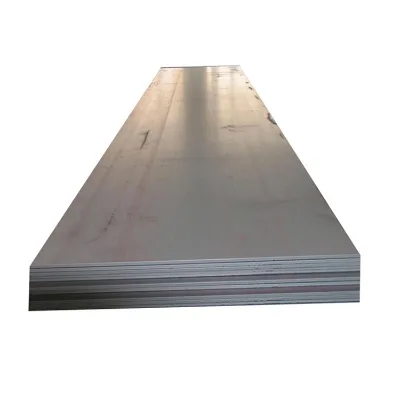


Weathering Steel Plate Corten Architectural Applications for Steel Structure Building
$40.00 - $55.00
MOQ: 500 Square Meters
Comprehensive Sourcing Guide
Strategic Sourcing Guide for Weathering Resistant Corten Steel Plates
Understanding Technical Specifications and Material Grades
When sourcing Weathering Resistant Corten Steel Plates, buyers must first establish a precise understanding of the technical parameters that define product performance. The core material classification typically revolves around specific steel grades designed to form a stable, protective rust layer that inhibits further corrosion. Based on available market data, common designations include Corten A, Corten B, and various ASTM designations such as ASTM A588, A242, and A606-4, alongside European equivalents like S355J0WP. These grades are not merely labels but represent distinct chemical compositions and mechanical properties tailored for specific environmental exposures.
The physical dimensions of the plate are equally critical for procurement planning. The supply chain offers a broad spectrum of thicknesses, with observed ranges spanning from 1.2mm up to 100mm, and in some specialized contexts, extending to 300mm. Width specifications generally fall between 1000mm and 3000mm, while lengths are often customizable, typically ranging from 1 meter to 12 meters. Buyers should note that while some listings indicate standard thicknesses like 20mm, the ability to request custom dimensions is a key attribute of this product category. The shape is consistently identified as a plate, suitable for heavy-duty structural applications.
Mechanical properties serve as the primary indicator of structural integrity. High-strength variants within this category often exhibit tensile strengths exceeding 1200 MPa, while standard structural grades may have yield strengths around 235 MPa. The manufacturing technique is predominantly hot rolling, which influences the grain structure and surface finish. Surface treatments vary, with options including bare finishes, coated surfaces, or specialized treatments such as quenching, tempering, and normalizing to enhance specific performance characteristics. Understanding these variables is essential before engaging with suppliers, as they directly impact the suitability of the material for the intended project.
Compliance, Certification, and Standard Verification
Ensuring compliance with international standards and holding valid certifications is a non-negotiable aspect of sourcing industrial steel products. The market for weathering resistant steel plates is governed by a complex matrix of standards, including AISI, ASTM, BS, DIN, GB, and JIS. Buyers must verify that the specific plates they procure meet the relevant standard for their region and application. For instance, while ASTM standards are prevalent in North America, GB and JIS standards are critical for projects in China and Japan, respectively.
Certification serves as the primary evidence of a manufacturer's adherence to quality management systems. The most frequently observed certification in this sector is ISO 9001:2008, which validates the consistency of the production process. Additionally, specific product certifications such as ISO and RoHS are common indicators of environmental compliance and quality assurance. In certain industrial applications, particularly those involving pressure vessels or specific engineering constraints, certifications like IBR (Indian Boiler Regulation) may be required.
Buyers should treat certification claims as observations that require verification rather than absolute guarantees. The presence of a certificate does not automatically imply that every batch of steel meets the same rigorous testing criteria. It is imperative to request current, valid certificates for the specific batch of steel being ordered. The documentation should explicitly state the standard (e.g., ASTM A588) and the specific grade (e.g., Corten B) to ensure traceability. Furthermore, while some suppliers list "Stock" availability, the certification status must be confirmed for these items, as stock levels can fluctuate, and older inventory might not carry the most recent compliance documentation.
Cost Drivers and Pricing Dynamics
The pricing of Weathering Resistant Corten Steel Plates is influenced by a multitude of factors, resulting in a wide observed range from $15 to $2,600 USD. This variance is not arbitrary but reflects differences in thickness, width, length, steel grade, and the level of customization required. Thinner gauges and standard widths typically command lower unit prices, whereas heavy plates with custom dimensions or high-strength specifications drive costs upward. The raw material market volatility for iron ore and scrap steel also plays a significant role in the final pricing structure.
Minimum Order Quantity (MOQ) is another critical cost driver. While some suppliers offer flexible terms with an MOQ as low as 1 unit, others enforce a strict threshold, such as 25 tons, to maintain economic viability in production and logistics. For buyers with smaller project needs, the higher per-unit cost associated with low MOQs must be factored into the total budget. Conversely, purchasing in bulk can significantly reduce the unit price but requires careful inventory management and storage planning.
Payment terms also impact the effective cost of procurement. Common arrangements include Letter of Credit (LC), Telegraphic Transfer (TT), and Open Account (OA). These terms influence cash flow and risk exposure. Suppliers may offer price adjustments for favorable payment terms, such as full upfront payment via TT, while LC terms might include bank fees that add to the overall cost. Additionally, trade terms like Ex-Work, FOB, CNF, CFR, and CIF determine who bears the cost of freight and insurance, which can substantially alter the landed cost of the steel. Buyers must calculate the total landed cost, including shipping and insurance, rather than focusing solely on the ex-factory price.
Typical Applications and Usage Scenarios
Weathering Resistant Corten Steel Plates are engineered for durability in harsh environments, making them ideal for a diverse range of industrial and construction applications. The primary usage scenarios include ship building, engineering construction, and the fabrication of boiler plates, container plates, and flange plates. The material's ability to withstand atmospheric corrosion without the need for painting makes it particularly valuable for outdoor structures exposed to the elements.
Specific applications often dictate the required grade and thickness. For example, ship plates require high tensile strength and specific impact resistance to withstand the dynamic loads of marine environments. Similarly, mold and dies applications demand precision and wear resistance, often utilizing specialized high-strength variants. The "Special Use" category for these plates includes wear-resistant steel, which is essential for machinery components subject to abrasion, as well as cutting tools and measuring tools where dimensional stability is paramount.
The versatility of the material extends to construction steel, where it is used for bridges, facades, and structural supports. The aesthetic appeal of the rust-like appearance, which stabilizes over time, has also led to its adoption in architectural projects. However, buyers must ensure that the specific grade selected matches the environmental conditions of the project site. For instance, while Corten B is suitable for many atmospheric conditions, specific grades may be required for marine or highly industrial environments to prevent accelerated corrosion.
Supplier Evaluation and Procurement Logistics
Evaluating suppliers for weathering resistant steel plates requires a rigorous assessment of their capabilities, logistics, and reliability. The origin of the steel is a significant factor, with major production hubs located in China, specifically in regions like Shandong. Buyers should verify the supplier's location and their ability to manage the supply chain from the mill to the final destination. The "Cargo Ready Date" is typically around 30 days, but delivery times can vary significantly based on stock availability. For stock items, delivery can be as fast as 7 days, while non-stock items may require up to 40 days for production and shipment.
Packaging and handling are critical to preventing damage during transit. Standard packaging often involves bundles secured with steel straps, with a maximum bundle weight of 5 tons. Alternative packaging options, such as wrapping with waterproof paper, are available upon request to protect the steel from moisture and corrosion during shipping. Buyers should explicitly confirm the packaging method in the purchase order to ensure the steel arrives in the required condition.
Lead time management is essential for project planning. Suppliers must provide clear timelines for both production and delivery. The distinction between stock and non-stock items is crucial; buyers should prioritize stock items if time is a constraint but be prepared for longer lead times for custom orders. Additionally, the customization availability of the product allows for tailored solutions, but this flexibility often extends the production timeline. Buyers must balance the need for customization with project deadlines when selecting a supplier.
Quality Control and Long-Term Procurement Considerations
Implementing a robust quality control (QC) protocol is vital to ensure that the delivered steel plates meet the specified requirements. Given the critical nature of weathering resistant steel in structural applications, buyers should insist on mill test certificates (MTC) that verify the chemical composition and mechanical properties of the steel. These certificates should confirm that the tensile strength, yield strength, and other properties align with the agreed-upon standards.
Long-term procurement considerations involve building a sustainable relationship with suppliers who can consistently deliver high-quality materials. This includes establishing clear communication channels for technical queries and resolving any discrepancies promptly. Buyers should also consider the lifecycle costs of the steel, including maintenance and potential replacement. While Corten steel is designed for longevity, the specific environment and usage conditions will determine its actual service life.
Furthermore, buyers should be aware of the potential for variation in product attributes. Not every listed product in a catalog will satisfy every specification. For instance, while the general category may offer "Wear Resistant Steel," specific batches might be optimized for different applications. Therefore, continuous verification of product attributes, such as surface treatment, thickness, and standard compliance, is necessary throughout the procurement process. By maintaining a disciplined approach to quality control and supplier evaluation, buyers can mitigate risks and ensure the successful execution of their projects using Weathering Resistant Corten Steel Plates.
Comparative Analysis of Product Attributes
To facilitate informed decision-making, the following table summarizes key product attributes observed in the market for Weathering Resistant Corten Steel Plates. This comparison highlights the variability in specifications and helps buyers identify the features most relevant to their specific needs.
| Attribute | Common Observation | Variability Notes |
|---|---|---|
| Steel Grade | Corten A, Corten B, ASTM A588/242/606 | Specific grade depends on application and region |
| Thickness | 1.2mm - 100mm (up to 300mm) | Customization available; standard ranges vary |
| Width | 1000mm - 3000mm | Some listings show 1000-2500mm range |
| Length | 1m - 12m | Highly customizable based on request |
| Surface Treatment | Bare, Coated, Quenched, Tempered | Depends on intended use and supplier capability |
| Certification | ISO, RoHS, ISO9001:2008, IBR | Verify specific batch certification |
| MOQ | 1 Unit - 500 Units (or 25 Tons) | Varies significantly by supplier and stock status |
| Delivery Time | 7 Days (Stock) - 40 Days (Non-Stock) | Dependent on production schedule and logistics |
| Origin | China (e.g., Shandong) | Major production hubs located in specific regions |
This table serves as a reference point for buyers to compare offerings and identify gaps between their requirements and available market products. It underscores the importance of detailed specification verification before finalizing any procurement contract.
FAQs
What certifications do Weathering Resistant Corten Steel Plates typically have?
These plates commonly hold ISO, RoHS, and IBR certifications. Some listings also specify ISO9001:2008 for quality management. Buyers should verify specific batch certificates rather than assuming all stock items carry every listed certification.
Which standards apply to these steel plates?
Products often comply with AISI, ASTM, BS, DIN, GB, and JIS standards. Specific grades like Corten B and ASTM A588 are frequently referenced. Always confirm the exact standard required for your project region before ordering.
How long is the delivery time for stock items?
Delivery for stock items is typically 7 days. Non-stock items may require up to 40 days for production and shipment. A cargo ready date of 30 days is also observed for general orders.
What is the minimum order quantity for these plates?
Minimum order quantities vary from 1 unit to 500 units depending on the supplier. Some specific listings enforce a strict 25-ton threshold. Buyers should check individual supplier terms for flexibility.
Can I request custom dimensions for these steel plates?
Yes, customization is available for length and thickness. Thickness ranges from 1.2mm to 100mm or 300mm, while lengths can be customized up to 12 meters. Widths typically span 1000mm to 3000mm.
What payment terms are accepted for these orders?
Common payment methods include LC, TT, and OA. Trade terms like Ex-Work, FOB, and CIF are also standard. These terms affect the final landed cost and cash flow requirements.
How are these steel plates packaged for shipping?
Standard packaging involves bundles secured with steel straps, with a maximum weight of 5 tons per bundle. Options include bare finishes or wrapping with waterproof paper upon request to prevent moisture damage.