Find With Lightning Protection Cellular Signal Amplifier for Homes, Offices, and Vehicles
Source 30 units of With Lightning Protection Cellular Signal Amplifier designed for homes, offices, and vehicles. Buyers can compare specifications including gain, coverage area, and IP ratings from verified suppliers in China.
Key considerations
Products List


Wide Bandwidth High Performance Global Cellular Signal Amplifier with Low Delay
$1200.00 - $1500.00
MOQ: 1 Pieces


Cell Phone Communication Antenna Amplifier with Customizable Cable Length
$10.00 - $15.00
MOQ: 10 Pieces


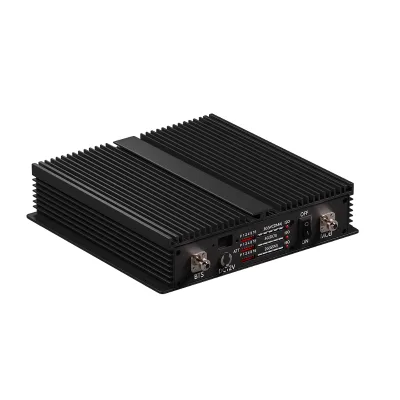


30dBm LTE2600 Mobile Signal Booster Network Repeater Cellphone Amplifier
$125.10 - $142.80
MOQ: 1 Pieces

High Power 2W 33dBm 3800MHz Cellular Amplifier Mobile Network Equipment 5g Signal Amplifier
$2476.00 - $2744.60
MOQ: 1 Pieces


Comprehensive Sourcing Guide
Strategic Sourcing Guide for Cellular Signal Amplifiers with Lightning Protection
Understanding the Technical Architecture of Protected Repeaters
When sourcing a cellular signal amplifier specifically configured with lightning protection, buyers must first distinguish between the core amplification function and the critical safety mechanisms designed to mitigate electrical surges. The product landscape for these devices includes various iterations, such as Wireless Repeaters and general Signal Repeaters, each serving distinct network topologies. A primary observation in the current market is the diversity in transmission media; while some units rely on Optical Fiber for long-distance, low-loss signal transport, others utilize traditional Cable-based transmission. This distinction is vital for procurement teams, as the choice of medium directly influences the installation complexity and the specific lightning protection requirements needed for the cabling infrastructure.
The technical specifications for these devices often highlight robust performance metrics essential for maintaining signal integrity during adverse weather conditions. For instance, specific models in the current inventory demonstrate a System Delay of 5μS or less, ensuring minimal latency for real-time communications. Furthermore, the Voltage Standing Wave Ratio (VSWR) is observed to be 1.5 or lower, indicating efficient power transfer and minimal signal reflection. Error Vector Magnitude (EVM) values are typically maintained at 6% or below, which is a crucial indicator of signal purity. When evaluating the physical interface, buyers should look for standardized RF Connectors, such as the SMA-Female*2 configuration found in several units, which ensures compatibility with standard antenna systems. The impedance is consistently standardized at 50 ω, a requirement for matching transmission lines and preventing signal loss.
Power supply requirements vary but generally adhere to a universal input standard of AC 100~240 V, converting to a DC 12V/3A output. This flexibility allows the units to operate in regions with varying grid voltages. However, the inclusion of lightning protection is not merely an add-on but a fundamental design feature in many of these units, explicitly listed as "With Lightning Protection." This feature is critical for outdoor installations where the device acts as a node between the external antenna and the internal distribution system. The protection mechanism must be capable of handling high-current surges, with some specifications indicating an Ics Capability of 25dB or greater, ensuring the device can withstand significant electrical stress without failure.
Compliance and Certification Verification Protocols
In the B2B procurement of electronic communication equipment, verifying compliance with international standards is non-negotiable. The supply chain for cellular signal amplifiers is heavily regulated to ensure that devices do not interfere with licensed spectrum and that they meet safety requirements for electrical equipment. Buyers must rigorously check for the presence of recognized certifications. In the current market data, ISO certification appears frequently, indicating that the manufacturing process adheres to international quality management standards. Additionally, RoHS (Restriction of Hazardous Substances) and CE (Conformité Européenne) markings are observed, suggesting compliance with environmental and safety directives relevant to the European market.
However, procurement teams must exercise caution regarding the scope of these certifications. While "CE" is a common observation, it is a self-declaration in many contexts and requires verification against specific harmonized standards for radio equipment. The presence of an ISO certification is a strong indicator of a supplier's commitment to consistent quality control, but it does not guarantee that every specific unit in a batch meets the exact performance parameters listed in marketing materials. Buyers should request the specific certificate numbers and verify their validity with the issuing bodies.
The standardization of the products is another critical area. Many units are described as adhering to "Standard" specifications, but this is a generic term. Buyers need to identify the specific technical standards, such as those defined by the International Telecommunication Union (ITU) or regional regulatory bodies like the FCC in the United States or the ETSI in Europe. The absence of specific standard names in general product descriptions should trigger a deeper inquiry. For example, while the product origin is listed as Fuzhou, China, or Shenzhen, China, the regulatory compliance must align with the destination country's laws. A device certified for the Chinese market may not be legally operable in the EU without additional testing.
Furthermore, the physical construction standards, such as the IP Rating, play a significant role in compliance and durability. An IP65 rating indicates that the device is dust-tight and protected against water jets from any direction, making it suitable for outdoor installation. This rating is often a prerequisite for obtaining certain certifications in harsh environments. Buyers should verify that the IP rating applies to the entire enclosure, including the lightning protection module, as a compromised seal can render the electrical protection ineffective.
Cost Drivers and Pricing Structure Analysis
The pricing of cellular signal amplifiers with lightning protection is influenced by a complex matrix of technical specifications, component quality, and supply chain logistics. The observed price range in the market spans from 1 USD to 100,000 USD, a variance that reflects the difference between simple indoor repeaters and high-capacity outdoor base station solutions. This wide range should not be interpreted as a linear scale of quality but rather as a reflection of distinct product categories. Low-cost units often target small-scale residential or office applications, while high-cost units are engineered for large commercial complexes or industrial sites.
A primary cost driver is the gain capability of the amplifier. Units with a gain of 50dB are common, but high-performance models can reach up to 85.0dB. Higher gain requires more sophisticated internal circuitry and higher-quality components, which directly increases the manufacturing cost. Similarly, the output power is a significant factor; an output power of 10W is a standard benchmark, but units with higher output capabilities will command a premium. The frequency range also impacts cost; multi-band units that support frequencies like 1.8GHz, 800MHz, 1900MHz, and 2700MHz require complex filtering and amplification stages, increasing the price compared to single-band solutions.
Packaging and logistics also contribute to the final cost. The product packing methods vary, with options ranging from simple Cartons to specialized Cages. The dimensions of the packaging, such as 230350134mm or 1808025mm, affect shipping volume and weight, which in turn influences freight charges. The product weight, observed as low as 0.2kg for some models, suggests the use of lightweight materials, which may be a trade-off against durability. Buyers must balance the initial purchase price against the long-term value of robust packaging that ensures the device arrives undamaged.
The Minimum Order Quantity (MOQ) is another critical financial consideration. The observed MOQ range is 1 to 10 units. This flexibility allows buyers to procure small quantities for pilot projects or small installations without significant capital commitment. However, larger orders may benefit from volume discounts, though specific discount structures are not publicly listed. Buyers should negotiate based on the total volume and the complexity of the customization required. Customization is available in the market, which can add to the cost but may be necessary for specific site requirements.
Typical Applications and Deployment Scenarios
The deployment of cellular signal amplifiers with lightning protection is driven by the need to extend coverage in areas where the natural signal is weak or obstructed. These devices are particularly effective in environments with large physical barriers, such as deep basements, large commercial buildings, and industrial facilities. The coverage area specifications provide a clear indication of the intended application. For instance, units with a coverage of 100 square meters are suitable for small offices or residential apartments, while those covering 500-1000 square meters are designed for larger commercial spaces or warehouses.
Outdoor installations are a primary use case for units with lightning protection. In these scenarios, the external antenna is exposed to the elements, making the lightning protection module essential to prevent damage from direct strikes or induced surges. The IP65 rating confirms that these units are designed to withstand outdoor conditions, including rain and dust. The transmission medium plays a crucial role in the application; Optical Fiber is preferred for long-distance runs where signal loss must be minimized, while Cable-based transmission is suitable for shorter distances within a building.
The network type is another factor in application selection. Devices supporting FDD (Frequency Division Duplex) networks are common, as they allow for simultaneous transmission and reception on different frequencies. This is essential for modern cellular networks. The coverage area can also be expressed in square feet, with some units covering 3229.17 to 5381.95 square feet, providing a clear metric for facility managers to determine the number of units required for a specific building.
In addition to coverage, the speed and transmission rate are critical for applications involving high data usage. While some units list a transmission rate of 2, others may offer higher speeds, such as 300m/s, which refers to the speed of signal propagation rather than data throughput. Buyers must ensure that the selected unit meets the data speed requirements of the end-users. The presence of a built-in firewall in some models adds a layer of security, making these units suitable for applications where data privacy is a concern, such as in corporate environments.
Supplier Evaluation and Quality Assurance Strategies
Evaluating suppliers for cellular signal amplifiers requires a focus on their ability to deliver consistent quality and adhere to the technical specifications provided. The origin of the products, such as Fuzhou, Shenzhen, or Guangdong in China, indicates a concentration of manufacturing capabilities in these regions. However, the location alone does not guarantee quality. Buyers should assess the supplier's track record in delivering products with the specific certifications mentioned, such as ISO, RoHS, and CE.
Quality control should be a central part of the procurement process. Buyers must verify that the "Condition" of the products is "New" and that the "Standard" adheres to the claimed specifications. The "Single Package Size" of 10X10X10cm for some items suggests compact packaging, which should be inspected upon receipt to ensure the product has not been damaged during transit. The "Product Weight" should also be verified against the specifications to ensure that the internal components match the expected density and quality.
The "Fastest Shipping" time of 13 days is a logistical metric that buyers should consider when planning their projects. However, this should not be the sole determinant of supplier selection. A supplier with a longer lead time but a higher reputation for quality and after-sales support may be a better choice. The "Selling Units" being "Single Item" indicates that the market supports flexible purchasing, which is beneficial for small-scale projects.
Buyers should also evaluate the supplier's ability to handle "Customization." Since customization is available, suppliers who can tailor the product to specific frequency ranges or mounting requirements demonstrate a higher level of technical competence. The "Article Number" and "Product Model" should be cross-referenced to ensure that the correct version of the product is being supplied. For example, models like RW-WR-M-33/37/40/43 or HPR-3T40(1800-2100-2700) represent specific configurations that must be matched to the project requirements.
Long-Term Procurement and Maintenance Considerations
Sourcing cellular signal amplifiers is not a one-time transaction but part of a long-term relationship that involves maintenance, upgrades, and potential replacements. The "System Delay" and "EVM" specifications are critical for long-term performance, as any degradation in these metrics can lead to poor user experience. Buyers should consider the lifespan of the components, particularly the lightning protection module, which may need replacement after a significant surge event.
The "Power Supply" requirements, specifically the AC to DC conversion, should be evaluated for energy efficiency. Units that operate efficiently will reduce operational costs over time. The "Impedance" and "VSWR" values should be monitored to ensure that the system remains optimized. Any deviation from the specified values may indicate a need for maintenance or component replacement.
The "Coverage" and "Gain" specifications should be reviewed periodically to ensure that the system continues to meet the needs of the facility. As the building or the surrounding environment changes, the performance of the amplifier may need to be adjusted. The availability of spare parts and technical support from the supplier is crucial for maintaining the system over its lifecycle.
Finally, buyers should consider the "Transmission Medium" when planning for future expansions. If the current system uses Cable, but the facility plans to expand to a larger area, the transition to Optical Fiber may be necessary. The supplier's ability to support such transitions and provide compatible equipment is a key factor in long-term procurement planning. The "Product Packing" and "Standard" dimensions should also be considered for future storage and logistics. By focusing on these long-term aspects, buyers can ensure that their investment in cellular signal amplifiers with lightning protection remains effective and reliable for years to come.
Comparative Analysis of Key Product Specifications
To assist buyers in making informed decisions, the following table summarizes the key technical specifications observed in the market for cellular signal amplifiers with lightning protection. This comparison highlights the diversity in performance metrics and helps identify the most suitable product for specific application needs.
| Specification | Observation A | Observation B | Observation C | Observation D |
|---|---|---|---|---|
| Type | Wireless Repeater | Signal Repeater | Signal Repeater | Signal Repeater |
| Lightning Protection | With Lightning Protection | With Lightning Protection | With Lightning Protection | With Lightning Protection |
| IP Rating | IP65 | IP65 | IP65 | IP65 |
| Frequency | 1.8gh | 900 | 1.8gh | 1.8gh |
| Gain | 50db | 85.0db | 50db | 50db |
| Output Power | 10W | 10W | 10W | 10W |
| Coverage | 500-1000sqm | 300-500sqm | 100 | 500-1000sqm |
| Transmission Medium | Optical Fiber | Cable | Cable | Optical Fiber |
| Certification | ISO, RoHS, CE | ISO | ISO, RoHS, CE | ISO, RoHS, CE |
| Origin | Fuzhou, China | Shenzhen, China | Shenzhen | Guangdong China |
| System Delay | ≤ 5μS | ≤ 5μS | ≤ 5μS | ≤ 5μS |
| VSWR | ≤ 1.5 | ≤ 1.5 | ≤ 1.5 | ≤ 1.5 |
| EVM | ≤ 6% | ≤ 6% | ≤ 6% | ≤ 6% |
| Power Supply | AC 100~240 V | AC 100~240 V | AC 100~240 V | AC 100~240 V |
| Ics Capability | ≥ 25db | ≥ 25db | ≥ 25db | ≥ 25db |
| RF Connector | SMA-Female*2 | SMA-Female*2 | SMA-Female*2 | SMA-Female*2 |
| Standard | Standard | Standard | Standard | Standard |
| Condition | New | New | New | New |
| Customization | Available | Available | Available | Available |
This table provides a snapshot of the market offerings, allowing buyers to compare features side-by-side. It is important to note that while many specifications are consistent across the observed products, the coverage area and gain vary significantly, reflecting the different use cases. Buyers should use this data as a starting point for their evaluation, ensuring that the selected product meets the specific requirements of their project.
FAQs
What certifications do these amplifiers have?
These amplifiers typically hold ISO, RoHS, and CE certifications. Buyers should verify specific certificate numbers with the issuing bodies to ensure compliance with regional safety and environmental directives before placing orders.
How does the lightning protection feature work?
The devices include built-in lightning protection to mitigate electrical surges during outdoor installation. Some models specify an Ics Capability of 25dB or greater to withstand significant electrical stress without failing.
Which transmission media are supported by these units?
Supported transmission media include both Optical Fiber and Cable. The choice depends on the installation distance, with fiber preferred for long runs to minimize signal loss and cable suitable for shorter indoor distances.
Can I customize the product specifications?
Customization is available for these signal repeaters to meet specific site requirements. Buyers should discuss their unique needs with suppliers to determine the feasibility and potential cost implications of customizing the unit.
What is the typical power supply requirement?
The units generally accept an input of AC 100~240 V and output DC 12V/3A. This universal input standard allows the devices to operate in regions with varying grid voltages without additional converters.
What is the minimum order quantity for these items?
The minimum order quantity ranges from 1 to 10 units depending on the supplier. This flexibility allows buyers to procure small quantities for pilot projects without significant capital commitment.
Where are these amplifiers manufactured?
Manufacturing locations include Fuzhou, Shenzhen, and Guangdong in China. Buyers should confirm the specific origin of the batch to ensure regulatory compliance aligns with the destination country's laws.