Source Zinc Plated Steel Concrete Nails for Construction, DIY, and Industry
Compare 30 listings of Zinc Plated Steel Concrete Nails from verified Chinese suppliers. Buyers can evaluate specifications like length, material grade, and surface finishing to find fasteners for building, home, and industrial applications.
Key considerations
Products List


$400.00 - $900.00
MOQ: 5 Tons




Comprehensive Sourcing Guide
Strategic Sourcing Guide for Zinc Plated Steel Concrete Nails
Understanding Product Specifications and Material Composition
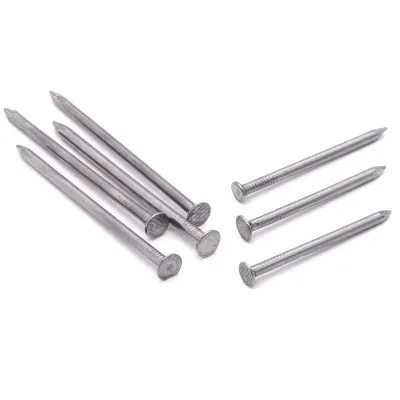
When sourcing Zinc Plated Steel Concrete Nails, buyers must first establish a clear understanding of the fundamental material composition and physical specifications that define the product's utility. The core material for these fasteners is consistently identified as steel or iron, often sourced with specific grades such as 4.6 or raw materials designated as 45# and 55#. These designations refer to the tensile strength and carbon content of the steel, which are critical for ensuring the nail can withstand the high impact forces required when driving into concrete or masonry without snapping. The surface treatment is a defining characteristic of this category; the "zinc plated" designation indicates a protective coating applied to the steel to prevent rust and corrosion. This process is often listed alongside other surface treatments like phosphating or plain finishes, but for concrete applications, zinc plating is preferred to extend the service life of the fastener in potentially damp environments.
The physical dimensions of concrete nails vary significantly based on the specific application and the density of the substrate. Sourcing data indicates that lengths can range from 25mm up to 75mm, while other specifications suggest sizes available from 1 inch to 4 inches, and even extending up to 6 inches for heavy-duty applications. The diameter or gauge is equally important, with standard sizes often falling between 1.5mm and 5.5mm. Buyers should verify that the supplier can provide nails in the specific length and diameter required for their project, as the "Common Nail" or "Concrete Nail" classification often encompasses a wide spectrum of sizes. The head style is typically round, designed to provide a broad bearing surface that prevents the nail head from pulling through the material being fastened. Furthermore, the customization of these nails is a key feature in the market, allowing clients to request specific colors, packaging, or dimensional adjustments to meet unique project requirements.
Compliance Standards and Technical Verification
Navigating the complex landscape of international standards is essential for ensuring that purchased concrete nails meet safety and performance expectations. The supply chain for these fasteners is governed by a variety of recognized standards, including JIS (Japanese Industrial Standards), ISO (International Organization for Standardization), GB (Guobiao, the Chinese national standard), DIN (Deutsches Institut für Normung), and ANSI (American National Standards Institute). When evaluating a potential supplier, buyers must explicitly request documentation confirming that their products adhere to the specific standard relevant to their target market. For instance, a product listed with a standard of "2D-20D" refers to a specific sizing system common in the nail industry, while other listings may reference dimensional standards like 3/4", 7/8", 1", 1-1/4", or 1-1/2".
It is crucial to distinguish between the general standards a supplier claims to follow and the specific certification status of the batch being purchased. While background information may mention certifications like CE, these should not be assumed as a guarantee for every listed product without direct verification. Buyers should request test reports or certificates of conformity that specifically address the mechanical properties of the zinc plating and the shear strength of the steel. The standard "ISO" is frequently cited, but the specific ISO standard number (e.g., ISO 10513 for nails) should be confirmed. Similarly, while "GB" and "DIN" are common, the exact version of the standard must be agreed upon in the purchase order to ensure compatibility with local building codes. The absence of a specific standard number in a product listing should prompt a direct inquiry to the supplier rather than an assumption of compliance.
Cost Drivers and Pricing Dynamics
The pricing of Zinc Plated Steel Concrete Nails is influenced by a complex interplay of material costs, manufacturing processes, and logistical factors. The base cost is heavily tied to the price of raw steel, specifically the 45# and 55# grades mentioned in the supply data. Fluctuations in the global steel market will directly impact the unit price of these fasteners. Additionally, the cost of the zinc plating process adds a variable layer to the pricing structure. The thickness and quality of the zinc coating, which determine the corrosion resistance, can vary between suppliers, leading to price discrepancies. Buyers should be aware that "zinc plated" is a general term; the actual cost may depend on whether the plating is hot-dip, electroplated, or another method, though specific plating thicknesses are not universally standardized in the provided data.
Packaging and logistics also play a significant role in the final cost. The observed packaging methods range from small boxes and bulk packing to complex pallet configurations, such as 120 pieces per coil, 60 coils per carton, and 48 cartons per pallet. Customized packaging, while often available, may incur additional fees. The Minimum Order Quantity (MOQ) is another critical cost driver. Data indicates that MOQs can range from as low as 1 unit to as high as 10,000 units, with some suppliers stating that the MOQ is "According to Your Size." This flexibility allows buyers to manage cash flow but requires careful negotiation to avoid high per-unit costs on small orders. Payment terms, typically involving a 30% advance and 70% before shipment via Telegraphic Transfer (TT), also affect the financial planning of the procurement cycle. Buyers should calculate the total landed cost, including freight and insurance, as the origin locations (such as Tianjin or Zhejiang, China) and delivery times (ranging from 10 to 30 days) will influence shipping expenses.
Typical Applications and Usage Scenarios
Zinc Plated Steel Concrete Nails are engineered for a diverse range of applications, primarily centered around construction and building material assembly. The primary usage is in the fastening of wood, metal, or other materials to concrete, brick, or block walls. The "Concrete Nail" classification suggests these are designed for high-impact driving, often requiring a hammer or a specialized powder-actuated tool. The "Roofing Nail" and "Common Nail" variations indicate that the same zinc-plated steel technology is adapted for different structural needs, such as securing roofing materials or general framing. The versatility of these nails is further highlighted by their application in home improvement, industrial projects, and general building material assembly.
The specific application dictates the required specifications. For residential construction, smaller diameters and lengths (e.g., 1" to 2") may be sufficient for attaching trim or light fixtures to concrete walls. In contrast, heavy industrial applications or large-scale infrastructure projects may require the larger sizes, such as 4" to 6" nails, to secure heavy steel beams or thick timber to concrete foundations. The "Eco-Friendly" performance attribute mentioned in some listings suggests that these fasteners may be part of sustainable building practices, potentially due to the recyclability of steel or the non-toxic nature of the zinc plating. However, buyers should verify if this claim applies to the specific product line, as environmental claims can vary. The ability to customize the color and finish allows these nails to be used in applications where aesthetics matter, such as in visible architectural elements where the nail head might be exposed.
Supplier Evaluation and Origin Considerations
Evaluating suppliers for Zinc Plated Steel Concrete Nails requires a thorough assessment of their operational capabilities and geographical location. The supply data indicates that major production hubs are located in China, specifically in regions like Tianjin and Zhejiang. These regions are known for their robust manufacturing infrastructure and access to raw steel materials. When selecting a supplier, buyers should verify the specific origin of the product, as "China" is a broad designation and regional differences in manufacturing quality can exist. A supplier based in Tianjin may have different logistical advantages compared to one in Zhejiang, particularly regarding access to ports and shipping routes.
The customization capabilities of a supplier are a key differentiator. The market data shows that customization is "Available" for various attributes, including size, color, and packaging. A supplier that offers flexible customization can better meet the unique needs of a buyer's project, such as providing specific packaging for retail distribution or customizing the nail length for a specialized application. However, buyers must balance this flexibility with the supplier's ability to maintain consistent quality. The "Connection" method listed as "Weld" in some contexts may refer to the manufacturing process of the nail shank or the packaging assembly, and understanding this process is vital for quality assurance. Buyers should also consider the supplier's payment terms and delivery reliability, as the standard delivery time ranges from 10 to 25 days, with some suppliers offering delivery within 30 days.
Quality Control and Long-Term Procurement Strategies
Implementing a robust quality control (QC) strategy is essential for mitigating risks associated with sourcing Zinc Plated Steel Concrete Nails. Given the critical role these fasteners play in structural integrity, buyers should not rely solely on the supplier's self-reported standards. Instead, a multi-stage QC approach is recommended. This includes pre-production sample verification, where the buyer receives samples to test for tensile strength, coating adhesion, and dimensional accuracy. During production, random inspections should be conducted to ensure consistency in the zinc plating thickness and the absence of defects such as burrs or uneven heads. Post-production, a final inspection of the packaged goods should verify that the quantity, packaging, and labeling match the purchase order.
Long-term procurement considerations involve building a sustainable relationship with reliable suppliers. The "Customized Packing" and "According to Your Request" options suggest that suppliers are willing to adapt to buyer needs, which is beneficial for long-term partnerships. Buyers should establish clear communication channels regarding changes in specifications or standards. It is also important to monitor the market for changes in raw material costs, as steel prices can fluctuate. By maintaining a steady order volume, buyers may be able to negotiate better payment terms or pricing structures. Additionally, buyers should keep abreast of changes in international standards and building codes, ensuring that their procurement strategy remains compliant with evolving regulations. The ability to source from multiple origins, such as Tianjin or Zhejiang, can also provide a buffer against supply chain disruptions, ensuring a continuous flow of materials for ongoing projects.
Comparative Analysis of Product Attributes
To facilitate informed decision-making, the following table summarizes the key attributes observed in the market for Zinc Plated Steel Concrete Nails. This comparison highlights the variability in specifications and the importance of verifying details before placing an order.
| Attribute Category | Observed Variations | Verification Requirement |
|---|---|---|
| Material | Steel, Iron, 45#, 55# | Confirm grade and tensile strength certification. |
| Surface Finish | Zinc Plated, Plain, Phosphating, Galvanized | Verify plating thickness and corrosion resistance test. |
| Size/Length | 25mm-75mm, 1"-4", 1"-6", 3/4"-1-1/2" | Match specific project requirements and substrate thickness. |
| Standards | JIS, ISO, GB, DIN, ANSI | Confirm the specific standard number relevant to the destination. |
| Packaging | Box, Bulk, Pallet, Customized | Ensure packaging protects against damage during transit. |
| Origin | Tianjin, Zhejiang, China | Verify factory location for logistical and quality assessment. |
| MOQ | 1 - 10,000 units | Negotiate based on order volume and storage capacity. |
| Delivery Time | 10-25 days, Within 30 days | Align with project schedule and account for shipping delays. |
By adhering to these guidelines and maintaining a rigorous approach to verification, buyers can effectively source high-quality Zinc Plated Steel Concrete Nails that meet their specific project needs while minimizing risk and ensuring long-term value.
FAQs
What materials are used for Zinc Plated Steel Concrete Nails?
These nails are manufactured from steel or iron, often utilizing grades like 4.6 or raw materials designated as 45# and 55#. The zinc plating provides a protective coating to prevent rust and corrosion during use in construction environments.
Which international standards do these concrete nails comply with?
Products typically adhere to major standards including JIS, ISO, GB, DIN, and ANSI. Specific dimensional standards may range from 2D-20D or specific inch measurements like 1 inch to 6 inches depending on the supplier's production capabilities.
Can buyers request customization for nail size and packaging?
Yes, customization is available for size, color, and packaging according to client needs. Buyers can specify dimensions ranging from 25mm to 75mm or larger, and choose from options like small boxes, bulk packing, or custom pallet configurations.
What are the typical delivery times for these fasteners?
Delivery times generally range from 10 to 25 days, with some suppliers offering delivery within 30 days. This timeline depends on the order volume, specific customization requirements, and the logistics from the manufacturing origin in China.
How are these nails packaged for shipment?
Packaging options include small boxes, bulk packing, and pallets, with specific configurations like 120 pieces per coil or 48 cartons per pallet. Customized packing is also available to meet specific client requirements for retail or industrial distribution.
What payment terms are standard for purchasing these nails?
Standard payment terms typically involve a 30% Telegraphic Transfer advance and 70% before shipment. Some suppliers may also offer FOB terms, ensuring secure financial transactions for both buyers and manufacturers during the procurement process.