Source Zirconium Carbonate Powder for Rubber, Feed, and Ceramics
Compare 14 verified listings of Zirconium Carbonate Powder with varying purity, particle size, and packaging options. Buyers can evaluate specifications for rubber additives, feed supplements, and ceramic glazes to find the right supplier.
Key considerations
Products List


Comprehensive Sourcing Guide
Strategic Sourcing Guide for Zirconium Carbonate Powder Procurement
Navigating the global market for Zirconium Carbonate Powder requires a disciplined approach that distinguishes between specific chemical grades, application requirements, and supplier capabilities. The core keyword "Zirconium Carbonate Powder" often appears in listings alongside related compounds such as zinc carbonate or generic zirconium salts, creating a complex landscape for procurement professionals. This guide synthesizes observed market data and technical attributes to provide a framework for evaluating potential suppliers without relying on unverified claims. Buyers must prioritize verification of chemical identity, purity specifications, and compliance documentation before initiating any commercial transaction.
Technical Specifications and Chemical Identity Verification
The primary challenge in sourcing Zirconium Carbonate Powder lies in verifying the exact chemical composition, as product listings frequently conflate zirconium-based compounds with other metal carbonates. Based on observed market data, the molecular weight for the relevant zirconium compound is recorded as 167.22, which serves as a critical baseline for verifying chemical identity. However, buyers must exercise caution regarding product type classifications found in supplier catalogs. Some listings explicitly identify the product as "Zinc Carbonate" or "Type: Zinc Carbonate," while others list "Type: Zirconium Carbonate" or "Classification: Zirconium." These discrepancies indicate that the market contains mixed inventory, and the buyer's first step must be a rigorous request for the Certificate of Analysis (COA) to confirm the CAS number and chemical formula.
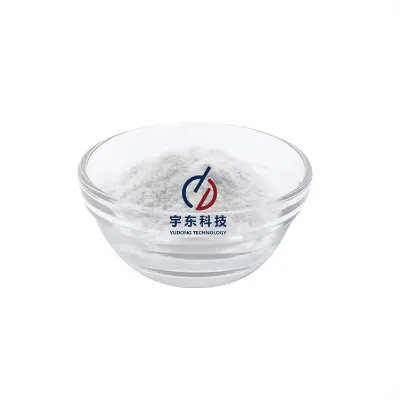
For authentic zirconium carbonate, the formula is often cited as Zr(OH)2CO3·ZrO2, with a specific EC number of 260-633-5. The physical appearance is consistently described as a white powder, though some entries note a generic "Powder" appearance without color specification. The solubility profile is a key differentiator; while some zirconium compounds are noted as insoluble in water, specific grades of zirconium carbonate are described as easily soluble in water. This variation suggests the existence of different hydration states or purity levels. Buyers should verify the pH value of a 10% slurry, which typically ranges between 7.0 and 8.5 for neutral to slightly alkaline grades. Furthermore, the bulk density is a critical logistical parameter, with observed ranges falling between 0.8 and 1.2 g/cm³. Understanding these physical properties is essential for calculating shipping volumes and determining the suitability of the material for specific manufacturing processes.
Compliance, Certification, and Regulatory Standards
In the industrial chemical sector, compliance is not merely a formality but a prerequisite for market access. The supplied data indicates that suppliers often hold ISO certification, with some providing additional documentation such as a Certificate of Analysis (COA). When evaluating a potential vendor, the presence of ISO certification is a strong indicator of a standardized quality management system, though the specific ISO standard (e.g., ISO 9001) should be confirmed. The COA is particularly vital as it provides the empirical evidence required to validate the product specifications listed in the catalog.
Regulatory compliance extends beyond general certifications to specific heavy metal and impurity limits. For high-purity applications, the lead content is a critical constraint, with observed limits as low as ≤0.002% or ≤15 ppm depending on the grade. Similarly, arsenic and cadmium content are strictly monitored, with typical maximums of ≤2 ppm and ≤1 ppm respectively. Iron content is also a significant factor, often capped at ≤50 ppm. Buyers must ensure that the supplier's COA explicitly states these values for the specific batch being purchased, as these limits can vary significantly between industrial grade and higher purity grades. The "Industrial Grade" classification observed in the market suggests that the material may not meet pharmaceutical or food-grade standards unless explicitly certified otherwise. Therefore, procurement teams must request detailed impurity profiles to ensure the material aligns with the safety requirements of their downstream applications.
Cost Drivers and Pricing Dynamics
The pricing structure for Zirconium Carbonate Powder is influenced by a complex interplay of factors, including purity levels, packaging requirements, and trade terms. The observed price range in the market is exceptionally broad, spanning from $1.86 to $3,350 per unit. This vast disparity is not indicative of a single product but rather reflects the difference between bulk industrial grades and specialized, high-purity formulations. A price at the lower end of this spectrum likely corresponds to bulk industrial grade material with standard specifications, while the higher end may reflect custom formulations, high purity (≥99%), or smaller batch sizes with specialized packaging.
Minimum Order Quantity (MOQ) is another significant cost driver. The market shows an MOQ range from 1 unit to 1,000 units. Suppliers with higher MOQs often offer more competitive unit pricing, whereas suppliers accommodating small trial orders (MOQ of 1) typically charge a premium. Packaging also impacts the final cost; standard packaging is often 25kg per bag, but options for 1,000kg bags or custom requirements are available. Buyers should be aware that "According to Customer Requirement" packaging options may incur additional handling fees. Furthermore, trade terms such as EXW, FOB, CFR, and CIF significantly alter the landed cost. An EXW price excludes all transportation and insurance costs, while a CIF price includes them up to the destination port. Procurement professionals must calculate the total landed cost rather than focusing solely on the unit price to avoid budget overruns.
Typical Applications and Performance Requirements
Zirconium Carbonate Powder serves a diverse range of industrial applications, and the selection of the correct grade depends heavily on the intended use. The observed application list includes rubber additives, feed additives, and ceramic glazes. For rubber applications, the material likely acts as a filler or processing aid, where particle size and bulk density are critical for dispersion. In the context of ceramic glazes, the loss on ignition (LOI) becomes a crucial parameter, with observed values ranging from 24% to 26%. This high LOI indicates significant volatile content, which affects the firing behavior and final glaze properties.
The chemical purity is equally important for specific applications. While some listings indicate a purity range of 30% to 50%, others specify a minimum zirconium content of ≥57% or a general purity of ≥99%. For feed additives, the strict limits on heavy metals (lead, arsenic, cadmium) are non-negotiable to ensure animal safety. In contrast, for ceramic applications, the focus may shift more toward the chemical stability and the specific particle size distribution, often specified as passing a -325 mesh sieve. The specific surface area, observed in the range of 8-15 m²/g, is another performance metric that influences reactivity and dispersion characteristics. Buyers must match these technical attributes to their specific process requirements rather than assuming a single grade is suitable for all uses.
Supplier Evaluation and Quality Control Protocols
Evaluating a supplier for Zirconium Carbonate Powder requires a multi-faceted approach that goes beyond reviewing product listings. The origin of the product is a key factor, with Yixing, Jiangsu, China, being a documented source for these materials. While this provides a geographical baseline, buyers should verify the specific manufacturing facility and its capacity to maintain consistent quality. The presence of "Customization: Available" suggests that suppliers are willing to tailor specifications, but this requires a robust quality control framework to ensure that custom orders meet the agreed-upon standards.
Quality control should be an integral part of the procurement process. Buyers must insist on batch-specific COAs that verify the molecular weight, purity, and impurity levels against the agreed specifications. The "Model No." or product code, such as "ZBC" or "40min," serves as a unique identifier for the grade, but these codes can vary between suppliers. It is essential to cross-reference these codes with the actual chemical specifications provided in the COA. Additionally, the moisture content, typically limited to ≤2.0%, must be verified to prevent issues with clumping or reactivity during storage and processing. For long-term partnerships, buyers should consider requesting third-party testing results to validate the supplier's internal QC data, ensuring that the product consistently meets the required standards over time.
Long-Term Procurement Considerations and Supply Chain Stability
Sourcing Zirconium Carbonate Powder is not a one-time transaction but a strategic decision that impacts long-term operational stability. The availability of customization and various packaging options (25kg bags, 1000kg bags, or custom requirements) offers flexibility, but it also introduces complexity in supply chain management. Buyers should establish clear communication channels with suppliers regarding lead times and production schedules, although specific lead time data is not universally provided in the current market observations.
The variability in purity and specifications across different listings underscores the need for a standardized specification sheet that both the buyer and supplier agree upon before any order is placed. This document should detail the acceptable ranges for all critical parameters, including purity, heavy metal content, particle size, and moisture. Furthermore, buyers should consider the scalability of the supply. As production needs grow, the supplier must be able to increase volume without compromising quality or delivery timelines. The trade terms (EXW, FOB, CFR, CIF) should be reviewed annually to ensure they remain cost-effective as logistics markets fluctuate. By maintaining a rigorous evaluation process and focusing on verified technical data, buyers can secure a reliable supply of Zirconium Carbonate Powder that meets their specific industrial needs.
FAQs
What is the purity range for Zirconium Carbonate Powder?
Purity ranges from 30% to 99% depending on the specific grade. Industrial grades often list 90% to 99%, while some formulations specify a minimum zirconium content of 57% or a general purity of 30% to 50%.
How is the product typically packaged for shipment?
Standard packaging is 25kg per plastic bag or 25kg per bag. Some suppliers offer 1000kg bags or custom packaging according to customer requirements to accommodate different logistics needs.
Which certifications do suppliers usually hold for this product?
Suppliers typically hold ISO certification and provide a Certificate of Analysis. Some listings also mention COA certification to verify chemical composition and impurity levels for industrial applications.
Can the product be customized for specific industrial needs?
Yes, customization is available for specifications and packaging. Buyers can request tailored particle sizes, purity levels, or specific bag configurations to match their manufacturing process requirements.
What is the solubility profile of Zirconium Carbonate Powder?
Solubility varies by grade, with some forms being insoluble in water and others easily soluble. Buyers should verify the specific grade properties to ensure compatibility with their intended application process.
Where are these zirconium carbonate products typically sourced from?
Products are commonly sourced from Yixing, Jiangsu, China, or other locations within China. Buyers should verify the specific origin to ensure supply chain stability and compliance with regional standards.