Outdoor Permeable Paving Grid Suppliers and Manufacturers
Compare 12 verified suppliers of Outdoor Permeable Paving Grid based on location, lead time, and certification. Review product specifications like pressure strength and working temperature before requesting samples or quotes; review the available evidence before requesting comparable quotations from suitable candidates.
Suppliers List

Shandong Geomembrane New Materials Co., Ltd.
- Verified by SGS
- Combined
- China Shandong
- Lead time15 days
- Avg. response≤ 2h
Main productsGeomembrane, Composite Geomembrane, Geocell, Geotextile, Three-Dimensional Composite Drainage Network, Gcl, Geogrid, Geotube, Geobag, Grass Grid
Main marketsDomestic


Interlocking Plastic Driveway Lawn Paving Reinforcement Planting Grass Paver Grid
$1.76 - $5.06
MOQ: 500 Square Meters

Grass Pavers Grass Grid for Car Parking Recycled Virgin Plastic Permeable Grid Paving Grid
$1.76 - $5.55
MOQ: 500 Square Meters

Grass Pavers Grass Grid for Car Parking Plastic Permeable Grid Paving
$1.76 - $5.62
MOQ: 500 Square Meters

$1.22 - $4.53
MOQ: 200 Square Meters

High Strength Interlocking Plastic Grass Paver Grid Driveway Ground Reinforcement Grass Gravel Grid
$1.76 - $3.26
MOQ: 500 Square Meters

Shandong Yijia New Materials Co., Ltd
- Verified by SGS
- Manufacturer/Factory
- China Shandong
- Lead time15 days
- Avg. response≤ 1h
Main productsGeocell, Geogrid, Geomembrane, Geotextiles, Fiberglass Geogrid, Polyester Geogrid, Biaxial Geogrid, Non Woven Geotextile, Plastic Grid, EPDM Membrane
Main marketsSouth America,Eastern Europe,Mid East,North America,Southeast Asia,Eastern Asia,Oceania,Western Europe,Africa


Ground Grid Honeycomb Geocell Permeable Grass Pavers Gravel Grid for Driveway
$0.30 - $3.00
MOQ: 1000 Square Meters

Road Geocell Permeable-Pavers Paddock Grid Concrete-Grass-Pavers
$0.30 - $3.00
MOQ: 1000 Square Meters

Shandong Jinruixiang Geotextile Material Co., Ltd.
- Verified by SGS
- Combined
- China Shandong
- Lead time15 days
- Avg. response≤ 6h
Main productsHDPE Geomembrane, Liner, Geogrid, Nonwoven Geotextile, Geotextile, Diainage Geomat, Geosynthetic Clay Layer, Lind Drainage Tube, Woven Geotextile, Corrugated Drainage Pipe
Main marketsAfrica,Southeast Asia/ Mideast,North America


Grass Paver Concrete Permeable Pavers Plastic Plastic Driveway Grid
$1.20 - $3.60
MOQ: 1000 Square Meters


$0.35 - $2.25
MOQ: 1000 Square Meters

Anhui Zhonglu Engineering Materials Co., Ltd.
- Verified by SGS
- Combined
- China Anhui
- Lead time15 days
- Avg. response≤ 2h
Main productsGeomembrane, Geotextile, Geogrid, Geocell, Drain Board, Geobag, Polyester Geogrid, 3D Geomat, Composite Geomembrane, Grass Grid
Main marketsOthers(foreignTradeCapacity.exportBusinessCapacityMarketOther),Southeast Asia/ Mideast,East Asia(Japan/ South Korea),Domestic,Europe,North America

Grass Gravel Grid Plastic Permeable Paving Grid System for Gravel
$0.32 - $2.23
MOQ: 200 Square Meters

Gravel Grid Pavers Plastic Permeable Car Parking Interlocking Grass Grid
$0.67 - $3.89
MOQ: 1000 Square Meters


Eco-Friendly Permeable Grass Grid for Parking Lots and Driveways
$2.80 - $8.33
MOQ: 1000 Square Meters

Taian Nuolian Engineering Materials Co., Ltd.
- Verified by SGS
- Trading Company
- China Shandong
- Lead time15 days
- Avg. response≤ 4h
Main productsConcrete Canvas, 3D Geomat, Composite Drainage Net, Gcl, Geomembrane, Geotextile, Geogrid, Geocell, Grass Grid Paver, Drainage Board
Main marketsSouth America,Africa,Southeast Asia/ Mideast


High Compressive Strength Plastic Gravel Pavers Grid for Parking Lot
$4.50 - $7.50
MOQ: 100 Square Meters

High Quality Grids Plastic Driveway Grid Gravel Grid Plastic Grass Paver
$4.50 - $7.50
MOQ: 100 Square Meters

Weifang Luyang Waterproof Material Co., Ltd
- Verified by TUVRHEINLAND
- Combined
- China Shandong
- Lead time15 days
- Avg. response≤ 4h
Main productsWaterproof Membrane, Waterproof Coating, Geotechnical Material, Bitumen Waterproof Membrane, Polyurethane Waterproof Coating, Tpo Waterproof Memrbane, Polyethylene Polypropylene Waterproof Membrane, Acrylic Waterproof Coating, HDPE Geomembrane, EPDM Waterproof Membrane
Main marketsSouth America,Southeast Asia/ Mideast,Europe,Australia,North America

Plastic Grass Paver, Permeable Ground Reinforcement Grid for Lawn Garden Driveway
$1.35 - $1.75
MOQ: 500 Pieces

Grass Paver Plastic Grid, Permeable Ground Reinforcement for Driveway Parking Garden Path
$1.35 - $1.75
MOQ: 500 Pieces

Plastic Grass Paver 50X50cm, Permeable Ground Grid for Driveway Parking, Wholesale Paver
$1.35 - $1.75
MOQ: 500 Pieces

Plastic Grass Paver 50X50cm Permeable Ground Grid for Driveway Parking Lot, Load Bearing Eco Paver
$1.35 - $1.75
MOQ: 500 Pieces

Permeable Plastic Grass Paver Grid, Eco Ground Reinforcement for Parking Lot Fire Lane
$1.35 - $1.75
MOQ: 500 Pieces

Plastic Grass Paver Grid, Permeable Paver for Driveway Parking Fire Lane, Ground Reinforcement
$1.35 - $1.75
MOQ: 500 Pieces

Shandong Toplus Material Technology Co., Ltd.
- Verified by TUVRHEINLAND
- Trading Company,Manufacturer/Factory,Group Corporation,Other
- China Shandong
- Lead time15 days
- Avg. response≤ 5h
Main productsGeomembrane, Geotextiles, Geocells, Geogrids, Engineering Fibers
Main marketsSouth America,Eastern Europe,Mid East,North America,Southeast Asia,Eastern Asia,Oceania,Western Europe,Africa

Grass Pavers Grass Grid for Car Parking Recycled Plastic Permeable Grid Paving
$1.90 - $2.33
MOQ: 5000 Square Meters


Environmentally Friendly Permeable Grass Grid - Allowing for Water and Air Circulation
$1.56 - $3.22
MOQ: 5000 Square Meters

Porous Grass Grid - Allows Air /Water to Pass Through, for Parking Lots
$1.56 - $3.22
MOQ: 5000 Square Meters

Environmentally Friendly Permeable Grass Grid - Sturdy and Durable, Providing Excellent Support.
$2.33 - $3.20
MOQ: 5000 Square Meters

Taian Wdf Polymer Composites Co., Ltd.
- Verified by SGS
- Trading Company
- China Shandong
- Lead time15 days
- Avg. response≤ 2h
Main productsGabio, Plastic Blind Ditch, Seepage and Drainage Sheet, Waterproof Material, Geotechnical Material, Drain Mat, Plastic Products, Synthetic Material, Composite Material
Main marketsSouth America,Others(foreignTradeCapacity.exportBusinessCapacityMarketOther),Southeast Asia/ Mideast,Domestic

Grass Pavers Grass Grid for Car Parking Recycled Plastic Permeable Grid Paving
$0.99 - $2.20
MOQ: 1000 Square Meters

Excellent Permeability Plastic Grass Paver Grid for Slope Protection Parking Lot Soil Stabilizer
$1.99 - $3.50
MOQ: 1000 Square Meters

Dual-Purpose Eco-Friendly and Durable Permeable Pavers Grass Paver Grid for Parking Lot Greeining
$0.60 - $3.88
MOQ: 1000 Square Meters

Anti-Slip Safety Water Permeability Strong Reinforced Grass Paver Grid for Garden Pathways
$0.66 - $1.20
MOQ: 1000 Square Meters


Road Geocell Permeable-Pavers Paddock Grid Concrete-Grass-Pavers
$0.50 - $1.20
MOQ: 1000 Square Meters

Dezhou Huaxiang New Material Technology Co., Ltd.
- Verified by BV
- Combined
- China Shandong
- Lead time15 days
- Avg. response≤ 2h
Main productsGeomembrane, Geotextile, Geogrid, Drainage Board, Drainage Net, Geosynthetic Clay Liner Gcl, Geocell, Geo Bags, Geomembrane Welding Machine, Cement Blanket(Gccm)
Main marketsSouth America,Africa,Southeast Asia/ Mideast,East Asia(Japan/ South Korea),Europe,Australia,North America

HDPE Plastic Permeable Grid Paving Grass Pavers Grass Grid for Car Parking Fire Lane Grass Grid
$0.13 - $3.48
MOQ: 1000 Square Meters

$0.13 - $3.48
MOQ: 1000 Square Meters

Hunan Ziwei New Materials Technology Co., Ltd.
- Verified by CTI
- Combined
- China Hunan
- Lead time15 days
- Avg. response≤ 2h
Main marketsDomestic

Permeable Plastic Lawn Reinforcement Grid for Garden Landscape Parking Lot Grass Paver
$2.10
MOQ: 100 Square Meters

Factory Supply Heavy-Duty Plastic Grass Grid for Parking Permeable Driveway Grass Paver
$1.97
MOQ: 100 Square Meters

Factory Supply Plastic Turf Reinforcement Grid for Garden Landscaping Drainage Permeable Grass Paver
$2.25
MOQ: 100 Square Meters

Plastic Turf Reinforcement Grid Permeable Paver for Driveway Green Parking HDPE Grass Paver
$2.72
MOQ: 200 Square Meters
Anhui Zhonglu Engineering Materials Co., Ltd.
- Verified by TüVRheinland
- Trading Company
- Lead time7 days
- Avg. response≤ 1h
Main productsGeocell, Geogrid, Geomembrane, Grass Grid, Geotextile
Main marketsSoutheast Asia(35%), Mid East(30%), South America(10%)

Hongxiang New Geo-Material Co., Ltd.
- Manufacturer
- China Shandong
- Lead time0 days
- Avg. response≤ 11h
Main productsWaterproof Materials, Geotextile, Geomembrane, Geogrid, Geonet, Geocomposite Geomembrane, Compound Geomembrane, Sodium Bentonite Geosyntetic Clay, Compound Geomembrane Geotextile, Geocomposite Drainage Mat



Comprehensive Sourcing Guide
Outdoor Permeable Paving Grid Supplier Concentration and Factory Types
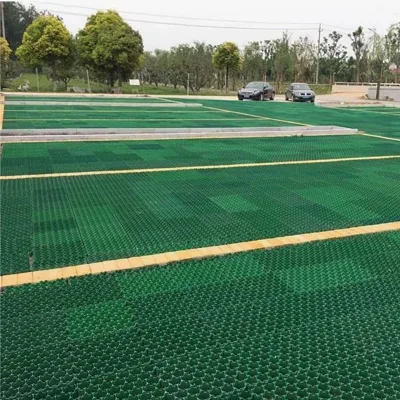
When you search for an Outdoor Permeable Paving Grid, the supplier pool tends to split between a few recognizable factory types. Some listings describe themselves as combined companies that carry broad earthwork product lines — geomembranes, geocells, geotextiles, drainage networks and grass grids alongside paver grids — which usually signals a factory-plus-trading hybrid. Others identify clearly as manufacturers/factories with narrower geosynthetic portfolios, such as geocells, geogrids and geomembranes. For this product, plastic grass paver grids and honeycomb geocell gravel grids are typically produced on similar HDPE processing lines, so a supplier's main-product list tells you whether paving grids are a core line or a side item.
Geography matters as well. The supplier data in this category shows a concentration in China's Shandong province, which functions as a real manufacturing cluster for geosynthetics and plastic earthwork products. Buyers should treat that clustering as useful: it makes it easier to batch factory visits, consolidate shipments from several suppliers, and compare quotes locally. However, always confirm the actual production address rather than the sales-office address, because hybrids in such clusters may sell for neighboring factories. A practical screening step is to shortlist suppliers whose main products include geocells, geogrids or grass grids — categories adjacent to permeable paver grids — since those are more likely to hold tooling, molds and quality processes for the product you actually need, rather than reselling it opportunistically.
How to Verify Outdoor Permeable Paving Grid Suppliers
Verification starts with platform-level credentials and moves to product-level evidence. In this category, some supplier profiles carry SGS verification, which confirms a third party checked the company's existence and basic details; treat that as a baseline, not a quality endorsement. System certifications also appear inconsistently — some suppliers list ISO9001:2015 and ISO14001:2015 certificates, others show no system certification at all, and individual product attributes may claim ISO certification even when the company profile does not. Never assume a displayed certificate covers the exact grass paver grid you intend to buy; ask for the certificate number, scope and validity, and cross-check the issuing body.
The second layer is product verification. Reputable listings in this category disclose concrete specifications: HDPE material, hexagonal grid shape, sizes around 500x500 mm with heights of 38, 48 and 68 mm, pressure strength figures in the range of 40–300 tons per square meter, and working temperatures from roughly -10°C to 50°C. Suppliers offering ODM/OEM capability, customization and free samples give you more ways to validate. Request physical samples of the exact cell depth and connection type — lap buckle connections, for instance, affect installation speed — and test them against your load and drainage requirements. Ask whether the supplier manufactures in-house or trades, request the factory address, and where possible commission a third-party audit or inspection before production. Response time on the platform, which in observed listings ranges from under one hour to several hours on average, is a weak but useful proxy for how a supplier will behave during an order.
What to Compare Across Outdoor Permeable Paving Grid Suppliers
Build a comparison table with dimensions that actually differ among these suppliers. Lead time is a first divider: one listing in this category advertises standard-specification production within seven days, while other profiles show general lead times around fifteen days — a meaningful gap if your project schedule is fixed. MOQ varies even more sharply: observed listings range from as low as a single set for a gravel grid paver to 200 pieces and up to 1,000 pieces for geocell ground grids, so your order volume may exclude some suppliers entirely. Price spreads are wide too — comparable grass paver grids in the results span roughly from about one dollar to over five dollars per unit — which usually reflects differences in cell height, material (recycled versus virgin HDPE) and thickness rather than pure margin.
Beyond these commercial figures, compare technical attributes: pressure strength rating, connection method, working temperature range, color options (black, green and grey appear in listings), cell depth options, and packing method (bundles versus wood pallets). Compare supplier labels as well: whether the profile is verified, whether system certifications are listed, whether ODM/OEM is offered, and the average response time. Company type matters for accountability — a manufacturer/factory will handle mold changes and material substitutions differently from a combined trading entity. Finally, check how broadly each supplier covers related products such as geocells, geogrids and geotextiles; a fuller earthwork portfolio can simplify sourcing if your project also needs slope or drainage products, but should not substitute for product-specific evidence.
Common Outdoor Permeable Paving Grid Sourcing Risks
The most frequent risk in this category is material substitution. HDPE grass grids look nearly identical whether made from virgin or recycled resin, but recycled content can reduce pressure strength and temperature resistance — a serious problem when specifications claim 40–300 tons per square meter. Some listings explicitly advertise recycled or virgin plastic as an option, so make the resin choice contractual and verify it through melt-index testing or an independent lab report on delivered goods, not just pre-shipment samples. A related risk is specification drift: heights of 38, 48 and 68 mm are standard, but buyers sometimes receive mixed heights or thinner walls than quoted because the visual difference is subtle.
Second is the hybrid-supplier risk. Combined companies and traders in the cluster may quote from a factory whose certifications, capacity or tooling they do not control, which surfaces only when a customization request — a different cell depth, a load rating, a color — exceeds their real capability. Watch also for certification mismatch: a supplier may show an ISO9001 certificate on the company profile while a specific product claims only generic ISO certification, or show no system certification at all; neither case proves the product itself is certified. Communication risk shows up in the data too — average response times range from well under an hour to more than five hours, and a listing with packing described only as "according to client's need" may indicate no standardized quality process. Finally, low MOQs can tempt buyers into ordering full production without a pilot batch; for load-bearing paving products, always run a trial quantity first.
Outdoor Permeable Paving Grid Regional Sourcing and Logistics
The evidence points to Shandong, China as the active sourcing region for this category, and that has concrete logistics implications. Suppliers in this cluster ship products that are bulky but light relative to value — plastic grids at 500x500 mm per piece and packing formats of 4–6 pieces per bundle or wood pallets — so container utilization and stacking height become cost drivers. Wood pallet packing, which at least one listing specifies, eases handling but adds weight and may require ISPM-15 heat treatment for export; bundle packing reduces cost but exposes grids to deformation if compressed in transit. Confirm packing format, palletization and load-securing plans in the quotation, not after production.
Lead-time planning should distinguish standard from custom specifications: one supplier in the results states standard specifications ship within seven days, while broader company lead times run around fifteen days, and customized tooling or colors will extend both. Because multiple factories cluster in the same province, you can combine orders from two suppliers into one container if their packing formats and delivery dates align — ask each whether they will consolidate at a nearby warehouse. Cell depth choices (50–300 mm for geocell-style products, 38–68 mm for paver grids) also affect volume: deeper grids consume container space faster, so recalculate freight per square meter of paved area, not per piece. Finally, verify the production address and origin marking — listings in this category state origin as China — and factor inland haulage to port into total landed cost.
Outdoor Permeable Paving Grid Commercial Terms and Order Planning
Commercial terms in this category reward buyers who fix technical and commercial details together. Price ranges visible in the data — from roughly $1.16–$4.56, $1.76–$5.06, up to $5.55–$5.62 for similar-sounding grass paver grids — show that price alone is meaningless without matching cell height, material grade and pressure strength. Quote against a single written specification: size (500x500 mm), height (38/48/68 mm), resin type, connection type, color and packing. Confirm the MOQ per specification rather than per product family; observed MOQs range from 1 set to 1,000 pieces, and a supplier comfortable at 200 pieces may price small customization runs differently.
Plan the order sequence deliberately. Use free-sample offers — several listings advertise samples freely — to shortlist, then place a pilot production batch before committing to container volumes. Align payment protection with supplier risk: prefer escrow or trade-assurance-style arrangements where available, and be aware that not every profile displays escrow or verification status, so ask directly. Set a delivery window based on the stated lead time (seven days for standard specifications at one supplier, around fifteen days as a general figure elsewhere), add buffer for customization, and tie a late-delivery clause to it. Agree inspection terms — a pre-shipment check of dimensions, wall thickness, resin documentation and packing — and specify carton or pallet labeling. Finally, plan repeat orders early: ask which specifications a supplier stocks for fast turnaround, since standard sizes will reorder far faster than custom molds.
FAQs
What is the typical lead time for ordering these grids?
Lead times vary by supplier and specification. Some manufacturers offer standard specifications within 7 days, while others may require up to 15 days for production. Buyers should confirm the specific timeline with the supplier before placing an order to ensure timely delivery.
What are the minimum order quantities for these products?
Minimum order quantities differ across suppliers. Some vendors accept orders as low as 1 piece, while others require a minimum of 500 or 1000 units. Buyers must check the specific MOQ listed for each product to determine the most suitable supplier for their volume needs.
Which certifications do these permeable paving grids hold?
Certifications vary by manufacturer. Some products carry ISO9001:2015 and ISO14001:2015 certificates, while others may only list ISO certification or none at all. Buyers should verify the specific system certifications provided by the supplier to ensure compliance with their project requirements.
What materials are used to manufacture these grids?
Most grids are manufactured from HDPE, which offers durability and resistance to environmental factors. Some products are made from recycled or virgin plastic. The material choice impacts the pressure strength and working temperature range, which typically spans from -10 to 50 degrees Celsius.
What is the price range for these permeable paving grids?
Prices vary significantly based on material, size, and supplier. The minimum price can start around 0.30, while maximum prices may reach up to 6.30 per unit. Buyers should compare specific product listings to find the best value that meets their budget and quality standards.
Where are these suppliers located and how fast do they respond?
Many suppliers are located in China, specifically in Shandong province. Response times vary, with some suppliers replying within 0.64 hours and others taking up to 5.46 hours. Buyers should prioritize suppliers with faster response times for quicker communication and order processing.
What customization options are available for these grids?
Customization is widely available for these products. Suppliers offer options for different grid shapes, sizes, and colors like green, grey, or black. Buyers can request specific dimensions or features, such as cell depth or pressure strength, to match their unique project requirements.