Source 100W Battery Charger for cameras, laptops, and tablets
Compare 30 verified 100W Battery Charger options from suppliers in China. Buyers can review specifications like voltage, current, and battery compatibility to find the right solution for standard batteries, cameras, and portable electronics.
Key considerations
Products List




Comprehensive Sourcing Guide
Strategic Sourcing Guide for 100W Battery Charger Solutions
Navigating the global market for a 100W Battery Charger requires a disciplined approach that distinguishes between generic power delivery and specialized charging protocols. The core keyword "100W Battery Charger" encompasses a diverse range of products, from simple standard battery chargers to complex systems designed for lithium-ion or lead-acid applications. Buyers must recognize that a 100W rating indicates the power throughput capability, but the actual utility of the device depends heavily on the specific chemistry, voltage, and current requirements of the target battery. This guide outlines the critical factors for sourcing these devices, focusing on technical alignment, regulatory compliance, and supplier reliability based on observed market data and industry standards.
Technical Specifications and Power Architecture
When evaluating a 100W charger, the primary technical focus must be on the intersection of voltage and current. A 100W output is not a single point but a curve defined by the product's rated voltage and current. In the observed market data, specific models demonstrate varying configurations, such as a 48V system with a 100A current rating or a 24V system with a 20A rating. These figures illustrate that "100W" is often a nominal capacity rather than a fixed operating point for every unit. Buyers must verify the Rated Input Voltage, which frequently appears as 220V/230V/110V, indicating the need for global compatibility or specific regional adapters.
The socket type is another critical specification. Data indicates a prevalence of "For E.U." socket types, which suggests that sourcing from regions like Zhejiang Taizhou or Anhui, China, often results in products designed for European markets. However, buyers must confirm if the unit includes universal input capabilities or if specific plug adapters are required for the destination market. The frequency rating of 50/60Hz is standard for these regions, ensuring compatibility with most global power grids.
Furthermore, the charger type itself varies significantly. While some units are labeled as "Electric Charger" for general use, others are specialized for "Lithium Battery," "Lead-Acid Battery Charger," or "Lithium Ion Battery Charger." The principle of operation also differs; some units utilize a "Single-Shock Charger" principle, while others are designed as "Simple Charger" units. The distinction is vital because a charger optimized for lead-acid chemistry may damage lithium-ion cells if the charging curve is not precisely controlled. The machine size, observed in some listings as 27.5x25x20.5cm, provides a baseline for physical integration, but buyers should always request detailed dimensional drawings for their specific application.
Compliance and Certification Verification
Regulatory compliance is a non-negotiable aspect of B2B procurement, particularly for electrical equipment. The market data highlights a strong presence of CE certification, with some listings explicitly stating "CE" as a product standard. Additionally, a subset of products lists "CE, RoHS, KC" certifications. The inclusion of KC certification suggests that some suppliers are targeting the South Korean market, which has stringent electrical safety requirements.
Buyers must treat these certifications as observations of specific batches or models rather than universal guarantees for all "100W" units. The presence of a "CE" mark implies conformity with European health, safety, and environmental protection standards, but it does not automatically validate the product for other jurisdictions. For instance, if the target market requires UL (USA) or CCC (China) certification, the buyer must explicitly verify this with the supplier. The "RoHS" designation indicates compliance with restrictions on hazardous substances, which is increasingly a baseline requirement for electronics in the EU and other regions.
The "Standard" field in product data often lists "Lithium" or "CE," which can be ambiguous. A "Lithium" standard likely refers to the battery chemistry the charger is designed to support, not a safety standard. Buyers should request copies of the actual test reports and certificates of conformity. Relying solely on the product listing text is insufficient; the physical product must bear the correct markings, and the documentation must be traceable to a recognized testing laboratory.
Cost Drivers and Pricing Dynamics
The observed price range for battery chargers in the market spans from 1 to 5800 USD. This wide variance is driven by several factors, including the complexity of the charging algorithm, the build quality, the brand reputation, and the included features. A basic "Simple Charger" for standard batteries may fall at the lower end of this spectrum, while a sophisticated 100W unit with digital controls, multiple safety protections, and premium packaging will command a higher price.
The Minimum Order Quantity (MOQ) is another significant cost driver, with observed ranges from 1 to 500 units. For buyers seeking small batches, the per-unit cost will likely be higher due to the lack of economies of scale. Conversely, purchasing at the upper end of the MOQ range can significantly reduce the unit cost. The "Selling Units" field often indicates "Single item," which suggests that some suppliers are willing to sell samples or small quantities, but bulk pricing structures should be negotiated based on the total volume.
Packaging also influences cost. Listings show variations between "Box Package," "Carton," and generic "Package." Customized packaging, which is listed as "Available," adds to the overall cost but may be necessary for branding and retail readiness. Buyers should clarify whether the price includes the cost of custom packaging or if it is an additional line item. The origin of the product, such as "Zhejiang Taizhou" or "Anhui, China," can also impact logistics costs and tariffs, which should be factored into the total landed cost calculation.
Typical Applications and Compatibility
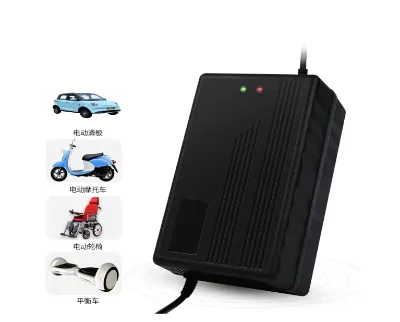
The versatility of a 100W Battery Charger is defined by its compatible battery types and application scenarios. Data indicates that some chargers are designed for "Standard Battery" types, specifically compatible with "AAA/AA" cells, while others are tailored for larger energy storage systems. The "Nominal Voltage" of 1.5V suggests compatibility with small consumer electronics, whereas a "Rated Voltage" of 24V or 48V points to applications in electric vehicles, solar storage, or industrial equipment.
The "Charger Application" field lists a broad range of devices, including "Camera, MP3/MP4 Player, Video Game Player, Laptop, Tablet." This suggests that certain 100W units are versatile enough to power or charge a variety of portable electronics. However, the "Type" field distinguishes between "Lithium Battery" and "Lead-Acid Battery Charger," indicating that a single charger is rarely suitable for all battery chemistries. A buyer must match the charger's output profile to the battery's charging requirements to prevent overcharging or undercharging.
The "Capacity" field provides further insight, with values ranging from "900mwh" to "20-250ah." This disparity highlights the difference between small portable power banks and larger stationary battery systems. A 100W charger might be ideal for charging a 20Ah battery within a reasonable timeframe, but it may be insufficient for a 250Ah system without extended charging cycles. Buyers should calculate the expected charging time based on the battery capacity and the charger's rated current to ensure it meets operational needs.
Supplier Evaluation and Origin Analysis
Evaluating suppliers requires a deep dive into their location and production capabilities. The data shows origins in "Zhejiang Taizhou," "Anhui, China," and general "China(Mainland)" locations. These regions are known for their manufacturing clusters, but the specific location can indicate the type of expertise available. Zhejiang is often associated with consumer electronics and general electrical components, while Anhui may have a stronger focus on industrial battery systems.
The "Brand Name" field lists "cvc," but many listings do not specify a brand, indicating a prevalence of OEM or private label opportunities. Buyers should assess the supplier's ability to provide customization, which is explicitly listed as "Available." This capability is crucial for adapting the charger to specific voltage, current, or connector requirements. The "Product Name" and "Model Number" fields, such as "MAX-30," "105v12a," or "HX-3620," serve as unique identifiers. Buyers should request a full product catalog to understand the range of models available and their specific technical parameters.
Reliability is also tied to the supplier's history with certifications. A supplier that consistently lists "CE, RoHS, KC" is likely more experienced with international compliance than one that only lists "CE." Buyers should verify the supplier's track record by requesting references or case studies from previous clients in similar industries. The "Reference Capacity" of "20-250ah" suggests that the supplier has experience with a wide range of battery sizes, which is a positive indicator of their technical flexibility.
Quality Control and Long-Term Procurement
Ensuring long-term quality requires a robust quality control (QC) strategy. The "Recyclable" attribute indicates that some products are designed with environmental sustainability in mind, which can be a differentiator in markets with strict waste management regulations. However, recyclability does not guarantee durability or performance. Buyers should implement a rigorous QC process that includes incoming inspection, functional testing, and durability checks.
The "Machine Size" and "Product Packing" details are essential for logistics planning. A "Box Package" or "Carton" must be designed to protect the charger during transit, especially if the unit is heavy or contains sensitive electronic components. The "Model Number" and "Specification" fields should be cross-referenced with the physical product to ensure there are no discrepancies between the ordered item and the delivered goods.
For long-term procurement, buyers should consider the availability of spare parts and the supplier's support infrastructure. A charger with a "Single-Shock Charger" principle may have specific maintenance requirements that differ from a standard linear charger. Establishing a clear communication channel with the supplier for technical support and warranty claims is essential. The "Selling Units" being "Single item" suggests that the supplier is flexible, but buyers should negotiate long-term contracts that lock in pricing and ensure consistent supply quality.
Comparative Analysis of Charger Configurations
To aid in decision-making, the following table summarizes key observed specifications for different charger configurations found in the market data. This comparison highlights the diversity in voltage, current, and application, helping buyers identify the most suitable option for their specific needs.
| Model Reference | Rated Voltage | Current Rating | Battery Type | Certification | Origin |
|---|---|---|---|---|---|
| MAX-30 | 12/24V | 10A | Standard Battery | CE, RoHS, KC | Zhejiang Taizhou |
| 48v100a | 48V | 100A | Lead-Acid | CE | Anhui, China |
| HX-3620 | 24V | 20A | Lithium Ion | CE | China(Mainland) |
| 105v12a | 105V | 12A | Lithium Battery | CE | Zhejiang Taizhou |
| HF4820 | 48V | 20A | Lithium Ion | CE | China(Mainland) |
This table illustrates that while the power rating may be similar (around 100W), the voltage and current profiles vary significantly. A 48V/100A unit delivers a vastly different power profile than a 24V/20A unit, despite both potentially falling under the "100W" category in marketing materials. Buyers must carefully match these specifications to their battery systems to ensure optimal performance and safety.
In conclusion, sourcing a 100W Battery Charger involves a meticulous evaluation of technical specifications, compliance status, and supplier capabilities. By focusing on the specific voltage, current, and battery chemistry requirements, and by verifying certifications and quality control measures, buyers can secure reliable and efficient charging solutions that meet their operational demands. The diversity in the market offers ample options, but success lies in the precision of the selection process and the rigor of the supplier evaluation.
FAQs
What certifications are available for 100w battery chargers?
Many units carry CE certification, while some listings also include RoHS and KC marks. Buyers should verify specific certificates for their target region, as not every model guarantees all listed standards.
Can I customize the packaging for my order?
Customization is available for packaging options like boxes or cartons. Suppliers typically offer these services to meet branding needs, though specific MOQs and lead times may apply to custom requests.
Which battery types are compatible with these chargers?
Chargers support various types including AAA, AA, Lithium, and Lead-Acid batteries. The specific compatibility depends on the model, with some designed for standard batteries and others for specific voltages like 24V or 48V.
How does the rated voltage affect charger performance?
Rated voltages vary significantly, with options like 24V, 48V, or 1.5V depending on the application. Selecting the correct voltage is critical to match the battery chemistry and ensure safe, efficient charging cycles.
What is the typical price range for these devices?
Prices range widely from 1 to 5800 USD based on complexity and features. Basic simple chargers cost less, while advanced units with digital controls or specific certifications command higher prices in the market.
Where are these battery chargers typically manufactured?
Products originate from regions like Zhejiang Taizhou, Anhui, and other parts of Mainland China. The specific location can influence logistics costs and the type of manufacturing expertise available for the unit.
What is the minimum order quantity for these products?
Minimum order quantities range from 1 to 500 units depending on the supplier and model. Smaller batches may have higher per-unit costs, while larger orders often benefit from economies of scale.