Source 120L Outdoor Garbage Dustbin Mould for Home Use, Household Appliances, Commodity
Find 30 listings for the 120L Outdoor Garbage Dustbin Mould from Chinese manufacturers. Buyers can compare specifications including mold life, surface finish, and delivery time to select the right supplier for their needs.
Key considerations
Products List


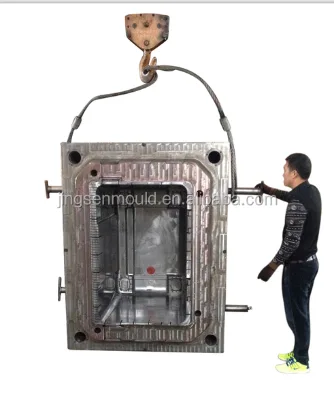


$3000.00 - $6000.00
MOQ: 1 Sets


China High Quality Plastic Injection Mold of Outdoor Bins Dustbin Mould
$4000.00 - $5000.00
MOQ: 1 Sets


Outdoor 120liter Plastic Trash Can Garbage Container Trash Bin Dustbin
$12.00 - $15.80
MOQ: 200 Pieces


Outdoor 120L Plastic Garbage Bin Large Trash Can Wastebin 120 Liter Waste Bin
$12.00 - $16.00
MOQ: 200 Pieces


Plastic Rubbish Bin Outdoor Recycle Plastic Dustbins 120 Liter Garbage Container
$8.00 - $20.00
MOQ: 50 Pieces


Comprehensive Sourcing Guide
Strategic Sourcing Guide for 120L Outdoor Garbage Dustbin Moulds
Procuring a high-performance 120L Outdoor Garbage Dustbin Mould requires a rigorous understanding of the intersection between material science, injection moulding engineering, and long-term operational durability. The market for these industrial tools is characterized by significant variation in design philosophy, from single-cavity precision to multi-cavity efficiency, and a wide spectrum of pricing structures. Buyers must navigate a complex landscape where the physical attributes of the mould, such as cavity count and runner systems, directly dictate the final unit cost and production efficiency. This guide provides a structured approach to evaluating suppliers and specifications, ensuring that the selected mould meets the demanding requirements of outdoor waste management applications.
Technical Specifications and Design Architecture
The core of any successful mould procurement lies in the detailed technical specifications. For a 120L outdoor dustbin, the mould must be engineered to handle high-volume production cycles while maintaining dimensional stability. The observed product data indicates that the primary shaping mode for these units is Injection Moulding, a process that demands precise temperature control and pressure management. A critical design variable is the mould cavity configuration. While some suppliers offer single-cavity moulds, which are often preferred for large-volume items like 120L bins to ensure uniform cooling and reduce cycle times, others may utilize multi-cavity setups for smaller components. The specific observation of "Single Cavity" in the provided data suggests that for this specific volume, a single-cavity approach is a viable and common configuration to manage the material flow of HDPE (High-Density Polyethylene).
Material selection is paramount for outdoor applications. The supplied facts confirm that HDPE is the standard plastic material utilized for these moulds. HDPE is chosen for its excellent chemical resistance, impact strength, and ability to withstand UV exposure, which is essential for outdoor garbage bins. The mould itself must be capable of processing this material without degradation, often requiring specific surface finishes. The data highlights "Polishing" as a standard surface finish process, but also notes "Texture," "Chrome Plating," and "Spray Painting" as available options. The choice of finish affects the release properties of the mould and the aesthetic quality of the final bin. For outdoor use, a textured finish may be preferred to hide minor scratches and improve grip, whereas a polished finish offers a smoother, more premium look.
Design software compatibility is another technical pillar. The sourcing process should verify that the supplier utilizes industry-standard CAD tools. The available data lists both "UG" (Unigraphics) and "AutoCAD" as supported design software. This indicates that the supplier can provide 3D data in various formats, including STP, Step, X-T, and Igs, which are essential for interoperability with the buyer's own engineering teams or for third-party verification. The "HASCO" and "DME" standards mentioned in the context refer to the standardized components used within the mould, such as guide pins, bushings, and ejector systems. Adherence to these standards ensures that spare parts are readily available and that the mould assembly follows established industry best practices.
Compliance, Certification, and Regulatory Standards
Navigating the compliance landscape is critical for B2B procurement, particularly when exporting or importing industrial equipment. The provided facts list several certifications, including "CE," "ISO," and "TSCE." While "CE" indicates conformity with health, safety, and environmental protection standards for products sold within the European Economic Area, and "ISO" suggests adherence to international quality management standards, buyers must verify the specific scope of these certifications. It is important to note that the presence of a certification label on a product page does not automatically guarantee that every unit produced under that listing meets the full scope of the standard. Buyers should request valid, up-to-date certification documents that specifically cover the mould manufacturing process and the final product output.
The "TSCE" certification mentioned requires specific verification, as it is not a universally recognized standard in the same manner as ISO or CE. Procurement teams should inquire about the issuing body and the specific criteria met. Furthermore, the "HASCO" and "DME" standards referenced in the product attributes relate to the internal components of the mould rather than the mould as a whole system. These standards ensure that the mould utilizes standardized, high-quality components that are interchangeable and reliable. When evaluating a supplier, buyers should ask for evidence of compliance with these component standards, as this directly impacts the longevity and maintainability of the tool.
Cost Drivers and Pricing Dynamics
The pricing for a 120L Outdoor Garbage Dustbin Mould is not uniform and is influenced by a multitude of technical and logistical factors. The observed price range in the market spans from 7 USD to 100,000 USD. This extreme variance underscores the importance of understanding the specific configuration of the mould being purchased. A mould at the lower end of this spectrum likely represents a simpler design, perhaps with a single cavity, basic surface finish, and standard components. Conversely, a mould at the higher end may feature complex cooling channels, high-grade steel (such as H13), advanced hot runner systems, and extensive customization.
The "Runners" system is a significant cost driver. The data indicates the availability of both "Hot Runner" and "Cold Runner" systems. Hot runner systems, which keep the plastic molten within the runner channels, eliminate waste and reduce cycle times but come with a significantly higher initial cost due to the complexity of the heating elements and control systems. The "Hot Runner Brand" is also a factor, with options like "Hasco," "Synventive," "Yudo," and "Mold-Masters" listed. These are premium brands known for reliability and precision, and their inclusion will increase the overall cost of the mould. Additionally, the "Mould Life" is a critical economic indicator. The observed data cites a life of "0.6 Million Shots," which is a benchmark for high-quality industrial moulds. Moulds with a higher shot count will generally command a higher price but offer a better return on investment over the long term.
Typical Applications and Production Capacity
The application of the 120L mould is primarily defined by its intended use in "Household Appliances," "Commodity," and "Home Use" sectors, specifically for outdoor waste management. The specific product attributes label these as "Plastic Garbage Bin Mould," "Plastic Waste Bin Mold," and "Plastic Dust Bin Mold," confirming their versatility in municipal and residential waste collection. The "Installation" type is noted as both "Fixed" and "Mobile," suggesting that the moulds can be used in stationary production lines or potentially in mobile manufacturing setups, though "Fixed" is the standard for high-volume injection moulding.
Production capacity is heavily influenced by the "Mould Cavity" count and the "Process Combination Type." The data specifies a "Single-Process Mode," which implies that the mould performs the primary injection function without complex secondary operations integrated into the same cycle. The "Mould Life" of 0.6 million shots suggests that these tools are designed for medium-to-high volume production runs. For a 120L bin, a single-cavity mould might produce one unit per cycle, whereas a multi-cavity setup (if available) would increase output proportionally. The "Delivery Time" of 50 days is a standard lead time for custom mould fabrication, accounting for design, machining, assembly, and testing. Buyers should be aware that this timeline can vary based on the complexity of the design and the current workload of the manufacturer.
Supplier Evaluation and Quality Control Protocols
Selecting the right supplier involves more than just comparing prices; it requires a deep dive into their manufacturing capabilities and quality assurance processes. The provided facts highlight a robust internal infrastructure, listing "CNC," "EDM," "Wire Cutting Machine," and "Drilling Machine" as in-house equipment. This indicates that the supplier has the capability to perform precision machining internally, which is crucial for maintaining tight tolerances. The presence of "Professional QC in House" is a strong indicator of quality commitment, suggesting that inspection is integrated into the production workflow rather than being an afterthought.
Buyers should verify the extent of this quality control. Does the supplier perform first-article inspections? Do they utilize CMM (Coordinate Measuring Machine) for dimensional verification? The "Design Time" of 10 days is a specific metric that can be used to evaluate the efficiency of the supplier's engineering team. A shorter design time might indicate a streamlined process, but it could also suggest a lack of thorough simulation or analysis. Buyers should ensure that the design phase includes flow analysis and cooling simulation to prevent defects in the final product. Additionally, the "Mold Spares" list, which includes "Ejectors/Water Tips/Rings/Seal Rings/Heater etc," shows that the supplier anticipates the need for maintenance and is prepared to supply replacement parts. This is a critical factor for long-term operational continuity.
Long-Term Procurement and Maintenance Considerations
The lifecycle of a mould extends well beyond the initial delivery. The "Time of Warranty" is listed as "1 Year," which is a standard industry term but should be scrutinized for what it covers. Does the warranty cover only manufacturing defects, or does it include performance guarantees? The "Mould 3D Type" formats (STP, Step, X-T, Igs) are essential for long-term maintenance, as they allow the buyer to recreate the mould design if the original supplier is no longer available.
Maintenance is a key consideration for outdoor dustbin moulds, which are subjected to high wear and tear. The "Heat Treatment" process of "Nitriding" is mentioned, which significantly enhances the surface hardness and wear resistance of the mould steel. This is a vital feature for extending the mould life, especially when processing abrasive materials or running at high speeds. The "Surface Finish" options, including "Chrome Plating," also play a role in durability, as chrome plating can protect the mould surface from corrosion and reduce friction during ejection.
The "prod_packing" is specified as "Wooden Box" or "Wooden Crate," which is standard for protecting the mould during shipping. However, buyers should verify that the packing includes desiccants and protective coatings to prevent rust during transit and storage. The "prod_origin" is listed as "China" and specifically "Taizhou, China," a region known for its moulding industry. While this provides context, buyers should be aware of the logistical implications of shipping from this location, including lead times and potential customs duties.
Comparative Analysis of Mould Configurations
To assist in decision-making, the following table summarizes the key technical attributes observed in the market for 120L outdoor garbage dustbin moulds. This comparison highlights the variability in specifications that buyers must evaluate against their specific production needs.
| Attribute | Observation A | Observation B | Observation C |
|---|---|---|---|
| Mould Cavity | Single Cavity | Single Cavity | Single Cavity |
| Plastic Material | HDPE | HDPE | HDPE |
| Runner System | Hot Runner | Cold Runner | Hot or Cold Runner |
| Surface Finish | Polishing | Polishing, Texture | Polishing, Texture, Chrome Plating |
| Design Software | UG | AutoCAD | UG / AutoCAD |
| Standard Components | HASCO | DME | HASCO / DME |
| Mould Life | 0.6 Million Shots | 0.6 Million Shots | 0.6 Million Shots |
| Delivery Time | 50 Days | 50 Days | 50 Days |
| Warranty | 1 Year | 1 Year | 1 Year |
| Certifications | CE, ISO | CE, TSCE | ISO, CE |
This table illustrates that while the core material and cavity count remain consistent, the runner system and surface finish options offer significant flexibility. The choice between a hot runner and a cold runner system will have the most profound impact on the initial cost and the long-term operational efficiency of the production line. Similarly, the surface finish options allow buyers to tailor the final product to specific market requirements, whether that be a high-gloss finish for premium retail or a textured finish for rugged outdoor use.
In conclusion, sourcing a 120L Outdoor Garbage Dustbin Mould requires a balanced approach that weighs technical specifications against cost and long-term value. By focusing on the verified attributes such as material compatibility, runner systems, and quality control protocols, buyers can make informed decisions that ensure the production of high-quality, durable waste bins. The data provided offers a solid foundation for evaluation, but the ultimate success of the procurement depends on thorough due diligence and clear communication with potential suppliers regarding specific project requirements.
FAQs
What certifications are available for the mould?
The mould comes with CE, ISO, and TSCE certifications. These indicate compliance with safety and quality standards, though buyers should verify the specific scope of each certificate for their region.
How long is the delivery time for this mould?
The standard delivery time is 50 days. This timeline accounts for design, machining, assembly, and testing phases required to fabricate a custom injection mould for outdoor garbage bins.
Which plastic material is used for the garbage bin?
High-Density Polyethylene (HDPE) is the standard plastic material used. HDPE offers excellent chemical resistance and impact strength, making it ideal for durable outdoor waste management applications.
Can the mould be customized for specific needs?
Yes, customization is available for the mould design and specifications. Buyers can request specific features like texture finishes or hot runner systems to match their production requirements.
What is the expected mould life for this product?
The observed mould life is 0.6 million shots. This lifespan indicates the tool is designed for medium-to-high volume production runs typical for industrial garbage bin manufacturing.
Which design software supports the mould creation?
The supplier supports UG and AutoCAD design software. These tools enable the creation of 3D data in formats like STP and IGS for precise engineering and interoperability with buyer systems.