Source 12v electromagnetic-operated excavator starter motor for Hitachi, JCB, and Sumitomo
Compare 30 listings for the 12v electromagnetic-operated excavator starter motor compatible with Hitachi, JCB, and Sumitomo models. Review specifications including voltage, teeth count, and power to find suitable units for excavators.
Key considerations
Products List




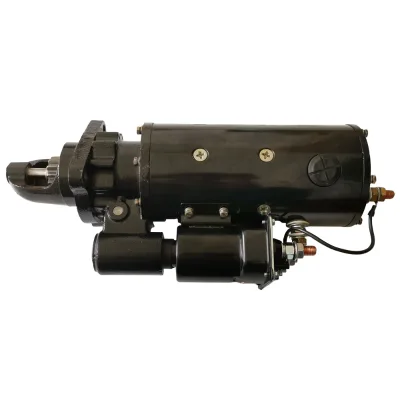
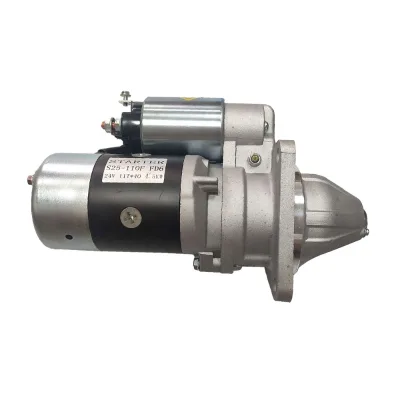
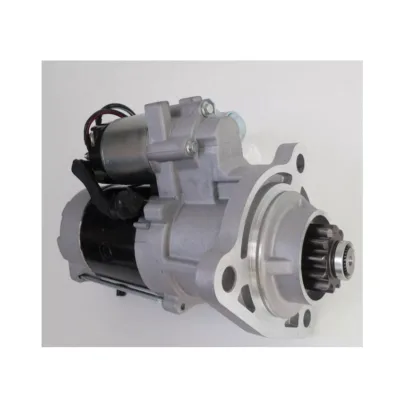

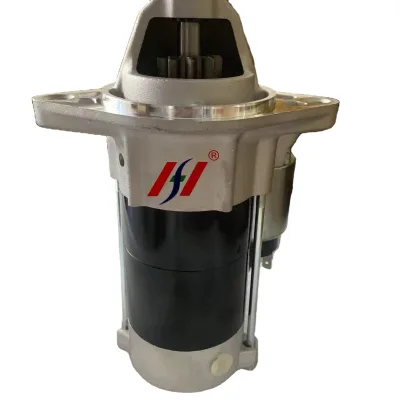
Comprehensive Sourcing Guide
Strategic Sourcing Guide for 12V Electromagnetic-Operated Excavator Starter Motors
Procuring replacement components for heavy machinery requires a rigorous approach that balances technical precision with supply chain reliability. For buyers specifically targeting a 12V electromagnetic-operated excavator starter motor, the market offers a diverse array of options ranging from generic replacements to model-specific OEM equivalents. The core objective is to identify a unit that matches the exact electrical and mechanical parameters of the target excavator while ensuring the supplier adheres to recognized quality standards. This guide outlines the critical factors for sourcing these components, drawing upon observed market data regarding specifications, certifications, and packaging standards to inform a robust procurement strategy.
Technical Specifications and Electrical Compatibility
The foundation of a successful procurement begins with verifying the technical specifications against the machinery's requirements. The primary electrical characteristic for this category is the voltage rating. While the core keyword specifies a 12V system, market observations indicate that compatible units often list voltage specifications as a range, including both 12V and 24V options. Buyers must confirm that the specific unit selected operates strictly at 12V to prevent electrical damage to the excavator's wiring harness and battery system. The power output is another critical metric; observed data suggests power ratings typically fall between 2.2 kW and 3 kW, with some listings citing an approximate power of 2.5 kW. Selecting a motor with insufficient kilowattage may result in slow cranking or failure to start under load, while an oversized unit may strain the electrical system.
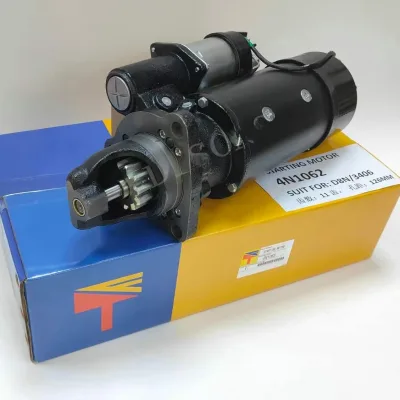
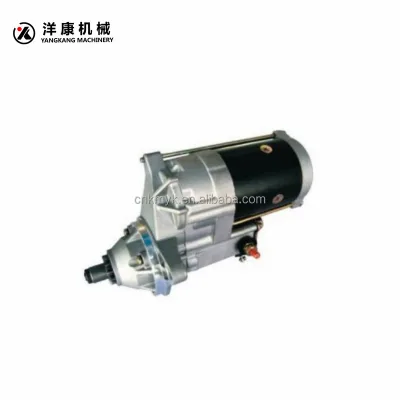
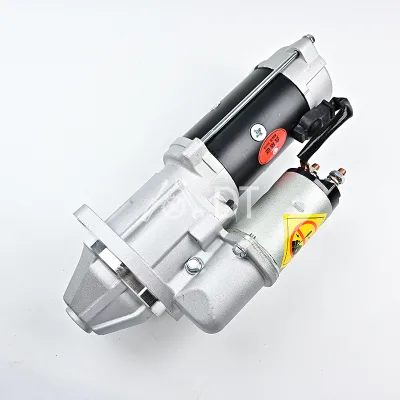
Mechanical compatibility is equally vital. The driving type for these units is consistently observed as deceleration, which is standard for heavy-duty starter motors designed to handle high torque loads. The gear engagement mechanism is defined by the number of teeth on the pinion gear. Market listings reveal variations, with common configurations including 9 teeth, 10 teeth, and 11 teeth. A mismatch in tooth count will prevent the starter from engaging the engine flywheel correctly. Furthermore, the rotation direction is a fixed attribute; the observed standard for these units is clockwise (CW) rotation. Deviating from this specification will render the motor inoperative. The DC form is identified as a common starter motor, though specific high-performance variants may utilize permanent magnet designs. The physical condition of the unit should always be verified as 100% new, and the material composition is predominantly metal, ensuring durability in harsh operating environments.
Compliance, Certification, and Quality Assurance
In the industrial machinery sector, certification serves as a proxy for manufacturing consistency and quality control. When sourcing excavator starter motors, buyers should prioritize suppliers who provide verifiable documentation. Observed product listings frequently cite ISO/Ts16949 and ISO9001 certifications. These standards indicate that the manufacturer has implemented a quality management system specifically tailored to the automotive and machinery supply chain. Additionally, CE certification is often listed alongside ISO standards, suggesting compliance with European safety and health requirements, which is a strong indicator of rigorous testing protocols.
Quality assurance is further reinforced by specific product attributes observed in the market. A high-confidence fact for this category is the "100% Tested" claim. This implies that every unit undergoes functional testing before packaging, reducing the risk of receiving defective components. The condition is consistently listed as "100% New," distinguishing these items from refurbished or remanufactured units. However, buyers must exercise due diligence; while these attributes are observed in the supply data, they should be treated as claims that require verification through the supplier's quality assurance documentation rather than assumed guarantees. The absence of a specific certification on a listing does not necessarily indicate non-compliance, but it warrants a direct inquiry into the supplier's quality control processes.
Application Specificity and Engine Compatibility
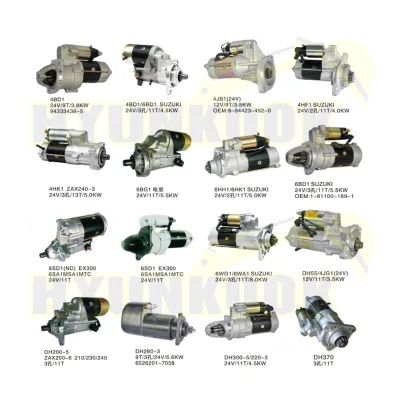
Excavators are not monolithic machines; they vary significantly by manufacturer, model, and engine type. Sourcing a generic starter motor without verifying engine compatibility is a primary source of procurement failure. The market data highlights specific compatibility matrices that buyers must reference. For instance, certain starter motors are explicitly designed for Hitachi Ex120 and Sumitomo Sh120 models, utilizing the 4BD1 engine. Other units are engineered for a broader range of machinery, including ZX120, EX100, EX200-5, SH100, and SK120, often associated with the 4BG1 engine series.
The following table summarizes the observed application and engine compatibility data to assist in cross-referencing requirements:
| Product Model Designation | Compatible Engine Series | Applicable Machinery Models |
|---|---|---|
| Hitachi Starter Motor | 4BD1 | Hitachi Ex120, Sumitomo Sh120 |
| JCB Starter Motor | 4BD1 | Hitachi Ex120, Sumitomo Sh120 |
| Excavator Starter Motor | 4BG1 | ZX120, EX100, EX200-5, SH100, SK120 |
| 4BG1 Starter Motor | 4BG1 | ZX120, EX100, EX200-5, SH100, SK120 |
| QDJ2804 Model | N/A | Specific OEM Application |
Buyers must match the "Adapted Engine" and "Compatible Engine" fields with the actual engine code of their excavator. Relying solely on the brand name of the excavator (e.g., "Hitachi") is insufficient, as different models within the same brand may utilize different engine families. The "Applicable Machinery Models" field provides a secondary verification layer. If a supplier lists a product as compatible with a specific model but the buyer's machine is a different variant, the unit should be rejected. Customization is available in the market, which allows for tailored solutions if the standard models do not fit the specific engine configuration.
Cost Drivers and Procurement Parameters
Understanding the cost structure of these components is essential for budgeting and supplier negotiation. The observed price range in the market spans from 30 USD to 2500 USD. This wide variance is driven by several factors, including the specific model designation, the complexity of the internal components (such as permanent magnet vs. common field coil), and the level of certification provided. Lower-priced units in the 30-100 USD range typically represent standard replacements for common engine types, while higher-priced units may include specialized engineering for specific heavy-duty applications or come with extended warranty and certification packages.
Minimum Order Quantity (MOQ) is another significant parameter. The observed MOQ range is between 1 and 30 units. This flexibility allows buyers to procure single units for emergency repairs or larger batches for fleet maintenance. However, some suppliers may impose a minimum order of 10 pieces for customized packaging or specific model runs. Lead times are generally short, with observed delivery times ranging from 1 to 7 days. This rapid turnaround is typical for standard inventory items but may vary for customized orders. Buyers should verify the specific lead time for their required quantity, as high-demand periods can impact availability.
Packaging, Logistics, and Shipping Standards
Proper packaging is critical for protecting sensitive electrical components during transit, especially given the weight and dimensions of starter motors. The market data indicates a variety of packaging standards. Common configurations include "Carton + Pallet" or "Carton Pallet" arrangements, which are suitable for standard shipping containers. For heavier units, such as those with a single gross weight of 60kg, "Wooden Box" packaging is often required to prevent damage during handling.
The physical dimensions of the packaging also influence logistics costs. Observed product standards list dimensions such as 352015cm, 352025cm, and 400mm200mm200mm. These variations reflect the size of the motor and the necessary cushioning materials. The package gross weight can range from 10kg for smaller units to 60kg for larger travel motors or heavy-duty starter assemblies. Buyers must account for these dimensions and weights when calculating freight costs and selecting shipping methods. Additionally, the origin of the products is consistently listed as China, which is a major hub for automotive and machinery components. This geographic concentration often results in competitive pricing but requires careful verification of the supplier's export capabilities and logistics network.
Supplier Evaluation and Long-Term Procurement
When evaluating potential suppliers, buyers should look beyond the basic product listing. The availability of customization is a strong indicator of a supplier's capability to handle specific procurement needs. A supplier that offers customization can often provide tailored solutions for non-standard engine configurations or specific packaging requirements. The "100% Tested" attribute should be a baseline requirement, but buyers should also request detailed test reports or quality certificates to validate this claim.
Long-term procurement considerations involve establishing a relationship with a supplier who can consistently deliver high-quality units. The presence of certifications like ISO/Ts16949 and ISO9001 suggests a commitment to continuous improvement and quality management. Buyers should also verify the supplier's ability to handle the specific lead times observed in the market, ensuring that their supply chain can accommodate the 1-7 day delivery window. For fleet operators, the ability to source compatible parts for multiple excavator models from a single supplier can streamline inventory management.
In conclusion, sourcing a 12V electromagnetic-operated excavator starter motor requires a meticulous approach to technical verification, compliance checking, and supplier evaluation. By focusing on the specific electrical ratings, mechanical tooth counts, and engine compatibility matrices, buyers can avoid costly mismatches. The wide range of prices and MOQs offers flexibility, but the buyer must balance cost with the assurance of quality provided by certified manufacturers. Ultimately, a successful procurement strategy relies on treating product attributes as observations to be verified rather than absolute guarantees, ensuring that the final component meets the rigorous demands of heavy machinery operation.
FAQs
What voltage ratings are available for these starter motors?
Units typically list voltage specifications as 12V or 24V ranges. Buyers must confirm the specific unit operates strictly at 12V to prevent electrical damage to the excavator's wiring harness and battery system.
Which certifications should I look for in a supplier?
Prioritize suppliers providing ISO/Ts16949 and ISO9001 certifications. These standards indicate a quality management system tailored to the automotive supply chain, while CE certification suggests compliance with European safety requirements.
How many teeth do the pinion gears usually have?
Market listings reveal variations with common configurations including 9, 10, and 11 teeth. A mismatch in tooth count will prevent the starter from engaging the engine flywheel correctly, so verify this against your engine.
Can I find customized packaging for these motors?
Customization is available in the market for tailored solutions. Some suppliers may impose a minimum order of 10 pieces for customized packaging or specific model runs to accommodate non-standard requirements.
What is the typical lead time for delivery?
Observed delivery times generally range from 1 to 7 days. This rapid turnaround is typical for standard inventory items but may vary for customized orders or during high-demand periods.
Which excavator models are compatible with these motors?
Specific models include Hitachi Ex120, Sumitomo Sh120, ZX120, and EX100. Buyers must match the adapted engine series, such as 4BD1 or 4BG1, with the actual engine code of their excavator to ensure compatibility.
What is the price range for these starter motors?
The observed price range spans from 30 USD to 2500 USD. Lower-priced units typically represent standard replacements, while higher-priced units may include specialized engineering or extended warranty packages.