Source 1600mm Manual Foot Shearing Machine for Sheet Metal, Steel Plate, and Roofing
Compare 30 listings for the 1600mm Manual Foot Shearing Machine to find options with varying cutting widths and warranty periods. Buyers can evaluate specifications like blade length, voltage, and material compatibility across multiple suppliers in China.
Key considerations
Products List
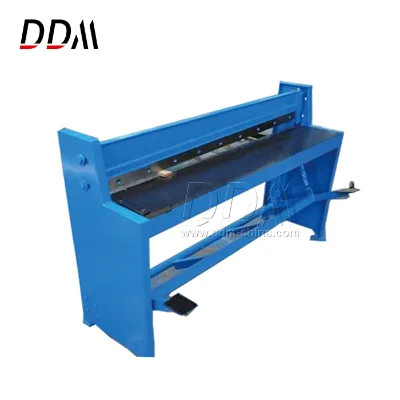


Manual Sheet Metal Shearing Machine Q01-1.5X1050 Foot Shearing Machine
$800.00 - $900.00
MOQ: 1 Pieces


Foot Plate Cutting Machine Foot Shearing Machine Q01-1.0X1000/Q01-1.5X1320/Q01-2X1000
$650.00 - $900.00
MOQ: 1 Pieces


Good Price Economic Electric Foot Shearing Cutting Machine with Manual Back Gauge
$1000.00 - $5000.00
MOQ: 1 Pieces
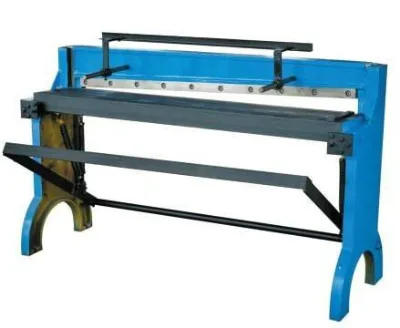
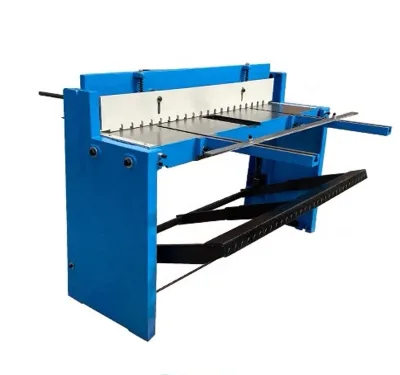


Q11-4*1600 Sheet Metal Foot Shearing Machine. Electric Shearer Electric Shears for Metal
$2700.00 - $2800.00
MOQ: 1 Pieces

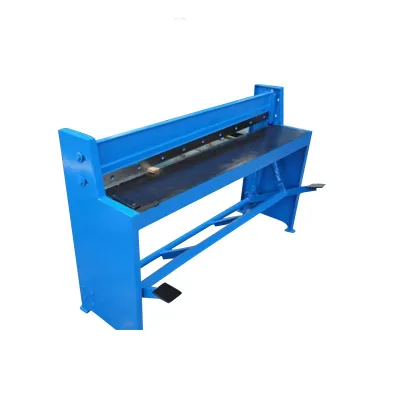
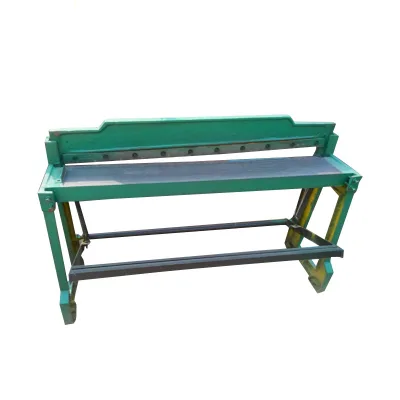
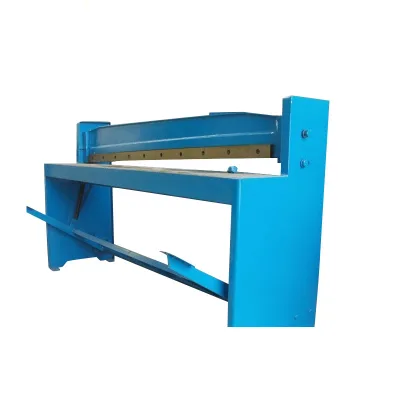

Hand Shearing Machine Q01-1.5X1500 Q01-1.5X1050 Manual Shearing Machine
$800.00 - $1200.00
MOQ: 1 Pieces


Foot Shearing Machine/Shear Thiness 1.6mm Width 1320mm/Q01-1.6*1320b Q01-1.2*200b
$1200.00 - $1500.00
MOQ: 1 Pieces


High Quality Foot Shear Machine (Manual Shearing Machine BQF01-1.25X650 BQF01-1.0X1050)
$500.00 - $1500.00
MOQ: 3 Pieces

Comprehensive Sourcing Guide
Sourcing Guide for 1600mm Manual Foot Shearing Machines
Understanding the Scope and Technical Reality of Manual Shearing
When sourcing a 1600mm Manual Foot Shearing Machine, buyers must first reconcile the specific dimensional requirement with the actual capabilities observed in the current market inventory. The core keyword implies a machine capable of shearing material up to 1600mm in width. However, an analysis of available product data reveals a prevalence of models with a maximum cutting width of 1300mm, such as the Q11-3*1300 and Q01-1.5x1320 variants. While a 1600mm capacity is a specific target, the immediate market reality suggests that buyers may need to consider machines with a 1300mm to 1320mm cutting width, such as the Q01-2X1000 or Q01-1.5X1320 models, or verify if a custom 1600mm configuration is available through the "Customization: Available" attribute observed in the supply chain.
The distinction between manual and automatic operation is critical in this category. The observed inventory includes machines explicitly labeled with an "Automatic Level: Manual," which aligns with the foot-operated nature of the equipment. These machines typically rely on a foot pedal to engage the shear, reducing the need for complex electrical automation during the cutting stroke. However, the data also lists "Automation: Automatic" as a general attribute for some units, indicating a potential confusion in listing or a hybrid design where the feed might be automated while the shear action remains manual. Buyers must verify if the specific unit they are evaluating is truly a foot-operated manual shear or a semi-automatic model. The power type is consistently listed as "Electric," yet specific power consumption figures often appear as "0 kW" or "0" in the provided data, suggesting that for manual foot shears, the primary energy input is human force, with electricity potentially reserved for lighting or auxiliary systems rather than the shearing motor itself.
Critical Technical Specifications and Dimensional Analysis
When evaluating a machine for a 1600mm requirement, the physical dimensions and cutting capacity are the primary decision factors. The observed specifications show a wide variance in cutting thickness capabilities. Some models, like the Q11-3*1300, list a maximum cutting thickness of 3mm, while others, such as the Q01-1.5x1050, specify a maximum shearing thickness of 1.5mm, and the Q01-2X1000 lists 2mm. For a machine intended to handle 1600mm widths, the structural integrity required to maintain a straight cut across that span is significant. The blade length is consistently observed at 1300mm in the high-confidence data, which directly conflicts with the 1600mm keyword. This discrepancy necessitates a rigorous verification step where the buyer must confirm if the 1600mm figure refers to the overall machine width or the actual usable blade length.
The back gauge system is another vital technical component. The observed back gauge travel ranges vary significantly, from 20-500mm in some models to 0-700mm in others, and a specific stopper adjust range of 350mm is noted. For a 1600mm machine, the back gauge must provide sufficient travel to handle large sheets without requiring manual repositioning for every cut. The raw material is specified as "Steel Plate," and the cutting materials include Stainless Steel, Iron Sheet, and Color Steel Tile. The material strength capability is listed as <=450kN/Cm, which serves as a benchmark for the hardness of the steel the machine can process. Buyers should verify if this strength rating applies to the specific 1600mm model or if it is a general rating for smaller 1300mm units.
The physical footprint of these machines is substantial. The dimension (LWH) for a standard model is recorded as 2115x1500x1400mm. The width of 1500mm in this dimension likely refers to the machine's overall width, which may be slightly larger than the 1320mm or 1300mm cutting width. If a 1600mm cutting width is required, the overall machine width will likely exceed 1500mm. The packing size is also a logistical consideration, with observed dimensions ranging from 140x76x115cm to 168x76x115cm, depending on whether the unit is packed in a wood case, box package, or film packing.
Compliance, Certification, and Regulatory Standards
In the industrial machinery sector, compliance is not merely a formality but a prerequisite for safe operation and market access. The observed product data lists several certifications, including CE, ISO 9001, and RoHS. The CE certification is a high-confidence fact, indicating that the machines meet European Union safety, health, and environmental protection requirements. However, the data also lists "CE ISO9001 Rohs" and "RoHS,CS,ISO 9001:ISO 9001:CE," suggesting that while CE is common, the specific combination of certifications may vary by model or manufacturer batch. Buyers should not assume that every 1600mm machine will carry the exact same certification suite; instead, they must request the specific certificate for the model in question.
The standard for the machines is often cited as "3*1300" or "CE ISO9001 Rohs," which appears to be a mix of model designation and certification status. The ISO 9001 certification, specifically noted as "ISO 9001:ISO 9001:CE" in some listings, indicates adherence to quality management systems. It is important to distinguish between the product standard and the management system standard. The observed data mentions "ISO 9001:2000" in the low-confidence background, but the high-confidence facts list "ISO 9001" without a year. Buyers should verify the current version of the ISO standard, as the 2000 version is outdated, and the current standard is ISO 9001:2015.
For a machine of this size, safety standards are paramount. The "Video Outgoing Inspection: Provided" attribute is a valuable quality assurance feature, allowing buyers to visually verify the machine's condition and assembly before shipment. This is particularly useful for large machines where physical inspection at the factory is difficult. The "Condition: New" attribute confirms that the machines are not refurbished, which is a critical factor for warranty validity and operational longevity.
Cost Drivers and Pricing Dynamics
The pricing for industrial shearing machines is influenced by several factors, including cutting width, thickness capacity, and automation level. The observed price range in the market is 20 to 5000 USD. This wide range likely reflects the difference between small, benchtop units and larger, floor-standing industrial machines. A 1600mm machine, being a larger and more robust piece of equipment, would likely fall toward the higher end of this spectrum, potentially approaching the 5000 USD mark, especially if it includes advanced features like a larger back gauge or higher thickness capacity.
The minimum order quantity (MOQ) is observed to be between 1 and 3 units. This low MOQ flexibility is beneficial for buyers who may only need a single machine for a specific project or a small workshop. However, buyers should be aware that the price per unit may decrease with higher volumes, and the "Competitive Price" attribute suggests that negotiation is possible. The "Customization: Available" attribute is a significant cost driver; customizing a machine to a 1600mm width when the standard is 1300mm will likely incur additional costs for modified blades, reinforced frames, and custom engineering.
Other cost factors include the type of packing. The observed options include "Film Packing," "Wood Case," and "Box Package." A wood case is generally more expensive but offers superior protection for international shipping, which is crucial for heavy machinery. The "Travel Times: 20r/Min" attribute indicates the operational speed, which can impact the overall productivity and, consequently, the value proposition of the machine. A higher travel speed might justify a higher price point if it significantly increases throughput.
Typical Applications and Operational Use Cases
The applications for a manual foot shearing machine are diverse, primarily serving industries that require precise cutting of metal sheets without the need for high-volume automation. The observed cutting materials include Stainless Steel, Iron Sheet, and Color Steel Tile, indicating suitability for construction, HVAC, automotive, and general metal fabrication sectors. The maximum cutting thickness of 3mm observed in the data suggests that these machines are ideal for light to medium-duty applications, such as cutting sheet metal for ductwork, roofing, or cladding.
The "Manual" automation level makes these machines particularly suitable for job shops or environments where flexibility is more important than speed. Operators can easily adjust the back gauge and cut different lengths without programming delays. The "Back Gauge Range" of 0-700mm or 20-500mm allows for a variety of cut lengths, making the machine versatile for small batch production. The "Color: Optional" attribute suggests that the machine can be customized to match a specific workshop's aesthetic or safety color coding, which is a minor but appreciated feature in industrial settings.
For a 1600mm machine, the application would likely involve cutting wider sheets of metal, such as those used in large-scale construction panels or industrial equipment enclosures. The "Material Strength: <=450kN/Cm" rating ensures that the machine can handle standard structural steels without excessive wear on the blade. The "Core Components: blade" highlights that the blade is the critical consumable part, and its quality directly affects the cut quality and machine longevity. Buyers should consider the availability and cost of replacement blades when evaluating the total cost of ownership.
Supplier Evaluation and Quality Assurance Protocols
Evaluating a supplier for a 1600mm Manual Foot Shearing Machine requires a focus on their ability to deliver on specifications and provide post-sales support. The "Location: Jiangsu, China" and "Origin: China" attributes indicate that the majority of these machines are manufactured in China, a hub for industrial machinery. Buyers should verify the specific factory location within Jiangsu, as different regions may have varying levels of quality control and supply chain maturity.
The "Video Outgoing Inspection: Provided" is a key quality assurance tool. Buyers should request a live video or a detailed recorded inspection that shows the machine being tested, the blade alignment, and the back gauge movement. This visual evidence helps confirm that the machine is in "New" condition and meets the "CE" and "ISO 9001" standards claimed. The "Warranty" period varies, with observations of 1 year, 2 years, and 3 years. A longer warranty period, such as 3 years, often indicates a supplier's confidence in their product quality and their willingness to support the machine over a longer period.
When evaluating suppliers, buyers should also consider the "Customization" capability. If the standard 1300mm machine does not meet the 1600mm requirement, the supplier must demonstrate the engineering capability to modify the frame and blade. The "Competitive Price" attribute suggests that suppliers are willing to negotiate, but buyers should ensure that price reductions do not compromise quality or warranty terms. The "Packing Size" and "Packing" method (Wood Case vs. Film) are also indicators of the supplier's attention to detail; a supplier that invests in robust packaging is more likely to invest in robust quality control.
Long-Term Procurement and Maintenance Considerations
Procuring a 1600mm Manual Foot Shearing Machine is a long-term investment that requires careful consideration of maintenance and operational longevity. The "Warranty" periods of 1 to 3 years provide a baseline for expected reliability, but buyers should plan for maintenance beyond the warranty period. The "Core Components: blade" indicates that the blade is a wear item that will eventually need replacement. Buyers should inquire about the availability of spare parts, particularly blades, and the cost of replacements.
The "Power Type: Electric" and "Voltage: 220V/380V" attributes suggest that the machine may require specific electrical infrastructure. Buyers must ensure that their facility can support the required voltage, especially if the machine is to be used in a region with different power standards. The "0 kW" power rating for the shearing action itself implies that the machine is primarily manual, but the electrical system may still require a stable power source for lighting or other auxiliary functions.
The "Condition: New" attribute is a starting point, but buyers should consider the machine's expected lifespan. A machine with a 3-year warranty and robust construction, such as the "Steel Plate" raw material, should have a long operational life if maintained correctly. The "Travel Times: 20r/Min" suggests a moderate operational speed, which can help reduce wear on the components compared to high-speed automated machines.
Finally, the "Customization: Available" attribute offers a path for future-proofing. If the buyer's needs change, such as requiring a different cutting width or thickness, the supplier's ability to customize the machine can extend its useful life. Buyers should establish a relationship with the supplier that includes access to technical support and spare parts, ensuring that the machine remains a productive asset for years to come. The "Video Outgoing Inspection" can also serve as a baseline for future maintenance comparisons, allowing the buyer to track the machine's condition over time.
FAQs
What is the maximum cutting thickness for these machines?
The maximum cutting thickness varies by model, ranging from 1 mm to 3 mm. Specific units like the Q11-3*1300 can shear up to 3 mm, while others may be limited to 1.5 mm or 2 mm depending on the configuration.
Can I find machines with a 1600mm cutting width?
Standard inventory typically features a 1300mm cutting width, though customization is available. Buyers should verify if a specific 1600mm configuration can be arranged through the supplier's customization services.
Which certifications do these shearing machines usually hold?
Most machines carry CE certification, and many also include ISO 9001 and RoHS compliance. Buyers should request specific certificates for the model, as certification combinations may vary between batches.
How long is the warranty period for these units?
Warranty periods range from 1 year to 3 years depending on the specific model and supplier. A 3-year warranty often indicates higher confidence in product quality and long-term operational support.
What is the minimum order quantity for purchasing these machines?
The minimum order quantity is flexible, typically ranging from 1 to 3 units. This allows buyers to purchase single machines for specific projects without needing to meet large volume requirements.
Where are these machines manufactured and shipped from?
The machines originate from Jiangsu, China, which is a major hub for industrial machinery. Buyers should confirm the specific factory location within this region for accurate logistics planning.
Can the machine color be customized for my workshop?
Yes, the machine color is optional and can be customized to match workshop aesthetics. This feature allows buyers to select specific colors to align with safety coding or branding requirements.