Source 304 Stainless Steel Bento Box for Kitchen School Office
Find 304 Stainless Steel Bento Box options from 30 verified listings. Compare features like insulation, leak-proof design, and customization for food storage needs in kitchens, schools, and offices.
Key considerations
Products List


Metal Stainless Steel Bento 304 Stainless Steel Lunch Box Food Container
$2.99 - $6.99
MOQ: 300 Pieces


Rectangular Stainless Steel Lunch Boxes Container Bamboo Bento Box Stackable Metal Lunch Box
$2.79 - $2.99
MOQ: 100 Pieces
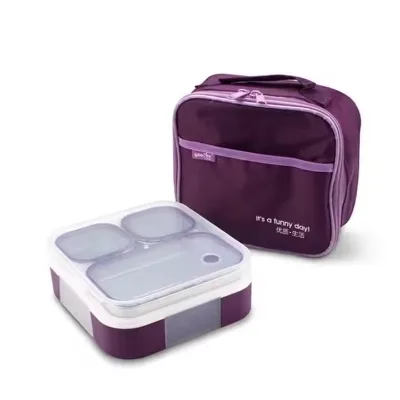


304 Food Grade Stainless Steel Outdoor Portable Bento Box with Bamboo Lid
$3.90 - $4.70
MOQ: 20 Pieces



Comprehensive Sourcing Guide
Strategic Sourcing Guide for 304 Stainless Steel Bento Boxes
Understanding Material Specifications and Construction
When sourcing 304 stainless steel bento boxes, the primary focus must be on verifying the material composition and construction integrity. The supplied product data confirms that stainless steel is a dominant material category for these items, with specific listings identifying the material explicitly as "Stainless Steel" and "Metal." While the core keyword specifies 304 grade, buyers must treat the material attribute as a verification point rather than an automatic guarantee. The provided facts indicate that surface finishes vary significantly, with options including "Sanding Polish" and "Mirror Polish." These finishes are not merely aesthetic; they directly impact the ease of cleaning and the resistance to food residue adhesion.
The structural design of these containers often includes specific features such as "Rectangle" shapes and varying capacities. The observed data lists standard capacities ranging from 400ml to 1600ml, with some products noting a general capacity range of 1-3L. This variability suggests that buyers should not assume a single standard size but rather evaluate the specific volume requirements of their target market. The "Single Tier" configuration is noted in some listings, while others imply multi-tier functionality through lattice quantities of 3. When evaluating the physical construction, the presence of "Freshness Preservation" features is a critical observation. This attribute often correlates with the tightness of the lid seal and the material's ability to maintain thermal properties, with some products claiming insulation for 2-6 hours.
Buyers must also scrutinize the "Volume" attribute, which is listed as "Customized" in several entries. This indicates that the internal dimensions and overall capacity are often flexible based on the supplier's tooling capabilities. The "Standard" attribute for some models lists specific dimensions like "20x 15x 7 cm" or "202015cm," providing a baseline for comparison. However, since "Customized" is also a listed standard, the procurement strategy should prioritize suppliers who can validate their tooling against these specific dimensional requirements. The "Shape" is predominantly rectangular, which is optimal for stacking and storage efficiency in both kitchen and office environments.
Compliance and Certification Verification
Navigating the regulatory landscape for food contact materials is paramount when sourcing stainless steel lunch boxes. The supplied facts provide a clear checklist of certifications that are frequently observed in this product category. Key certifications include "FDA," "CE / EU," and "LFGB." The presence of LFGB (German Food and Feed Code) is particularly significant, as it represents a stringent standard for food safety in the European market. Similarly, FDA compliance is essential for access to the United States market. The data also notes that "Certification" is a specific attribute, meaning buyers should request valid, current certificates for each batch or model rather than relying on general supplier claims.
The "Food Container Feature" attribute lists "Microwavable" for some products, which introduces a critical compliance check. While stainless steel is generally microwave-safe, the presence of non-metal components such as seals, lids, or decorative elements can render a product unsafe for microwave use. Buyers must verify that the "Microwavable" claim is supported by the specific construction of the lid and any gaskets used. The "Eco-friendly" attribute is also prominent in the data, appearing alongside "Stocked" and "Customization" options. This suggests that sustainability is a key selling point, but buyers should verify what specific eco-friendly claims are being made, such as the recyclability of the stainless steel or the materials used in packaging.
The "Small Orders: Accepted" attribute indicates that some suppliers are flexible with order volumes, which can be beneficial for testing compliance with new markets. However, the "MOQ" (Minimum Order Quantity) varies widely, with observed ranges from 10 to 1000 units and specific listings citing 300 PCS. This variability requires buyers to align their compliance testing budgets with their order volumes. For instance, if a buyer requires FDA testing for a small batch, the cost per unit may be prohibitive compared to a larger run where the testing cost is amortized. The "Customization" availability further complicates compliance, as custom designs may require new safety assessments or updated certification documentation.
Cost Drivers and Pricing Dynamics
The pricing structure for 304 stainless steel bento boxes is influenced by several factors derived from the observed market data. The listed price range in USD spans from 0.5 to 9.37, a significant variance that reflects differences in material grade, manufacturing complexity, and finishing quality. The lower end of this range likely corresponds to basic models with simple finishes and standard capacities, while the higher end may reflect premium features such as advanced insulation, complex multi-tier designs, or specialized surface treatments like mirror polishing.
The "MOQ" is a primary cost driver. With observed ranges from 10 to 1000 units, the unit price is inversely related to the order volume. Suppliers offering "Small Orders" may charge a premium to cover the setup costs for smaller production runs. Conversely, buyers placing orders near the 1000-unit mark may benefit from economies of scale. The "Customization" attribute also impacts cost significantly. Custom molds for specific shapes, sizes, or branding require upfront tooling investments, which are often passed on to the buyer either as a one-time fee or a higher unit price. The "Standard" attribute, which includes specific dimensions like 400ml or 1600ml, suggests that standard models are more cost-effective than custom-sized alternatives.
Packaging costs are another variable. The data lists "Carton," "Poly Bag + Carton," "OPP Bag," and "Carton or Box" as packaging options. The choice of packaging affects the final landed cost, especially for international shipping. "Carton" packaging generally offers better protection but adds weight and volume, increasing freight costs. "OPP Bag" is lighter and cheaper but may require additional outer packaging for bulk shipping. The "Eco-friendly" attribute may also influence pricing if the packaging materials are sustainable, such as recycled cardboard or biodegradable plastics, which can be more expensive than standard options.
Typical Applications and Usage Scenarios
The versatility of 304 stainless steel bento boxes is highlighted by the diverse "Usage" attributes listed in the product data. These items are designed for "Food," "Tableware," and "Thermal" applications, indicating their suitability for a wide range of environments. The "Place" attribute explicitly mentions "Kitchen, School, Office, Picnic, etc.," confirming that these products are intended for both domestic and commercial use. The "Function" of "Serving Food" and "Food Container" underscores their primary role in meal preparation and transport.
The "Freshness Preservation" feature is particularly relevant for applications where food quality must be maintained over time, such as in school cafeterias or office break rooms. The "Insulated for 2-6 Hours" attribute suggests that these boxes are suitable for users who need to keep meals hot or cold throughout a workday or school day. The "Leak Proof" feature, noted in the data, is critical for preventing spills in bags or backpacks, making these boxes ideal for commuters and students. The "Portable" attribute further supports this, indicating that the design prioritizes ease of transport.
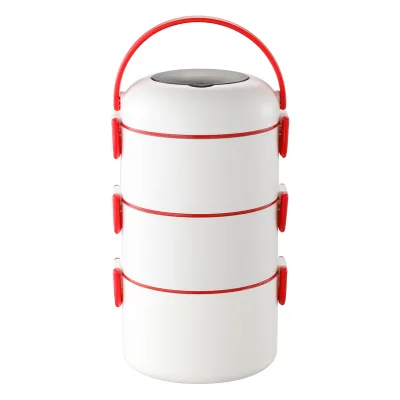
The "Single Tier" and "Lattice Quantity: 3" configurations offer different usage scenarios. Single-tier boxes are often preferred for simple meals or side dishes, while multi-tier boxes (lattice quantity of 3) are better suited for complete meals with separate compartments for main courses, sides, and desserts. The "Rectangle" shape is advantageous for maximizing space in lunch bags and refrigerators, while the "Multicolor" option allows for personalization, which is often desired in school or office settings. The "Non-Disposable" attribute confirms that these are durable, reusable products, aligning with the "Eco-friendly" trend and reducing waste in institutional settings.
Supplier Evaluation and Production Capabilities
Evaluating suppliers for 304 stainless steel bento boxes requires a deep dive into their production capabilities and service offerings. The "Design" attribute, which lists "OEM and ODM Services Available," indicates that many suppliers offer design flexibility. This is crucial for buyers looking to create private label products or customize existing designs. However, the "Customization" attribute also implies that the supplier must have the necessary tooling and engineering expertise to execute these changes. Buyers should verify the supplier's ability to handle "Customized" volumes and standards, as this can impact lead times and quality consistency.
The "Origin" of the products is consistently listed as "China," with specific locations like "Guangdong, China" mentioned. This concentration in Guangdong suggests a mature supply chain with access to raw materials and manufacturing expertise. However, buyers should not assume that all suppliers in this region have the same quality standards. The "Small Orders: Accepted" attribute suggests that some suppliers are more flexible than others, which can be beneficial for startups or buyers testing new markets. The "Stocked" attribute indicates that some suppliers maintain inventory, which can reduce lead times for standard models.
The "Process" attribute, listing "Sanding Polish" and "Mirror Polish," highlights the importance of surface treatment capabilities. Buyers should assess the supplier's equipment and quality control measures for these processes to ensure consistent finishes. The "Standard" attribute, which includes specific dimensions and capacities, suggests that suppliers have established production lines for standard models. However, for custom orders, the "Customized" standard implies a need for rigorous quality control to ensure that the custom dimensions meet the buyer's specifications. The "Certification" attributes (FDA, LFGB, CE) should be verified with the supplier to ensure they are current and applicable to the specific product model.
Quality Control and Long-Term Procurement
Implementing a robust quality control (QC) strategy is essential for long-term success in sourcing 304 stainless steel bento boxes. The "Food Container Feature" attributes, such as "Freshness Preservation," "Microwavable," and "Leak Proof," require specific testing protocols. Buyers should request test reports for leak resistance, thermal retention, and microwave safety. The "Material" attribute, specifically "Stainless Steel," necessitates verification of the grade to ensure it meets the 304 standard. This can be done through material analysis or by requesting mill certificates from the supplier.
The "Surface" finish, whether "Sanding Polish" or "Mirror Polish," should be inspected for defects such as scratches, pitting, or uneven finishes. These defects can affect the product's appearance and functionality, particularly in terms of cleaning and food safety. The "Packing" methods, including "Carton," "Poly Bag," and "OPP Bag," should be evaluated for their ability to protect the product during transit. Damaged packaging can lead to product damage and increased return rates.
Long-term procurement considerations include the supplier's ability to maintain consistent quality over time. The "Customization" and "OEM/ODM" capabilities suggest that the supplier should have a stable production process that can handle volume increases without compromising quality. The "MOQ" and "Lead Time" (though not explicitly listed, implied by the "Small Orders" and "Stocked" attributes) should be aligned with the buyer's inventory management strategy. Buyers should also consider the "Eco-friendly" aspect, ensuring that the supplier's sustainability claims are backed by verifiable practices, such as the use of recyclable packaging or energy-efficient manufacturing processes.
| Feature Category | Observed Attributes | Verification Requirement |
|---|---|---|
| Material | Stainless Steel, Metal | Verify 304 grade via mill certificate |
| Certification | FDA, LFGB, CE / EU | Request current, model-specific certificates |
| Surface Finish | Sanding Polish, Mirror Polish | Inspect for uniformity and defects |
| Capacity | 400ml - 1600ml, 1-3L | Validate volume accuracy against standard |
| Packaging | Carton, Poly Bag, OPP Bag | Assess protection and sustainability |
| Function | Insulated, Leak Proof, Microwavable | Request test reports for specific claims |
| Customization | OEM, ODM, Customized | Verify tooling capability and lead times |
By adhering to these verification protocols and understanding the nuances of the product attributes, buyers can make informed decisions that ensure the quality, safety, and reliability of their 304 Stainless Steel Bento Box procurement. The interplay between material quality, certification compliance, and supplier capability forms the foundation of a successful sourcing strategy in this competitive market.
FAQs
What certifications do 304 stainless steel bento boxes typically have?
These boxes commonly hold FDA, LFGB, and CE certifications for food safety. Buyers should verify specific certificates for each model batch rather than assuming all products meet every standard automatically.
Can I order small quantities of these lunch boxes?
Yes, many suppliers accept small orders with Minimum Order Quantities as low as 10 units. However, standard listings often cite an MOQ of 300 pieces, so confirm volume flexibility before purchasing.
How long do insulated stainless steel containers keep food fresh?
Insulated models can maintain temperature for 2 to 6 hours depending on the design. This feature helps preserve freshness during commutes or school days, though performance varies by specific construction.
What surface finishes are available for these metal lunch boxes?
Common finishes include sanding polish and mirror polish to ensure easy cleaning. The choice of finish impacts resistance to food residue and overall aesthetic appeal for kitchen or office use.
Which capacities are standard for these stainless steel food containers?
Standard capacities range from 400ml up to 1600ml, with some options reaching 1-3 liters. Buyers must check specific model dimensions as volumes are often customizable based on tooling capabilities.
Are these bento boxes suitable for microwave use?
Some listings indicate the containers are microwavable, but this depends on non-metal components like lids. Always verify that seals and gaskets are safe before placing the box in a microwave.