Source Eco-Friendly Carved Bamboo Bento Box for Lunch, Picnic, Travel
Compare 30 Eco-Friendly Carved Bamboo Bento Box options from verified suppliers. These stainless steel lunch boxes with bamboo lids offer microwavable and heated features for food storage, tableware, and sundries; compare the available evidence and request quotations based on your requirements.
Key considerations
Products List

Bamboo Bento Box Bamboo Fibre Lunch Box Professional Biodegradable Bamboo Lunch Bento Box
$6.00 - $8.50
MOQ: 300 Pieces

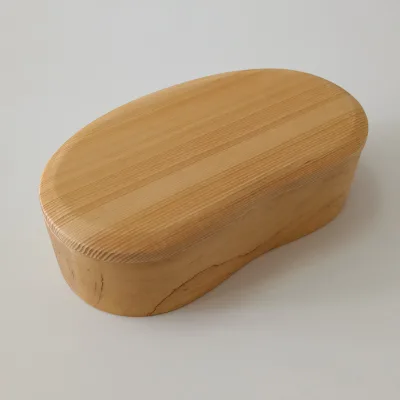


Sustainable Stainless Steel Bento Lunch Box for Eco-Conscious Consumers
$0.70 - $0.80
MOQ: 10000 Pieces


Eco Bamboo Lunch Box Customized Logo Food Grade Stainless Steel Bento Box
$3.58 - $4.08
MOQ: 600 pieces


Bamboo Bento Box with Compartments and Utensils Stackable Meal Prep Lunch Box
$7.69 - $8.56
MOQ: 600 pieces

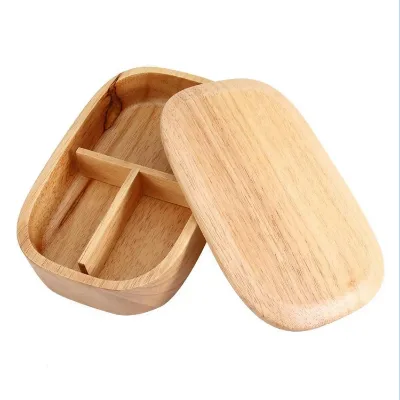


Comprehensive Sourcing Guide
Eco-Friendly Carved Bamboo Bento Box Sourcing Guide
Eco-Friendly Carved Bamboo Bento Box products occupy a distinctive niche in the food container market, combining renewable material sourcing with decorative craftsmanship that plain plastic or steel containers cannot match. The listings observed in this category come primarily from suppliers based in Fujian, China, a region with an established bamboo processing industry, and product positioning ranges from simple lunch storage to multifunctional tableware suitable for food, sundries, and general universal use. Buyers entering this category should understand that the carved element introduces an additional production step that affects both unit cost and inspection requirements compared with plain bamboo boxes.
Before issuing any request for quotation, define your intended use case precisely: retail gift packaging, foodservice lunch programs, or branded promotional storage. The observed listings include both pure bamboo construction and hybrid designs such as stainless steel lunch boxes with bamboo lids, so clarifying whether you need an all-bamboo body or a bamboo-and-metal combination will determine which suppliers can quote accurately. A focused RFQ that states material, carving style, capacity, and packaging expectations will filter responses quickly and reduce sampling cycles later in the process.
Product Scope and Observed Listing Signals
The observed product pages show a coherent but varied scope. Common attributes include eco-friendly and stocked features, food-contact usage, heatable and microwavable food container features, and freshness preservation claims. Sizes observed span compact formats such as 16 x 11.1 x 5.9 cm and 18.5 x 10.5 x 5.2 cm, with capacities in the 1–3L range and liquid capacities listed at 800ml and 1200ml. Finishing is described as matt lacquer, shapes include round and rectangle, and the stated style references are European and simple design language.
Additional signals relevant to buyers include customization availability, customized logo options applied via silkscreen printing, and a brand name of "Nature" appearing in the data. Packaging is listed both as individual cardboard or shrink wrap with bulk carton packing and as carton or box. Model numbers such as MY-2186 and EB-B6366 appear, which suggests established tooling rather than made-to-order-only production. Weight is listed at approximately 0.25 kg for one item, and a load rating above 10 kg appears in the observed attributes, though buyers should confirm which SKU each specification belongs to.
Technical Specifications to Verify
Because listings in this category mix attributes across multiple SKUs, the first verification task is mapping each specification to a specific model. Confirm external dimensions against your own tolerance needs: the observed dimensional tolerance is stated as less than ±5 mm inclusive, and weight tolerance is listed at less than ±5%. For carved surfaces, request details on carving depth, pattern repeatability, and whether the carved areas receive the same matt lacquer finish as flat surfaces, since carved grooves can hold finish unevenly and complicate cleaning in food use.
Structural specifications also deserve written confirmation. Verify wall thickness, lid fit tolerance, and whether the microwavable and heatable features apply to the full box or only to specific components — an all-bamboo body and a stainless steel body with bamboo lid behave very differently under heat. For liquid capacities of 800ml and 1200ml, ask how capacity is measured (to the brim or to a usable fill line) and whether a silicone or other sealing element exists, since the observed attributes do not confirm a gasket. Finally, confirm the load claim above 10 kg relates to static stacking or carried weight.
Compliance and Safety Documentation
Food-contact compliance is the central documentation requirement for this category. The observed listings cite FDA and LFGB certification, which are the two most commonly requested food-contact frameworks for bamboo tableware sold into North American and European channels. However, certification claims on product pages are observations, not guarantees for your specific order. Request current, order-specific test reports and verify the issuing laboratory, test dates, and the exact material scope covered — a certificate covering plain bamboo panels may not extend to lacquered, carved, or glued assemblies.
The observed data also references SGS, CE, and "100% export standard" in one listing's standard field. Treat CE cautiously: it is not inherently a food-contact mark, so ask the supplier to specify which directives or test methods each claim refers to. For any finish applied to food-contact surfaces, request documentation on the lacquer formulation and its migration test status. Buyers exporting to the EU should additionally ask whether bamboo raw material sourcing documentation is available; the background context includes an FSC reference, but its presence should be confirmed through a valid chain-of-custody certificate rather than assumed from a product page.
Cost Drivers and Commercial Terms
Unit cost in this category is driven by several observable factors. Carving is the most significant: hand-carved or deeply carved patterns require more labor than surface engraving, so request quotes that separate base box cost from decoration cost. Size and capacity matter as well — an 800ml format and a 1200ml format will not price identically, and the 1–3L capacity tier suggests some SKUs are substantially larger. Finish selection (matt lacquer versus unfinished), lid type, and packaging choice (individual cardboard or shrink wrap versus bulk carton) all shift landed cost and should be quoted as options.
On commercial terms, observed MOQ values in this category range from 10 to 10,000 pieces, with one listing explicitly stating 1000 pieces as its MOQ, and observed listed prices span roughly $0.14 to $68 per unit. That spread signals a wide quality and size range rather than a single product benchmark, so anchor negotiations to your chosen specification. Confirm whether customization and logo printing carry setup fees or per-unit surcharges, whether the quoted price includes export carton packing, and what incoterms apply. Selling unit is listed as single item, which simplifies per-unit price comparison.
Supplier Qualification and Quality Control
Qualify suppliers through a structured sequence rather than catalog impressions. Start with a document review: business license, food-contact certificates, and factory photos or audit reports distinguishing manufacturers from trading companies. Fujian-based suppliers in this category benefit from regional material access, but that advantage only transfers to you if the supplier controls or has long-term agreements with its bamboo processing. Follow document review with physical sampling of your target model — for example, MY-2186 or EB-B6366 — and evaluate the samples against your own checklist rather than the supplier's photos.
For quality control, build an inspection protocol around the category's known risk points. Carved areas should be checked for splinters, burrs, and finish pooling; dimensions and weight should be measured against the stated tolerances of ±5 mm and ±5%; and lid fit on hybrid stainless steel and bamboo models should be tested for alignment. Define an acceptable quality limit before production, and decide whether you will rely on the supplier's in-house inspection or commission a third-party pre-shipment inspection. Packaging integrity in bulk cartons, given the carved surfaces, should also be part of the inspection scope.
Long-Term Procurement Checks
Sustained sourcing from this category requires attention to supply continuity and specification drift. Bamboo is a natural material, so batch-to-batch color variation is normal even within a "unicolor" or "natural" color specification; agree on an approved color standard or master sample at the start of the relationship and reference it in every purchase order. Re-confirm certifications annually, because food-contact test reports expire and reformulated lacquers can invalidate earlier approvals. Keep the silkscreen logo artwork, carving pattern files, and dimensioned drawings on file so a change of production line does not silently alter your product.
Operationally, track supplier performance with simple metrics: defect rates from each inspection, on-time shipment consistency, and responsiveness on replacement claims. The stated packing methods — individual cardboard or shrink wrap with bulk carton — should be checked periodically for compression damage in transit, especially for carved designs. Finally, review whether your volume justifies moving from stock models toward semi-custom tooling, since customization is confirmed as available and a 1000-piece MOQ appears in the data. Long-term agreements tied to master samples and documented specifications protect both pricing and product consistency as your program scales.
FAQs
What materials are used in this Eco-Friendly Carved Bamboo Bento Box?
This bento box pairs a carved bamboo body or lid with a stainless steel lunch box container, combining natural material with food-safe metal. Listings show FDA and LFGB certification references, indicating suitability for food contact. The natural bamboo carries a matt lacquer finish, and the multicolor-free unicolor design keeps the appearance simple and eco-friendly for daily food storage.
Can the bamboo bento box be customized with a logo?
Yes, customization is available, and listings specify a customized logo applied by silkscreen printing. Buyers typically submit artwork in vector format, and the supplier confirms placement and size before production. Minimum order quantities start around 1000 pieces, so smaller trial runs may not qualify for custom branding. Confirm artwork requirements and sample approval before mass production.
How should I clean and care for a carved bamboo bento box?
Hand wash the bamboo parts with mild soap and warm water, then dry them thoroughly to prevent warping or cracking. Stainless steel components can be washed more freely, and the box is listed as microwavable and heatable where the metal parts are removed. Avoid soaking bamboo for long periods, never place it in a dishwasher, and occasionally apply food-safe oil to maintain the carved surface.
What sizes and capacities are available for this bento box?
Listed specifications include a round carved bamboo style measuring 18.5 by 10.5 by 5.2 centimeters, a rectangular stainless steel lunch box with bamboo lid sized 16 by 11.1 by 5.9 centimeters, and capacity options of 800 milliliters or 1200 milliliters. Capacity generally falls in the 1 to 3 liter range across the product line, so confirm the exact model number and dimensions with the supplier before ordering.
What is the minimum order quantity and packaging for wholesale orders?
The listed MOQ is 1000 pieces, which is typical for customized bamboo food containers. Packaging options include individual cardboard boxes or bulk packing into cartons, and some models use shrink wrap with carton or box packing. Selling units are single items. Confirm whether the MOQ applies to standard stock, carved designs, or logo-customized orders, since customization usually carries the higher minimum.
Where are these bamboo bento boxes produced and shipped from?
The products originate in Fujian, China, a region known for bamboo processing and carved woodcraft manufacturing. Suppliers state export-standard quality and stock availability, with eco-friendly and stocked features listed. Buyers typically arrange sea or air freight from Chinese ports depending on order volume and urgency. Ask each supplier for current lead times, freight options, and export documentation before placing a wholesale order.