Source 4-flute carbide profile cutter for Milling, Metal Drilling, and Wood Drilling
Compare 30 verified listings for the 4-flute carbide profile cutter featuring tungsten carbide and steel materials. Buyers can evaluate specifications like coating types, bore styles, and packing options from suppliers in China.
Key considerations
Products List


Cutting Tools Tungsten Carbide 4 Flute Milling Cutter CNC Machine Tools Cutter
$33.90 - $38.80
MOQ: 10 Pieces


Um 4 Flutes Solid Carbide Square Milling Cutter for Aluminum of Coated Colorful
$2.50 - $50.00
MOQ: 20 Pieces

Um 4 Flutes Solid Carbide Square Endmill Cutter for Aluminum of Coated Colorful
$2.50 - $50.00
MOQ: 20 Pieces

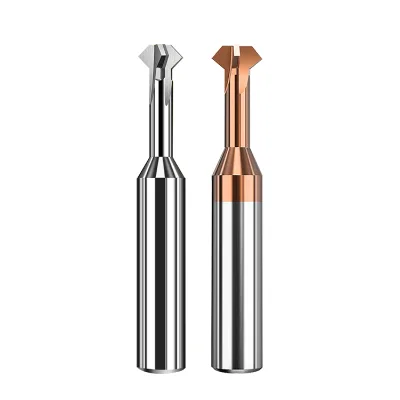


$0.50 - $1.00
MOQ: 100 Pieces


Comprehensive Sourcing Guide
Strategic Sourcing Guide for 4-Flute Carbide Profile Cutters
Understanding Technical Specifications and Material Composition
When sourcing a 4-flute carbide profile cutter, the primary focus must be on the precise material composition and geometric specifications that define the tool's performance. The supplied product data indicates that the core material for these tools is consistently identified as Tungsten Carbide, Tungsten Steel, or Cemented Carbide. These terms refer to the same class of hard metal alloys essential for high-speed machining, though specific grades like K05 may be listed for certain applications. The presence of a "Coating" attribute in the product specifications suggests that surface treatments are a standard feature, designed to reduce friction and extend tool life during aggressive cutting operations.
The geometry of the cutter is equally critical. The observed specifications frequently reference a "4T" designation, which directly correlates to the four-flute configuration required for the core keyword. This 4-flute design is particularly advantageous for milling machines, offering a balance between material removal rates and surface finish quality. The data highlights specific model dimensions such as 9035R154T R and 12540404T, indicating that the diameter, length, and radius are variable parameters that must be matched to the specific machining task. Buyers should verify that the "Shank Type" is compatible with their machinery, with "Straight Shank" being a common configuration observed in the market data. Furthermore, the "Flute Number" is explicitly noted as 2T in some contexts, creating a need for buyers to rigorously distinguish between 2-flute and 4-flute variants to ensure the purchased tool matches the intended application, as 4-flute cutters generally provide a smoother finish in softer materials while 2-flute cutters are often preferred for chip evacuation in harder materials.
Compliance, Certification, and Standard Verification
Navigating the compliance landscape for industrial cutting tools requires a meticulous review of certifications and adherence to international standards. The product data reveals a diverse array of certifications, including CE, ISO9001, SGS, RoHS, and ISOGS. These marks are not merely decorative; they serve as indicators of the manufacturer's commitment to quality management systems and safety protocols. For instance, the presence of ISO9001 certification suggests that the supplier adheres to a standardized quality management process, which is crucial for maintaining consistency in tool geometry and hardness.
In addition to certifications, the standards to which these tools are manufactured vary significantly. The observed data lists a wide spectrum of international standards, including BS, ANSI, JIS, GB, GOST, ASTM, and DIN. This variation implies that a single supplier may produce tools to different regional or industry-specific standards. Buyers must verify which standard applies to their specific procurement needs. For example, if the machining operation is in a region governed by DIN standards, a tool certified only under GB or JIS might not meet the required tolerance levels. The "Standard" attribute in the product data is sometimes listed as "Standard" generically, while other entries specify "CE SGS" or "ISO". This inconsistency necessitates a direct inquiry to the supplier to confirm the exact standard applicable to the specific SKU being ordered. The "prod_standard" field often contains model-specific codes like "G1202 4pcs/set" or "903530*4T R", which serve as internal identifiers rather than universal standards, further emphasizing the need for buyers to cross-reference these codes with the actual international standard documentation provided by the manufacturer.
Cost Drivers and Pricing Structure Analysis
The pricing landscape for 4-flute carbide profile cutters is influenced by a complex interplay of material costs, customization levels, and packaging requirements. The observed price range in the market data spans from 0.5 to 98 USD, a wide variance that reflects differences in tool size, material grade, and the extent of customization. A tool priced at the lower end of this spectrum is likely a standard, off-the-shelf item with minimal coating and standard packaging, whereas a tool at the higher end may feature specialized coatings, custom geometries, or premium packaging materials.
Material composition is a primary cost driver. The distinction between generic "Tungsten Steel" and specific grades like "Tungsten Carbide K05" can significantly impact the final price. Higher-grade carbides offer superior wear resistance and hardness, justifying a higher cost point. Additionally, the "Customization" attribute is listed as "Available" and "Customized" in multiple entries, indicating that bespoke solutions command a premium. Customization can include specific dimensions, such as the "OEM Customize Any Size" option observed in the data, or unique coating applications. Packaging also plays a role in cost; options range from "Plastic Package/Box" to "Carton Box" and even "Wooden" cases for larger or more delicate shipments. The "MOQ" (Minimum Order Quantity) range of 1 to 1000 units further influences the unit price. Buyers ordering small quantities may face higher per-unit costs due to setup fees, while bulk orders of 1000 units may benefit from economies of scale. It is essential for buyers to understand that the "Price" is not a static figure but a variable dependent on the specific configuration of the tool and the volume of the order.
Typical Applications and Operational Context
The versatility of 4-flute carbide profile cutters makes them suitable for a broad range of industrial applications, as evidenced by the diverse usage scenarios listed in the product data. The primary application is identified as "Milling Machine," which is the standard equipment for utilizing these tools. However, the data also specifies usage in "Metal Drilling" and "Wood Drilling," highlighting the tool's adaptability across different material types. The "Rotation" attribute, noted as "Left/Right," suggests that these cutters can be configured for specific directional cutting needs, which is critical for complex profiling operations.
Beyond basic drilling and milling, the tools are applied in specialized machinery sectors. The product data lists applications in "Metal Casting Machinery," "Metal Coating Machinery," "Metal Drawing Machinery," "Metal Engraving Machinery," and "Metal forging Machinery." This extensive list indicates that 4-flute carbide profile cutters are integral components in the manufacturing of heavy machinery and precision metal parts. The "Condition" of the tools is consistently listed as "New," ensuring that buyers receive fresh, unused inventory with full performance capabilities. The "After-Sales Service" is described as "After Sale Without Worry," and a "Warranty" of "1 Year" is frequently mentioned, providing a safety net for buyers regarding the tool's durability and performance. The "Bore" type, specifically "Brad Point," is another critical specification for drilling applications, ensuring precise centering and reduced walk during the initial cut. Buyers must align these application specifics with their operational requirements to ensure the selected cutter can handle the intended workload without premature failure.
Supplier Evaluation and Origin Verification
Evaluating suppliers for 4-flute carbide profile cutters requires a careful assessment of their geographic origin and logistical capabilities. The product data indicates that the primary manufacturing origins are in China, with specific cities such as Chengdu, Wuxi, and Shanghai being prominent hubs. Chengdu is noted for producing tools with "CE" and "ISO9001:Coating:Coating" certifications, while Wuxi and Shanghai are associated with different model numbers and packaging types. The presence of an "Official Website" (Lzqtools COM) suggests that some suppliers maintain a direct digital presence, which can be a valuable resource for verifying product authenticity and technical support.
When evaluating suppliers, buyers should look for consistency in the "prod_origin" field. A supplier claiming to be from Chengdu but shipping from a different location without explanation may indicate a lack of transparency or a reseller arrangement. The "Standard" of the product, often linked to the origin, should be verified against the buyer's local regulatory requirements. For instance, tools originating from Chengdu with CE certification are suitable for the European market, while those with GB standards may be better suited for domestic Chinese applications. The "prod_packing" details, such as "Plastic Box," "Carton Box," or "Wooden" cases, also provide insight into the supplier's attention to detail and logistics capabilities. A supplier offering "Cartons or Wooden" packaging demonstrates flexibility in handling different shipping requirements, which is crucial for international procurement. Buyers should also verify the "After-Sales Service"承诺, ensuring that the supplier provides genuine support for the "1 Year" warranty period mentioned in the data.
Quality Control and Long-Term Procurement Considerations
Ensuring long-term success in sourcing 4-flute carbide profile cutters involves establishing robust quality control measures and planning for future procurement needs. The "Condition" of the tools is a primary quality indicator, with "New" being the standard expectation. However, buyers must go beyond this basic check and verify the physical integrity of the "Coating" and the precision of the "Flute Number." The "Standard" attribute, which varies from generic to specific codes like "G1202," should be cross-referenced with the actual product to ensure it meets the required tolerance levels.
Long-term procurement considerations include the availability of replacement parts and the consistency of the supply chain. The "Customization" attribute being "Available" suggests that suppliers can adapt to changing production needs, but buyers should confirm the lead times for custom orders. The "MOQ" range of 1 to 1000 units allows for flexibility, but buyers should negotiate terms that balance inventory costs with supply security. The "Warranty" of "1 Year" is a standard offering, but buyers should clarify the terms of the warranty, including what constitutes a defect and the process for claims. Additionally, the "After-Sales Service" should be evaluated for responsiveness and technical expertise. A supplier that offers "After Sale Without Worry" should be able to provide prompt support for any issues arising during the warranty period. Finally, buyers should monitor the "Standard" compliance of future orders, ensuring that any changes in the product line do not compromise the tool's performance or safety. By maintaining a rigorous approach to quality control and supplier evaluation, buyers can secure a reliable supply of high-performance 4-flute carbide profile cutters for their manufacturing operations.
Comparative Analysis of Product Attributes
To facilitate a clearer understanding of the variations in 4-flute carbide profile cutters, the following table summarizes key attributes observed in the market data. This comparison highlights the diversity in specifications, certifications, and origins that buyers must navigate.
| Attribute | Observed Variations | Relevance to Procurement |
|---|---|---|
| Material | Tungsten Carbide K05, Tungsten Steel, Cemented Carbide | Determines hardness, wear resistance, and cost. |
| Certification | CE, ISO9001, SGS, RoHS, ISOGS | Indicates compliance with safety and quality standards. |
| Standard | BS, ANSI, JIS, GB, GOST, ASTM, DIN, Custom Codes | Ensures compatibility with regional regulations and machinery. |
| Origin | Chengdu, Wuxi, Shanghai (China) | Affects logistics, lead times, and regulatory compliance. |
| Packaging | Plastic Box, Carton Box, Wooden, 1PCS/Box | Impacts protection during shipping and storage costs. |
| Customization | Available, Customized, OEM Any Size | Allows for tailored solutions but may increase lead time. |
| Warranty | 1 Year | Provides assurance of product durability and support. |
| Flute Number | 2T, 4T (Core Keyword) | Defines cutting efficiency and surface finish quality. |
This table underscores the necessity for buyers to conduct a detailed review of each product listing to ensure that the specific attributes align with their operational requirements. The diversity in materials, standards, and origins means that a "one-size-fits-all" approach is ineffective in this market. Buyers must prioritize the specific attributes that are critical to their application, such as the material grade for high-speed machining or the certification for export compliance. By leveraging this comparative analysis, buyers can make informed decisions that optimize performance, cost, and reliability in their procurement of 4-flute carbide profile cutters.
FAQs
What certifications do 4-flute carbide profile cutters typically have?
These cutters often carry CE, ISO9001, SGS, and RoHS certifications. Buyers should verify specific model standards like G1202 or ISO to ensure compliance with their regional regulations before ordering.
Can I order customized sizes for these carbide profile cutters?
Yes, customization is available for dimensions and specifications. Suppliers offer OEM options to customize any size, allowing buyers to match exact machining requirements for milling or drilling tasks.
Which materials are used to manufacture these profile cutters?
Manufacturers primarily use Tungsten Carbide, Tungsten Steel, or Cemented Carbide. Some specific grades like K05 are listed for high-performance applications, ensuring durability during metal and wood drilling operations.
How does the coating affect the performance of these cutters?
A coating is applied to reduce friction and extend tool life. This surface treatment is standard on many models, enhancing performance during aggressive cutting operations on various machinery types.
What is the typical warranty period for these tools?
Most suppliers provide a one-year warranty on new condition tools. Buyers should confirm after-sales service terms to ensure coverage for defects or premature failure during the warranty period.
Which supplier locations are common for these carbide cutters?
Major manufacturing hubs include Chengdu, Wuxi, and Shanghai in China. Buyers should verify the specific origin listed for their model to ensure logistical compatibility and regulatory compliance.
What is the minimum order quantity for these profile cutters?
The minimum order quantity ranges from 1 to 1000 units depending on the supplier. Small orders may incur higher per-unit costs, while bulk purchases benefit from economies of scale.