Source 4-way entry euro pallet for Warehouse, Cold Storage, Transport
Compare 30 verified listings for 4-way entry euro pallets made of HDPE plastic with customizable colors and logos. Buyers can evaluate load capacities, dimensions, and supplier details for forklift use and rackable storage applications.
Key considerations
Products List


Anti-Slip Plastic Pallet Euro Large Size Plastic Pallet HDPE Euro Pallet
$19.60 - $29.00
MOQ: 100 Pieces


New Design Euro Pallets Type Pallet Standard Size Euro Plastic Pallets
$23.00 - $32.00
MOQ: 100 Pieces


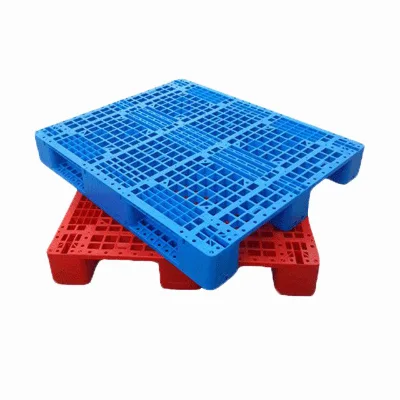
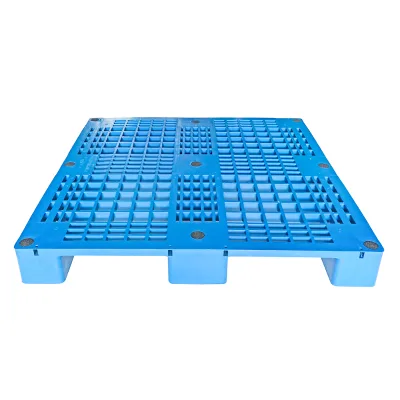
HDPE Pallet Plastic Palette Palet 1500x1200 4 Way Entry Loading Pallet
$15.17 - $30.35
MOQ: 200 pieces


Comprehensive Sourcing Guide
Strategic Sourcing Guide for 4-Way Entry Euro Pallets
Procuring 4-way entry euro pallets requires a rigorous understanding of technical specifications, material properties, and compliance standards to ensure operational efficiency and safety. These pallets are engineered to allow forklift access from all four sides, a critical feature for high-throughput logistics environments. The market offers a diverse range of options, from standard flat pallets to specialized units designed for specific load capacities and storage systems. Buyers must navigate a landscape where attributes such as insulation, static load limits, and customization options vary significantly between suppliers. This guide provides a structured approach to evaluating potential suppliers and selecting the right pallet configuration based on verified product data and industry best practices.
Technical Specifications and Design Architecture
The foundational requirement for any 4-way entry pallet is its structural design, which must accommodate entry from all directions without compromising stability. The observed product data indicates that the primary type available in this category is the "Flat Pallet," though "Special Pallets" also exist for unique applications. A defining characteristic of the 4-way entry design is the runner configuration. Specific listings describe a "3 Runners" setup, which is a common engineering choice to balance weight distribution and entry capability. The style of these pallets is frequently noted as "Single Face" or "Single Faced," meaning the top deck is distinct from the bottom, often utilizing a specific runner layout to facilitate the 4-way entry.
Material composition is another critical technical variable. The supplied facts confirm that "Plastic" is the dominant material, with "HDPE" (High-Density Polyethylene) explicitly identified as a raw material for specific models. This material choice offers durability and resistance to moisture, chemicals, and temperature fluctuations, making it suitable for cold storage and warehouse environments. The dimensions of these pallets vary to meet international and regional standards. Observed standard sizes include 1100mm x 1100mm x 150mm and 1200mm x 800mm x 155mm. Other configurations, such as 1200mm x 1000mm x 150mm, are also prevalent. Buyers must verify that the selected model number, such as TB088, TB129, or XYWJ-1111WC-A(HJ), aligns with their specific racking dimensions and storage requirements.
Load capacity is a non-negotiable specification. The data presents a wide range of capabilities, with static loads observed from 1 ton to 6 tons, and dynamic loads ranging from 1.5 tons to 4 tons. Rack loads are also specified, with some units rated for 0.5 tons and others for higher capacities. It is essential for buyers to distinguish between dynamic load (the weight the pallet can support while being moved by a forklift) and static load (the weight it can support when stationary on the floor). The "Load Capacity" field in supplier listings often refers to a specific rating, but the buyer must confirm whether this refers to dynamic or static performance to avoid structural failure during operations.
Compliance, Certification, and Safety Standards
Ensuring that pallets meet international and regional safety standards is paramount for liability management and operational safety. The supplied product facts list "En840" and "CE" as certifications associated with specific pallet models. EN840 is a European standard specifically governing the design and testing of pallets, ensuring they can withstand the rigors of international transport. The CE marking indicates conformity with health, safety, and environmental protection standards for products sold within the European Economic Area.
When evaluating suppliers, buyers should verify that the "prod_standard" field matches the required regulatory framework for their destination market. While the data mentions "standard" as a generic descriptor, the presence of specific certification codes like En840 suggests that compliant units undergo rigorous testing. For buyers operating in regions with strict safety regulations, relying on a supplier who can provide documentation for these certifications is a critical step. Additionally, the "Anti-Static" attribute observed in some listings indicates that certain pallets are treated to prevent static electricity buildup, which is vital for industries handling sensitive electronics or flammable materials. Buyers must explicitly request proof of anti-static treatment if this is a requirement for their application, as not all plastic pallets possess this property.
Cost Drivers and Pricing Variables
The pricing for 4-way entry euro pallets is influenced by a complex interplay of factors, including material costs, manufacturing complexity, and order volume. The observed price range in the market spans from $0.80 to $950 USD, a significant variance that reflects differences in size, load capacity, and customization. The lower end of the spectrum likely corresponds to smaller, single-faced units with standard load ratings, while the higher end may include heavy-duty, specialized pallets with custom branding or enhanced features.
Minimum Order Quantity (MOQ) is another major cost driver. The data indicates an MOQ range of 1 to 200 units. Suppliers with lower MOQs may charge a premium per unit due to the setup costs associated with smaller production runs. Conversely, buyers ordering at the higher end of the MOQ spectrum can often negotiate better unit prices. The "prod_packing" method also affects the final landed cost. Some suppliers offer "Pallet" packing, while others use "Packing" or "as Requirement" methods. Customization options, such as "Customized" logos or specific colors like "Blue (Can Be Customized)," can add to the unit cost. The "free printing" of logos mentioned in some listings is a value-add that can reduce branding expenses, but buyers should confirm if this applies to all models or only specific ones.
Typical Applications and Operational Fit
The versatility of 4-way entry pallets makes them suitable for a broad spectrum of industrial applications. The observed usage data highlights "Forklift Use," "Rackable," and "Warehouse Storage" as primary functions. These pallets are designed to integrate seamlessly into automated and manual material handling systems. The "Automatic Forklift" usage attribute suggests compatibility with automated guided vehicles (AGVs) and robotic systems, which are increasingly common in modern logistics centers.
Specific applications mentioned in the product data include "Concrete Construction," "Cargo Transportation," and "Cold Storage Warehouse." The use of HDPE plastic makes these pallets particularly advantageous for cold storage, as they do not absorb moisture and are resistant to the thermal contraction and expansion that can affect wood. The "Insulation" attribute further supports their use in temperature-controlled environments. For cargo transportation, the 4-way entry design maximizes efficiency by allowing forklifts to access the pallet from any angle, reducing the time required for loading and unloading. The "Single Face" style is particularly effective for applications where the bottom deck needs to be clear for cleaning or inspection, while the "3 Runners" configuration provides the necessary stability for heavy loads during transit.
Supplier Evaluation and Geographic Considerations
Selecting a reliable supplier requires a thorough evaluation of their capabilities, location, and production standards. The product data indicates that many suppliers originate from "Qingdao, China" or "Shandong, China," regions known for their manufacturing infrastructure. While the "Place of Origin" is a key piece of information, buyers should also assess the supplier's ability to meet specific quality requirements. The presence of model numbers like "TB088" and "LYCW-1210B" suggests that suppliers have established product lines, but buyers must verify that these models are currently in production and meet the latest standards.
Supplier evaluation should also include a review of their customization capabilities. The data confirms that "Customization" is available for attributes such as color and logo. Buyers should inquire about the lead times for customized orders, as these can vary significantly from standard production runs. The "Single package size" of 123x103x18 cm and the "Weight" of 22kg for specific models provide insight into the logistics of shipping. Buyers must calculate the total shipping volume and weight to determine the most cost-effective freight method. Additionally, the "Brand Name" field, such as "ENL," indicates that some suppliers operate under their own brand, while others may offer OEM services. Buyers should clarify whether they are purchasing a branded product or a generic unit that can be rebranded.
Quality Control and Long-Term Procurement Strategy
Implementing a robust quality control (QC) process is essential to ensure that the 4-way entry pallets meet the required performance standards. Buyers should request test results for dynamic and static load capacities, as well as proof of compliance with EN840 and CE standards. The "prod_standard" field, which lists dimensions like 1200mm800mm155mm, should be verified against actual product samples to ensure dimensional accuracy. Deviations in size can lead to issues in racking systems and automated storage equipment.
Long-term procurement considerations involve building a relationship with a supplier who can provide consistent quality and support. The availability of "Customized" logos and colors allows companies to maintain brand consistency across their supply chain. Buyers should also consider the lifecycle of the pallets; HDPE pallets are known for their durability, but they can degrade over time due to UV exposure or mechanical stress. Establishing a replacement schedule and ensuring the supplier can provide matching units for future orders is crucial for maintaining operational continuity. Finally, buyers should monitor market trends and pricing fluctuations to optimize their procurement strategy, ensuring they secure the best value for their investment while maintaining high standards of safety and efficiency.
Comparative Analysis of Key Pallet Attributes
To assist in decision-making, the following table summarizes the key attributes observed in the product data, highlighting the variability buyers must navigate.
| Attribute | Observed Values | Relevance to Procurement |
|---|---|---|
| Material | Plastic, HDPE | Determines durability, chemical resistance, and suitability for cold storage. |
| Entry Type | 4-Way | Essential for forklift flexibility and automated system integration. |
| Load Capacity | Static: 1T-6T; Dynamic: 1.5T-4T | Critical for safety; must match the heaviest expected load. |
| Dimensions | 1100x1100x150mm, 1200x800x155mm, 1200x1000x150mm | Must align with racking systems and storage facility constraints. |
| Certification | En840, CE | Indicates compliance with international safety and design standards. |
| Customization | Logo, Color (Blue), Insulation | Allows for branding and specific environmental adaptations. |
| Origin | Qingdao, China; Shandong, China | Influences shipping costs and lead times. |
| Style | Single Face, 3 Runners | Affects structural integrity and ease of cleaning. |
This comparison underscores the need for buyers to carefully match their specific operational requirements with the detailed specifications provided by suppliers. By focusing on these core attributes, procurement teams can make informed decisions that enhance safety, efficiency, and cost-effectiveness in their logistics operations.
FAQs
What certifications do 4-way entry euro pallets typically have?
Many 4-way entry euro pallets carry En840 and CE certifications to ensure safety and compliance. These standards verify that the pallets meet rigorous design and testing requirements for international transport and storage operations.
Which load capacities are available for plastic 4-way entry pallets?
Load capacities vary significantly, with static loads ranging from 1 ton to 6 tons and dynamic loads up to 4 tons. Buyers must verify whether the listed capacity refers to static or dynamic performance to ensure operational safety.
Can I customize the color and logo on these plastic pallets?
Yes, customization is available for both color and logo on many models. While blue is a common standard color, suppliers often offer free printing or custom branding options to match specific corporate identity requirements.
How does the 3 runner design affect pallet stability?
The 3 runner configuration is a common engineering choice that balances weight distribution and facilitates 4-way entry. This design supports the single face style and ensures stability when moving heavy loads with forklifts from any direction.
What are the standard dimensions for these euro pallets?
Standard sizes include 1100mm by 1100mm, 1200mm by 800mm, and 1200mm by 1000mm configurations. Specific models like TB088 or LYCW-1210B adhere to these dimensions to ensure compatibility with racking systems and automated storage equipment.
Where are these plastic pallets typically manufactured?
Most suppliers originate from regions like Qingdao and Shandong in China. These locations are known for their manufacturing infrastructure, offering a wide range of plastic pallet models with varying specifications and customization capabilities.