Source 40t Aluminium Extrusion Cooling Table for Factories
Find and compare 30 models of 40t Aluminium Extrusion Cooling Table designed for metal processing machinery parts and aluminum material factories. These fully automatic units feature heat-resistant aluminium structures and customizable dimensions to suit specific production requirements.
Key considerations
Products List

Aluminium Extrusion Handling Table Aluminium Extrusion Cooling Table
$50000.00 - $500000.00
MOQ: 1 Pieces


1800t Aluminium Extrusion Cooling Tables with 32m in Aluminum Extrusion Line
$35000.00 - $45000.00
MOQ: 1 Sets


Premium Aluminum Profile Extrusion Cooling Table for Efficient Production
$35000.00 - $55000.00
MOQ: 1 Sets

1800t Aluminum Extrusion Cooling Table in Aluminum Extrusion Machine
$35000.00 - $45000.00
MOQ: 1 Sets


High Quality Aluminium Extrusion Profile Cooling Table Turn-Key Project
$60000.00 - $500000.00
MOQ: 1 Pieces

Cheap Price Aluminium Extrusion Profile Cooling Table/ Handling System Made in China
$42000.00 - $300000.00
MOQ: 1 Pieces

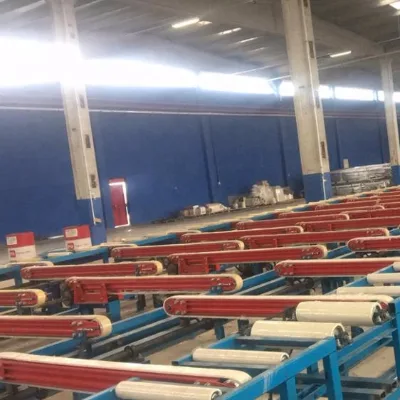
Belt Type Aluminum Handling Table for Aluminium Profile Extrusion Press
$33587.60 - $38676.63
MOQ: 1 Minimum
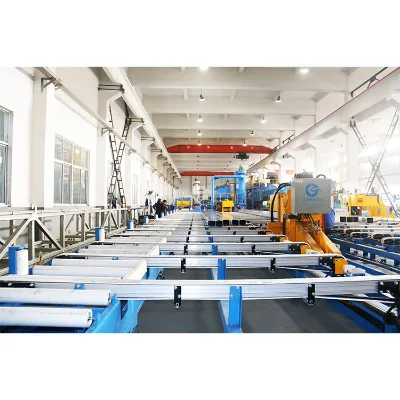
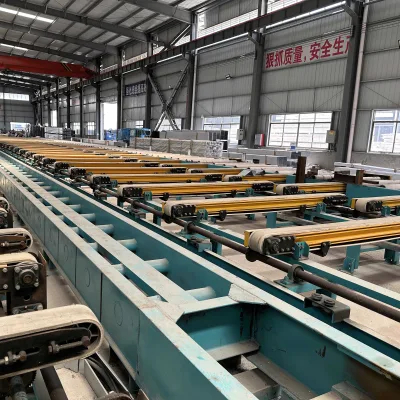
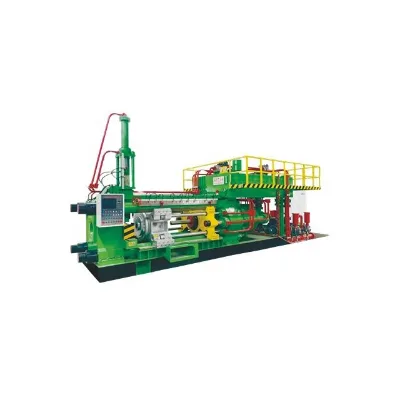


Comprehensive Sourcing Guide
40t Aluminium Extrusion Cooling Table Sourcing Guide
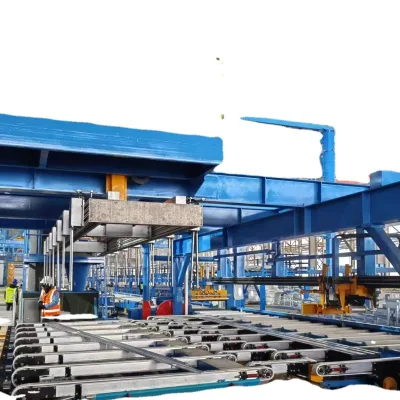
Procuring a 40-ton aluminium extrusion cooling table requires a rigorous evaluation of structural integrity, thermal management capabilities, and automation compatibility. These heavy-duty handling tables are critical components in aluminium material factories, serving as the primary interface for cooling and transporting extruded profiles immediately after they exit the press. The core function of this equipment is to manage the extreme thermal load of freshly extruded aluminium while maintaining precise dimensional stability. Buyers must understand that the "40t" designation refers to the maximum static load capacity the stretcher and conveyor system can support without deformation, a critical metric for handling large, dense aluminium profiles.
The sourcing process for such specialized machinery involves navigating a market dominated by manufacturers in China, particularly in industrial hubs like Foshan. Listings indicate a wide variance in product models, such as the RR8932, REC2323, and various HN-CT series units, suggesting that suppliers offer highly customized solutions rather than off-the-shelf inventory. This customization is often driven by specific production requirements, including the need for heat-resistant aluminium materials and fully automatic operation. Buyers must therefore focus on verifying the specific engineering standards and material features of each quoted unit, as generic descriptions may not reflect the actual performance capabilities required for high-volume metal processing operations.
Product Scope and Observed Listing Signals
The observed market data reveals a significant price range, spanning from $10 to $820,000 USD, which indicates a broad spectrum of product configurations and quality tiers. This variance is not merely reflective of brand prestige but is directly correlated with the physical dimensions, material thickness, and automation level of the cooling table. For instance, specific models like the HN-CT600T-2000T and HN-CT660UST-2200UST suggest complex sizing and functional variations that impact cost. Buyers should interpret the lower end of this range as potentially representing smaller, less automated, or older generation units, while the higher end likely corresponds to fully automatic, large-footprint systems with advanced thermal management and robust steel frameworks.
Listing signals also highlight diverse packaging and shipping requirements, which are crucial for logistics planning. Products are described with packing methods ranging from "Wood Case" and "Shipping Standard" to "Nude Packing," depending on the model and supplier. The observed minimum order quantity (MOQ) ranges from 1 to 10 units, suggesting that while these are capital-intensive items, some suppliers may offer flexible purchasing terms for smaller facilities or pilot lines. However, the presence of specific container size requirements, such as 40HQ, implies that large-scale units may require specialized freight arrangements. Buyers must carefully cross-reference the listed dimensions, such as 32000x6000x1000mm or 26000x6000x1000mm, with their factory floor plans to ensure physical compatibility before committing to a purchase.
Technical Specifications to Verify
When evaluating technical specifications, the material composition and structural design are paramount. The supplied facts indicate that these tables are constructed from metal, with specific emphasis on aluminium components that are heat-resistant. This is essential for withstanding the radiant heat from freshly extruded profiles without warping or degrading. The structure is often described as a conveyor system or roller conveyor, which must be synchronized with the extrusion press speed. Buyers should verify the exact configuration of the rollers, including their diameter, spacing, and drive mechanism, to ensure smooth transport of varying profile shapes. The automatic nature of these machines, described as "Fully Automatic," implies integrated PLC controls that must be compatible with the buyer’s existing factory automation ecosystem.
Dimensional accuracy and load-bearing capacity are other critical verification points. Specific standards cited in listings include dimensions like 32000x6000x800mm and 26000x6000x1200mm, with weights reaching up to 14,260 kg for certain models. The "40t" stretcher capacity must be validated against the actual weight distribution of the aluminium profiles being processed. Buyers should request detailed engineering drawings that specify the steel grade used for the frame and the aluminium alloy used for the cooling surfaces. Additionally, the power requirements, listed as "Electric," need to be matched with the facility’s electrical infrastructure, including voltage, frequency, and phase requirements. The warranty period, often cited as 12 months, should be clearly defined in terms of coverage for mechanical and electrical components.
Compliance and Safety Documentation
Compliance with international standards is a non-negotiable aspect of sourcing heavy industrial machinery. The observed certifications include ISO and CE marks, which are critical for ensuring that the equipment meets basic safety and quality management requirements. The ISO certification, often linked to ISO9001 in broader industry contexts, indicates that the manufacturer follows a standardized quality management system. However, buyers must verify the specific scope of these certifications, as they may not cover the final assembled product’s safety features. The CE mark is particularly important for operations within or exporting to regions that require strict adherence to European machinery directives, ensuring that electrical and mechanical hazards are mitigated.
Safety documentation should also include detailed operational manuals, emergency stop protocols, and maintenance schedules. Given the high weight and moving parts of a 40t cooling table, risk assessments must be conducted to identify potential pinch points, crushing hazards, and thermal risks. Buyers should ensure that the supplier provides comprehensive documentation on lockout/tagout (LOTO) procedures and guard rail specifications. The "Condition: New" status listed for many products implies that the machinery should be free from previous wear, but buyers must insist on factory acceptance test (FAT) reports that verify the functionality of all safety interlocks and emergency systems before shipment.
Cost Drivers and Commercial Terms
The cost of a 40t Aluminium Extrusion Cooling Table is driven by several key factors, including the size of the unit, the quality of materials, and the level of automation. Larger dimensions, such as the 32000mm length observed in some listings, require more raw material and complex manufacturing processes, directly increasing the price. The use of heat-resistant aluminium and high-grade steel for the frame also contributes to the cost. Additionally, fully automatic systems with advanced conveyor mechanisms and PLC controls are more expensive than semi-automatic or manual alternatives. Buyers should request a detailed breakdown of costs to understand the value proposition of each component, rather than relying on a single lump-sum quote.
Commercial terms, including payment methods, delivery schedules, and after-sales support, are equally important. The observed MOQ of 1-10 units suggests that suppliers are willing to negotiate on quantity, but buyers should clarify the lead time for production and shipping. The "prod_standard: According to production requirements" indicates that many units are built to order, which can extend lead times. Buyers should negotiate clear milestones for payment, such as deposits upon order confirmation and balance payments upon successful factory acceptance testing. Warranty terms, typically 12 months, should be clearly defined, including the scope of coverage and the supplier’s response time for technical support.
Supplier Qualification and Quality Control
Supplier qualification is critical when sourcing specialized industrial equipment. Buyers should prioritize manufacturers with a proven track record in producing aluminium extrusion handling tables, particularly those located in established industrial regions like Foshan. The brand name "Giansun" is observed in some listings, indicating that established brands may offer higher reliability and better after-sales support. However, buyers should not rely solely on brand reputation; they must conduct thorough due diligence, including reviewing the supplier’s production capacity, quality control processes, and customer references. Verifying the supplier’s ability to provide customization, as indicated by the "Customization: Available" attribute, is also essential for meeting specific operational needs.
Quality control measures should be implemented throughout the manufacturing process. Buyers should request regular production updates and, if possible, conduct third-party inspections during critical stages of assembly. The "prod_packing" variations, from "Wooden Box and Paper Box" to "Nude Packing," highlight the need for clear packaging specifications to prevent damage during transit. Buyers should specify packaging requirements in the purchase agreement to ensure that sensitive components, such as electrical panels and precision rollers, are adequately protected. Additionally, verifying the "Condition: New" status through photos or video inspections before shipment can help avoid receiving refurbished or damaged goods.
Long-Term Procurement Checks
Long-term procurement success depends on the reliability and durability of the cooling table over its operational lifespan. Buyers should assess the expected maintenance requirements and the availability of spare parts. The "Material Feature: Heat Resistant" and "Structure: Conveyor System" attributes suggest that regular inspection of rollers and drive mechanisms is necessary to prevent wear and tear. Buyers should negotiate a long-term spare parts agreement with the supplier to ensure timely access to critical components, such as motors, sensors, and conveyor belts. This proactive approach minimizes downtime and extends the useful life of the equipment.
Furthermore, buyers should consider the scalability and adaptability of the cooling table for future production needs. As aluminium extrusion technologies evolve, the ability to upgrade or modify the cooling table may become necessary. Buyers should inquire about the supplier’s capability to provide retrofitting services or software updates for the PLC controls. The "Dimensions: Customized" attribute indicates that flexibility is available, but buyers must ensure that any future modifications are supported by the original manufacturer. Establishing a strong relationship with the supplier for ongoing technical support and training is also vital for maximizing the efficiency and safety of the cooling table in the long run.
FAQs
What is the standard size for the 40t Aluminium Extrusion Cooling Table?
The standard size is 32000x6000x1200mm or 32000x6000x1000mm depending on the specific model. Dimensions can also be customized to match actual specifications or production requirements for unique facility layouts.
Can the 40t Aluminium Extrusion Cooling Table be customized?
Yes, customization is available for this equipment. Buyers can request specific dimensions, material features like heat resistance, and packing options such as wood cases or shipping standards to suit their needs.
Which certifications apply to the 40t Aluminium Extrusion Cooling Table?
The product holds ISO certification and meets ISOCondition:New standards. Some models also comply with CE requirements, ensuring they meet international safety and quality benchmarks for industrial machinery.
How is the 40t Aluminium Extrusion Cooling Table packed for shipping?
Packing options include wood cases, wooden boxes, paper boxes, or nude packing. The specific method depends on the model, with some units requiring shipping standard packaging to ensure safe transport.
What is the warranty period for the 40t Aluminium Extrusion Cooling Table?
The standard warranty period is 12 months for the machine. This coverage applies to the electric power system and the conveyor or roller structure used for handling aluminum extrusions.
Where is the 40t Aluminium Extrusion Cooling Table manufactured?
The product originates from China, with specific manufacturing locations including Foshan. These facilities produce the metal processing machinery parts and cooling tables for aluminum material factories.