Source 450A Robotic MIG Welding Torch for automotive, machinery, and construction
Find 30 listings for the 450A Robotic MIG Welding Torch to compare specifications like operating current, duty cycle, and cooling methods. Buyers can evaluate options ranging from air-cooled to water-cooled models with Euro connectors for industrial applications.
Key considerations
Products List




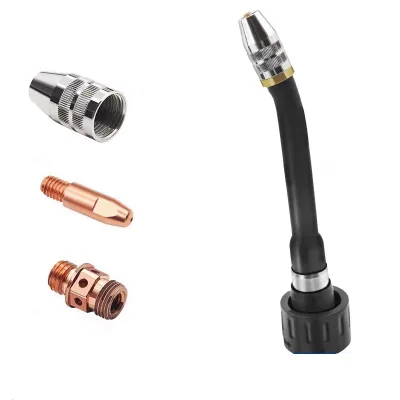


Comprehensive Sourcing Guide
Strategic Sourcing Guide for 450A Robotic MIG Welding Torches
Technical Specifications and Operational Parameters
When evaluating a 450A Robotic MIG Welding Torch, the primary focus must be on the electrical and thermal capabilities that define its suitability for high-intensity industrial applications. The core specification for this category involves the operating current, which typically ranges from 450A to 550A depending on the specific gas mixture used. In the observed market data, torches with a 450A rating are often paired with mixed gas configurations, where the current capacity might be listed as 450A for mixed gases or slightly higher, such as 550A, for pure CO2 applications. This distinction is critical because the thermal load on the torch differs significantly between gas types.
The cooling mechanism is another non-negotiable technical parameter for robotic systems. Robotic MIG torches operating at this amperage almost invariably require water cooling to maintain operational integrity during continuous duty cycles. The observed data confirms that high-performance torches utilize water cooling systems, often paired with a duty cycle of 100% or 60% depending on the specific model and manufacturer design. A torch with a 100% duty cycle at 450A is essential for automated lines where the welding process cannot be interrupted for cooling periods. The wire diameter compatibility is equally vital; standard configurations for this amperage class support wire diameters ranging from 0.8mm to 2.4mm, allowing for versatility in joint preparation and filler material selection.
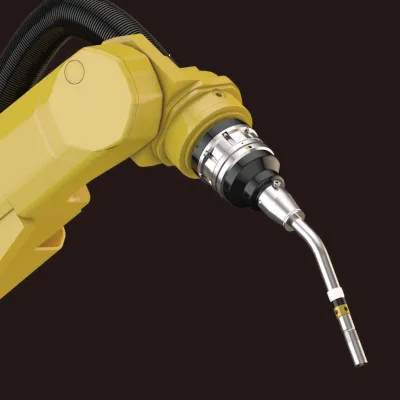
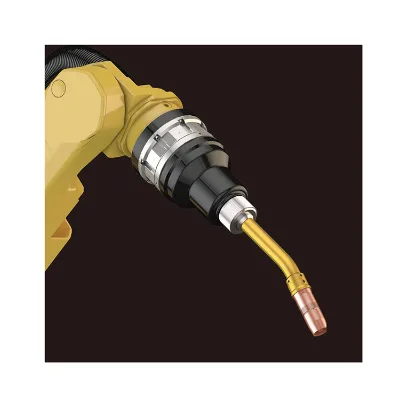
The physical interface of the torch also dictates its integration into robotic arms. The rear connector type is a standardization point that buyers must verify. The Euro Connector is a prevalent standard in the observed product listings, ensuring compatibility with a wide range of robotic welding power sources and cable assemblies. Additionally, the length of the torch cable and the overall size of the unit must align with the reach and payload capacity of the specific robot being utilized. While some models are described as "portable" or "standard," robotic applications typically demand a "standard" size with a defined length, often between 0.9m and 1.6m, to ensure proper cable management and minimize drag on the robot's wrist.
Compliance and Certification Verification
In the global B2B market for industrial welding equipment, compliance with international safety and quality standards is a prerequisite for procurement. Buyers must rigorously verify that the 450A robotic MIG welding torches they source carry the necessary certifications. The observed product data indicates a strong presence of CE, CCC, ISO9001, RoHS, and TUV certifications. These marks are not merely marketing labels; they represent adherence to specific regulatory frameworks regarding electrical safety, electromagnetic compatibility, and environmental restrictions on hazardous substances.
The CE marking is particularly significant for procurement within the European Union, indicating that the product meets EU safety, health, and environmental protection requirements. Similarly, the CCC (China Compulsory Certification) is mandatory for products sold within the Chinese market, ensuring local regulatory compliance. For buyers operating in multiple jurisdictions, the presence of ISO9001 certification is a strong indicator that the manufacturer maintains a quality management system capable of consistent production. The RoHS directive ensures that the torch components do not contain restricted hazardous materials, which is increasingly important for environmental compliance and recycling protocols.
However, buyers should exercise caution when interpreting certification claims. While the data lists certifications like "ISOCE" or "ISO9001: 2000," these should be cross-referenced with the specific certificate numbers provided by the supplier. The "ISO9001: 2000" standard is an older version; modern procurement should ideally seek ISO9001:2015 compliance to ensure the manufacturer adheres to the latest quality management principles. Furthermore, the presence of TUV certification adds a layer of third-party validation, suggesting that the product has undergone independent testing for safety and performance. Buyers must request valid, up-to-date certificates for each batch of equipment to avoid liability issues and ensure that the equipment meets the specific regulatory requirements of their operational location.
Cost Drivers and Pricing Dynamics
The pricing structure for 450A robotic MIG welding torches is influenced by a complex interplay of technical specifications, material quality, and supply chain factors. The observed market data reveals a wide price range, spanning from approximately $2.30 to $13,500. This vast disparity indicates that the keyword "450A Robotic MIG Welding Torch" encompasses a spectrum of products, from basic consumable components to fully integrated robotic torch assemblies with advanced cooling and control systems.
Several key factors drive the cost of these torches. First, the cooling system design is a major cost driver. Water-cooled torches with high-duty cycle ratings (100%) and robust internal cooling channels require more expensive materials and manufacturing precision than air-cooled alternatives. Second, the connector type and build quality significantly impact price. Euro connectors with high-temperature resistance and durable insulation materials command a premium. Third, the brand reputation and the level of customization available can influence the final cost. Products offering customized packing or specific OEM configurations often carry higher price points due to the additional engineering and setup costs involved.
Buyers must also consider the Minimum Order Quantity (MOQ) and its effect on unit pricing. The observed MOQ range is between 1 and 10 units. While some suppliers may offer single-unit purchases at a higher per-unit cost, larger orders often benefit from economies of scale. However, the data suggests that for specialized robotic torches, the MOQ might be flexible depending on the customization level. The "OEM: on Order Quantity" attribute implies that custom branding or specific configuration requests may require a minimum volume to be economically viable. Additionally, the delivery time, which ranges from 5 to 20 workdays, can affect the total cost of ownership if expedited shipping is required to meet production deadlines.
Typical Applications and Industrial Use Cases
The 450A Robotic MIG Welding Torch is designed for heavy-duty industrial applications where high deposition rates and consistent weld quality are paramount. These torches are primarily utilized in sectors such as automotive manufacturing, heavy equipment fabrication, and structural steel construction. The ability to handle wire diameters up to 2.4mm and operate at currents up to 550A makes them suitable for welding thick plates and large structural components. The "Maximum Welding Thickness" observed in the data, ranging from 10-15mm to over 15mm, confirms their suitability for substantial fabrication tasks.
In robotic welding cells, these torches are often employed for long-run production cycles where the duty cycle is critical. The 100% duty cycle capability allows for continuous operation without the need for cooling pauses, which is essential for high-throughput assembly lines. The "Balanced Pressure Type" design mentioned in the specifications suggests applications where precise control of shielding gas flow is necessary to prevent weld defects, particularly in environments with varying atmospheric conditions. The "Single Flame" attribute, while seemingly contradictory to MIG welding (which uses a plasma arc), may refer to specific torch configurations or consumable designs intended for specific soldering or specialized welding processes, though the primary application remains standard MIG/MAG welding.
The application of these torches is not limited to a single industry. They are versatile enough for use in machinery manufacturing, as indicated by the "Application: Machinery" attribute. The "Hand" application attribute suggests that while designed for robots, these torches may also have manual counterparts or be adaptable for semi-automatic operations. However, for robotic integration, the focus is on the "Machinery" and "Automatic" aspects, where the torch serves as the end-effector for the robot, delivering the welding arc with precision and repeatability.
Supplier Evaluation and Sourcing Criteria
Selecting the right supplier for 450A robotic MIG welding torches requires a thorough evaluation of their technical capabilities, quality assurance processes, and logistical reliability. Buyers should prioritize suppliers who can provide transparent documentation regarding their manufacturing standards and certification status. The presence of multiple certifications such as CE, CCC, SGS, and ISO9001 in the product data suggests that reputable suppliers maintain rigorous internal controls. However, buyers must verify that these certifications are current and applicable to the specific model being purchased.
The origin of the product is another critical factor. The observed data indicates that these torches are manufactured in Shanghai and Changzhou, Jiangsu, China. While these regions are known for their robust manufacturing ecosystems, buyers should assess the specific factory's capacity to meet their volume requirements and quality standards. The "Place of Origin" should be clearly stated on the product documentation to ensure traceability. Additionally, the supplier's ability to offer customization, such as "Customized" packing or specific "OEM" configurations, is a valuable differentiator.
Logistical considerations, including lead time and delivery terms, must also be factored into the supplier evaluation. The observed delivery times range from 5 to 20 workdays, which can vary based on order volume and customization requirements. Buyers should establish clear communication channels with suppliers to confirm lead times and ensure that the delivery schedule aligns with their production needs. The "Expiration Date" of 3 months mentioned in the data may refer to the shelf life of consumable components or specific packaging, which is a detail that requires clarification to avoid receiving degraded products.
Quality Control and Long-Term Procurement Strategy
Implementing a robust quality control (QC) strategy is essential for ensuring the longevity and performance of 450A robotic MIG welding torches. Buyers should insist on pre-shipment inspections that verify the torch's electrical continuity, cooling system integrity, and mechanical durability. The "Duty Cycle" rating of 60% or 100% must be validated through testing to ensure the torch can withstand the thermal stress of continuous operation. The "Wire Dia" compatibility should also be tested with actual welding wire to confirm that the liner and contact tip fit correctly without causing feeding issues.
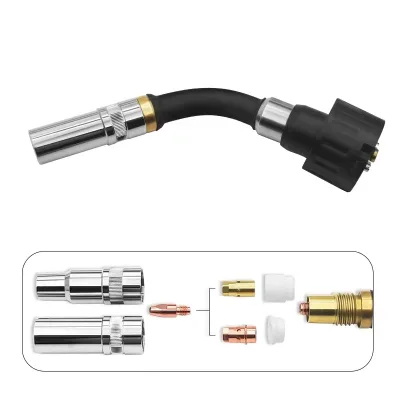
Long-term procurement considerations involve building a sustainable relationship with suppliers who can provide consistent quality and support. This includes establishing clear specifications for spare parts, such as contact tips, nozzles, and diffusers, which are consumable components that require regular replacement. The "Product Name" and "prod_model" (e.g., LIN400A, HRK550A) should be standardized across orders to ensure compatibility and simplify inventory management. Buyers should also consider the total cost of ownership, including maintenance costs and the availability of technical support, rather than focusing solely on the initial purchase price.
The "Standard" and "Size" attributes, such as "Portable" or "Standard," should be defined clearly in procurement contracts to avoid ambiguity. Ensuring that the torch meets the specific dimensional and performance standards of the robotic cell is crucial for seamless integration. Finally, buyers should maintain a record of all certifications and test results for each batch of equipment to facilitate future audits and compliance checks. By adopting a disciplined approach to quality control and supplier management, organizations can maximize the efficiency and reliability of their robotic welding operations.
Comparative Analysis of Key Product Attributes
To facilitate informed decision-making, the following table summarizes the key technical and compliance attributes observed in the market for 450A robotic MIG welding torches. This comparison highlights the variations in specifications that buyers should consider when selecting a product.
| Attribute | Observed Range / Value | Relevance to Procurement |
|---|---|---|
| Operating Current | 400A - 550A (CO2/Mixed) | Determines welding power and material thickness capability. |
| Cooling Way | Water Cooling | Essential for high-duty cycle robotic applications. |
| Duty Cycle | 60% - 100% | Indicates continuous operation capability without cooling pauses. |
| Wire Diameter | 0.8mm - 2.4mm | Defines compatibility with various filler wire sizes. |
| Rear Connector | Euro Connector | Ensures compatibility with standard robotic power sources. |
| Certifications | CE, CCC, ISO9001, RoHS, TUV | Validates safety, quality, and environmental compliance. |
| Origin | Shanghai, Changzhou, China | Indicates manufacturing location and potential supply chain factors. |
| Delivery Time | 5 - 20 Workdays | Affects production planning and inventory management. |
| Maximum Thickness | 10-15mm to >15mm | Guides selection based on the thickness of materials to be welded. |
This comparative overview underscores the importance of matching specific technical requirements with the capabilities of the available products. By carefully evaluating these attributes, buyers can select a 450A Robotic MIG Welding Torch that optimizes performance, ensures compliance, and supports long-term operational efficiency.
FAQs
What certifications do 450A robotic MIG welding torches typically have?
These torches typically carry CE, CCC, ISO9001, RoHS, and TUV certifications. Buyers must verify that these marks are current and applicable to the specific model being purchased to ensure regulatory compliance in their operational location.
Which cooling method is required for high-duty cycle robotic torches?
Water cooling is the required method for robotic torches operating at high amperage with continuous duty cycles. This system maintains operational integrity during long runs, unlike air cooling which is insufficient for sustained 100% duty cycle performance.
Can these torches handle wire diameters up to 2.4mm?
Yes, standard configurations for this amperage class support wire diameters ranging from 0.8mm to 2.4mm. This versatility allows for selection across different joint preparations and filler material requirements in heavy industrial fabrication tasks.
What is the typical delivery time for these welding torches?
The typical delivery time ranges from 5 to 20 workdays depending on order volume and customization. Buyers should establish clear communication with suppliers to confirm lead times that align with their specific production deadlines.
Which connector type is standard for robotic integration?
The Euro Connector is the prevalent standard ensuring compatibility with a wide range of robotic welding power sources. This interface standardization is critical for seamless integration into automated welding cells and cable management systems.
How does the duty cycle affect robotic welding operations?
A 100% duty cycle allows for continuous operation without cooling pauses, which is essential for high-throughput assembly lines. This capability ensures the torch can withstand the thermal stress of uninterrupted industrial welding processes.