Find 485 Communication PLC for Automation, Monitoring, and Control
Source 30 units of 485 Communication PLC featuring RS485 interfaces and automatic control functions. Buyers can compare specifications including input points, output methods, and communication protocols from verified suppliers in China.
Key considerations
Products List


Automate Programmable PLC Control PLC
$99.72 - $150.62
MOQ: 1 sets
Ji' Nan Tian Chuan Zhong Cheng Electricity Equipment Co., Ltd.


PLC Module PLC Programm Controller Make
$99.72 - $150.62
MOQ: 1 sets
Ji' Nan Tian Chuan Zhong Cheng Electricity Equipment Co., Ltd.


$50.00 - $100.00
MOQ: 1 Pieces


$50.00 - $100.00
MOQ: 1 Pieces

$50.00 - $100.00
MOQ: 1 Pieces


PLC Communication Trainer with Software PLC Training Equipment Educational Equipment
$1000.00 - $8000.00
MOQ: 1 Sets
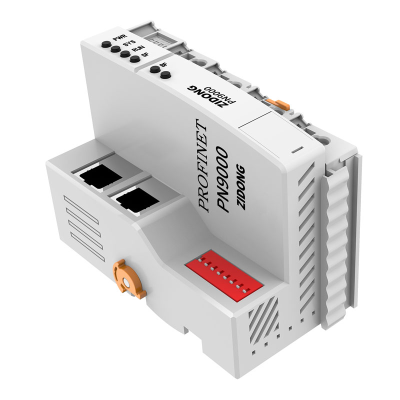


Programmable Logic Controllers PLC Controlling System
$1000.00 - $5000.00
MOQ: 1 Pieces
LIAONING XINLAI INTELLIGENT EQUIPMENT MANUFACTURING CO LIMITED


EV Charging Communication Protocol Controller Evcc Module PLC for CCS1 CCS2
$700.00 - $800.00
MOQ: 1 Sets
Comprehensive Sourcing Guide
485 Communication PLC Sourcing Guide
When evaluating programmable logic controllers (PLCs) with RS485 communication capabilities, buyers must navigate a market characterized by significant variation in hardware architecture and software integration depth. The core keyword "485 Communication PLC" typically refers to industrial controllers that utilize the RS485 serial standard for data transmission, often supporting Modbus RTU or proprietary protocols. This guide synthesizes observed market signals and technical specifications to help procurement teams make informed decisions, focusing on the specific attributes found in current listings, such as the H1X and H2X series, which emphasize bus and pulse motion control alongside standard I/O operations.
The procurement landscape for these devices is defined by a wide range of price points and minimum order quantities (MOQs), reflecting the diversity from basic standalone units to complex multi-axis motion controllers. Buyers should recognize that "485 communication" is rarely an isolated feature; it is often part of a broader connectivity suite that includes Ethernet, USB, and digital I/O expansion. Understanding the interplay between serial communication, motion control capabilities, and power supply requirements is essential for selecting a PLC that aligns with specific automation tasks, whether they involve simple monitoring or complex 8-axis synchronization.
Product Scope and Observed Listing Signals
Current market listings for 485 communication PLCs reveal a product scope that extends beyond simple logic control into integrated motion management. Observed models, such as the H1X-1410MT-A and the broader H1X/H2X series, demonstrate a trend toward combining standard PLC functions with advanced motion control features. These units often support up to 12-axis pulse output or bus-based servo control, indicating that the RS485 interface is frequently used not just for data logging, but for coordinating multiple axes and peripheral devices in real-time. The presence of "Automatic Control" and "Program" task attributes suggests these are sophisticated controllers capable of handling complex sequential operations rather than simple on/off switching.
The physical and structural attributes of these PLCs also vary, with materials ranging from plastic enclosures to aluminum alloy housings, which may impact thermal management and durability in harsh industrial environments. Listings indicate that customization is available, allowing buyers to tailor specific features to their production needs. Furthermore, the inclusion of "Continuous" signal attributes and "Combination" structures implies that these devices are designed for systems requiring steady-state monitoring and integrated input/output handling. Buyers should note that while many units are listed as "New," the specific condition and packaging details, such as carton packing, should be verified to ensure safe transit and proper storage upon arrival.
Technical Specifications to Verify
Verifying the communication interfaces is the most critical technical step when sourcing a 485 Communication PLC. Listings confirm the presence of RS232 and dual RS485 ports, with some models supporting free agreement protocols and Modbus TCP/IP over Ethernet. Buyers must verify whether the RS485 ports are dedicated to specific functions, such as connecting to HMIs, drives, or other PLCs, and ensure that the protocol support matches the existing infrastructure. The observation of "Plug and Play" capabilities for EtherCAT and "No Need to Import Xml Files" suggests a user-friendly software environment, but buyers should confirm that the specific firmware version supports the required baud rates and parity settings for their application.
I/O configuration and power supply requirements are equally important to validate before purchase. The observed H1X-1410MT-A model features 14 input points and 10 output points, with output methods including NPN transistor and relay options. Buyers must ensure that the I/O type matches their field devices, as mixing NPN and PNP/Relay outputs can complicate wiring and increase costs. Additionally, the voltage range of 24VDC or 100-240AC must be confirmed against the facility’s power distribution system. The support for communication expansion and the ability to add board extensions further enhance flexibility, but buyers should verify the maximum number of supported slave stations and the bandwidth limitations of the RS485 bus in their specific network topology.
Compliance and Safety Documentation
Compliance documentation is a non-negotiable aspect of industrial procurement, and the observed listings highlight certifications such as CE and ISO 9001. Buyers must request and verify the validity of these certificates, ensuring that the CE mark corresponds to the specific model and voltage configuration being purchased. The presence of ISO 9001 indicates a quality management system, but it does not guarantee that every unit meets safety standards; therefore, buyers should ask for test reports or conformity declarations that specifically address electrical safety and electromagnetic compatibility (EMC) for the 485 communication ports.
In addition to general certifications, buyers should verify if the PLC meets specific industry standards relevant to their application, such as UL or RoHS compliance, especially if the equipment will be deployed in North America or environmentally sensitive regions. The listings mention "Protection" and "Monitoring" functions, which may imply built-in safety features, but these should be distinguished from certified safety-rated PLCs. If the application involves critical safety interlocks, buyers must confirm that the PLC’s safety functions are independently certified and do not rely solely on software-based logic, which may not meet functional safety standards like IEC 61508.
Cost Drivers and Commercial Terms
The cost of a 485 Communication PLC is influenced by several factors, including the complexity of the motion control capabilities, the number of communication interfaces, and the level of customization required. Listings show a wide price range, from low-cost basic units to higher-priced multi-axis controllers, reflecting the disparity in features such as 8-axis support, Ethernet switches, and bus servo compatibility. Buyers should analyze the total cost of ownership, which includes not only the unit price but also the cost of programming software, communication cables, and any necessary expansion modules or power supplies.
Commercial terms, such as MOQ and lead time, vary significantly among suppliers. Observed MOQs range from 1 to 10 units, suggesting that small-batch procurement is feasible, but buyers should negotiate for volume discounts if their requirements exceed the standard MOQ. Lead times are not explicitly stated in the observed data, but buyers should clarify production schedules, especially for customized units, as customization can extend delivery times. Payment terms, warranty periods, and return policies should be clearly defined in the contract to mitigate financial risk, particularly when dealing with international suppliers from regions like Shenzhen or Guangdong, China.
Supplier Qualification and Quality Control
Supplier qualification requires a thorough assessment of the manufacturer’s technical support capabilities and quality assurance processes. Buyers should verify the supplier’s ability to provide comprehensive documentation, including user manuals, programming guides, and firmware updates, as the observed features like "USB Downloadable Program" and "Free Communication Protocol" rely heavily on software support. Suppliers with a strong track record in motion control and bus communication are preferable, as they are more likely to provide reliable technical assistance for complex integration issues involving RS485 and EtherCAT networks.
Quality control measures should be evaluated through the supplier’s inspection protocols and defect rate statistics. Buyers should inquire about incoming material inspections, in-process testing, and final functional testing, particularly for the communication ports and I/O channels. The observation of "Brand New" condition and specific packaging like "Carton" suggests attention to physical protection, but buyers should request photos or videos of the packaging process to ensure that the PLCs are protected against static discharge and physical damage during transit. Establishing a clear communication channel for post-sale support is also crucial, as troubleshooting communication errors often requires remote assistance and firmware adjustments.
Long-Term Procurement Checks
Long-term procurement success depends on the supplier’s ability to provide consistent supply and future-proof technology. Buyers should assess the supplier’s product roadmap to ensure that the 485 communication PLCs will remain supported with firmware updates and spare parts availability for the expected lifespan of the automation system. The rapid evolution of industrial communication protocols means that buyers should consider whether the PLC’s RS485 interface can be supplemented with newer technologies like Ethernet or EtherCAT without requiring a complete system overhaul.
Additionally, buyers should monitor the supplier’s reputation for after-sales service and technical responsiveness. The observed advantages, such as "Same Program Can Control Both Pulse and Bus Servo," indicate a flexible software environment, but buyers should verify that this flexibility is maintained through regular updates. Establishing a long-term partnership with a supplier who offers training, application engineering support, and a reliable supply chain will reduce downtime and integration risks, ensuring that the 485 communication PLCs continue to meet operational needs as production requirements evolve.
FAQs
What communication interfaces does the 485 Communication PLC support?
The device supports RS485, RS232, Ethernet, and Ethercat interfaces. It features two RS485 ports and allows free agreement support on the RS485 line for flexible integration.
Can this PLC be customized for specific industrial tasks?
Yes, customization is available for this PLC unit. Buyers can request specific configurations to match unique program tasks or control requirements without needing standard models.
Which certifications are held by the 485 Communication PLC?
The product holds CCC, CE, and ISO 9001 certifications. These standards ensure the device meets safety and quality requirements for industrial automation applications in various regions.
How many input and output points does the PLC have?
The model features 14 input points and 10 output points. It supports NPN transistor and relay output methods to handle different load types effectively.
What is the power supply voltage range for this unit?
The PLC operates on a voltage range of 24VDC or 100-240AC. This dual power supply type ensures compatibility with diverse industrial power environments and stability.
Where is the 485 Communication PLC manufactured?
The product originates from Shenzhen or Guangdong, China. These locations are known for advanced manufacturing capabilities in the electronics and automation sector.
Does the PLC support communication expansion capabilities?
Yes, the device supports communication expansion through its left extension feature. It also includes a built-in electronic cam and supports up to 12-axis pulse output.