Find 4K 120Hz HDMI KVM Extender for Gaming, Studios, Control Rooms
Source 30 verified options for the 4K 120Hz HDMI KVM Extender to compare features like resolution support and cable length. Buyers can evaluate specifications for gaming, broadcast studios, and control room applications directly from suppliers in Guangdong, China.
Key considerations
Products List
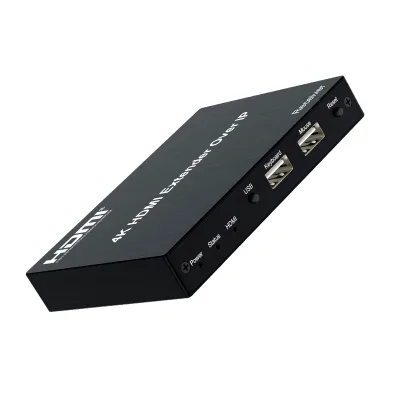


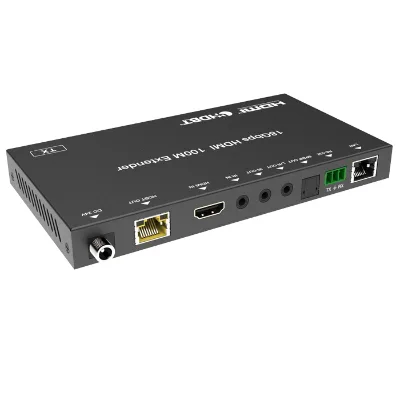
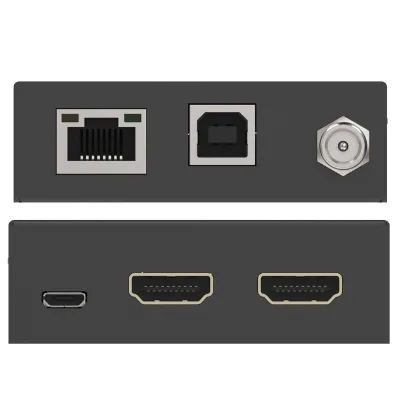


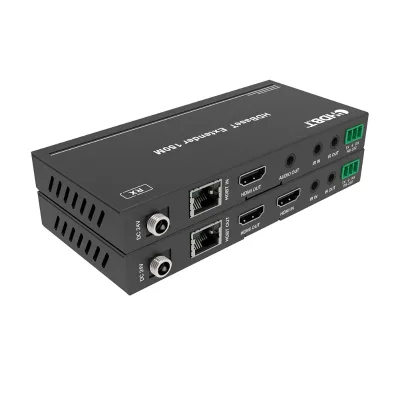


Comprehensive Sourcing Guide
Strategic Sourcing Guide for 4K 120Hz HDMI KVM Extender Solutions
The procurement landscape for high-performance video and control infrastructure has evolved significantly, driven by the demand for seamless multi-display management and remote system control. When sourcing a 4K 120Hz HDMI KVM Extender, buyers must navigate a complex array of technical specifications, compatibility requirements, and supply chain variables. While the core keyword suggests a specific performance tier, the actual market offerings often vary in their ability to sustain such high refresh rates over extended distances. This guide provides a disciplined framework for evaluating potential suppliers and products, ensuring that procurement decisions are grounded in verified technical realities rather than marketing assertions.
Technical Architecture and Bandwidth Realities
The fundamental challenge in sourcing a 4K 120Hz KVM extender lies in the bandwidth requirements. A 4K resolution at 120Hz with 8-bit color depth requires a data throughput significantly higher than standard 4K 60Hz signals. Current industry standards, such as HDMI 2.0, typically support 4K at 60Hz, while HDMI 2.1 is required to reliably handle 4K at 120Hz. Buyers must critically examine the stated HDMI version of any proposed solution. In many observed product listings, specifications cite HDMI 1.4b or HDMI 1.0, which are technically insufficient for native 4K 120Hz transmission.
When evaluating technical specifications, procurement teams should verify the maximum resolution and refresh rate claims against the underlying protocol version. For instance, some products in the current market are listed with a Max resolution of 3840*2160/30HZ, which aligns with HDMI 1.4b capabilities but falls short of the 120Hz requirement. If a supplier claims 4K 120Hz support, the buyer must request detailed bandwidth calculations and proof of signal integrity testing. Additionally, the type of transmission medium is critical. While copper-based extenders are common for short distances, fiber optic solutions are often necessary for longer runs to maintain signal quality. The presence of fiber optic technology in a product description often indicates a higher capability for distance and bandwidth, yet the specific version of the fiber interface must match the HDMI source requirements.
Buyers should also scrutinize the Video latency time. In high-refresh-rate environments, such as competitive gaming or real-time trading, latency is a critical performance metric. Some observed products list a latency of <100us, which is an excellent benchmark for real-time applications. However, this figure must be validated under the specific load conditions of the intended deployment. The Max working current for the transmitter and receiver, often cited as TX 420mA, RX 480mA, provides insight into the power consumption and thermal management requirements of the device. These electrical characteristics influence the design of the power supply, which is frequently listed as a 5V/1A adapter in standard configurations.
Compliance, Certification, and Regulatory Standards
In the B2B sector, compliance is not merely a formality but a prerequisite for risk mitigation. When sourcing electronic components from global markets, particularly from regions like Guangdong, China, verifying adherence to international safety and environmental standards is essential. The most common certifications observed in this category include RoHS (Restriction of Hazardous Substances) and CE (Conformité Européenne). These certifications indicate that the product meets specific environmental and safety guidelines for the European and global markets.
However, the presence of a certification claim on a product page does not guarantee that every unit in a batch is compliant. Buyers must request valid, up-to-date certification documents from the supplier, ensuring that the specific model number matches the documentation. For example, a product listed with a Warranty period of 2 years may have different compliance requirements depending on the target market. In the United States, additional certifications such as FCC (Federal Communications Commission) for electromagnetic interference might be required, though these are not always explicitly listed in general product descriptions.
Furthermore, the place of origin plays a significant role in the supply chain's regulatory landscape. Products originating from China are subject to specific import regulations and quality control checks. Buyers should verify if the supplier has a history of passing customs inspections and if their manufacturing facilities adhere to ISO quality management standards. The Certification field in product data often lists RoHS, CE, but buyers should treat these as observations of the specific listing rather than universal guarantees for all inventory. It is prudent to include compliance verification as a mandatory step in the supplier qualification process, ensuring that the final product can be legally sold and deployed in the buyer's target regions.
Cost Drivers and Total Cost of Ownership
The price range for HDMI KVM extenders is vast, with observed listings spanning from 8.35 to 1099.99 USD. This wide disparity reflects differences in technology, build quality, brand positioning, and included features. Lower-priced units often utilize older HDMI standards, such as HDMI 1.4b, and may support only 3840*2160/30HZ, which is insufficient for 4K 120Hz applications. Conversely, higher-priced units are more likely to incorporate advanced chipsets capable of handling higher bandwidths, fiber optic transmission, and enhanced error correction.
When evaluating cost, buyers must look beyond the unit price to the Total Cost of Ownership (TCO). This includes the cost of power adapters, cabling, and potential replacement costs due to failure. Products with a Warranty period of 2 years may offer better long-term value despite a higher initial price, as they reduce the risk of downtime. Additionally, the MOQ (Minimum Order Quantity) range of 1-200 units affects the per-unit cost. Larger orders often benefit from economies of scale, but buyers must balance this against inventory holding costs and the risk of obsolescence.
Other cost drivers include Customization options. Many suppliers offer Customization: Available for branding, packaging, or specific technical modifications. While customization can add value, it often increases the lead time and unit cost. Buyers should assess whether the customization is necessary for their specific deployment or if a standard off-the-shelf solution is more cost-effective. The Product Name and Model Number (e.g., HDES150-KVM) can also indicate the product's tier; specialized models often command a premium due to their specific feature sets, such as KVM over fiber optic capabilities.
Typical Applications and Deployment Scenarios
The versatility of KVM extenders makes them suitable for a wide range of applications, from HDTV and DVD players to Computer, Microphone, and Telephone systems. The Application field in product data often lists HDTV, DVD, STB, Computer, Microphone, Telephone, Projector, Speaker, Home Appliance, Multimedia, highlighting the broad compatibility of these devices. However, the specific use case dictates the required technical specifications.
In Home Theater and Multimedia setups, the primary focus is often on video quality and audio fidelity. Products supporting 8/10/12 bit deep color and stereo, 7.1CH audio formats are ideal for these environments. The Audio Format and Sound Channel specifications, such as Surround Sound, are critical for creating an immersive experience. In contrast, Corporate and Data Center applications prioritize reliability, low latency, and remote management. Here, the Video latency time of <100us becomes a decisive factor, as even minor delays can impact productivity.
For Gaming and High-Performance Computing environments, the 4K 120Hz requirement is paramount. Buyers must ensure that the extender supports the necessary refresh rates and color depths to avoid visual artifacts or frame drops. The 3D Support feature, often listed as No in standard models, may be a dealbreaker for users requiring 3D content. Additionally, the Control method, whether Wired or IR remote control (e.g., 38 KHz; NEC), influences the user experience. In professional settings, Wired control is often preferred for stability, while IR remote control may be more convenient for consumer applications.
Supplier Evaluation and Quality Assurance
Selecting the right supplier is as critical as selecting the right product. Buyers should evaluate suppliers based on their ability to provide consistent quality, reliable lead times, and responsive customer support. The private mold status, often listed as Yes, indicates that the supplier has proprietary designs, which can be a sign of innovation and quality control. However, it also means that the product may be unique to that supplier, limiting the ability to source replacements from alternative vendors.
Quality assurance should be a central part of the procurement process. Buyers should request test results and performance claims to verify the product's capabilities. While specific test data may not always be available in public listings, suppliers should be willing to provide third-party testing reports or internal quality control logs. The prod_packing (e.g., Customized or Factory Standand) and Finish (e.g., PVC Black Wood) also reflect the attention to detail in manufacturing. A well-packaged product with a durable finish suggests a higher level of quality control.
Furthermore, the Selling Units (e.g., Single item) and Output specifications (e.g., VGA, AV, SDI, Component signal) indicate the flexibility of the product. Suppliers that offer a wide range of output options are better equipped to handle diverse deployment scenarios. Buyers should also verify the Remote Control availability, as some products are listed as Without Remote Control, which may require additional accessories or software solutions for operation.
Long-Term Procurement Considerations and Scalability
Long-term procurement planning involves considering the scalability and future-proofing of the solution. The HDMI Version is a key factor in this regard. As the industry moves towards HDMI 2.1, buyers should ensure that their chosen extender can support future upgrades without requiring a complete system overhaul. Products with HDMI 1.4b or HDMI 1.0 may become obsolete quickly, limiting their utility in future deployments.
The Warranty period is another critical consideration. A 2-year warranty provides a reasonable safety net, but buyers should also inquire about the supplier's policy for extended warranties or replacement programs. In the event of a failure, the ability to quickly replace units is essential for maintaining operational continuity. The place of origin and lead time also impact the supply chain's resilience. Suppliers with a strong presence in Guangdong, China may offer faster lead times, but buyers should also consider the risks associated with geopolitical tensions or supply chain disruptions.
Finally, the Customization options allow buyers to tailor the solution to their specific needs. Whether it is branding, packaging, or technical modifications, customization can enhance the product's value. However, buyers must weigh the benefits of customization against the potential increase in cost and lead time. By carefully evaluating these long-term factors, buyers can ensure that their investment in 4K 120Hz HDMI KVM extenders remains viable and effective for years to come.
Comparative Analysis of Key Product Attributes
To facilitate decision-making, the following table summarizes the key attributes observed in the current market, highlighting the variations that buyers must consider.
| Attribute | Observed Range/Value | Implication for 4K 120Hz Sourcing |
|---|---|---|
| HDMI Version | HDMI 1.4b, HDMI 1.0 | Likely insufficient for 4K 120Hz; requires verification of HDMI 2.0/2.1 support. |
| Max Resolution | 3840*2160/30HZ, 1080P | 30Hz is standard for HDMI 1.4b; 120Hz requires higher bandwidth protocols. |
| Video Latency | <100us | Excellent for real-time applications; verify under full load conditions. |
| Power Adapter | 5V/1A | Standard; ensure adequate power for the specific model's current draw. |
| Warranty | 2 years | Standard industry offering; check for extended options. |
| Place of Origin | Guangdong, China | Common manufacturing hub; verify compliance with local and export regulations. |
| Certification | RoHS, CE | Essential for market access; request valid documentation. |
| Transmission | Fiber Optic, Copper | Fiber preferred for long distances; verify bandwidth capacity. |
| Audio Support | Stereo, 7.1CH | Verify compatibility with specific audio systems. |
| 3D Support | No | Most standard models do not support 3D; check for specific 3D-capable units. |
This comparative analysis underscores the importance of rigorous verification. Buyers must not rely solely on the product name or general description but must delve into the specific technical details to ensure the product meets the demanding requirements of a 4K 120Hz HDMI KVM Extender deployment. By adhering to these guidelines, procurement teams can make informed decisions that balance performance, cost, and reliability.
FAQs
What HDMI version supports 4K 120Hz KVM extenders?
HDMI 2.1 is required to reliably support 4K at 120Hz. Many listed products only support HDMI 1.4b, which is limited to 4K at 30Hz or 1080p at higher refresh rates.
Can I find 4K 120Hz extenders with under 100us latency?
Some fiber optic models offer latency under 100us for real-time applications. However, verify if the specific unit supports 120Hz, as many low-latency devices are limited to 30Hz at 4K resolution.
Which certifications should I verify for Chinese KVM extenders?
Look for RoHS and CE certifications as standard compliance markers. These indicate adherence to environmental and safety guidelines, though you must request valid documents for the specific model number.
How does the 5V 1A power adapter affect performance?
The 5V 1A adapter powers standard transmitter and receiver units. Ensure the power supply matches the max working current requirements, typically around 420mA for the transmitter and 480mA for the receiver.
What is the maximum resolution for HDMI 1.4b extenders?
HDMI 1.4b extenders typically support a maximum resolution of 3840x2160 at 30Hz. They cannot natively handle 4K at 120Hz, which requires the higher bandwidth of HDMI 2.1.
Can I customize packaging for bulk orders of KVM extenders?
Yes, customization is available for branding and packaging in many listings. This option may increase the unit cost and lead time, so confirm the minimum order quantity before requesting changes.
Which audio formats are supported by these HDMI extenders?
Supported audio formats include stereo and 7.1 channel surround sound. Verify that the specific model supports the required bit depth, such as 8, 10, or 12-bit deep color, for your setup.
What is the typical warranty period for these devices?
A standard warranty period for these devices is two years. This coverage helps mitigate risks, but always confirm the specific terms apply to the model number and region of purchase.