Find 4G Wireless Router for Mobile phone, Server, and Workstation
Source 30 verified 4G Wireless Router options for SOHO and Enterprise use. Compare models like G720 and LTE-M300 with varying antenna types, CPU specs, and delivery times from Chinese manufacturers.
Key considerations
Products List


Router with SIM Card Portable Router WiFi Mobile Unlocked 4G WiFi Router
$6.00 - $70.00
MOQ: 1000 Pieces


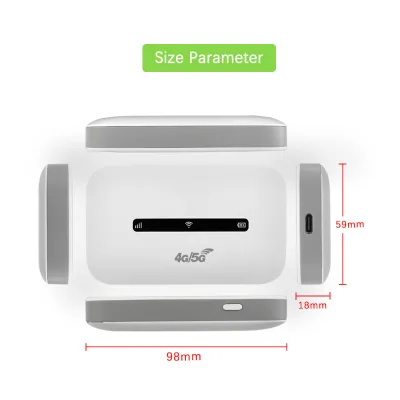


Professional Router LTE SIM Card WiFi Router Wireless Hotspot 3G 4G Router
$18.00 - $26.00
MOQ: 1 Pieces

Comprehensive Sourcing Guide
Strategic Sourcing Guide for 4G Wireless Routers
Understanding Technical Specifications and Performance Metrics
When evaluating 4G wireless routers for B2B procurement, buyers must first distinguish between the diverse technical architectures available in the current market. The core functionality of these devices often centers on their ability to serve as border routers or access points in both SOHO and enterprise environments. A critical observation in the current supply landscape is the variation in CPU architecture; some units utilize multi-bus multi-CPU configurations, while others rely on single-chip solutions like Qualcomm processors. This distinction directly impacts processing power and the ability to handle concurrent data streams.
Performance metrics are equally variable. Procurement teams should verify whether a router is classified as a "Line-Rate Router" or a "Non Line Speed Router." The former suggests the device can handle traffic at the maximum theoretical speed of its interface, whereas the latter indicates a potential bottleneck under heavy load. For applications requiring high throughput, such as server workstations or large-scale mobile deployments, the distinction is vital. Furthermore, the transfer rate is a specific constraint to note; observed market data indicates some models operate at transfer rates up to 300Mbps, which may be insufficient for high-bandwidth enterprise applications but adequate for smaller networks.
The physical and logical configuration of the device also dictates its suitability. Buyers should examine the antenna type, which can be either built-in or external. External antennas often provide better signal penetration and range, making them preferable for industrial or remote deployments. The work mode is another technical differentiator; devices supporting an "AP+STA" (Access Point + Station) mode offer greater flexibility in network topology, allowing the router to connect to an upstream network while simultaneously broadcasting its own signal. Additionally, the port structure, whether modular or fixed, influences future scalability. Modular ports allow for the addition of specific interfaces as network needs evolve, whereas fixed ports limit the device to its initial configuration.
Compliance, Certification, and Regulatory Standards
In the global B2B market, regulatory compliance is not merely a formality but a prerequisite for market entry and operational safety. When sourcing 4G wireless routers, buyers must rigorously verify that the product possesses the necessary certifications to operate legally in the target region. The most frequently observed certifications in the current supply pool include CE, RoHS, and ISO. The CE mark indicates conformity with health, safety, and environmental protection standards for products sold within the European Economic Area. RoHS compliance ensures that the device is manufactured without specific hazardous materials, which is critical for environmental sustainability and waste management regulations. ISO certification, while often referring to management systems, serves as a marker for the manufacturer's adherence to quality control processes.
Beyond general certifications, specific technical standards must be validated against the intended deployment environment. The 4G connectivity standard is a primary area of verification. Devices should explicitly support the relevant frequency bands and protocols, such as LTE-FDD, LTE-TDD, and WCDMA. Failure to match the local carrier's frequency bands will render the device useless. Furthermore, the firmware language is a practical compliance issue; while English firmware is commonly observed, buyers must ensure the interface supports the local language requirements of their end-users to prevent operational errors.
The physical standards of the product also play a role in compliance, particularly regarding packaging and dimensions. Some units adhere to specific dimensional standards, such as 160mm86mm29mm or 17912836mm, which may be required for rack mounting or specific enclosure designs. Packaging standards, ranging from simple plastic boxes to complex gift boxes with cartons, can impact logistics costs and product protection during transit. Buyers should also check for origin-specific regulations; products originating from regions like Hubei or Shenzhen, China, must meet the export standards of their destination country. Ensuring that the "CE RoHS" status is explicitly compliant, rather than just claimed, is essential for avoiding customs delays and potential legal liabilities.
Cost Drivers and Pricing Dynamics
The pricing of 4G wireless routers is influenced by a complex interplay of factors, including component quality, certification costs, and order volume. The observed market price range for these devices spans from $1 to $200 USD, a wide spectrum that reflects significant variation in quality and capability. Lower-priced units often correspond to basic models with limited features, such as built-in antennas and lower transfer rates, while higher-priced models typically feature external antennas, advanced CPU architectures, and comprehensive certification packages.
One of the most significant cost drivers is the Minimum Order Quantity (MOQ). The market data indicates an MOQ range from 1 to 3,000 units. Buyers purchasing small quantities may face higher per-unit costs but benefit from flexibility. Conversely, large-volume orders, such as those requiring an MOQ of 1,000 units, often unlock significant cost savings. The relationship between volume and price is not linear; it is often step-based, where reaching a specific threshold triggers a price reduction. Additionally, the customization factor plays a role in pricing. While customization is available for many models, the cost of implementing custom firmware, specific color schemes (White or Black), or tailored packaging can increase the unit price.
Lead times also indirectly affect the total cost of ownership. Standard delivery times can vary, with some suppliers offering a window of 40-45 days. Longer lead times may necessitate higher safety stock levels, increasing inventory holding costs. Buyers must balance the immediate cost of the unit against the logistical costs of storage and the risk of stockouts. The power supply configuration is another subtle cost factor; devices supporting multiple power standards (EU, US, UK, AU) may require different manufacturing runs or adapters, potentially influencing the final price.
Typical Applications and Deployment Scenarios
The versatility of 4G wireless routers allows them to serve a wide array of applications, from small office home offices (SOHO) to large enterprise networks. The primary use cases identified in the market include Telephone, Mobile phone, Server, Workstation, Computer, and Laptop connectivity. This broad compatibility makes the 4G router a critical component in hybrid network environments where wired connections are unavailable or unreliable.
In SOHO settings, the router often functions as a primary internet gateway, providing Wi-Fi connectivity for multiple devices. The "AP+STA" work mode is particularly valuable here, allowing the device to extend an existing network or create a new one. For enterprise applications, the router may be deployed as a border router, managing traffic between the internal network and the external internet. In this context, the presence of a built-in firewall is a non-negotiable feature to protect sensitive corporate data. The user capacity is another critical metric; some models support up to 32 users, which is suitable for small teams but may require load balancing for larger organizations.
Industrial and remote deployments also represent a significant application area. The rugged nature of some units, combined with their ability to operate on 4G networks, makes them ideal for temporary sites, construction zones, or remote monitoring stations. The weight of the device, observed at around 300g for certain models, is a factor in portable deployments where ease of transport is essential. Furthermore, the color options (White or Black) can be a deciding factor in aesthetic integration for office environments, while the "New" condition of the products ensures reliability for mission-critical applications.
Supplier Evaluation and Quality Assurance
Selecting a reliable supplier is as important as selecting the right product. Buyers should prioritize suppliers who demonstrate transparency in their product attributes and origin. The supply chain for 4G routers is heavily concentrated in specific regions, with Shenzhen and Hubei, China, being prominent origins. While these regions are hubs for electronics manufacturing, buyers must verify the specific factory capabilities and quality control measures in place.
Quality assurance should be a continuous process, not a one-time check. Buyers should request evidence of the "New" condition of the products and verify that the packaging meets the specified standards, such as "Plastic Box Packaging," "Box," or "Giftbox+Cartonbox." The presence of a warranty, typically observed as 12 months, is a strong indicator of the supplier's confidence in their product. However, the warranty terms should be clearly defined, covering defects in materials and workmanship.
When evaluating suppliers, buyers should also consider the customization capabilities. The availability of customization suggests a flexible manufacturing process, but it also requires a robust communication channel to ensure that custom requirements are met accurately. The supplier's ability to provide detailed technical documentation, including firmware details and port specifications, is a key indicator of their professionalism. Additionally, the consistency of certifications like CE, RoHS, and ISO across different batches is crucial for maintaining compliance over time.
Long-Term Procurement and Lifecycle Management
Sourcing 4G wireless routers is not a transactional event but a strategic initiative that requires long-term planning. Buyers must consider the lifecycle of the device, including firmware updates, hardware obsolescence, and support availability. The firmware language, currently observed as English, may need to be localized for future deployments, and the supplier's ability to provide firmware updates is essential for maintaining security and functionality.
The modular nature of some port structures offers a degree of future-proofing, but the underlying architecture, such as the "Multi Bus Mmulti CPU" design, may limit the device's ability to handle future bandwidth demands. Buyers should assess the upgrade path for their network infrastructure and ensure that the chosen routers can integrate with future technologies. The lead time of 40-45 days for some models highlights the importance of maintaining a buffer stock to mitigate supply chain disruptions.
Finally, the environmental impact of the product should be considered. The use of ABS materials and compliance with RoHS standards aligns with sustainability goals, but buyers should also evaluate the end-of-life disposal options. The packaging materials, ranging from simple plastic boxes to complex carton systems, should be recyclable or reusable to minimize waste. By focusing on these long-term considerations, buyers can ensure that their investment in 4G wireless routers remains viable and compliant throughout the product's lifecycle.
Comparative Analysis of Key Product Attributes
To facilitate decision-making, the following table summarizes the key attributes observed across the current market offerings. This comparison highlights the diversity in specifications and helps buyers identify the most suitable options for their specific needs.
| Attribute Category | Observation A | Observation B | Observation C |
|---|---|---|---|
| Product Model | Routers | FAP655 | G720 / G710 |
| CPU Architecture | Qualcomm | Multi Bus Mmulti CPU | Not Specified |
| DDR Memory | 512m | Not Specified | Not Specified |
| WiFi Antenna | Built-in | External | External |
| Transfer Rate | 300Mbps | Not Specified | Not Specified |
| Performance | Line-Rate / Non Line Speed | Line-Rate Router | Not Specified |
| Certifications | CE, RoHS, ISO | CE, RoHS, ISO | CE, RoHS, ISO |
| Dimensions | 160mm86mm29mm | 17912836mm | 20x20x20 |
| Weight | 300g | Not Specified | Not Specified |
| User Capacity | 32 Users | Not Specified | Not Specified |
| Power Supply | EU, US, UK, AU | Not Specified | Not Specified |
| Warranty | 12 Months | 12 Months | 12 Months |
| Origin | Hubei, China / Shenzhen | China | China |
This table illustrates that while certifications and warranty periods are relatively consistent, technical specifications like CPU architecture, memory, and dimensions vary significantly. Buyers should use this data to cross-reference their technical requirements with the available product profiles, ensuring a precise match between the device capabilities and the intended application environment.
FAQs
What certifications do 4g wireless routers typically have?
Most units carry CE, RoHS, and ISO certifications. These marks confirm compliance with safety and environmental standards for European and global markets.
Can I customize the packaging for bulk orders?
Customization is available for many models. Buyers can request specific packing types like plastic boxes or gift boxes depending on their logistics needs.
What is the typical delivery time for these routers?
Delivery times can range from 40 to 45 days for certain models. Buyers should plan inventory accordingly to avoid stockouts during long lead periods.
Which CPU architectures are found in these devices?
Devices utilize various architectures including Qualcomm chips or multi-bus multi-CPU designs. The choice impacts processing power and handling of concurrent data streams.
How many users can a typical 4G Wireless Router support?
Some models support up to 32 users simultaneously. This capacity suits small teams or SOHO environments but may require load balancing for larger groups.
What power supply options are available for these routers?
Power supplies support EU, US, UK, and AU standards. This flexibility ensures compatibility with electrical outlets across different regions without needing adapters.
Are these routers suitable for enterprise applications?
Yes, they are designed for SOHO and enterprise use cases. Features like built-in firewalls and line-rate performance support secure corporate network deployments.