Find 50mm Hole Air Conditioner Manifolds for HVAC, Refrigeration, and Construction
Explore 30 listings for 50mm Hole Air Conditioner Manifolds suitable for HVAC systems, refrigeration equipment, and building construction. Buyers can compare specifications like material, thickness, and certifications to select the right components for their projects.
Key considerations
Products List
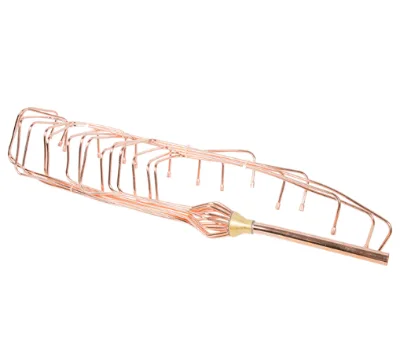
3-Way Air Conditioning Branch Copper Manifold Manifold for Air Conditioner Parts
$5.19 - $5.39
MOQ: 50 pieces
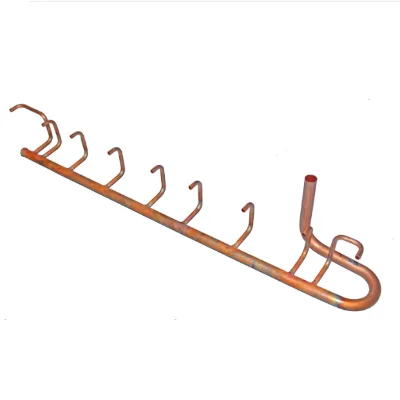
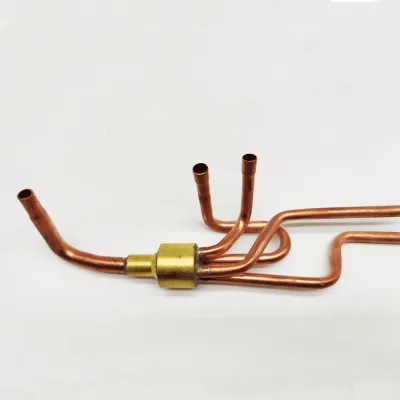
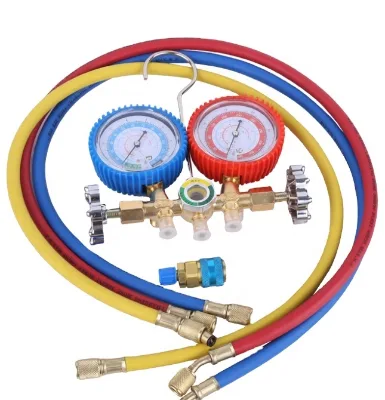


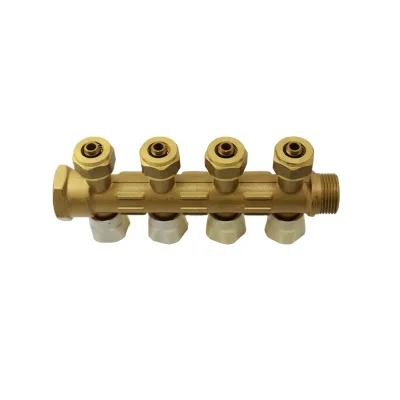


Aluminum Tube for Heat Exchanger Cooler Manifold for Condenser &Heater
$10.00 - $100.00
MOQ: 100 Pieces


Air Conditioner Parts AC Service Valve Air Conditioner Split Copper Valve
$1.35 - $1.50
MOQ: 200 Pieces


Comprehensive Sourcing Guide
Strategic Sourcing Guide for 50mm Hole Air Conditioner Manifolds
Procuring specialized components like manifolds with specific aperture requirements, such as a 50mm hole, demands a rigorous approach to technical verification and supplier evaluation. In the B2B refrigeration and air conditioning sector, the integrity of the manifold assembly directly influences system efficiency, safety, and longevity. This guide provides a structured framework for buyers to navigate the market, focusing on evidence-based criteria derived from current industry standards and product attributes. The objective is to ensure that sourced components meet the precise operational demands of commercial and residential HVAC systems without relying on unverified marketing claims.
Technical Specifications and Dimensional Verification
The primary technical requirement for this procurement category is the precise aperture size, specifically the 50mm hole. While general product listings often describe manifolds as "Copper Tubes Customized Copper Pipes Coil" or "Air Conditioning Fitting," the specific dimensional tolerance for the hole must be confirmed against the application's pressure and flow requirements. Buyers must verify that the material composition aligns with the intended refrigerant environment. The supplied data indicates that high-quality manifolds often utilize materials with a copper content of at least 99.90%, or alternatively, copper or aluminum alloy blends. This distinction is critical because the thermal conductivity and corrosion resistance of the material will vary significantly between pure copper and alloy compositions.
Furthermore, the physical geometry of the component must be scrutinized. Product attributes suggest that available shapes include round, square, and rectangular configurations. For a 50mm hole manifold, the thickness of the wall is a crucial variable. Observed specifications in the market range from 0.3mm to 3.0mm, with specific listings noting 0.5mm and 0.3mm thicknesses. A 50mm aperture in a 0.3mm wall may require different structural reinforcement compared to a 3.0mm wall, particularly under high-pressure conditions. Buyers should not assume that a "50mm hole" implies a standard thickness; instead, they must request detailed engineering drawings that specify the wall thickness relative to the bore diameter. Additionally, the surface finish, often described as polished, plays a role in reducing friction and preventing debris accumulation within the manifold, which is essential for maintaining refrigerant purity.
Compliance and Certification Standards
Navigating the regulatory landscape for air conditioning components requires a clear understanding of applicable standards. The market data references specific standards such as EN 12735-1, which governs the testing and performance of certain refrigeration equipment components. When sourcing a 50mm hole manifold, buyers must verify that the product explicitly complies with this standard or an equivalent regional regulation. The presence of certifications like CE and ISO9001 is frequently observed in product listings, but these must be treated as observations rather than universal guarantees.
Buyers should demand valid, current certification documents from the supplier rather than accepting a generic claim. The CE marking indicates conformity with health, safety, and environmental protection standards for products sold within the European Economic Area, while ISO9001 signifies adherence to quality management principles. However, the specific application of these certifications to a 50mm manifold must be confirmed. For instance, does the ISO9001 certification cover the specific manufacturing process of the manifold, or is it a general facility certification? Furthermore, the material composition, such as the use of brass or copper alloys, must align with environmental directives regarding the use of hazardous substances. Verification of these compliance documents is a non-negotiable step before finalizing any procurement order, as non-compliant components can lead to system failures and legal liabilities.
Cost Drivers and Economic Factors
The pricing of specialized manifolds is influenced by several interconnected variables, including material costs, manufacturing complexity, and order volume. The observed price range in the market spans from $0.10 to $100, a wide spectrum that reflects the diversity of product types, from simple fittings to complex, customized assemblies. The cost of raw materials, particularly copper and aluminum alloys, is a primary driver. Given that the material composition can range from 99.90% copper to mixed alloys, fluctuations in global metal prices will directly impact the unit cost.
Order volume is another significant economic factor. The Minimum Order Quantity (MOQ) varies widely, with observed ranges from 1 unit to 5000 units, and specific listings citing MOQs of 50KG or 100 units. For a specialized item like a 50mm hole manifold, the MOQ may be higher due to the custom nature of the tooling required. Buyers should analyze the total cost of ownership rather than just the unit price. This includes considering the cost of packaging, which often involves corrugated boxes or color boxes, and the logistics of shipping. The single package size of 40x20x10 cm and a gross weight of 5.000 kg per unit are critical for calculating freight costs. Additionally, the "Easy Installation" feature mentioned in product attributes can reduce labor costs during the installation phase, providing a hidden economic benefit that offsets a potentially higher initial purchase price.
Typical Applications and Operational Context
Understanding the operational context of the 50mm hole manifold is essential for selecting the right component. These manifolds are primarily designed for use in refrigeration equipment and building construction applications. The specific usage scenarios include air conditioning systems, where the manifold serves as a critical junction for refrigerant distribution. The data indicates that these components are compatible with various refrigerants, including R134A and R410A, which are common in modern HVAC systems.
The application environment can vary from commercial settings to home use. In commercial refrigeration, the manifold must withstand higher pressure cycles and continuous operation, necessitating robust construction and high-grade materials. In residential applications, the focus may shift slightly towards ease of installation and compact design. The "Air Conditioning Fitting" classification suggests that these components are integral parts of the refrigeration circuit, connecting various lines and ensuring proper flow dynamics. The "Y shape" standard mentioned in some product attributes implies a specific flow configuration that must be matched to the system design. Buyers must ensure that the manifold's design, including the 50mm aperture, aligns with the specific flow requirements of their system to prevent pressure drops or flow restrictions that could compromise system efficiency.
Supplier Evaluation and Reliability Assessment
Evaluating suppliers requires a multi-faceted approach that goes beyond simple price comparison. The origin of the product, often listed as Zhejiang, China, provides a geographical context for the manufacturing base, but it does not guarantee quality. Buyers should investigate the supplier's track record in producing specialized fittings and their ability to handle customization requests. The attribute "Customization: Available" suggests that many suppliers can tailor the manifold to specific requirements, such as the 50mm hole size or specific material grades.
Key evaluation criteria include the supplier's after-sales service provisions. The availability of "Free Spare Parts" is a significant indicator of supplier confidence and commitment to long-term support. This service can be crucial in the event of a manufacturing defect or an installation error that requires replacement. Additionally, the warranty period, typically observed as 1 Year, should be clearly defined in the contract. Buyers should also assess the supplier's production capacity and lead times. While some listings mention a leading time of 1 Month, this can vary based on order volume and customization requirements. A reliable supplier should provide transparent communication regarding production schedules and the ability to meet delivery deadlines without compromising quality.
Quality Control and Inspection Protocols
Implementing a robust quality control (QC) protocol is essential to ensure that the received manifolds meet the specified technical requirements. Given the variability in material thickness and surface finish, buyers should establish clear acceptance criteria before production begins. The QC process should include visual inspections to verify the surface polish and the absence of defects such as cracks or porosity. Dimensional checks are critical to confirm that the 50mm hole is within the specified tolerance and that the wall thickness matches the ordered specifications.
Material verification is another vital step. Buyers should request mill test certificates or conduct independent material analysis to confirm the copper content or alloy composition. This ensures that the component will perform as expected under the operating conditions of the refrigeration system. Pressure testing is also recommended to verify the integrity of the manifold under simulated operating pressures. The "Eco-Friendly" feature noted in some product attributes should be verified through documentation regarding the manufacturing process and material sourcing. By integrating these QC measures into the procurement process, buyers can mitigate the risk of receiving substandard components that could lead to system failures.
Long-Term Procurement Considerations
Sourcing specialized components like 50mm hole manifolds is not a one-time transaction but part of a long-term supply chain strategy. Buyers should consider the scalability of the supplier's operations and their ability to maintain consistent quality over time. The "Operating Language" of the supplier being English is a practical consideration for communication, but the depth of technical support is equally important. Long-term partnerships often yield benefits such as priority production scheduling, volume discounts, and collaborative product development.
Buyers should also plan for the lifecycle of the component. The "New" condition of the products suggests that they are fresh from the manufacturing line, but the storage and handling conditions during transit can affect their quality. Proper packaging, such as corrugated boxes, is essential to prevent damage. Furthermore, the availability of spare parts and the supplier's willingness to provide technical support for installation and maintenance are critical for the long-term success of the project. By focusing on these long-term factors, buyers can build a resilient supply chain that supports the ongoing operational needs of their air conditioning and refrigeration systems.
FAQs
What material is used for 50mm Hole Air Conditioner Manifolds?
The manifolds typically use copper with a minimum purity of 99.90% or copper-aluminum alloy blends. This material selection ensures high thermal conductivity and corrosion resistance suitable for refrigeration systems.
Which certifications are available for these air conditioning fittings?
Available certifications include CE and ISO9001, though these must be verified against specific manufacturing processes. Buyers should request valid documentation to confirm compliance with safety and quality management standards.
Can I find customized 50mm Hole Air Conditioner Manifolds?
Yes, customization is available for specific requirements like hole size or material grade. Suppliers often offer tailored solutions to match unique system designs while maintaining structural integrity and performance standards.
How thick are the walls on these copper pipe assemblies?
Wall thickness varies from 0.3mm to 3.0mm depending on the specific product model and application. Buyers must verify the exact thickness required for their pressure conditions rather than assuming a standard value.
What is the minimum order quantity for these fittings?
Minimum order quantities range from 1 unit to 5000 units, with some listings specifying 50KG or 100 units. The specific MOQ depends on the supplier and the level of customization requested.
Which standard applies to these refrigeration equipment components?
The EN 12735-1 standard is referenced for testing and performance of certain refrigeration equipment components. Compliance with this standard ensures the component meets necessary safety and operational criteria.
What is the lead time for ordering these manifolds?
The typical lead time is approximately one month, though this can vary based on order volume. Buyers should confirm specific delivery schedules with the supplier to ensure alignment with project timelines.