Source 6 Axis Automatic Spring Coiler for automotive, medical, and industrial uses
Compare 30 listings of 6 Axis Automatic Spring Coiler machines from verified Chinese suppliers. Review specifications including wire diameter, output capacity, and control types to find the right equipment for your production needs.
Key considerations
Products List


High-Efficiency Automatic Spring Coiling Machine for Fast Production
$3000.00 - $5000.00
MOQ: 1 Pieces

High-Speed Automatic Spring Coiling Machine for Efficient Production
$11000.00 - $16000.00
MOQ: 1 Sets


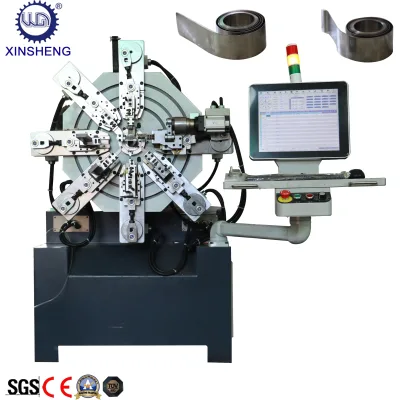


Comprehensive Sourcing Guide
Strategic Sourcing Guide for 6-Axis Automatic Spring Coilers
Understanding the Technical Landscape of Multi-Axis Spring Machinery
When researching a 6-axis automatic spring coiler, buyers must first distinguish between the specific capabilities of the machinery and the general market offerings. The supplied product data indicates a diverse range of available equipment, including CNC-controlled units, universal machines, and specialized coilers for compression, torsion, and general spring applications. While the core keyword focuses on a 6-axis configuration, the observed inventory includes models with varying axis counts, such as the 2-axis CNC-8422, and others defined by their specific spring output capabilities like the HCT-808 or YHJ-80.
The technical specifications for these machines vary significantly based on the intended spring geometry. For instance, some units are designed for wire diameters ranging from 0.5mm to 2.0mm, while others accommodate thicker wires between 1.8mm and 2.4mm. The diameter of the resulting spring is equally critical, with observed ranges spanning from 0-45mm up to 62-95mm. Buyers should note that the "6-axis" designation implies a higher degree of freedom for complex spring geometries, such as conical or multi-radius springs, compared to the 2-axis models observed in the current dataset. The production capacity is another vital metric; observed output rates range from 60 to 80 pieces per minute, with specific models like the YHJ-80 achieving 70PCS/Min and others reaching 80PCS/Min.
Power consumption is a key technical differentiator. The data shows a spread in motor power, with some units utilizing a 0.75kw motor, while others, such as the YHJ-60, are equipped with a 4kw main motor. Heat treatment power is also specified in certain models, such as the 1.5kw rating found in the YHJ-60 configuration. These power requirements directly influence the electrical infrastructure needed for installation. Furthermore, the physical footprint of the machinery is substantial, with measurement dimensions observed as high as 170016002000mm and maximum widths up to 2000mm. Buyers must ensure their facility has adequate floor space to accommodate these dimensions, which are typical for heavy-duty automatic coilers.
Compliance, Certification, and Origin Verification
In the global procurement of industrial machinery, verifying the origin and certification status is paramount for ensuring regulatory compliance and supply chain reliability. The supplied facts confirm that the majority of the observed equipment originates from China, with specific manufacturing hubs identified in Dongguan, Guangdong. This regional concentration suggests a mature supply chain ecosystem for spring machinery in this area, but it also necessitates rigorous due diligence regarding export compliance and shipping logistics.
Certification serves as a primary indicator of quality management systems. The dataset explicitly lists ISO 9001 and CE certifications for several models, such as the HCT-808 and GT-MS-2B. The presence of ISO certification implies that the manufacturer adheres to international quality management standards, which is essential for consistent production output. The CE marking indicates conformity with health, safety, and environmental protection standards for products sold within the European Economic Area. However, buyers must verify that the specific 6-axis model they intend to purchase carries these certifications, as the data shows a mix of certified and non-certified listings. For example, while some units list ISO 9001:CE, others only list ISO or CE independently.
Standardization is another critical aspect of compliance. The observed products adhere to various standards, including "Set," "Unit," and specific dimensional standards like 2510x1400x1900mm. The GT-MS-2B model explicitly references the CE standard. Buyers should request the specific technical documentation for the 6-axis machine to confirm that it meets the safety and performance standards required in their target market. This includes verifying electrical safety standards, noise emission levels, and mechanical guarding requirements. Without explicit confirmation of these standards for the specific 6-axis model, procurement carries the risk of non-compliance upon importation.
Cost Drivers and Pricing Variables in Spring Coiling
Determining the cost of a 6-axis automatic spring coiler requires an analysis of multiple variables beyond the base unit price. The observed price range in the market spans from $1 to $100,000,000, indicating a vast disparity in value based on complexity, automation level, and brand positioning. While this range is broad, the actual cost of a high-end 6-axis CNC machine will likely be at the higher end of this spectrum due to the advanced control systems and precision engineering required.
Several factors drive the cost of these machines. First, the control type is a significant determinant. The data highlights "CNC" and "Automatic" control types. A 6-axis machine typically utilizes advanced CNC systems to manage the complex movements required for multi-radius springs, which increases the cost compared to semi-automatic or manual units. Second, the customization options available influence pricing. The fact that customization is available suggests that buyers can tailor the machine to specific production needs, but this often comes with a premium. Third, the material and build quality, indicated by the "New" condition and heavy weights (e.g., 1200kg), contribute to the overall cost. Heavier machines generally imply more robust construction and better stability during high-speed operation.
Packaging also plays a role in the total landed cost. The observed packing methods include vacuum packaging, wooden cases, veneer cases, and standard fumigated wooden cases. The choice of packaging affects shipping costs and insurance premiums. For international shipments, a fumigated wooden case is often a regulatory requirement to prevent pest transfer, which adds to the logistics cost. Additionally, the warranty terms, such as the 1-year warranty observed in the dataset, should be factored into the total cost of ownership. A longer warranty or extended service coverage might increase the initial purchase price but reduce long-term operational risks.
Typical Applications and Production Capabilities
The application of a 6-axis automatic spring coiler is defined by its ability to produce complex spring geometries that simpler machines cannot handle. Based on the observed product types, these machines are suitable for manufacturing compression springs, torsion springs, and universal spring applications. The specific dimensions observed, such as spring diameters from 0-45mm up to 95mm and heights from 80mm to 200mm, indicate versatility in handling small to medium-sized components.
The productivity rates observed, ranging from 60 to 80 pieces per minute, suggest that these machines are designed for medium-to-high volume production environments. For instance, the YHJ-60 model is identified as a torsion spring machine with a productivity of 60 PCS/Min, while the HCT-808 achieves 80 PCS/Min. A 6-axis machine would likely be optimized for applications requiring tight tolerances and complex shapes, such as automotive valve springs, suspension components, or precision medical device springs. The ability to handle wire diameters from 0.5mm to 2.4mm allows for a wide range of spring stiffness and load-bearing capacities.
The "Universal Machine" classification found in the data suggests that some units can be reconfigured for different spring types, enhancing their utility for manufacturers with diverse product lines. However, the specific axis count is crucial for complex geometries. A 6-axis system allows for independent control of the wire feed, coil formation, and cutting mechanisms, enabling the production of springs with variable pitch, conical shapes, and specialized end coils. This capability is essential for industries where spring performance is critical, such as aerospace, automotive, and high-end consumer electronics.
Supplier Evaluation and Quality Assurance Protocols
Evaluating a supplier for a 6-axis automatic spring coiler requires a systematic approach to ensure the machine meets operational requirements. The first step is to verify the supplier's ability to provide the specific model with the desired axis count. The dataset shows a variety of models, including CNC-8422, CNC-8208, and GT-MS-2B, but buyers must confirm that the specific 6-axis configuration is available and not just a generic listing.
Quality assurance should focus on the machine's condition and the manufacturer's track record. All observed products are listed as "New," which is a positive indicator, but buyers should request detailed inspection reports or video demonstrations of the machine in operation. The presence of certifications like ISO 9001 and CE is a strong indicator of a quality-focused manufacturer, but these should be verified against the specific unit being purchased. Additionally, the warranty terms, such as the 1-year warranty observed, should be clearly defined in the contract, including coverage for parts, labor, and on-site support.
Supplier location is another critical factor. With the majority of the observed products originating from China, specifically Dongguan, Guangdong, buyers should consider the implications of international shipping, import duties, and lead times. The standard packaging, such as the standard export case or fumigated wooden case, should be confirmed to ensure safe transit. Buyers should also evaluate the supplier's after-sales support capabilities, including the availability of spare parts and technical training. The "Automatic Grade" and "Control Type" specifications should be matched against the buyer's technical team's expertise to ensure smooth operation and maintenance.
Long-Term Procurement and Operational Considerations
Long-term procurement of a 6-axis automatic spring coiler involves more than just the initial purchase; it requires a comprehensive view of the total cost of ownership and operational efficiency. The power requirements, such as the 1.5kw to 4kw motors observed, must be integrated into the facility's energy management plan. Buyers should calculate the ongoing energy costs and ensure that the electrical infrastructure can support the machine's peak power demands.
Maintenance and spare parts availability are critical for minimizing downtime. The "Vacuum Packaging" and "Wooden Case" options observed suggest that the machines are designed for protection during transit, but long-term storage and maintenance require specific environmental controls. Buyers should inquire about the recommended maintenance schedule and the availability of consumables, such as wire guides and cutting blades. The "Customization" attribute indicates that the machine can be adapted to specific needs, but buyers should ensure that any custom modifications are documented and supported by the manufacturer for future repairs.
Finally, the scalability of the production line should be considered. As the business grows, the ability to increase output or switch to different spring types without significant downtime is essential. The observed productivity rates of 60-80 PCS/Min provide a baseline, but buyers should verify if the machine can be upgraded or if additional units can be integrated into the production line. The "Standard" and "Unit" specifications suggest that the machines are designed for modular integration, but this should be confirmed with the supplier to ensure compatibility with existing equipment. By carefully evaluating these long-term factors, buyers can ensure that their investment in a 6-axis automatic spring coiler delivers sustained value and operational excellence.
FAQs
What is the production capacity of 6 axis automatic spring coilers?
Production capacity typically ranges from 60 to 80 pieces per minute for observed models. Specific units like the YHJ-80 achieve 70 PCS/Min, while others reach 80 PCS/Min depending on the spring geometry and wire diameter used.
Which certifications are available for these automatic spring machines?
Many models carry ISO 9001 and CE certifications to ensure quality and safety compliance. Buyers should verify that the specific 6-axis unit they select includes these markings, as some listings show ISO or CE independently.
Can the machine handle different wire diameters and spring sizes?
Yes, these machines accommodate wire diameters from 0.5mm to 2.4mm and spring diameters ranging from 0 to 95mm. The specific range depends on the model, with some units designed for thicker wires between 1.8mm and 2.4mm.
Where are the manufacturers of these machines located?
The majority of observed equipment originates from China, with specific manufacturing hubs in Dongguan, Guangdong. This regional concentration suggests a mature supply chain ecosystem for spring machinery in this area.
What is the standard packaging for shipping these heavy machines?
Standard packaging includes vacuum packaging, wooden cases, veneer cases, or standard fumigated wooden cases. Fumigated wooden cases are often required for international shipments to prevent pest transfer and ensure safe transit.
How much power do these automatic spring coilers consume?
Power consumption varies, with main motors ranging from 0.75kw to 4kw and heat treatment power at 1.5kw. Buyers must ensure their facility has adequate electrical infrastructure to support these peak power demands.