Source 7 Passenger Open EV Rickshaw for cargo, tourism, and events
Compare 30 listings for the 7 Passenger Open EV Rickshaw with varying battery capacities, speeds, and dimensions. Buyers can evaluate electric cargo and passenger models from Jiangsu and Henan suppliers to find suitable options for local transport needs.
Key considerations
Products List
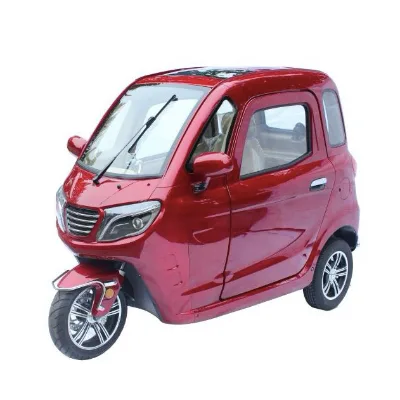
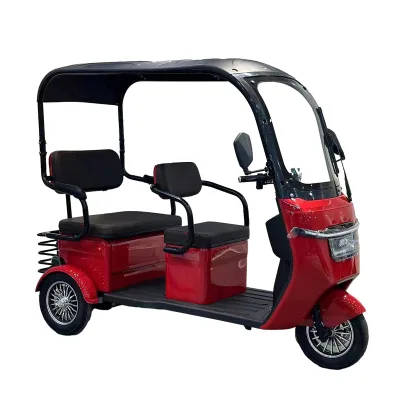
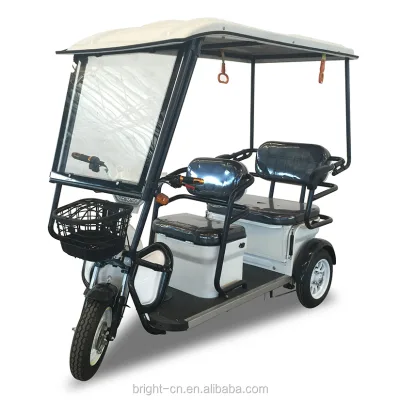
Outdoor Recreational 48v500w Passenger 3 Wheel Tricycle Open Body Type Trike
$400.00 - $600.00
MOQ: 50 units


Top Quality 2 Wheel Electric Rickshaw/Electric Rickshaw for Exhibition
$688.00 - $888.00
MOQ: 5 Pieces


Electric Rickshaw Passenger Tricycle for Passenger 650W Electric Tricycle
$450.00 - $520.00
MOQ: 30 Sets


Hot Sale Two Seats Semiclosed Electric Tricycle Rickshaw with Cabin
$1000.00 - $1300.00
MOQ: 10 Pieces


Open Cargo Tricyle Electric Cargo Tricycle Auto Rickshaw Passenger Wheel Motorcycle
$740.00 - $745.00
MOQ: 24 Pieces

Cargo Tricycle Electric Cargo Tricycle Auto Rickshaw Passenger Wheel Motorcycle
$1145.00 - $1150.00
MOQ: 22 Pieces

Three Wheel Cargo Tricycle Electric Cargo Tricycle Auto Rickshaw Passenger Wheel Motorcycle
$1240.00 - $1250.00
MOQ: 30 Pieces

Three Wheel Motorcycle Electric Cargo Tricycle Auto Rickshaw Passenger
$1045.00 - $1050.00
MOQ: 22 Pieces


Comprehensive Sourcing Guide
Strategic Sourcing Guide for 7-Passenger Open Electric Rickshaws
The global demand for sustainable urban mobility solutions has accelerated the adoption of electric rickshaws, particularly in markets seeking cost-effective, zero-emission transport for both passengers and cargo. For procurement professionals targeting a 7-passenger open electric rickshaw, the sourcing landscape presents a unique set of technical and logistical challenges. Unlike standard two-wheeled scooters, these multi-passenger vehicles require rigorous evaluation of structural integrity, battery capacity, and regulatory compliance. This guide synthesizes observed market data and technical specifications to provide a disciplined framework for evaluating suppliers and products, ensuring that procurement decisions are grounded in verifiable facts rather than marketing assertions.
Technical Specifications and Performance Parameters
When evaluating a 7-passenger open electric rickshaw, the first step is to scrutinize the core technical specifications that define operational capability. The observed market data indicates a significant variance in powertrain configurations, ranging from 501 to 800W for general applications, with some models featuring 1000W motors. For a vehicle designed to carry seven passengers, the motor power is a critical determinant of acceleration and hill-climbing ability. Buyers must verify that the motor power aligns with the vehicle's total weight, which typically falls between 200kg and 300kg in the observed dataset.
Range and battery technology are equally paramount. The data reveals a mix of battery systems, including 48V and 60V configurations with capacities ranging from 32Ah to 45Ah, predominantly using lead-acid technology. A 60V 45Ah lead-acid battery is observed in cargo-focused models, offering a mileage range of 70-80km, whereas 48V 32Ah systems typically support 50-70km. For a 7-passenger configuration, the higher voltage and capacity are generally preferable to ensure consistent performance under full load. The charging time for these units is observed to be between 7 and 9 hours, a factor that influences fleet turnover rates and charging infrastructure requirements.
Dimensional constraints also play a vital role in suitability for specific environments. Observed dimensions vary from 21009201800mm to 230011201600mm. The wheelbase, noted as 1100mm in specific models, impacts stability and turning radius. Buyers should verify that the vehicle's width and height are compatible with local road regulations and the intended operating environment, such as narrow market streets or wider tourist avenues. The tire specification of 135-70/12 is a common observation, but the load rating of these tires must be sufficient to support the weight of seven adults plus the vehicle's curb weight.
Compliance, Certification, and Regulatory Alignment
Navigating the regulatory landscape is perhaps the most critical aspect of sourcing electric rickshaws. The observed product data lists certifications such as EEC and CE, which are essential for market entry in many regions. However, the presence of a certification label on a product page does not guarantee that every unit in a specific batch meets the standard. Procurement teams must treat these certifications as observations of the supplier's general compliance status rather than a blanket guarantee for every ordered unit.
The distinction between passenger and cargo usage is often reflected in certification requirements. While some models are listed with a "Use For" attribute of "Cargo," others specify "Passenger and Cargo" or simply "Passenger." A 7-passenger vehicle intended for public transport or tourist shuttling will likely face stricter safety standards than a cargo-only variant. Buyers must verify that the specific model selected holds the necessary local homologation for passenger transport, which may differ from the EEC or CE certifications observed in the general data.
Furthermore, the classification of the vehicle as an "Electric Motorcycle Scooter" or a "Rickshaw" can impact licensing and insurance requirements. In some jurisdictions, a vehicle with a 1000W motor and a top speed of 30km/h may be classified differently than one with a lower power output. The observed maximum speed ranges from 25 to 30km/h, with some listings noting a limit of ≤30Km/h. It is imperative to confirm that the vehicle's speed limiter and power output comply with local traffic laws for the specific class of vehicle it is being registered as.
Cost Drivers and Pricing Structure Analysis
Understanding the cost structure of electric rickshaws requires looking beyond the sticker price. The observed price range in the market spans from $230 to $2,999 USD. This wide variance is driven by several factors, including battery capacity, motor power, build quality, and the inclusion of safety features. The lower end of the price spectrum often corresponds to basic models with smaller batteries (48V) and lower power motors, while the higher end reflects robust units with 60V systems, larger batteries, and enhanced structural components.
The minimum order quantity (MOQ) is another significant cost driver, with observed ranges from 1 to 122 units. For buyers seeking to establish a small pilot fleet, a low MOQ is advantageous, but it often comes with a higher unit cost. Conversely, bulk orders can leverage economies of scale to reduce the per-unit price, though this requires a significant upfront capital investment. The "Selling Units" attribute often indicates "Single item," suggesting that many suppliers are flexible with order sizes, but buyers should negotiate volume discounts explicitly.
Additional cost factors include customization options and packaging. The data indicates that customization is available, which can add to the base price. Packaging methods, such as "Iron Shelf and Plylwood," are designed to prevent damage during transit but may increase shipping costs. Buyers should also consider the long-term cost of ownership, including battery replacement cycles and maintenance, which are influenced by the quality of the lead-acid batteries and the durability of the galvanized tube frame.
Typical Applications and Operational Use Cases
The versatility of 7-passenger open electric rickshaws makes them suitable for a diverse range of applications. The observed "Use For" attributes include "Cargo," "Passenger," and "Passenger and Cargo," highlighting their dual-purpose nature. In urban environments, these vehicles are frequently deployed for last-mile logistics, transporting goods within dense city centers where larger trucks cannot navigate. The open body type facilitates easy loading and unloading, making them ideal for market vendors and delivery services.
For the tourism and hospitality sectors, these rickshaws serve as eco-friendly transport for short-distance tours. The "Recreational Outdoor" designation in some product names suggests their suitability for leisure activities. The ability to carry seven passengers allows for group transport to hotels, resorts, or event venues. The "Application" attribute listing "Exhibition" further supports their use in trade shows and large events where temporary, flexible transport is required.
However, the specific application dictates the required specifications. A vehicle used for heavy cargo transport will require a robust frame and higher torque motor, whereas a passenger-focused model prioritizes comfort and safety features. The observed "Grade Ability" of 10-15° or 15-20° indicates the vehicle's capability to handle inclines, which is crucial for cities with hilly terrain. Buyers must match the vehicle's grade ability and power output to the topography of their intended operating area.
Supplier Evaluation and Origin Verification
Evaluating suppliers requires a disciplined approach to verifying their capabilities and origins. The observed data points to suppliers originating from Jiangsu and Henan, China, which are known manufacturing hubs for electric vehicles. While the "Brand Name" "Everbright" is mentioned, buyers should not rely on a single brand but rather assess the supplier's overall track record. The availability of customization and the specific model numbers (e.g., CR01, CR08) indicate that suppliers offer a range of configurations, but buyers must ensure that the specific model ordered matches the required specifications.
Verification of the supplier's production capacity and quality control processes is essential. The "Customization: Available" attribute suggests flexibility, but buyers should request detailed documentation on how customization affects the vehicle's structural integrity and safety. Additionally, the "Place of Origin" should be confirmed to ensure that the supplier has the necessary infrastructure to support the order, including assembly lines and testing facilities.
Buyers should also scrutinize the "Prod Standard" and "Prod Model" details. For instance, a standard listed as "2.61.11.5m" may refer to packaging dimensions or a specific production standard, and clarity is needed to avoid misunderstandings. The "Prod Packing" method of "Iron Shelf and Plylwood" should be evaluated for its effectiveness in protecting the vehicle during long-distance shipping, especially if the destination is far from the manufacturing hub.
Quality Control and Long-Term Procurement Considerations
Ensuring long-term reliability requires a focus on quality control (QC) protocols. The "Material" attribute listing "Galvanized Tube" suggests a focus on corrosion resistance, which is vital for vehicles operating in various weather conditions. However, the quality of the galvanization process can vary, and buyers should request samples or third-party inspection reports to verify the thickness and durability of the coating. The "Brake System," observed as "F&R Disc Brake" or "Front disc+Rear disc," is a critical safety component. Buyers must verify that the braking system is rated for the vehicle's maximum load and that the discs are made of high-quality materials to ensure consistent stopping power.
Battery longevity is another key consideration. Lead-acid batteries, while cost-effective, have a limited lifespan compared to lithium-ion alternatives. The observed "Charge Time" of 7-9 hours and the "Battery" specifications (48V32AH or 60V45AH) indicate the need for a maintenance schedule that includes regular water level checks and terminal cleaning. Buyers should inquire about the warranty terms for the battery and motor, as these are the most expensive components to replace.
Finally, the "Driving Type" being "Electric" and "Motorized" implies a reliance on electrical systems. Buyers should ensure that the wiring harnesses and controllers are of high quality to prevent electrical failures. The "Steering" mechanism, described as "Handle steering," should be tested for responsiveness and durability. By integrating these quality control measures into the procurement process, buyers can mitigate risks and ensure that the 7-passenger open electric rickshaws they acquire provide reliable service over their intended lifespan.
Conclusion
Sourcing a 7-passenger open electric rickshaw involves a complex interplay of technical specifications, regulatory compliance, cost management, and supplier reliability. The observed data highlights a market with diverse options, ranging from basic cargo models to more sophisticated passenger vehicles. By adhering to a disciplined evaluation process that prioritizes verified facts over marketing claims, procurement professionals can identify suppliers that offer high-quality, compliant, and cost-effective solutions. Whether for urban logistics, tourism, or exhibition purposes, the right electric rickshaw can significantly enhance operational efficiency while supporting sustainability goals. The key lies in meticulous due diligence, ensuring that every aspect of the vehicle, from its battery capacity to its braking system, meets the specific needs of the intended application.
FAQs
What battery capacity is available for 7 Passenger Open EV Rickshaw models?
Available battery configurations include 60V45Ah and 48V32Ah lead-acid systems. The 60V45Ah variant supports a mileage of 70-80km, while the 48V32Ah system typically offers 50-70km of range.
Which certifications are observed for these electric rickshaw vehicles?
Observed certifications include EEC and CE marks. These indicate compliance with specific regional standards, though buyers should verify that the specific batch holds necessary homologation for passenger transport.
How much does a 7 Passenger Open EV Rickshaw typically cost?
The observed price range spans from 230 to 2999 USD. Costs vary based on battery capacity, motor power, and structural build quality, with higher prices reflecting more robust 60V systems.
Can I customize the color and dimensions of the electric rickshaw?
Customization is available for colors like black or red, as well as specific requirements. Dimensions vary between 2100*920*1800mm and 2300*1120*1600mm depending on the specific model configuration.
What is the maximum speed limit for these electric cargo and passenger vehicles?
The maximum speed is typically between 25 and 30km/h, with some models capped at 30km/h. This speed aligns with regulations for electric motorcycles and scooters used in urban environments.
Which brake systems are standard on these open body type rickshaws?
Standard braking systems feature front and rear disc brakes. This configuration ensures reliable stopping power for vehicles carrying up to seven passengers or heavy cargo loads.
What is the minimum order quantity for sourcing these electric rickshaws?
The minimum order quantity ranges from 1 to 122 units. Lower MOQs allow for pilot fleets, while bulk orders may leverage economies of scale to reduce the per-unit price.
Where are the manufacturers of these electric rickshaws located?
Manufacturers are primarily located in Jiangsu and Henan, China. These regions are known hubs for electric vehicle production, offering various models like the CR01 and CR08 series.