Source 8000 Cycles LiFePO4 Battery Cells for Cars, Solar, and Boats
Compare 30 listings for 8000 Cycles LiFePO4 Battery Cells from verified suppliers. This catalog features options for electric vehicles, solar storage, and marine applications with varying capacities and certifications.
Key considerations
Products List


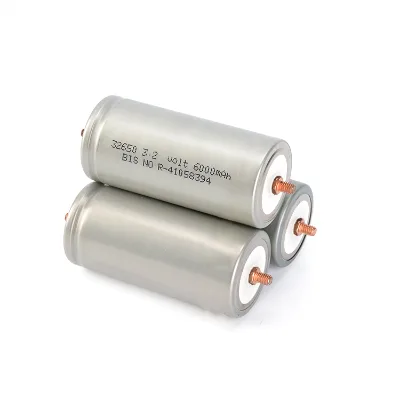

Solar Battery LiFePO4 8000 Cycle 3.2V 271ah LiFePO4 Cells LiFePO4 Battery
$65.39 - $67.59
MOQ: 100 Pieces


High-Performance 100ah 280ah 3.2V LiFePO4 Battery Energy Storage Cells
$23.00 - $27.00
MOQ: 100 Pieces

Lithium LiFePO4 Battery with Long Cycle Life14500 Rechargeable Battery Cell
$0.52 - $2.05
MOQ: 5000 Pieces

Comprehensive Sourcing Guide
Strategic Sourcing Guide for 8000 Cycles LiFePO4 Battery Cells
Understanding the Performance Landscape of Long-Life Lithium Iron Phosphate
When sourcing battery cells with a target cycle life of 8000 cycles, buyers must first distinguish between marketing terminology and verified performance data. The core keyword "8000 cycles" implies a specific depth of discharge (DoD) and thermal management profile that standard consumer-grade cells often do not meet. In the current market, LiFePO4 (Lithium Iron Phosphate) chemistry is the primary candidate for such longevity due to its inherent stability compared to other lithium-ion variants. The supplied product data indicates that specific models, such as the EA280 and EA321006, utilize LFP cathode materials, which are foundational for high-cycle applications.
However, it is critical to observe that the provided product listings contain varying cycle life claims. Some entries specify a cycle life of 2000 times or "More Than 2000 Times," while others highlight a capacity of 36V 17.4Ah or specific models like the 32700. The discrepancy between the 2000-cycle observations in the data and the 8000-cycle target suggests that the 8000-cycle metric is likely achievable only under strict operating conditions, such as shallow depth of discharge (e.g., 80% DoD or less) and controlled temperature environments. Buyers should not assume that a cell listed with a 2000-cycle rating can be pushed to 8000 cycles without significant derating of its capacity or a reduction in its usable life expectancy. The sourcing strategy must therefore focus on verifying the specific test conditions under which the cycle life was measured.
Technical Specifications and Operational Parameters
Selecting the right cell requires a deep dive into technical specifications that go beyond simple capacity. The supplied data reveals a diverse range of voltage standards, from 1.5V to 4.8V, and specific model numbers like the 14500-800mAh and 3.2V 120Ah. For an 8000-cycle application, the nominal voltage is typically 3.2V for LiFePO4 chemistry. The data explicitly lists "3.2v 120ah" as a model specification, which aligns with the high-capacity requirements for stationary storage or heavy-duty electric mobility.
Voltage cut-off points are equally critical for maintaining the 8000-cycle goal. The provided facts mention a discharge cut-off voltage of 2.6V and a charge cut-off voltage of 3.65V for certain models. Operating outside these bounds can drastically reduce cycle life. For instance, charging a LiFePO4 cell above 3.65V or discharging below 2.6V consistently can lead to plating or structural degradation. Furthermore, the discharge rate is a key differentiator. The data notes both "High Discharge Rate" and "Medium Discharge Rate" options. An 8000-cycle application, such as solar storage or a remote control vehicle, may require a specific balance between power delivery and longevity. High discharge rates often generate more heat, which accelerates aging. Therefore, buyers must verify if the cell's internal resistance and thermal characteristics support the intended load without compromising the cycle life target.
The physical form factor is another specification to consider. The product data identifies "Square Battery" shapes and specific dimensions like the 32700 model. The 32700 form factor is common in industrial applications, offering a robust structure for high-capacity cells. In contrast, the 14500 model is smaller, typically used in low-power applications. For a project requiring 8000 cycles, the larger form factors often provide better thermal mass and structural integrity, which are essential for long-term reliability. The weight of the unit, noted as "About 2.7kg" for certain configurations, also serves as a proxy for internal cell count and capacity, which buyers should cross-reference against the energy density requirements of their specific application.
Compliance, Certification, and Safety Standards
In the B2B procurement of battery cells, compliance is not merely a formality but a prerequisite for market access and safety assurance. The supplied product information lists several certifications, including CE, ISO9001, ISO14001, RoHS, MSDS, and UN38.3. These certifications indicate that the manufacturer adheres to specific quality management and safety protocols. For an 8000-cycle target, the UN38.3 certification is particularly vital, as it validates the cell's ability to withstand transport conditions, which is a proxy for its structural integrity and safety margin.
The data also mentions "Smart BMS" (Battery Management System) as an attribute. While the BMS is an accessory or integrated component, its presence is crucial for achieving long cycle life. A smart BMS monitors individual cell voltages, temperatures, and currents, preventing overcharging and deep discharging. Without a robust BMS, even the highest-quality LiFePO4 cells may fail prematurely. Buyers should verify that the BMS is compatible with the specific cell chemistry and voltage range, such as the 3.2V nominal voltage observed in the data.
Additionally, the presence of ISO9001 and ISO14001 certifications suggests that the manufacturer has established processes for quality control and environmental management. These standards are essential for ensuring that the production consistency required for 8000-cycle performance is maintained across large batches. However, buyers must be cautious; the presence of a certificate does not guarantee that every unit in a shipment meets the 8000-cycle claim. The certification should be viewed as a baseline requirement, and specific test reports for the batch in question should be requested to confirm performance under the buyer's specific operating conditions.
Cost Drivers and Economic Considerations
The cost of sourcing LiFePO4 cells with high cycle life is influenced by several factors, including raw material prices, manufacturing complexity, and the level of customization. The observed price range in the market data spans from $0.52 to $999.9, reflecting the vast difference between small consumer cells and large industrial battery packs. For an 8000-cycle application, the cost per cycle is often a more relevant metric than the upfront price per unit. While high-capacity cells with advanced BMS and strict quality control may have a higher initial cost, their extended lifespan can result in a lower total cost of ownership.
The Minimum Order Quantity (MOQ) is another significant economic driver. The data shows an MOQ range of 1 to 50,000 units. For buyers testing the 8000-cycle claim, a lower MOQ allows for sampling and validation without a massive financial commitment. However, for large-scale deployment, negotiating a lower unit price through a higher MOQ is standard practice. The data also indicates that OEM/ODM services are acceptable, with options for custom stickers, logos, packages, and connectors. These customization options can add to the cost but are often necessary for brand integration and specific application requirements.
Production ability is another factor affecting cost and availability. The supplied facts mention a production ability of 120,000 pieces per month. This capacity suggests that the supplier can handle large orders, but buyers should verify if this capacity is dedicated to the specific high-cycle models or if it is shared with standard production lines. Supply chain stability is crucial for long-term projects, and a supplier with high production volume may offer better pricing and more reliable lead times.
Typical Applications and Use Case Alignment
The versatility of LiFePO4 cells makes them suitable for a wide range of applications, as evidenced by the product data listing uses in remote control cars, planes, boats, cars, buses, UPS systems, lighting, and electric bicycles. For an 8000-cycle target, the most suitable applications are those that require long-term reliability and frequent cycling, such as solar storage, electric buses, and stationary UPS systems. The data explicitly mentions "Solar Storage" and "Car/Solar" as usage categories, which aligns with the high-cycle requirement.
In contrast, applications like remote control cars and planes often prioritize high discharge rates and weight-to-power ratios over extreme cycle life. While the data lists these as usage scenarios, the 8000-cycle claim may be less relevant for these high-stress, intermittent use cases. Buyers must align their application requirements with the cell's specifications. For instance, a solar storage system that cycles daily may benefit significantly from the 8000-cycle capability, whereas a remote control vehicle that is used sporadically may not fully utilize the extended lifespan.
The data also highlights "Fixed" installation as a characteristic, which is typical for stationary applications like solar storage or backup power. This installation method allows for better thermal management and protection from vibration, both of which are essential for achieving the 8000-cycle goal. Buyers should ensure that their application design supports these conditions, including proper ventilation and mounting solutions.
Supplier Evaluation and Quality Assurance Protocols
Evaluating a supplier for high-cycle battery cells requires a rigorous approach that goes beyond checking certifications. The data indicates that the product origin is primarily Shenzhen, China, a major hub for battery manufacturing. While this location offers access to a robust supply chain, buyers must conduct due diligence to ensure the specific supplier meets the 8000-cycle standard. Key evaluation criteria include the supplier's production history, R&D capabilities, and quality control processes.
The presence of a "Smart BMS" and "Customization" options suggests that the supplier has the technical capability to tailor solutions. However, buyers should request detailed test reports that specifically validate the 8000-cycle claim under the buyer's intended operating conditions. The data mentions "Sample Is Available," which is a critical step in the evaluation process. Buyers should order samples to perform independent testing, verifying the cycle life, internal resistance, and thermal performance before committing to a large order.
Quality control should also extend to the packaging and shipping processes. The data lists "Cartons, Pallets" and "as Customer Request" for packing, indicating flexibility. However, for high-value battery cells, specialized packaging that protects against physical damage and moisture is essential. Buyers should verify that the supplier uses appropriate packaging standards to ensure the cells arrive in pristine condition.
Long-Term Procurement and Lifecycle Management
Procuring cells with an 8000-cycle life is a long-term investment that requires careful planning for the entire product lifecycle. The warranty period is a key indicator of the supplier's confidence in their product. The data shows warranty periods ranging from 13 months to 3 years. For an 8000-cycle application, a warranty of 3 years or more is preferable, as it suggests the supplier is willing to stand behind the product's longevity. Buyers should negotiate warranty terms that cover not just the initial period but also the expected degradation over time.
The rechargeability and cycle life are interconnected. The data confirms that the products are "Chargeable" and "Rechargeable," which is fundamental for long-term use. However, buyers must consider the end-of-life management of the batteries. LiFePO4 cells are generally more recyclable than other lithium-ion chemistries, but buyers should inquire about the supplier's recycling or disposal programs.
Finally, the payment and shipping terms play a role in long-term procurement stability. The data lists payment methods such as T/T, West Union, and Paypal, and shipping options including DHL, FedEx, and Sea. For large orders, buyers should negotiate favorable payment terms and secure shipping arrangements to mitigate risks. The ability to customize the product, as indicated by the "OEM/ODM: Acceptable" attribute, also allows for future scalability and adaptation as the buyer's needs evolve. By focusing on these long-term factors, buyers can ensure a sustainable and reliable supply chain for their high-cycle battery requirements.
FAQs
Can 8000 Cycles LiFePO4 Battery Cells be found with CE and RoHS certifications?
Yes, specific models like EA280 and EA321006 carry CE, RoHS, and UN38.3 certifications. These certifications confirm safety and compliance, though buyers must verify batch-specific test reports to ensure the 8000-cycle claim holds under actual operating conditions.
What is the standard voltage range for these lithium iron phosphate cells?
The standard voltage range observed is 1.5V to 4.8V, with specific 3.2V models available for LiFePO4 chemistry. Operating within the 2.6V discharge and 3.65V charge cut-off limits is critical to maintaining the targeted long cycle life without degradation.
Which customization options are available for these battery packs?
Suppliers accept OEM and ODM requests including custom stickers, logos, packages, and connectors. Production ability reaches 120,000 pieces monthly, allowing for tailored solutions while maintaining quality standards through ISO9001 and ISO14001 certified processes.
How does the cycle life of 2000 times compare to 8000 cycles?
Listed cycle lives of 2000 times or more indicate standard performance, while 8000 cycles require strict shallow depth of discharge. Achieving the higher cycle count depends on controlled temperature environments and avoiding deep discharges that accelerate structural aging.
Can I find 8000 Cycles LiFePO4 Battery Cells with a Smart BMS?
Yes, products feature Smart BMS technology to monitor voltage and temperature for safety. This system prevents overcharging and deep discharging, which is essential for extending the lifespan of the cells to meet high-cycle application requirements.
What are the typical applications for these high-cycle battery cells?
These cells are suitable for solar storage, electric buses, UPS systems, and lighting. While also used in remote control vehicles, stationary applications like solar storage better utilize the extended lifespan due to consistent cycling and stable thermal conditions.