Source Acrylic Mini Knife Display Stand for Retail and Home
Find 30 Acrylic Mini Knife Display Stand options from Chinese manufacturers. Compare custom sizes, clear acrylic materials, OEM services, and modern designs for retail, home decor, and exhibition uses to select the best fit for your business needs; compare the available evidence and request quotations based on your requirements.
Key considerations
Products List



Customized Dagger Display Stand Folded Pocket Knife Display Acrylic Rack
$1.08 - $2.31
MOQ: 100 Pieces


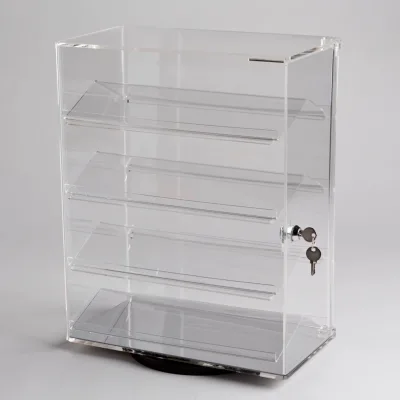
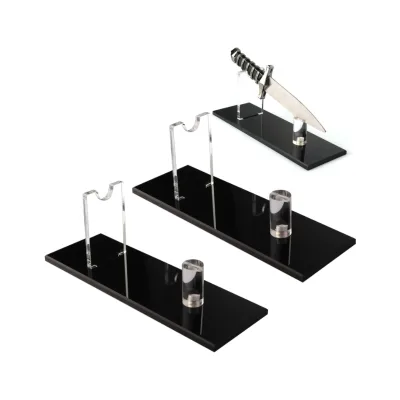
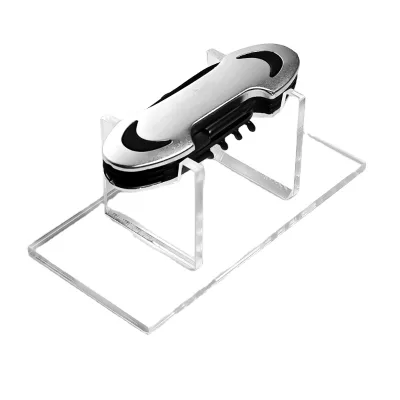
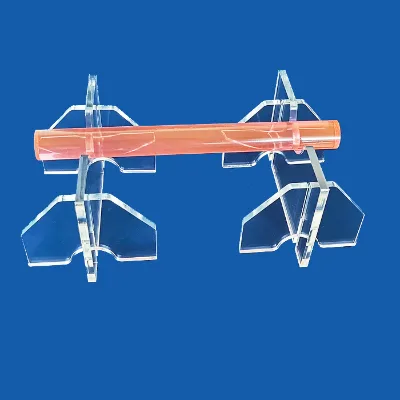
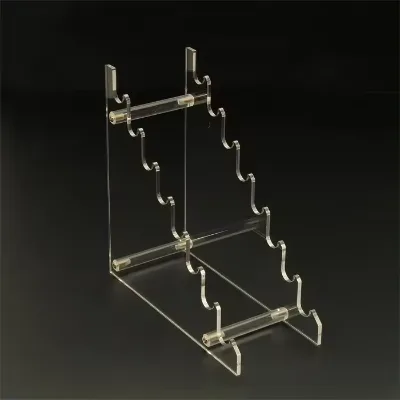
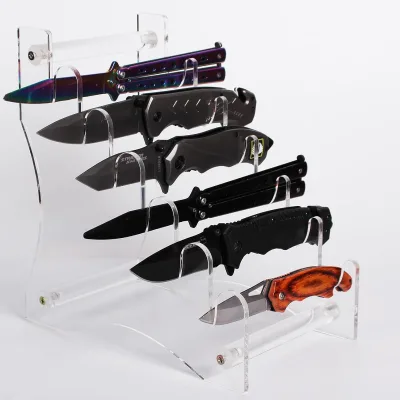


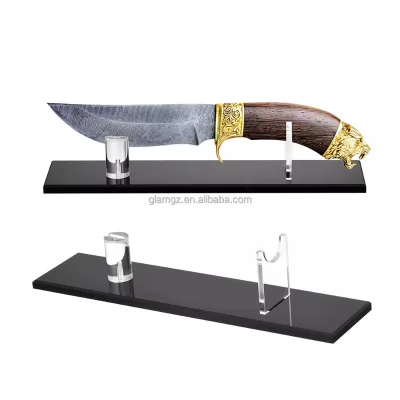
Custom Acrylic Transparent Pair Sword Holder Rack Desktop Knife Display Stand
$2.65 - $3.27
MOQ: 100 pieces


Comprehensive Sourcing Guide
Acrylic Mini Knife Display Stand Sourcing Guide
Acrylic mini knife display stands occupy a niche where cutlery presentation, retail merchandising, and home organization intersect. Buyers sourcing these products typically need compact units that hold individual knives securely while keeping blades visible, which makes acrylic the dominant material choice due to its clarity, rigidity, and ability to be cut and polished into precise slots. Because the product combines a display function with a storage function, procurement decisions should weigh both how the stand looks on a counter or shelf and how reliably it grips each knife without scratching the blade or handle.
This guide is written for procurement teams comparing listings across supplier platforms rather than for first-time retail shoppers. It focuses on how to read product-page signals, which specifications to confirm before sampling, what documentation matters for compliance, and how to structure commercial terms, supplier qualification, and ongoing quality checks. The core keyword is treated as a product family: listed variants include clear knife racks in custom sizes, L-stand and desktop display formats, and models intended for exhibitions, specialty stores, supermarkets, and home use, so verification steps are framed to apply across those variations.
Product Scope and Observed Listing Signals
Observed listings in this category cluster around clear acrylic knife racks sold under brand names such as HC, with model numbers like BCH-725, Gl-K13, QA11, WM-A0006, WM-A0018, and WM-A0049 appearing on product pages. Price ranges across the observed products span roughly $0.75 to $50 per unit, and stated minimum order quantities range from 2 to 200 pieces, with at least one listing advertising an MOQ of 2pcs. That spread tells buyers the category contains everything from small desktop stands to larger multi-unit display sets, so price comparisons only make sense after isolating stands of comparable size and capacity. One listing notes a display quantity of 6 units, confirming capacity varies materially between models.
Placement signals are equally useful for filtering. Listings describe usage spanning exhibition shows, specialty stores, supermarkets and stores, and home decorative furniture, with application fields including home and name care display. Style descriptors include modern, light luxury, and desktop, while product type is often listed under commercial furniture. Buyers should treat these attributes as observations of how suppliers position their products, not guarantees that every listing meets the same standard. Use them to shortlist: if your need is a countertop retail display, prioritize desktop L-stand models; if it is home storage, prioritize rack-style clear knife racks.
Technical Specifications to Verify
Acrylic grade and thickness are the first technical points to confirm. Listings broadly state the main material as acrylic, sometimes spelled "Arcylic," but that label alone does not distinguish cast from extruded sheet or reveal sheet thickness. Slot dimensions matter more than overall footprint for knife storage: ask whether slot width, depth, and spacing are fixed or adjustable, and whether the stand safely holds the handle weight of your knife assortment without tipping. Because at least one listing confirms custom sizes are accepted, buyers with non-standard knife profiles should request a custom quotation rather than forcing a stock model.
Beyond the sheet itself, verify finishing quality and structural details. Polished edges, whether slots are flame-polished or saw-cut, affect both appearance and the risk of scratching blade coatings. Confirm color options — listings note both "Customized Color" and "Clear and Color" — plus whether the stand is folded or one-piece, since one listing states folded: No, meaning shipping dimensions equal assembled dimensions. Size fields in the observed data appear as "Custom Size Accepted," "CUSTOMIZE," and "A5 and Customize," so record exact dimensions per SKU in your specification sheet and request a sample cut to those dimensions before committing to production.
Compliance and Safety Documentation
Certification claims should be read carefully and verified against documents, not marketing text. Observed listings cite SGS&CE as certificates, which suggests suppliers in this category do reference third-party testing and CE conformity, but buyers must request the actual certificate copies, check the scope covers acrylic display products, and confirm the certificate belongs to the supplying entity rather than a different factory. Where the stands will be sold into retail chains or exported to regulated markets, ask what food-contact or material-safety declarations the supplier can provide, and document what is and is not available before committing.
Because knife display stands are not themselves sharp products, compliance risk centers on material composition and packaging safety rather than blade regulation. Request material safety data or acrylic resin declarations, and confirm whether any additives, adhesives, or polishing compounds used in production are disclosed. Observed packing fields mention "Standard Packing," "Packed by Hard Carton for Export," and "Safe Packig," which signals export carton readiness but not validated drop-test performance. Ask the supplier whether cartons are designed for your distribution mode — parcel, pallet, or container — and retain copies of all documentation in your procurement file for audit purposes.
Cost Drivers and Commercial Terms
Unit cost in this category is driven primarily by sheet size and thickness, slot count, edge finishing, and degree of customization. A simple clear desktop stand sits near the low end of the observed $0.75–$50 range, while larger custom-shaped or multi-unit racks with light-luxury styling command the higher end. Customization is explicitly available across listings ("OEM&ODM Custom: Customized", "Customization: Available"), and custom tooling or setup may be reflected in the quoted price, so ask whether a custom shape carries a one-time charge or is absorbed into unit pricing at your volume.
Commercial terms worth clarifying before sampling include MOQ, sample policy, and packaging. Observed MOQs range from 2 to 200 pieces, and at least one listing states "Sample: Accept," so confirm whether sample fees are refundable against a production order and what the sample lead time is. Selling unit is listed as single item, meaning pricing is typically per piece rather than per set — verify this to avoid misbudgeting multi-knife racks. Confirm incoterms, payment terms, and whether mail packing (one listing states mail packing: Y) adds cost or changes the carton specification, since export packing standards affect landed cost.
Supplier Qualification and Quality Control
Qualify suppliers on demonstrated experience and transparency rather than listing polish alone. One observed listing cites "10 Years Furniture Experience" and places origin in Jiangxi, China, while others cite Guangzhou and Shenzhen as origins, reflecting a concentration of acrylic display manufacturers in southern China. Use this geographic clustering to plan supplier visits or third-party inspections, but do not assume origin alone indicates capability. Ask each candidate how long they have produced acrylic display products specifically, whether they manufacture in-house or trade, and whether they hold the SGS and CE documentation they reference.
Build a lightweight quality-control protocol before the first order. For production runs, define an inspection checklist covering acrylic clarity, edge polish, slot dimensional accuracy against your drawing, color match for tinted variants, and carton integrity. Since MOQs as low as 2 pieces are offered, use a small pilot order to test the supplier's responsiveness and consistency before scaling. Agree on how defects are handled — replacement versus credit — and whether the supplier will provide photos of goods packed before shipment. For ongoing orders, consider periodic third-party inspection aligned to your checklist, and keep records of sample approvals so reorders match the golden sample.
Long-Term Procurement Checks
Long-term sourcing success in this category depends on managing customization continuity. Because many listings accept custom size, custom shape, and customized color, your drawings and approved samples become the de facto specification. Maintain version-controlled drawings, note which acrylic sheet supplier or thickness your approved sample used, and confirm at each reorder that the production recipe has not changed. For suppliers offering OEM service, establish who owns the tooling or molds for your custom shapes, so you are not locked in if you later diversify your supplier base.
Finally, track commercial and product consistency across reorder cycles. Reconfirm MOQ, price validity, and packaging at each order rather than assuming the original quotation still applies, since small acrylic products are sensitive to raw material price movement. Monitor whether listed attributes — such as antitheft status (one listing states Not Antitheft), display quantity, or model numbers like WM-A0049 — remain stable across supplier catalog updates, as discontinuations and renumbered models are common in this segment. Schedule an annual review of certificates, re-verify any SGS or CE documents, and refresh your inspection checklist with any field failures observed in your own distribution, keeping the procurement file current as your assortment of mini knife display stands evolves.
FAQs
How can I customize the Acrylic Mini Knife Display Stand for my store?
Customization is available for size, shape, and color, so the stand can match your retail layout or brand look. Suppliers accept custom specifications beyond the listed models, and samples can be arranged before bulk orders. Provide drawings or reference dimensions when requesting a quote, and confirm packing requirements for export.
What is the minimum order quantity for a clear acrylic knife display rack?
The minimum order quantity starts at 2 pieces for listed products, making small trial orders possible. Larger quantities typically qualify for better unit pricing, which ranges roughly from 0.75 to 50 dollars depending on size and design. Confirm the exact MOQ with the supplier for your chosen customization level.
Can I order a sample of the Acrylic Mini Knife Display Stand first?
Yes, sample orders are accepted, and the MOQ of 2 pieces supports low-risk testing. A sample lets you check acrylic clarity, workmanship, and fit for your knives before committing to volume. Ask about sample lead time and whether sample costs can be credited toward a later bulk purchase.
What certifications do these acrylic display stand manufacturers hold?
Listed products reference SGS and CE certificates, which indicate tested quality for commercial display use. Certification coverage can vary by model and factory, so request the certificate documents directly when evaluating a supplier. Also confirm which specific certifications apply to your customized version, since modifications may need reconfirmation.
Which materials are used to make the clear knife display rack?
The stands are made of acrylic, offering a clear, modern appearance suited to light luxury home and retail settings. Acrylic is durable for indoor display and can be produced in customized colors as well as clear finishes. Confirm acrylic thickness and finishing options when placing a customized order.
How are acrylic knife display stands packed for export shipping?
Packing options include standard packing with mail packing available, and some models are packed in hard cartons for export. Safe packaging protects acrylic surfaces from scratches during transit. If you need retail-ready or reinforced export cartons, state this requirement before ordering so packing costs are quoted correctly.
Where do Acrylic Mini Knife Display Stand suppliers come from?
Listed products originate from Jiangxi, Guangzhou, and Shenzhen in China, reflecting an established acrylic fabrication base. Supplier location affects shipping cost, lead time, and factory visits, so compare candidates across these regions. Confirm the exact origin for your customized order, since production may occur at a partner facility.
Can these acrylic display stands be used outside retail exhibitions?
Yes, listed usage covers exhibition shows, specialty stores, supermarkets, and home display, so they suit both commercial and domestic settings. They are designed for indoor display only and are not antitheft units. For home use, choose a size and desktop style that fits your counter or shelf space.