Source Adhesive Stickers for Shipping, Food, and Medicine
Source Adhesive Stickers from 30 verified suppliers in China. Compare options featuring waterproof vinyl, paper, and PET materials with custom printing and strong adhesive backing for logistics, retail, and packaging needs; compare the available evidence and request quotations based on your requirements.
Key considerations
Products List


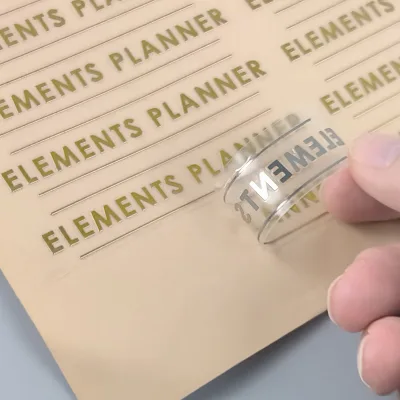


$0.27 - $0.30
MOQ: 4590 Square Meters


Sticker Print Paper Die Cut Stickers Custom Printing Paper Sticker Label
$0.12 - $0.28
MOQ: 1000 Pieces
Comprehensive Sourcing Guide
Adhesive Stickers Sourcing Guide
Buyers must first distinguish between the diverse material bases available in the current market, ranging from standard paper to specialized synthetic options like PET and vinyl. The observed listings indicate that paper-based stickers are often paired with offset printing for high-volume, cost-effective runs, while vinyl and PET materials support more demanding applications requiring durability. Understanding these material distinctions is critical before engaging suppliers, as the choice directly impacts the sticker's ability to withstand environmental stressors such as moisture or friction during shipping.
Procurement teams should also evaluate the specific surface finishing options that define the final product appearance and protection level. Available data highlights glossy or matte lamination as standard processes, which serve to enhance color vibrancy and provide a necessary barrier against water and abrasion. When sourcing, buyers need to verify if the supplier can accommodate custom sizes and specific adhesive strengths, ensuring the selected finish aligns with the intended usage environment, whether for food packaging, pharmaceutical labeling, or general logistics tracking.
Product Scope and Observed Listing Signals
The market for Adhesive Stickers demonstrates a wide range of customization capabilities, with suppliers frequently offering support for custom materials, content, and dimensions. Listings confirm that products are available for diverse applications including bottled beverages, shipping labels, price tags, and medicine packaging. This flexibility allows buyers to source single solutions for complex supply chains, provided they clearly communicate their specific requirements regarding size, shape, and the intended industry application to avoid mismatches in product performance.
Observations of listing signals reveal significant variation in minimum order quantities and delivery timelines, which directly influences procurement strategy. While some suppliers list minimums as low as one unit for sampling, bulk orders often require commitments ranging from 3,000 to 5,000 pieces, with lead times typically spanning five to ten working days. Buyers must carefully review these commercial thresholds to ensure their inventory planning aligns with supplier capabilities, balancing the need for rapid replenishment against the cost efficiency of larger production runs.
Technical Specifications to Verify
Verification of adhesive strength and surface compatibility is paramount when selecting stickers for specific industrial or consumer applications. The observed data points to the availability of strong adhesive formulations suitable for various surfaces, yet buyers must confirm that the specific adhesive chemistry is compatible with the target substrate, such as glass, plastic, or cardboard. This verification prevents issues like label peeling or residue left behind after removal, which can damage product packaging or compromise brand presentation in retail environments.
Surface finishing and printing technology also require rigorous technical validation to ensure the final output meets quality expectations. Suppliers offer both offset and letterpress printing methods, each with distinct advantages regarding color fidelity and production speed. Buyers should request samples to test the durability of the lamination process, specifically checking for resistance to water, heat, and scratching. Confirming that the artwork formats, such as AI, PDF, or CDR, are fully supported by the supplier's design team is also essential to avoid production delays.
Compliance and Safety Documentation
Ensuring that Adhesive Stickers meet relevant safety and regulatory standards is a non-negotiable step for buyers in regulated industries like food and medicine. The observed listings mention certifications such as ISO 9001 and SGS, which indicate a supplier's commitment to quality management systems and product safety. However, buyers must explicitly request documentation proving that the specific materials and inks used comply with local regulations for food contact and pharmaceutical labeling, as general certifications do not automatically guarantee compliance with every jurisdiction's specific safety requirements.
Documentation regarding the origin and composition of the materials is equally critical for supply chain transparency and risk management. Products are frequently sourced from manufacturing hubs in Guangdong and Wuxi, China, but buyers should verify the specific factory conditions and material sourcing policies. Requesting detailed material safety data sheets (MSDS) and proof of origin helps mitigate risks associated with supply chain disruptions or regulatory non-compliance, ensuring that the final product can be legally distributed in the target market without legal or reputational repercussions.
Cost Drivers and Commercial Terms
The total cost of ownership for Adhesive Stickers is heavily influenced by the complexity of the customization and the volume of the order. Factors such as the choice of material, the number of colors in the printing process, and the application of special finishes like holographic or anti-counterfeit features can significantly drive up unit prices. Buyers should analyze the trade-off between premium features and budget constraints, understanding that higher customization levels often result in longer lead times and higher minimum order quantities, which impacts overall cash flow and inventory holding costs.
Commercial terms and payment structures play a vital role in managing financial risk during the procurement process. Listings indicate that trade terms are often negotiated, with common payment methods including T/T, PayPal, and Western Union. Buyers must clarify the deposit requirements, the timing of the final payment, and the specific Incoterms that define responsibility for shipping and insurance. Establishing clear terms regarding sample availability and costs is also essential, as free samples may be offered but often come with conditions that affect the final production agreement.
Supplier Qualification and Quality Control
Supplier qualification should extend beyond basic certification checks to include a thorough assessment of their production capacity and quality control protocols. Buyers are advised to verify the supplier's ability to handle large-scale orders, as observed minimums can reach 100,000 units, and ensure they have the infrastructure to maintain consistent quality across batches. Requesting a detailed quality assurance plan that outlines inspection points for printing accuracy, adhesive application, and packaging integrity is essential to prevent defects from reaching the end customer.
Effective quality control also requires a robust sampling and testing strategy before full-scale production begins. The availability of samples allows buyers to physically test the sticker's performance under real-world conditions, such as exposure to moisture or temperature fluctuations. Buyers should establish a clear protocol for approving samples, including specific criteria for color matching, adhesion strength, and dimensional accuracy. This proactive approach ensures that any potential issues are identified and resolved early, minimizing the risk of costly recalls or production stoppages later in the supply chain.
Long-Term Procurement Checks
Building a sustainable relationship with adhesive sticker suppliers requires ongoing monitoring of performance metrics and supply chain stability. Buyers should regularly review lead times and delivery reliability, as variations in production schedules can disrupt inventory levels and impact downstream operations. Establishing key performance indicators (KPIs) for on-time delivery, defect rates, and responsiveness to change orders helps maintain accountability and ensures that the supplier continues to meet the evolving needs of the business over time.
Continuous improvement and adaptation to market changes are also critical for long-term procurement success. As regulations evolve and new materials become available, buyers must stay informed about industry trends and technological advancements that could offer better value or performance. Maintaining open communication channels with suppliers allows for collaborative problem-solving and innovation, ensuring that the sourcing strategy remains agile and competitive. Regular audits and feedback loops help identify areas for improvement and foster a partnership that drives mutual growth and efficiency.
FAQs
What materials are available for Adhesive Stickers?
Adhesive Stickers are available in paper, PET, and vinyl materials. Paper options include art paper for general use, while PET and vinyl provide durability. These materials support strong adhesive backing and are suitable for various applications such as bottled beverages, food packaging, and shipping labels. Buyers can select the material that best fits their specific product requirements and environmental conditions.
Can I customize the size and design of the stickers?
Yes, customization is available for material, content, usage, and size. Any custom size is supported to meet specific requirements. Buyers can provide design drawings in Ai, Psd, Pdf, or Cdr formats. The printing process supports offset and letterpress techniques, with surface finishing options like glossy or matt lamination. This ensures the final product matches your brand identity and functional needs precisely.
What is the typical lead time for production?
The typical lead time ranges from 5 to 10 working days. Some suppliers offer a delivery time of 7 days, while others may require 7 to 10 days for production. Samples are available for approval before bulk manufacturing. Buyers should confirm the exact timeline with the supplier based on order quantity and customization complexity to ensure timely delivery for their projects.
What certifications do the Adhesive Stickers have?
The Adhesive Stickers hold ISO9001 and SGS certifications. These certifications ensure quality management and safety standards are met. Some products also reference ISO and SGS compliance. These credentials are important for buyers in industries like food, medicine, and logistics, where regulatory compliance and product safety are critical. Buyers can request certification documents to verify compliance with their specific industry requirements.
What is the minimum order quantity for these stickers?
The minimum order quantity varies, with some suppliers requiring 3000 PCS and others setting the MOQ at 5000 PCS. Buyers should check the specific supplier's requirements as quantities can range from 1 to 100000 units. Lower MOQs may be available for samples or small batches. Confirming the exact MOQ with the supplier is essential for planning your procurement budget and inventory.
Where are these Adhesive Stickers manufactured?
These Adhesive Stickers are manufactured in China, with specific origins in Guangdong and Wuxi. Suppliers ship from ports like Shanghai or Ningbo. The products are packed in strong export cartons, with pallets available for larger orders. Buyers can source directly from these regions to benefit from established manufacturing infrastructure and efficient logistics networks for international shipping.