Source Waterproof Silicone Washi Tape for Office School Decoration
Explore 30 listings of Waterproof Silicone Washi Tape suitable for office, school, and decoration projects. Buyers can compare specifications like adhesive type, width, and length to find the right tape for carton sealing or custom designs.
Key considerations
Products List




Comprehensive Sourcing Guide
Strategic Sourcing Guide for Waterproof Silicone Washi Tape
Navigating the global market for specialized adhesive solutions requires a disciplined approach, particularly when the core requirement involves a niche intersection of materials: Waterproof Silicone Washi Tape. This category combines the aesthetic and tactile qualities of traditional paper tape with the durability and chemical resistance of silicone adhesives. For procurement professionals, the challenge lies in distinguishing between marketing terminology and verifiable product attributes. The following guide synthesizes observed market data and technical realities to provide a robust framework for sourcing this specific product class, ensuring that buyers can make informed decisions based on evidence rather than assumption.
Understanding Material Composition and Adhesive Chemistry
The foundation of any successful procurement strategy for this product lies in a precise understanding of the material composition. While the term "washi tape" traditionally implies a paper backing, the specific requirement for "waterproof silicone" introduces a complex material dynamic. In the observed market data, distinct material categories appear, including Polyester, Silicone, PVC, and generic paper-based constructions. A critical observation is that "Silicone" is explicitly listed as both a material and an adhesive type in various listings. This suggests that true Waterproof Silicone Washi Tape may utilize a silicone-based adhesive applied to a backing that could be paper, polyester, or a synthetic blend, rather than the adhesive being the sole structural component.
Buyers must verify the specific role of silicone in the product. Is the adhesive a silicone hot melt, or is it a pressure-sensitive silicone formulation? The data indicates that "Hot Melt Glue" and "Pressure Sensitive" are distinct adhesive types available in the market. For a product claiming to be "waterproof," the adhesive must exhibit high cohesion and resistance to moisture ingress. The presence of "Silicone" as an adhesive attribute alongside "Water Activated" and "Hot Melt" suggests a diverse supply chain where the specific formulation determines the final performance. Procurement teams should not assume that all "silicone" labeled tapes share identical chemical properties; the backing material (e.g., Polyester vs. Paper) significantly influences the tape's flexibility, tear resistance, and adhesion to various substrates.
Technical Specifications and Dimensional Variability
When evaluating technical specifications, dimensional consistency is paramount, yet the market data reveals significant variability in standard sizes. Observed specifications include widths ranging from 20mm to 30mm, with some listings offering custom widths up to 7.5cm. Lengths vary from 1.5m to 1800m, and thicknesses are noted as 0.15mm or 100um. This wide range indicates that "standard" dimensions are not universal but rather dependent on the specific manufacturer's production capabilities.
For a buyer seeking Waterproof Silicone Washi Tape, the following specifications require strict verification against the supplier's data sheet:
- Width: Common observed standards include 20mm, 25mm, and 30mm, but custom widths are frequently available.
- Thickness: Observed values range from 0.15mm to 100um (0.1mm). Thicker tapes may offer better durability for industrial sealing, while thinner tapes suit decorative applications.
- Length: Standard rolls vary from 1.5m to 3m, with industrial variants potentially reaching 1800m.
- Temperature Resistance: Most observed products are rated for "Normal Temperature," which is a critical constraint for applications involving heat or cold storage.
Buyers must explicitly confirm whether the "waterproof" claim holds under specific temperature conditions, as the observed "Normal Temperature" rating suggests limitations in extreme environments. The data also highlights specific model numbers like CD-2001, SWST001, and HX-6008, which serve as unique identifiers for these dimensional profiles. Relying on generic descriptions without referencing specific model numbers can lead to receiving products that do not meet the required dimensional tolerances.
Compliance, Certification, and Regulatory Standards
In the B2B procurement landscape, compliance is not merely a formality but a risk mitigation strategy. The observed market data includes several certifications, specifically CE, ISO, RoHS, and BSCI. These certifications indicate that certain suppliers adhere to international standards for safety, environmental impact, and social responsibility. However, the presence of these certifications in the data does not guarantee that every product labeled "Waterproof Silicone Washi Tape" possesses them.
Buyers must treat certifications as supplier-specific attributes rather than universal product features. For instance, while "CE" and "ISO" are listed, the context suggests these apply to specific manufacturing batches or product lines, such as those originating from Guangdong or Jiangsu. The "RoHS" certification is particularly relevant for electronic or consumer-facing applications, ensuring the tape is free from specific hazardous substances. Similarly, "BSCI" certification addresses social compliance in the supply chain, which is increasingly important for multinational corporations.
When evaluating a potential supplier, procurement teams should request valid, current certificates rather than relying on marketing claims. The data also mentions "25mm x 0.5mm x 3m" as a specific standard, which serves as a reference for dimensional compliance. Buyers should verify if the supplier's production standards align with international norms or if they rely on internal specifications that may differ from global expectations. The absence of a universal standard for "Waterproof Silicone Washi Tape" means that the buyer must define their own acceptance criteria based on the specific application requirements.
Cost Drivers and Minimum Order Quantity (MOQ) Analysis
Understanding the economic structure of this product category is essential for budgeting and supply chain planning. The observed price range in the market spans from $0.07 to $2.48 USD per unit, a significant variance that reflects differences in material quality, adhesive formulation, and order volume. The Minimum Order Quantity (MOQ) ranges from 20 rolls to 50,000 units, indicating a highly flexible supply chain that accommodates both small-scale testing and large-scale industrial deployment.
Several factors drive the cost of Waterproof Silicone Washi Tape. The primary driver is the adhesive chemistry; silicone adhesives are generally more expensive than standard acrylic or rubber-based alternatives due to their superior thermal and chemical resistance. The backing material also plays a role; polyester and specialized paper blends command higher prices than standard kraft paper. Additionally, customization options, such as custom printing, specific dimensions, or unique packaging (e.g., Brown Kraft Box vs. Roll), add to the overall cost.
The MOQ structure suggests that buyers can start with small quantities to validate product performance before committing to large orders. The observed "20roll/Designs" MOQ is particularly favorable for prototyping and design validation. However, buyers should be aware that lower MOQs often come with higher per-unit costs. As order volumes increase, the cost per unit typically decreases, but the total capital outlay rises. Procurement teams must balance the need for flexibility with the economies of scale, ensuring that the chosen supplier can accommodate the desired order size without compromising on quality or lead time.
Typical Applications and Usage Scenarios
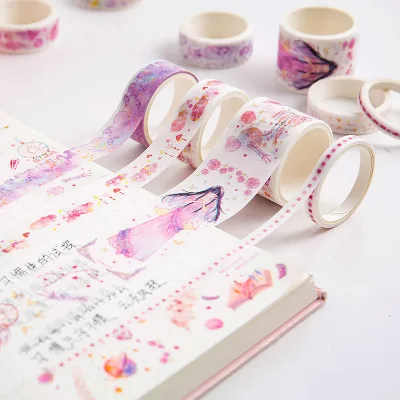
The versatility of Waterproof Silicone Washi Tape makes it suitable for a wide range of applications, from office and school environments to industrial packaging. The observed usage data highlights "Office," "School," and "Decoration" as primary use cases, alongside "Carton Sealing" for industrial purposes. This duality requires buyers to select a product that balances aesthetic appeal with functional durability.
In office and school settings, the tape is often used for labeling, organizing, and decorative purposes. The "Printing" and "Design Print" attributes observed in the data support this application, allowing for custom branding or color-coded organization. The "Waterproof" feature ensures that labels remain legible even in humid environments or if accidentally exposed to moisture. In industrial contexts, the tape serves as a sealing solution for cartons, where the "Single Sided" adhesive and "Pressure Sensitive" properties facilitate quick and secure closure. The "Heat-Resistant" feature noted in some listings is crucial for applications involving temperature fluctuations, such as shipping in hot climates or storage in heated facilities.
Buyers must align the product selection with the specific end-use environment. A tape designed for decorative office use may not possess the tensile strength required for heavy-duty carton sealing. Conversely, an industrial sealing tape may lack the aesthetic qualities needed for branding. The "Customized" nature of the product allows for tailoring these properties, but it requires clear communication of the intended application to the supplier.
Supplier Evaluation and Quality Control Protocols
Selecting the right supplier is as critical as selecting the right product. The market data indicates that suppliers are located in various regions, including Guangdong, Hebei, and Jiangsu, China. While these regions are known for manufacturing capabilities, the geographic origin alone does not guarantee quality. Buyers should evaluate suppliers based on their ability to provide consistent product specifications, valid certifications, and responsive customer service.
Quality control protocols should be established before placing an order. Key areas to verify include the consistency of the adhesive application, the dimensional accuracy of the tape, and the durability of the backing material. The "Free Sample" and "Free Design" attributes observed in the data are valuable tools for initial quality assessment. Buyers should request samples to test the tape's waterproofing capabilities, adhesion strength, and resistance to tearing. It is also essential to verify the "Customization" capabilities, ensuring that the supplier can meet specific requirements for width, length, and printing.
When evaluating suppliers, buyers should look for evidence of a robust quality management system. The presence of certifications like ISO and BSCI is a positive indicator, but direct communication regarding quality control processes is necessary. Questions should be asked about how the supplier handles defects, manages inventory, and ensures consistency across production batches. The "Brown Kraft Box" and "Cardboard Packaging" options observed in the data suggest that packaging is a consideration for product protection during transit, which is another aspect of quality control.
Long-Term Procurement Considerations and Sustainability
Sourcing Waterproof Silicone Washi Tape is not a one-time transaction but part of a long-term supply chain strategy. Buyers should consider the sustainability of the materials used, the environmental impact of the adhesive, and the potential for future customization. The "Customized" and "Design Print" attributes suggest that suppliers are willing to adapt to changing market needs, which is a positive sign for long-term partnerships.
Sustainability considerations include the recyclability of the tape and the environmental impact of the manufacturing process. While the data does not explicitly state the recyclability of the silicone adhesive, buyers should inquire about the supplier's environmental policies and any initiatives to reduce waste or energy consumption. The "RoHS" certification is a step in the right direction, indicating compliance with restrictions on hazardous substances.
Furthermore, buyers should plan for scalability. As business needs grow, the ability to increase order volumes without compromising quality or lead time is crucial. The observed MOQ range of 20 to 50,000 units suggests that suppliers can accommodate growth, but buyers should confirm lead times and production capacity during the negotiation phase. Establishing a clear communication channel with the supplier ensures that any changes in requirements can be addressed promptly, maintaining the integrity of the supply chain.
In conclusion, sourcing Waterproof Silicone Washi Tape requires a meticulous approach that balances technical specifications, compliance, cost, and supplier reliability. By focusing on verified data and avoiding assumptions, buyers can secure a supply chain that meets their specific needs while maintaining high standards of quality and performance. The flexibility of the market, evidenced by the wide range of specifications and customization options, offers significant opportunities for strategic procurement, provided that buyers remain vigilant in their evaluation and testing processes.
FAQs
What materials are used for Waterproof Silicone Washi Tape?
Products utilize Polyester, Silicone, or PVC as backing materials. Silicone also appears as an adhesive type alongside hot melt glue and pressure-sensitive options. Buyers must verify the specific material composition for their application needs.
Which certifications are available for these tape products?
Certifications include CE, ISO, RoHS, and BSCI depending on the manufacturer. These indicate compliance with safety, environmental, and social responsibility standards. Buyers should request valid certificates rather than assuming universal coverage.
How are the dimensions of the tape specified?
Widths range from 20mm to 30mm with lengths from 1.5m to 1800m. Thickness varies between 0.15mm and 100um. Custom dimensions are frequently available to meet specific project requirements.
Can I get free samples for quality testing?
Free samples are available for many designs to validate product performance. This allows buyers to test waterproofing and adhesion before placing large orders. Minimum order quantities can be as low as 20 rolls per design.
Where are these products manufactured?
Manufacturing origins include Guangdong, Hebei, and Jiangsu in China. Different regions may offer varying production capabilities and lead times. Buyers should confirm the specific place of origin for each supplier.
What customization options are offered for the tape?
Customization is available for printing, dimensions, and packaging types like Brown Kraft Box. Buyers can request specific widths, lengths, and adhesive formulations. Design services are often provided free of charge for prototypes.