Source Adjustable Alloy Anchor Connector for Structural, Electrical, and Profile Uses
Find and compare 30 Adjustable Alloy Anchor Connector options for structural, electrical, and profile applications. Evaluate specifications such as material, surface treatment, and connection types to identify suitable components for your engineering needs.
Key considerations
Products List


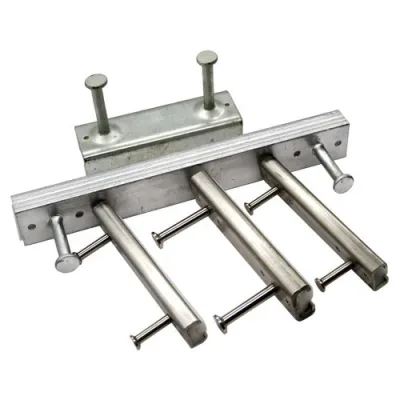
Premium Alloy Steel Connectors for Reliable Cable Connections in Bridges
$0.80 - $1.30
MOQ: 1000 Pieces


Comprehensive Sourcing Guide
Adjustable Alloy Anchor Connector Sourcing Guide
Sourcing adjustable alloy anchor connectors requires a disciplined approach to verifying material integrity, dimensional precision, and surface treatment durability. These components serve as critical junction points in structural frameworks, electrical assemblies, and modular profile systems, where the ability to adjust positioning before final fixation is paramount. Buyers must distinguish between generic fasteners and specialized connectors designed for specific load-bearing or conductive applications. The term "alloy" often refers to aluminum or aluminum alloy compositions, which offer a favorable strength-to-weight ratio and corrosion resistance, but the exact grade and temper significantly influence performance. Procurement teams should prioritize suppliers who provide clear metallurgical specifications rather than relying on generic marketing terms.
The market landscape for these connectors is diverse, ranging from simple corner brackets to complex electrical busbar connectors with adjustable blade configurations. Observed product listings indicate a wide variance in model numbers, such as SGPA series and MK-AF, suggesting that standardization is not uniform across all suppliers. This fragmentation necessitates rigorous technical validation before placing orders. Buyers should focus on understanding the specific mechanical and electrical requirements of their end-use application, whether it involves securing aluminum profiles in construction or managing high-current electrical connections. The availability of customization options further complicates the sourcing process, requiring clear communication of tolerances and functional expectations to avoid mismatches in the final assembly.
Product Scope and Observed Listing Signals
The observed product range includes items explicitly labeled as "Connector Accessories Anchors," "Aluminum Profile Angle Brackets," and "Connecting Components," indicating a broad scope that spans mechanical fastening and structural joining. Listings frequently highlight "Round" head types and "Galvanized Sheet" surface treatments, although other entries specify "Without Treatment" or "Oxygenation," pointing to varied protective strategies depending on the environmental conditions of the end application. The presence of models like SGPA0512 and SGPA050104 suggests that suppliers offer a catalog of pre-defined sizes, yet the "all type" designation in some listings implies a capability for bespoke manufacturing. Buyers should interpret these signals as evidence of a flexible supply chain but must verify that the specific variant meets their engineering drawings.
Color options such as "Silver," "Black," and "Customized" are commonly advertised, which may relate to anodizing or powder coating processes rather than just aesthetic preferences. In technical applications, color can sometimes indicate specific alloy grades or surface hardness levels, so procurement specialists should not assume that color choices are purely cosmetic. The mention of "Export Packing" and "Carton Package" highlights standard logistical practices, but the variability in packaging descriptions suggests that buyers should specify their own packaging requirements to prevent damage during transit. Additionally, the observation of "Male" connections and "Welding" as connection methods indicates that these anchors are designed for diverse assembly techniques, requiring careful selection based on the joining process available at the manufacturing site.
Technical Specifications to Verify
Material composition is the most critical technical parameter, with listings citing both "Aluminium" and "Aluminum Alloy" as primary materials. Buyers must verify the specific alloy series, such as 6061 or 7070, as referenced in some standards, because these designations dictate tensile strength, yield point, and machinability. For electrical applications, the distinction between pure aluminum and copper or brass blades is vital, as conductivity and thermal expansion rates differ significantly. The specification of main line capacities ranging from 185 to 840 mm² and branch lines from 6 to 50 mm² in certain models underscores the importance of matching connector ratings to the electrical load. Procurement teams should request material test reports to confirm that the alloy composition aligns with the design requirements for corrosion resistance and mechanical strength.
Dimensional accuracy and standard compliance are equally essential, with references to GB, DIN, ANSI, BSW, and JIS standards indicating that suppliers may cater to different regional markets. However, the presence of non-standard entries like "contact me for more information" for standards suggests that some products may not adhere to widely recognized international norms. Buyers should verify the exact model numbers, such as SGPA1401 or SM250212, against their own technical drawings to ensure compatibility with existing hardware. The "Adjustable" nature of these connectors implies the presence of sliding mechanisms or slotted holes, which must be tested for stability under vibration and load. Additionally, surface treatments like galvanization or oxygenation should be evaluated for their impact on electrical conductivity and long-term durability in harsh environments.
Compliance and Safety Documentation
While ISO9001 is mentioned in background data, buyers should not assume that all suppliers holding this certification have specific compliance for adjustable alloy anchors. Instead, procurement teams should request product-specific certifications that address the intended use, whether it is structural integrity for construction or electrical safety for power distribution. For connectors used in high-current applications, documentation should include thermal testing results and insulation ratings if applicable. The absence of explicit safety certifications in many listings highlights the need for buyers to conduct their own due diligence or require suppliers to provide third-party test reports. This is particularly important for components that will be subject to regulatory scrutiny in industries such as automotive, aerospace, or heavy electrical infrastructure.
Documentation should also cover the origin of materials and the manufacturing process to ensure traceability. Listings indicating origins in Dalian, China, or generally "China" provide a starting point, but buyers should seek detailed certificates of origin and material traceability records. For products with "Customization" available, the supplier should provide documentation on how custom designs are validated and tested. This includes proof that the customization process does not compromise the structural integrity or electrical performance of the connector. Buyers should also verify that the surface treatments used, such as galvanization, comply with environmental regulations regarding hazardous substances, especially if the products are destined for markets with strict RoHS or REACH requirements.
Cost Drivers and Commercial Terms
The observed price range of 0.02 to 570 USD reflects the vast diversity in product complexity, from simple brackets to high-capacity electrical connectors. Buyers should analyze cost drivers such as material weight, alloy grade, and surface treatment complexity. Aluminum alloys are generally more expensive than standard steel alternatives, and specialized treatments like oxygenation or specific anodizing processes add to the unit cost. The minimum order quantity (MOQ) range of 1 to 1000 pieces indicates that suppliers are flexible, but higher volumes often yield better pricing. Procurement teams should negotiate based on total cost of ownership, considering factors like packaging efficiency, lead times, and potential waste due to dimensional inaccuracies.
Commercial terms such as delivery time and packing methods also impact the overall cost structure. Listings mentioning delivery times of less than 30,000 units or 20 days suggest varying production capacities, which can affect pricing and availability. Buyers should clarify whether the quoted price includes export packing or if custom packaging incurs additional charges. The availability of customization is a significant cost factor, as it may require tooling changes or specialized production runs. It is advisable to request detailed quotations that break down material, labor, and overhead costs to understand the value proposition. Additionally, buyers should consider the financial implications of currency fluctuations and shipping costs, especially when sourcing from international suppliers.
Supplier Qualification and Quality Control
Supplier qualification should begin with a thorough review of their manufacturing capabilities and quality management systems. Buyers should verify that the supplier has experience in producing adjustable alloy connectors, particularly those with specific model numbers like SGPA series or MK-AF. Requesting samples for physical inspection is crucial to assess the fit, finish, and adjustability of the connectors. Quality control processes should include dimensional checks, material composition analysis, and surface treatment verification. Buyers should inquire about the supplier's internal testing protocols, such as torque testing for fasteners or conductivity testing for electrical connectors, to ensure consistent product quality.
Communication and responsiveness are key indicators of a reliable supplier, especially when dealing with customized orders. The presence of "contact me for more information" in some listings suggests that direct communication is necessary for detailed specifications. Buyers should evaluate the supplier's ability to provide technical support and resolve issues promptly. It is also important to assess the supplier's supply chain stability, including their access to raw materials and their ability to meet delivery deadlines. Establishing a clear quality agreement that defines acceptable tolerances, defect rates, and corrective action procedures can help mitigate risks. Regular audits or third-party inspections may be warranted for high-volume or critical applications to ensure ongoing compliance.
Long-Term Procurement Checks
Long-term procurement success depends on continuous monitoring of product performance and supplier reliability. Buyers should track field performance data, including any failures, corrosion issues, or dimensional drifts in adjustable mechanisms. This feedback loop is essential for identifying potential design flaws or material inconsistencies that may not be apparent during initial testing. Regularly reviewing supplier performance metrics, such as on-time delivery rates and defect percentages, helps in making informed decisions about contract renewals or supplier diversification. Buyers should also stay updated on changes in industry standards and regulations that may affect the compliance of their current sourcing strategy.
As technology and materials evolve, buyers should periodically reassess the suitability of their current connectors against emerging alternatives. This includes evaluating new alloy compositions or surface treatments that may offer improved performance or cost efficiency. Maintaining a diverse supplier base can reduce dependency on single sources and provide leverage in negotiations. It is also advisable to establish long-term partnerships with suppliers who demonstrate a commitment to innovation and quality improvement. By fostering collaborative relationships, buyers can gain access to early insights on new products and technologies, ensuring that their procurement strategy remains competitive and aligned with future business needs.
FAQs
What is the standard for adjustable alloy anchor connectors?
The standard for these connectors is GB, though DIN, ANSI, BSW, and JIS standards are also available. This ensures compatibility with various international engineering requirements and local regulations for connector accessories.
Can I request custom packaging for these aluminum connectors?
Yes, customization is available including export packing or carton packages as you requested. Buyers can specify unique packaging needs to ensure safe transport and brand alignment for their specific distribution channels.
Which surface treatment options exist for these anchor connectors?
Surface treatments include galvanized sheet, oxygenation, or without treatment depending on the specific model. This allows selection based on environmental exposure and corrosion resistance requirements for different industrial applications.
How fast can I receive these aluminum profile connectors?
Delivery time is typically under 30,000 units or within 20 days for standard orders. This lead time supports urgent project needs while maintaining quality control for aluminum alloy components and anchor accessories.
What is the minimum order quantity for these connectors?
The minimum order quantity starts at 1 piece for most models like SGPA0512. This low MOQ allows buyers to test product quality and fit before committing to larger bulk orders for their projects.
Which materials are used for these connector accessories?
Materials include aluminum, aluminum alloy, and sometimes steel for specific anchor types. These materials provide the necessary strength and weight characteristics required for electrical appliances and aluminum profile connections.