Find Adjustable Height MDF Dining Table for Hotels, Homes, and Restaurants
Browse 30 Adjustable Height MDF Dining Table listings for hotel and home dining spaces. Compare sizes, finishes, materials, packing options, and customization availability to identify models suited for 3-5 star hospitality or residential projects before requesting supplier quotes; compare the available evidence and request quotations based on your requirements.
Key considerations
Products List


$80.00 - $200.00
MOQ: 20 Pieces


Top Furniture Modern Wooden Coffee Restaurant Room Slabs MDF Wood Dining Table
$27.00 - $33.00
MOQ: 30 Pieces


Hot Selling Round Table Dining Restaurant Living Room MDF Table Dining Table
$88.00 - $92.00
MOQ: 50 Pieces


Modern Good Quality Home Furniture 4 Wood Legs MDF Material Restaurant Dining Table
$18.00 - $35.00
MOQ: 200 Pieces

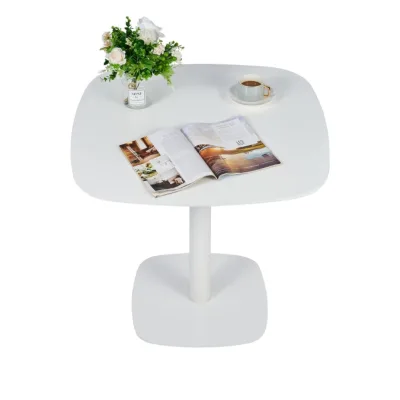


$118.00 - $119.90
MOQ: 30 Pieces


Comprehensive Sourcing Guide
Adjustable Height MDF Dining Table Sourcing Guide
An Adjustable Height MDF Dining Table is a versatile furniture item that serves both hospitality and residential buyers, and it is widely supplied by Chinese manufacturers operating at factory level. When sourcing this product, buyers should recognize that listings typically present a modern, rectangular design in wood-based construction, often offered in white or black finishes with customization available. The dual-use positioning—covering hotel and home settings—means the same platform may be configured differently for a three-to-five-star hotel bedroom or lobby versus a residential dining space.
Because the category combines mechanical adjustability with engineered wood construction, procurement decisions differ from standard fixed dining tables. Buyers must evaluate both the lifting mechanism's durability and the panel quality, since MDF and plywood grades directly influence load capacity and longevity. The listings observed include fixed (non-rotary) configurations and unfolded designs, so confirm early in negotiation which structural variants a factory actually produces rather than assuming a catalog image reflects current production capability.
Product Scope and Observed Listing Signals
The observed listings cluster around rectangular, modern-styled tables sized between 12080cm and 16090cm, with models such as DT-120, DT-A52, DT-B04, CX-Q20, DT-3367, DT-3368, and HY-HFP0574 appearing in the data set. Materials are described as wood, wooden, or plastic, with plate specifications referencing E1 grade plywood or MDF and wood finishes in veneer, laminate, or melamine. Colors span white, black, and brown. Condition is uniformly new, and several listings indicate customization is available while others are non-customized, so treat customization as a per-listing attribute.
Application signals point toward hotel bedroom, hotel lobby, and restaurant use, with hotel level noted as three to five star. Packing formats vary noticeably: carton packing, 1PCS/CTN, 1PCS/2ctns, and 1PCS/3ctns, with volumes ranging from 0.19cbm to 0.47cbm and container loading figures of 360 to 415 pieces per 40HQ for certain models. Observed prices in the category ranged from 15.5 to 699 USD, and MOQs from 1 to 200 pieces, but treat these as listing observations—not guaranteed terms—and verify current quotations directly with each supplier.
Technical Specifications to Verify
Start with dimensional verification. Listed sizes include 12080cm, 13080cm, 14080cm, 16090cm, and a dimensional specification of 1208073cm, but buyers should request full drawings showing the adjustable height range—the minimum and maximum table heights, the mechanism travel, and locked-height stability. Ask for the panel specification in writing: E1 grade plywood or MDF should be confirmed by grade certificate, along with panel thickness and edge banding type, since these determine resistance to swelling and chipping in high-use hotel environments.
Second, verify the lifting mechanism itself. Request details on the actuation method (manual, gas lift, or motorized), cycle-life expectations, and load rating at maximum extension. Confirm the finish system—veneer, laminate, or melamine—matches the abrasion and moisture resistance expected for restaurant or lobby use. For logistics planning, collect gross weight per piece (one listing shows 21kgs/PCS, another 40kgs/PCS), carton dimensions such as 1288915cm, and per-40HQ loading counts so you can model landed freight cost accurately before committing to a model.
Compliance and Safety Documentation
Compliance begins with the panel material. Because listings reference E1 grade plywood and MDF, buyers should request formal documentation supporting that emission grade rather than accepting a listing attribute at face value—ask for the mill's test reports or batch certificates covering formaldehyde emissions for the engineered wood used in your production run. One observed listing carries CE, ISO, and CCC certification marks; where a supplier claims these, request the actual certificates, verify the certifying body, and confirm the scope covers furniture rather than an unrelated product line.
Structural and mechanical safety matters equally for adjustable tables. Ask the factory to describe how the height-adjustment mechanism is tested—lock strength, repeated cycling, and pinch-point protection—and request any internal or third-party test evidence they can share. For hotel deployments, confirm finish flammability and surface-wear expectations with the supplier in writing, even if no specific standard is claimed in the listing. Document all compliance commitments in the purchase contract so that substitution of lower-grade board or mechanisms during production becomes a breach rather than a dispute.
Cost Drivers and Commercial Terms
The main cost drivers in this category are panel grade and thickness, the type of height-adjustment mechanism, finish selection (melamine generally costs less than veneer or high-pressure laminate), and customization level—listings that are explicitly customized command different pricing than non-customized stock models. Size also matters: moving from a 12080cm to a 16090cm platform increases both material content and freight volume, which is visible in the observed packing data where larger models ship in three cartons at 0.47cbm versus 0.19cbm for compact versions.
On commercial terms, the observed price band of 15.5–699 USD and MOQ range of 1–200 pieces reflect listing-level variation, not contractual offers—request itemized quotations specifying unit price at your target volume, tooling or customization fees, and packaging costs. Clarify packing format (EPE plus foam corners plus hard carton appears in one listing) and confirm whether 1PCS/CTN or multi-carton packing applies to your chosen model. Negotiate Incoterms explicitly, and model container economics using the stated 40HQ loading figures of 360 or 415 pieces to compare suppliers on delivered cost rather than unit price alone.
Supplier Qualification and Quality Control
Qualify suppliers as factories rather than traders where possible—one listing explicitly states business type as factory and accepts OEM/ODM orders, which signals direct production capability. Request evidence of manufacturing scope: photos or video of the panel processing line, edge banding equipment, and mechanism assembly area. Ask how long the specific model has been in production and whether the factory can provide references from hotel or restaurant projects, since three-to-five-star hospitality buyers typically demand tighter tolerances than residential channels.
Build a staged quality-control plan into the order. Conduct an initial sample approval covering panel finish, height mechanism function, and color matching against your approved standard. During mass production, define inspection checkpoints for panel grade verification, mechanism cycling tests, and packing integrity—especially important given multi-carton packing on larger models where components must arrive complete. For first orders, consider a pre-shipment inspection covering dimensional accuracy against the stated size (for example, 12080cm or 14080cm), carton drop-test readiness, and label accuracy before balance payment is released.
Long-Term Procurement Checks
For repeat purchasing, track consistency across production batches. Confirm that the supplier maintains the same panel source, mechanism supplier, and finish批次 specification over time, and require written notification of any material substitution—this is a common failure point in engineered-wood furniture where E1 grade board may quietly be replaced with ungraded stock. Keep an approved golden sample on file and reference it in every purchase order, so quality disputes can be resolved against a physical benchmark rather than photographs.
Plan for product continuity and spare-parts availability. Ask whether the height-adjustment mechanism, replacement hardware, and touch-up finish materials will remain available for several years after your initial order, which matters for hotel operators maintaining large room inventories. Review loading efficiency annually—changes in carton design can shift the 360-to-415-piece 40HQ range and alter landed cost. Finally, reassess customization terms periodically: listings showing "customization available" today may change as factory capacity shifts, so lock in OEM/ODM arrangements, tooling ownership, and exclusivity conditions in a framework agreement covering your forward orders.
FAQs
What materials are used for adjustable height mdf dining tables?
These tables typically use MDF or plywood for the plate, combined with wood or plastic components. The surface finish often includes veneer, laminate, or melamine for durability. Some models feature a wooden structure with a white or black color option, ensuring a modern style suitable for various interior designs.
Can I customize the size of an Adjustable Height MDF Dining Table?
Yes, customization is available for many models. Standard sizes include 120x80cm, 130x80cm, 140x80cm, and 160x90cm. You can select specific dimensions to fit your space. The product is often supplied in carton packing, with some models offering EPE and foam corner protection for safe transit during shipping.
What certifications do adjustable height mdf dining tables have?
Many models hold CE and ISOCCC certifications, ensuring compliance with international standards. These certifications verify the quality and safety of the materials used, such as E1 grade plywood or MDF. This makes the tables suitable for commercial environments like hotels, restaurants, and lobbies that require reliable and certified furniture.
How are adjustable height mdf dining tables packed for shipping?
Packing methods vary by model but generally include carton packing. Some items use one piece per carton, while others may use two or three cartons per unit. Protective materials like EPE and foam corners are often added. The gross weight ranges from 21kg to 40kg per piece, affecting container loading capacity.
What is the minimum order quantity for adjustable height mdf dining tables?
The minimum order quantity typically ranges from 1 to 200 pieces, depending on the supplier and model. Customized orders may have different MOQs. Standard items often allow for smaller trial orders, while bulk purchases can achieve better pricing. It is best to check specific supplier requirements for your desired model and quantity.
Where are adjustable height mdf dining tables manufactured?
These tables are primarily manufactured in China. Factories in this region offer competitive pricing and a wide variety of styles, including modern designs. The origin ensures access to high-quality materials like MDF and wood. Buyers can often find OEM and ODM services from these factories to meet specific branding needs.