Source Adjustable Mobile Container Ramp for Warehouse, Ship, and Yard
Find 30 Adjustable Mobile Container Ramp options with varying load capacities and lifting heights. Compare steel construction models from China to identify suitable solutions for warehouse, shipboard, and workshop applications; compare the available evidence and request quotations based on your requirements.
Key considerations
Products List


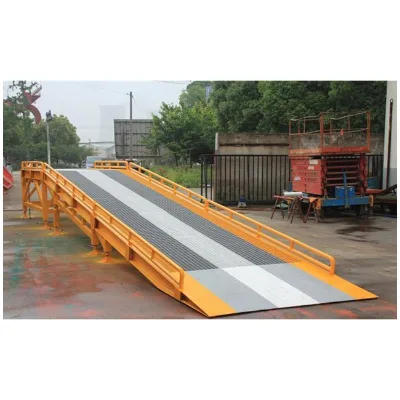
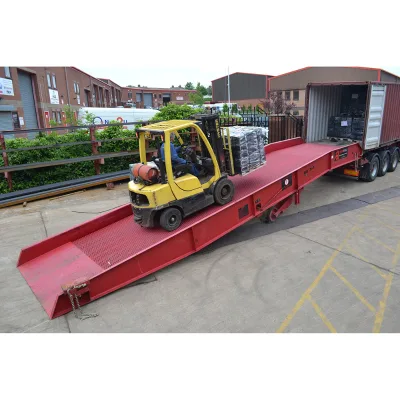


CE Certified Foldable Mobile Loading Ramp for Loading Container or Truck
$1800.00 - $2000.00
MOQ: 1 Sets


CE Portable Loading Docks Mobile Loading Ramps Mobile Container Ramp for Sale
$2800.00 - $3000.00
MOQ: 1 Pieces


Loading Container Adjustable Hydraulic Mobile Loading Ramp Dock Ramp for Sale
$1700.00 - $2000.00
MOQ: 1 Pieces
Comprehensive Sourcing Guide
Adjustable Mobile Container Ramp Sourcing Guide
Procuring an Adjustable Mobile Container Ramp requires distinguishing between units designed for stationary warehouse loading and those engineered for dynamic yard operations. The observed market data indicates a diverse range of configurations, including models with foldable frames for compact storage and others featuring fixed, high-duty steel structures for heavy industrial use. Buyers must first determine if their operational environment demands a moving unit capable of repositioning or a stationary ramp that remains fixed at a specific loading bay.
The available product listings reveal significant variation in lifting heights, with observed specifications ranging from 1.8 meters to 2 meters, alongside adjustable height options. This variance directly impacts the compatibility of the ramp with different container types and truck bed heights. Sourcing teams should prioritize verifying the specific lifting mechanism, such as hydraulic or manual systems, to ensure the selected ramp can safely accommodate the weight levels and operational frequency of their specific logistics workflow.
Product Scope and Observed Listing Signals
Market analysis of current listings highlights a clear segmentation between mobile and stationary ramp designs, each serving distinct logistical needs. Some products are explicitly categorized as warehouse loading ramps with anti-skid checkered plates, while others are identified as yard ramps with moving running modes. This distinction is critical because a unit designed for a fixed workshop crane application may lack the structural integrity or mobility features required for a shipboard or outdoor yard environment.
Buyers should carefully examine the listed material specifications, as the supply chain offers both standard steel and high-duty steel structures to meet varying load demands. The observed load capacities range from 4.5 tons to 8 tons, with some units rated for 5 tons, necessitating a precise match between the ramp's rated capacity and the heaviest expected cargo. Additionally, the presence of explosion-proof or insulating features in certain listings suggests specialized applications that require enhanced safety protocols beyond standard loading operations.
Technical Specifications to Verify
When evaluating technical performance, the lifting height and platform dimensions are the primary constraints for operational safety and efficiency. Listings show standard dimensions such as 11,500mm by 2,280mm and specific height ranges of 1,300 to 1,750mm, which must align with the physical dimensions of the containers and trucks being serviced. Buyers must verify that the adjustable height mechanism can reliably reach the required elevation without compromising the structural stability of the ramp during the loading cycle.
The driven type and control mechanism are equally vital for determining the ease of operation and power requirements. While some units utilize manual control and AC power sources, others rely on hydraulic systems for smoother lifting and lower operator fatigue. It is essential to confirm whether the ramp features a removable design or a fixed structure, as this affects long-term maintenance and storage logistics. Ensuring the platform is equipped with an anti-skid checkered plate is a non-negotiable safety requirement for all wet or oily loading conditions.
Compliance and Safety Documentation
Safety compliance is a foundational requirement for all industrial lifting equipment, and the observed market data confirms the prevalence of CE and ISO certifications among listed products. Buyers must request and validate specific certification documents, such as ISO RoHS or GS marks, to ensure the equipment meets international safety standards for electrical and mechanical components. Relying solely on a general claim of certification is insufficient; the specific scope of the certification must cover the exact model and configuration being purchased.
In addition to general certifications, the provision of machinery test reports is a critical indicator of product reliability and performance verification. These reports should detail the results of load testing, structural integrity checks, and safety feature evaluations under controlled conditions. Procurement teams should insist on receiving these documents prior to finalizing any order, as they provide the necessary evidence that the ramp can safely handle the specified load capacity without risk of structural failure during operation.
Cost Drivers and Commercial Terms
The final cost of an Adjustable Mobile Container Ramp is heavily influenced by the complexity of the lifting mechanism and the quality of the steel structure used. Units featuring hydraulic systems, explosion-proof features, or custom color options typically command a higher price point compared to basic manual models with standard steel construction. Buyers should anticipate a price range reflecting these variations, with observed market listings spanning from approximately 800 to over 6,000 USD depending on the specific configuration and load capacity.
Commercial terms regarding packaging and shipping logistics also play a significant role in the total landed cost. The supply chain offers diverse packing options, including container shipping, nude cargo, and wooden crates or wrapping film, each with different implications for protection and freight charges. Additionally, the minimum order quantity (MOQ) varies between one and five units, allowing for flexibility in procurement volume but potentially affecting the per-unit cost for smaller orders.
Supplier Qualification and Quality Control
Supplier qualification should focus on the manufacturer's ability to provide consistent quality control and comprehensive after-sales support. The observed product origins, including Guangzhou and Shandong in China, indicate a concentrated manufacturing base, but buyers must verify the specific factory's track record for producing high-duty steel structures. It is advisable to request evidence of past performance, such as machinery test reports or references from similar industrial clients, to validate the supplier's capability to meet strict safety and durability standards.
Quality control processes must extend beyond the final inspection to include material verification and assembly checks. Buyers should ensure that the supplier adheres to the stated standards, such as the specific dimensions and load capacities listed in the product specifications. The availability of a machinery test report and the condition of the product as "New" are baseline requirements, but ongoing quality assurance measures, such as regular maintenance checks and spare part availability, are essential for long-term operational reliability.
Long-Term Procurement Checks
Establishing a long-term procurement strategy requires regular audits of the ramp's condition and performance against the original specifications. Over time, the hydraulic systems and manual controls may require maintenance, and the anti-skid checkered plates may wear down, necessitating a proactive approach to inspection and replacement. Buyers should maintain a schedule for checking the structural integrity of the high-duty steel frame and verifying that the lifting height remains adjustable and stable under load.
Future procurement decisions should be informed by the evolving needs of the logistics operation, including changes in container types or load capacities. As the business scales, the initial selection of a ramp with a 4.5-ton capacity might need to be upgraded to a unit capable of handling 8 tons. Continuous monitoring of the supplier's ability to provide customization, such as adjustable colors or specific dimensions, ensures that the equipment remains aligned with the changing demands of the warehouse or yard environment.
FAQs
What load capacities are available for adjustable mobile container ramps?
Listed adjustable mobile container ramps cover capacities from around 4.5t up to 8t, with several models rated at 5t. Choose the capacity based on your heaviest forklift plus pallet load, and confirm the rating before ordering. Heavier-duty steel structures are used for the higher tonnage models, and customization is available if your workflow needs a different rating.
Can the ramp be adjusted to different container floor heights?
Yes, the height is adjustable, with lifting heights listed at 1.8m and 2m across models. The ramp deck can be raised or lowered so the transition plate meets the container floor during loading and unloading. Check that your container types and dock positions fall within the adjustable range before placing an order.
How is the ramp moved around the yard?
The running mode is moving, so the ramp can be repositioned between docks, containers, and yard areas. Most units are designed to be towed or repositioned with a forklift once the landing legs are raised. Because the structure is heavy-duty steel and some models weigh up to 3500kg, plan for suitable towing equipment and firm ground.
What certifications do these mobile container ramps carry?
Certification listings include CE, and some products also show ISO, with additional listings mentioning RoHS and GS. Certification coverage varies by model, so confirm the exact certificates for the specific unit you intend to buy. Request copies of the certificates and the machinery test report, which is provided for listed models.
Can the ramp be customized in color, size, or features?
Yes, customization is available, and customized colors are acceptable alongside the standard blue finish. Options can include platform dimensions, anti-skid checkered plate surfaces, and other features within the manufacturer's build range. Provide your container height, capacity requirement, and site conditions so the supplier can quote a suitable configuration.
How is the ramp packed and shipped for export orders?
Packing options listed include container shipping, nude cargo, and wooden crate or wrapping film packing. Origin locations include Guangzhou and Shandong, China, so sea freight is the typical shipping method for export quantities. Confirm the packing method in writing, since nude packing lowers cost while crating gives better protection during transit.