Source Adjustable Steel Wire Jump Rope for Fitness, Training, and Cardio
Explore 30 listings for the Adjustable Steel Wire Jump Rope, featuring customizable lengths, plastic or steel rope materials, and various handle types. Buyers can compare specifications like length, packing, and certification details to find suitable options for fitness, training, and cardio workouts.
Key considerations
Products List


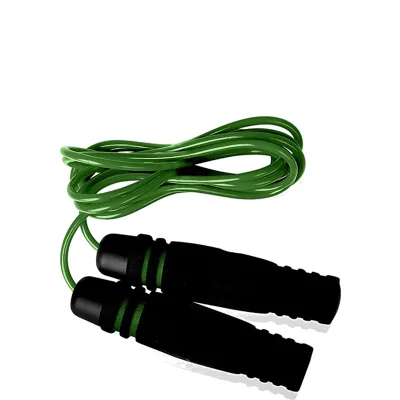


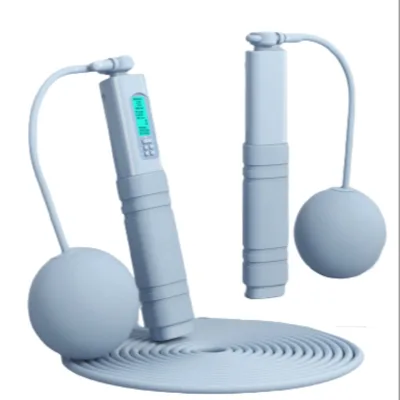
Cordless Steel Wire Double Weight Bearing Heavy Speed Skipping Jump Rope
$2.26 - $3.16
MOQ: 1000 pieces


Comprehensive Sourcing Guide
Strategic Sourcing Guide for Adjustable Steel Wire Jump Ropes
Understanding Technical Specifications and Material Composition
When sourcing an Adjustable Steel Wire Jump Rope, the primary objective is to identify products that balance durability with the specific length requirements of the user. The core component of this equipment is the rope itself, which must be constructed from steel wire to ensure high tensile strength and resistance to snapping during intense workouts. In the current market, the rope material is often described as a steel wire core, sometimes encased in a plastic coating to prevent tangling and reduce friction. This combination allows for the "fast speed" attribute observed in high-performance models, where the cable rotates smoothly through the bearings.
The adjustability feature is a critical specification for B2B buyers targeting diverse customer bases. Unlike fixed-length ropes, adjustable models allow users to shorten or lengthen the cable to fit their height and jumping style. The observed product data indicates that standard lengths can reach up to 300cm, with specific models adhering to standards such as 300cm or 38mm*3M. Buyers must verify that the adjustment mechanism is robust, as a loose or slipping mechanism can render the product unsafe. The handle material is another vital technical consideration; observed listings frequently cite a combination of plastic and aluminum handles. Aluminum provides a lightweight yet sturdy grip, while plastic components may offer ergonomic comfort or cost reduction. The presence of bearings, specifically noted as "Bearing Skip Rope" or "Single Skip Rope," is essential for high-speed applications, reducing drag and allowing for rapid rotations.
| Specification Category | Observed Market Data | Verification Requirement for Buyers |
|---|---|---|
| Rope Material | Plastic coating, Steel wire core | Confirm steel gauge and coating durability to prevent fraying. |
| Handle Material | Plastic, Aluminum | Verify weight distribution and grip texture for user comfort. |
| Length Standards | 280cm, 300cm, 38mm*3M | Ensure the adjustment range covers the target demographic's height. |
| Speed Mechanism | Bearing Skip Rope, Fast Speed | Check bearing quality (ball bearings vs. sleeve) for rotation smoothness. |
| Adjustment Type | Length Adjustment | Test the locking mechanism for slippage under tension. |
Compliance, Certification, and Regulatory Standards
Navigating the regulatory landscape is a non-negotiable aspect of sourcing jump ropes for international markets. The product data explicitly highlights several certifications that serve as indicators of compliance. Notably, the CE mark is a mandatory requirement for products entering the European Economic Area, signifying that the product meets EU safety, health, and environmental protection requirements. Buyers must ensure that the supplier provides valid CE documentation that corresponds to the specific model numbers, such as GM2013, GM2016, GM2017, or BP-JR537.
Beyond the CE mark, chemical safety is a significant concern, particularly for products that may come into contact with skin or be used by children, although the primary target demographic observed is adults. The data references "Ca 65/Reach," which points to compliance with California Proposition 65 and the EU's REACH regulation regarding the restriction of hazardous substances. This is crucial for ensuring that the plastic coatings, handle materials, and any adhesives used do not contain prohibited levels of phthalates, lead, or other toxic chemicals.
Furthermore, the product standards listed, such as "3000x2.5mm" or "300cm," suggest that manufacturers adhere to specific dimensional tolerances. While these are observed as product attributes, buyers should verify that these dimensions align with international safety standards for sports equipment. The origin of the products, primarily from Jiangsu, China, and other regions in China, requires careful vetting to ensure that the manufacturing facilities adhere to these stated certifications. A supplier claiming CE or Reach compliance without providing test reports or certificates of conformity poses a significant legal and reputational risk.
Cost Drivers and Pricing Dynamics
The pricing structure for adjustable steel wire jump ropes is influenced by several key factors, including material quality, manufacturing complexity, and order volume. The observed price range in the market spans from $0.30 to $20.00 USD, a wide spectrum that reflects the difference between basic entry-level models and premium, feature-rich versions. The lower end of this range typically corresponds to products with simpler construction, such as basic plastic handles and standard steel cables without advanced bearing systems. Conversely, the higher price points are associated with models featuring high-grade aluminum handles, precision ball bearings, and specialized coatings for enhanced durability and speed.
Minimum Order Quantity (MOQ) is another critical cost driver. The data indicates an MOQ range of 10 to 1000 pieces, with specific listings showing thresholds of 50 PCS or 100 PCS. Buyers with smaller initial orders may face higher per-unit costs due to the fixed setup costs of production lines. However, suppliers with lower MOQs, such as 10 or 50 pieces, offer flexibility for testing the market or fulfilling small-scale distribution needs. The "Supply Ability" of 500 pieces per day suggests that many manufacturers have the capacity to scale up production quickly, which can help stabilize costs for larger orders.
Customization is a significant factor in pricing. The availability of OEM services, customized logos, and tailored colors adds value but also increases the unit cost. Suppliers offering "Customized Logo Available" or "OEM" services will typically charge a setup fee or a premium per unit. Additionally, packaging requirements, such as moving from a simple poly bag to a carton or wooden case, will impact the final landed cost. Buyers should analyze the total cost of ownership, including shipping and duties, rather than focusing solely on the FOB price. The "Fob Port" options, such as Nantong Port or Shanghai Port, also influence logistics costs depending on the buyer's location and preferred shipping routes.
Typical Applications and Target Demographics
Adjustable steel wire jump ropes are versatile tools designed for a wide range of applications, from professional athletic training to general fitness and recreational use. The observed product attributes indicate a primary target demographic of "Adult" users, suggesting that the designs are optimized for the biomechanics and intensity levels of grown individuals. These ropes are particularly effective for high-intensity interval training (HIIT), cardio conditioning, and boxing footwork drills, where the speed and adjustability of the rope are paramount.
The "Fast Speed" attribute highlights the suitability of these products for competitive sports and serious fitness enthusiasts who require rapid rope rotation. The bearing mechanisms found in "Bearing Skip Rope" models are specifically engineered to minimize friction, allowing for speeds that exceed what is possible with fixed-length or non-bearing ropes. This makes them ideal for CrossFit gyms, martial arts studios, and professional training facilities where equipment durability and performance are critical.
However, the adjustability feature also broadens the appeal to casual users and families. The ability to customize the length means that a single model can accommodate users of varying heights, making it an attractive option for schools, community centers, and retail gift sets. The "Single Skip Rope" and "Bearing Skip Rope" classifications suggest that the market is segmented by performance level, with some users preferring the simplicity of a single rope and others requiring the advanced mechanics of a bearing system. The "Product name: jump rope" and "Function: Jumping Workout" confirm that the primary utility is physical exercise, but the specific design features allow for niche applications in rehabilitation or light aerobics as well.
Supplier Evaluation and Operational Capabilities
Selecting the right supplier requires a thorough evaluation of their operational capabilities and commitment to quality. The observed data reveals that suppliers are located primarily in Jiangsu, China, with dispatch ports in Nantong and Shanghai. Buyers should verify the supplier's production capacity, noting that some have a stated "Supply Ability" of 500 pieces per day. This capacity indicates the ability to handle medium to large orders without significant delays, but it is essential to confirm if this is a sustained rate or a peak capacity.
Lead times and sample availability are critical operational metrics. The data shows sample times ranging from 5 to 10 working days, which is a standard window for B2B procurement. Buyers should use this period to rigorously test the product for quality, ensuring that the "Length Adjustment" mechanism functions correctly and that the "Steel rope" does not kink or break under stress. The availability of "Customization" and "OEM" services suggests that suppliers are flexible, but buyers must assess the lead time implications of these custom orders.
The "Packing Details" vary from simple "Polybag" to "Carton" or "Wooden Case," indicating different levels of protection and branding potential. A supplier that offers "OPP Bag/ Carton /Wooden Case" options demonstrates versatility in meeting diverse client needs. However, buyers must ensure that the packaging protects the product during transit, especially for steel wire ropes that can be damaged by sharp impacts. The "Single gross weight" of 0.500 kg and "Single package size" of 20X15X4 cm are useful for calculating shipping costs and warehouse space requirements.
Quality Control and Long-Term Procurement Strategy
Implementing a robust quality control (QC) strategy is essential to mitigate risks associated with sourcing adjustable steel wire jump ropes. Given the wide price range and varying specifications, buyers should establish clear acceptance criteria before production begins. Key QC checkpoints include verifying the "Rope Material" for steel content and coating integrity, testing the "Handle Material" for durability and grip, and inspecting the "Bearing" mechanism for smooth rotation. The "Certification" documents, such as CE and Reach compliance, must be validated against the actual products to ensure they are not merely marketing claims.
Long-term procurement considerations involve building a sustainable relationship with suppliers who can consistently deliver high-quality products. The "MOQ" flexibility observed in the market allows buyers to start with smaller orders and scale up as demand grows. However, relying on a single supplier can be risky; diversifying the supplier base across different regions or facilities can mitigate supply chain disruptions. Buyers should also consider the "Sample Time" and "Sample Time" variability (5-7 vs. 7-10 days) when planning their product launches and inventory replenishment cycles.
Finally, the "Logo" customization options offer a pathway to brand building. Suppliers offering "Customized Logo Available" or "OEM" services enable buyers to create a unique brand identity. However, the quality of the logo application must be consistent and durable, especially since the product is subject to frequent handling and friction. By focusing on these technical and operational details, buyers can secure a reliable supply of adjustable steel wire jump ropes that meet the rigorous demands of the global fitness market.
FAQs
What certifications are available for these jump ropes?
The products carry CE certification and comply with Ca 65/Reach standards. These documents verify safety and chemical restrictions for international markets, ensuring the plastic and aluminum components meet regulatory requirements for the European Economic Area and California.
Can I customize the logo and color of the rope?
Yes, customization is available for both logos and colors. Suppliers accept OEM requests and offer customized logos, allowing buyers to brand the product with specific designs or colors while maintaining the standard steel wire and plastic handle construction.
What are the standard length specifications for the rope?
Standard lengths include 300cm, 280cm, and a 38mm*3M specification. The product features length adjustment capabilities, allowing users to modify the rope size to fit different heights while adhering to the observed dimensional standards of 3000x2.5mm.
How fast can the rope rotate during workouts?
The rope is designed for fast speed rotation, often utilizing a bearing mechanism. This feature reduces friction and allows for rapid spins, making it suitable for high-intensity interval training and professional athletic conditioning where speed is a critical performance factor.
What is the minimum order quantity for these products?
The minimum order quantity ranges from 10 to 1000 pieces, with specific listings showing thresholds of 50 or 100 PCS. This flexibility allows buyers to test the market with smaller orders or scale up production based on their specific distribution needs.
Where are the products manufactured and shipped from?
Products originate from Jiangsu, China, and are dispatched from Nantong or Shanghai ports. Buyers can expect a supply ability of 500 pieces per day, with sample times ranging between 5 to 10 working days for quality verification before bulk production.
What materials are used for the handles and rope?
The rope consists of a steel wire core with a plastic coating, while handles are made of plastic and aluminum. This combination ensures durability and a lightweight grip, with the steel wire providing high tensile strength to prevent snapping during intense workouts.