Source African Lace Fabric for Wedding, Uniform, and Fashion
Explore 30 listings of African Lace Fabric available for sourcing. Buyers can compare specifications such as material, width, and lace craft across knitted and embroidered options for applications in wedding, uniform, and fashion sectors.
Key considerations
Products List


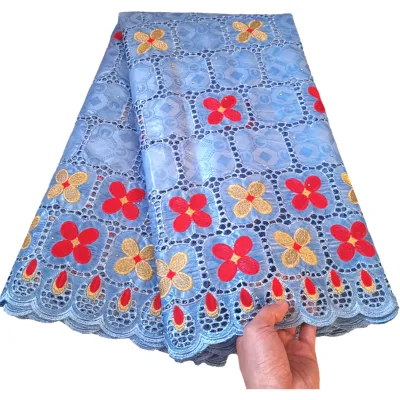


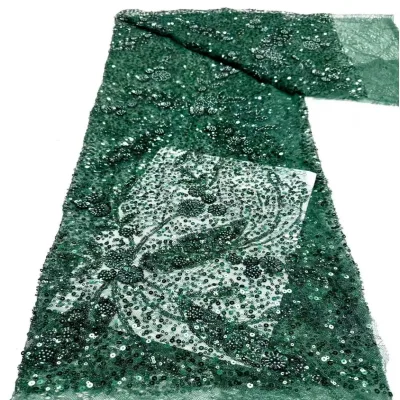


New Style Bridal Glitter Embroidery Lace Fabric Wedding Dress African Lace
$6.00 - $8.00
MOQ: 300 Yards




Comprehensive Sourcing Guide
Strategic Sourcing Guide for African Lace Fabric Procurement
Navigating the global market for African Lace Fabric requires a nuanced understanding of diverse manufacturing techniques, material compositions, and application-specific requirements. The term "African Lace Fabric" often encompasses a broad spectrum of textile products, ranging from traditional hand-crafted pieces to modern industrial warp knitting and embroidery outputs. For B2B buyers, the primary challenge lies in distinguishing between generic lace descriptions and products that meet specific aesthetic and functional standards required for fashion, bridal, and home textile applications. This guide provides a structured approach to sourcing, focusing on technical verification, supplier evaluation, and quality assurance without relying on unverified market claims.
Understanding Material Composition and Technical Specifications
The foundation of any successful procurement strategy begins with a precise definition of material and technical specifications. In the current supply landscape, the material composition for lace fabrics varies significantly. Buyers must verify whether the product is constructed from Polyester, Mesh, or a blend such as Polyester and Cotton. These material choices directly influence the fabric's drape, durability, and suitability for specific end-uses. For instance, Polyester is frequently cited for its resilience and cost-effectiveness in high-volume production, while Mesh materials offer unique transparency and texture profiles often desired in bridal wear.
Technical specifications extend beyond raw materials to include the physical dimensions and production methods. Width is a critical parameter that dictates cutting efficiency and waste reduction. Observed market data indicates a wide variance in width specifications, ranging from standard garment widths of 54/55 inches and 58/59 inches to broader industrial widths of 130 to 150 centimeters. Procurement teams must align these specifications with their pattern-making requirements to minimize material loss. Furthermore, the production process plays a pivotal role in the final product's character. The market features both "Knitted" and "Embroidered" techniques, with specific references to "Warp Knitting Lace" and "Embroidery Lace." The distinction is vital; knitted laces often offer elasticity and stretch, whereas embroidered laces provide rigid, decorative structures that may require a backing mesh.
| Specification Category | Observed Range/Type | Procurement Implication |
|---|---|---|
| Material | Polyester, Mesh, Polyester/Cotton | Determines durability, washability, and cost tier. |
| Width | 54/55", 58/59", 130~150cm | Affects cutting efficiency and fabric yield per garment. |
| Technics | Knitted, Embroidered, Jacquard | Defines texture, stretch, and structural integrity. |
| Lace Craft | Knitted Lace, Embroidery Lace | Influences the visual complexity and hand-feel. |
| Color Production | Dyeing, Dyed, Picture Color | Indicates the method of color application and consistency. |
Distinguishing Production Techniques and Craftsmanship
The craftsmanship of African Lace Fabric is defined by the specific techniques employed during manufacturing. Buyers should not assume that all "lace" products share the same construction. The supply chain offers distinct categories such as "Knitted Lace" and "Embroidery Lace," each serving different design philosophies. Knitted lace is often associated with warp knitting technologies, producing a fabric that is inherently stretchable and suitable for fitted garments. In contrast, embroidery lace involves the application of thread onto a base fabric, often resulting in a more rigid and ornate appearance. Some products also feature "Jacquard Fabric" technology, which allows for complex patterns woven directly into the material rather than applied as an overlay.
Color production methods are another critical technical differentiator. The market includes options for "Dyeing" and "Dyed" processes, which saturate the fabric with color, as well as "Picture Color" options that may refer to specific printed or multi-tonal effects. When sourcing for uniform or fashion applications, the consistency of the dyeing process is paramount. Buyers must verify if the color production is standardized across batches to ensure that a single order does not result in visible shade variations. Additionally, the presence of accessories such as "Sequin Beaded" elements or "Applique" requires a separate evaluation of the attachment method. These embellishments can alter the fabric's weight and handling characteristics, necessitating adjustments in sewing machinery and thread selection.
Application-Specific Sourcing Strategies
The versatility of lace fabric allows it to serve a wide array of applications, from high-fashion garments to functional home textiles. The "Usage" field in product data often lists "Uniform," "Accessories," "Wedding," "Underwear," and "Fashion," indicating the breadth of the market. For buyers targeting the bridal sector, the focus should be on fabrics with "Embroidery Lace" or "Knitted Lace" that offer a premium hand-feel and intricate detailing. These products are often described as suitable for "Wedding Dress Fashion Garments." Conversely, buyers sourcing for "Home Textiles" or "Garment" applications may prioritize durability and breathability.
The "Feature" attribute, such as "Breathable," is particularly relevant for clothing applications where comfort is a priority. Some products also highlight "Eco-Friendly" and "Water Soluble" characteristics, which are increasingly important for sustainable fashion lines or specialized applications where the lace dissolves after use. For uniform production, the "Trimming" style and "Customization" availability become key decision factors. The ability to customize the width, color, and pattern is essential for brands requiring specific branding or uniform codes. When sourcing for "Life" applications or general "Garment" use, the structural integrity of the "Embroidery Application" must be robust enough to withstand regular wear and washing.
Compliance, Certification, and Standard Verification
In the global textile trade, compliance and certification are non-negotiable for maintaining market access and brand reputation. While specific certification statuses like "OEKO-TEX" are often discussed in the broader industry context, buyers must verify the actual certification status of each supplier rather than relying on general market assumptions. The provided data mentions "Customized" standards and specific product standards such as "148cm" or "135-145cm," which likely refer to width or specific quality benchmarks rather than third-party safety certifications.
Buyers should explicitly request documentation regarding chemical compliance, particularly for fabrics intended for children's wear or intimate apparel. The "Standard" field in product listings often indicates that the product meets a "Customized" requirement, meaning the supplier can tailor the fabric to meet specific buyer specifications. However, this does not automatically imply adherence to international safety standards. Procurement teams must include clauses in their contracts requiring suppliers to provide test reports for harmful substances, color fastness, and shrinkage. For products labeled as "Eco-Friendly," buyers should demand proof of sustainable sourcing or manufacturing practices, as this term is not legally defined without supporting documentation.
Cost Drivers and Pricing Dynamics
Understanding the cost drivers of African Lace Fabric is essential for accurate budgeting and negotiation. The price range in the market is observed to be between $0.02 and $33.80 per unit, a variance that reflects differences in material quality, production complexity, and order volume. Several factors influence where a specific product falls within this range. The "Technics" employed, such as intricate embroidery versus standard knitting, significantly impact labor costs. Similarly, the inclusion of accessories like "Sequin Beaded" elements adds to the material and assembly costs.
The "MOQ" (Minimum Order Quantity) is another critical cost driver, with observed ranges spanning from 1 to 5000 units. High MOQs often correlate with lower unit prices, making them suitable for large-scale production runs. Conversely, suppliers offering low MOQs or "Sample Free" options cater to smaller brands or prototyping phases, though the unit cost may be higher. The "Packing" method, whether "PP Bag and Export Carton," "Plastic Membrane," or "OPP/Carton/Bag," also affects logistics costs. Buyers should factor in the cost of specialized packaging required for export to ensure the fabric arrives without damage. Additionally, the "Customization" availability often carries a premium, as it requires dedicated production lines or manual adjustments to standard processes.
Supplier Evaluation and Quality Control Protocols
Selecting the right supplier requires a rigorous evaluation process that goes beyond price comparisons. Buyers should assess the supplier's capability to handle "Manual Process" requirements, as some lace products rely on skilled handwork for finishing touches. The "Location" of the supplier, often cited as "China," provides context for logistics and lead times, but the specific factory capabilities must be verified. A reliable supplier should demonstrate a clear understanding of the "Applications" they serve, whether it is "Clothing," "Home Textiles," or "Bridal."
Quality control protocols must be established before production begins. Given the diversity in "Lace Craft" and "Color Production," visual inspection is critical. Buyers should request pre-production samples to verify the "Color" accuracy, ensuring that "White," "Black," or "Picture Color" matches the agreed-upon standard. The "Drawn" aspect of embroidery should be checked for consistency in stitch density and pattern alignment. For products with "OEM/ODM" capabilities, the supplier must demonstrate flexibility in adapting designs to the buyer's specifications. It is advisable to implement a third-party inspection service for bulk orders to verify that the final product meets the agreed-upon "Standard" and "Feature" requirements.
Long-Term Procurement and Relationship Management
Building a sustainable supply chain for African Lace Fabric involves more than a single transaction; it requires long-term relationship management. The "Customization" and "OEM/ODM" capabilities of suppliers are assets that can be leveraged for future product development. Buyers should maintain open communication channels to discuss potential improvements in "Fabric Technology" or material innovations. The "Sample Free" policy mentioned by some suppliers can be a valuable tool for continuous product testing and development.
As market trends shift towards sustainability and ethical manufacturing, buyers should proactively engage suppliers on their environmental practices. The "Eco-Friendly" attribute, while present in some product descriptions, requires ongoing verification to ensure it remains a core part of the supplier's operations. Long-term contracts should include clauses for price stability, quality consistency, and responsiveness to design changes. By treating product attributes as observations rather than absolute claims, buyers can maintain a realistic and adaptable procurement strategy. This approach ensures that the sourcing of African Lace Fabric remains aligned with both immediate production needs and long-term strategic goals.
FAQs
What materials are used for African Lace Fabric?
African Lace Fabric is commonly made from Polyester, Mesh, or a blend of Polyester and Cotton. These materials determine the fabric's durability and drape, with Polyester offering resilience for high-volume production while Mesh provides unique transparency for bridal wear.
Which production techniques are available for this lace?
The available techniques include Knitted, Embroidered, and Jacquard Fabric technologies. Knitted lace offers elasticity suitable for fitted garments, whereas embroidered lace provides rigid, decorative structures often used for wedding dresses and fashion applications.
Can buyers customize the width and color of the fabric?
Yes, customization is available for width, color, and pattern to meet specific branding needs. Observed width specifications range from 54/55 inches to 130-150 centimeters, with color production methods including dyeing and picture color options.
What are the typical usage applications for this fabric?
This fabric is used for uniforms, accessories, wedding dresses, underwear, and home textiles. The versatility allows it to serve both high-fashion bridal sectors and functional garment applications requiring breathability and specific trimming styles.
How does the minimum order quantity affect pricing?
The minimum order quantity ranges from 1 to 5000 units, directly influencing the unit price. Higher volumes often correlate with lower costs, while low MOQs or sample-free options cater to prototyping but may carry a higher per-unit cost.
Where are these African Lace Fabric products manufactured?
The products originate from China, which provides context for logistics and lead times. Buyers should verify specific factory capabilities and quality control protocols rather than relying solely on the country of origin for supplier selection.
What features distinguish eco-friendly options in this market?
Some products feature eco-friendly and water-soluble characteristics for sustainable fashion lines. Buyers must demand proof of sustainable sourcing or manufacturing practices, as these terms require documentation to verify compliance with environmental standards.