Source Air Cooled Self-Starting Diesel Generator for Land Use, Emergency Crew, Standby Unit
Explore 30 listings of Air Cooled Self-Starting Diesel Generator options suitable for land use, emergency crews, and standby applications. Buyers can compare specifications like output power, noise levels, and starting modes to find the right unit for their needs.
Key considerations
Products List


Industrial Open Type Diesel Generator for Reliable Air Cooling Solutions
$481.00 - $514.00
MOQ: 1 Pieces


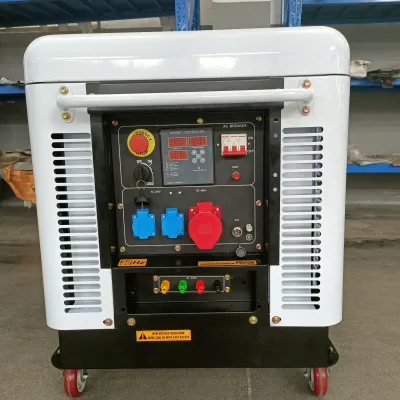


Air-Cooled Diesel Generator Direct Brushless Alternator/Generator with Diesel Engine
$50.00 - $1000.00
MOQ: 10 Pieces

High Capacity Self-Starting Diesel Generator in Customer Choice Color
$3185.00 - $10285.00
MOQ: 1 Pieces


Comprehensive Sourcing Guide
Strategic Sourcing Guide for Air Cooled Self-Starting Diesel Generators
Procuring an air-cooled self-starting diesel generator requires a disciplined approach to aligning technical specifications with operational requirements. These units are distinct from water-cooled alternatives, relying on ambient air flow to dissipate heat from the engine block. This cooling method typically dictates the power range and application suitability, making it essential for buyers to understand the specific constraints and advantages before initiating a supplier search. The following guide outlines the critical factors for evaluating these assets, ensuring that procurement decisions are grounded in verifiable data and industry standards rather than marketing assertions.
Technical Architecture and Cooling Dynamics
The defining characteristic of the air-cooled self-starting diesel generator is its thermal management system. Unlike water-cooled engines that utilize a radiator and coolant loop, air-cooled units employ fins on the cylinder block and head, coupled with a fan driven by the crankshaft to force air over the engine surfaces. This design simplifies the mechanical architecture, reducing the number of potential leak points and maintenance requirements associated with liquid cooling systems. However, this simplicity comes with thermal limitations.
When evaluating technical specifications, buyers must scrutinize the rated output and maximum output capabilities. In the observed market data, specific models such as the DG11000SE demonstrate a rated output of 7.5kw and a maximum output of 8kw. These figures represent the continuous power the unit can sustain and the peak power it can handle for short durations, respectively. The distinction is critical for sizing the generator correctly for the intended load. Furthermore, the engine speed is a primary determinant of efficiency and noise. While some units operate at high speeds (HSS) to maximize power density, others, such as the DG11000E3, are noted as low-speed units. Speed variations directly impact the frequency output, which is typically standardized at 50/60Hz for commercial applications.
The starting mechanism is another vital technical component. The "self-starting" designation implies an automatic starting system, often integrated with an auto-start feature that activates the unit upon power failure. This is distinct from manual electric start units, which require human intervention. The presence of an electric start system, often paired with a specific fuel type like 0# Diesel, ensures rapid deployment in emergency scenarios. Buyers should verify the starting system's reliability, particularly in environments where the generator must remain dormant for extended periods before an immediate need arises.
Compliance, Certification, and Operational Standards
Navigating the regulatory landscape is essential for international procurement. Compliance ensures that the equipment meets safety and environmental standards in the destination market. The supplied product data indicates that certain models adhere to a suite of standards including CE, GS, ROHS, and ISO9001-2008. These certifications cover electrical safety, electromagnetic compatibility, and quality management systems. However, buyers must exercise caution when interpreting these claims. While the presence of these marks on a product listing is a positive indicator, the specific version of the standard (e.g., ISO9001-2008 versus ISO 9001:2015) may vary, and the scope of certification should be verified against the specific model number.
Noise levels are a significant compliance factor, particularly for urban or residential applications. The observed data lists noise levels ranging from 70 to 75 Dba at a distance of 7 meters for certain units. For applications requiring lower acoustic signatures, such as the "Low Noise Automation Type" units, buyers must look for specific acoustic enclosures or "Silent Type" configurations. The standard noise measurement distance of 7 meters is a common industry baseline, but local regulations may impose stricter limits. Verifying that the manufacturer provides independent test reports for noise emission is a prudent step before finalizing a purchase.
Additionally, the installation method influences compliance with local building codes. Units are available in both portable and fixed installation configurations. Portable units, often packed in cartons, offer flexibility for temporary power needs, while fixed units are designed for permanent integration into a facility's infrastructure. The "Land Use" classification, often noted as "Land Use" or "Ordinary," further defines the permissible environments for operation, ensuring the unit is suitable for the intended terrain and usage conditions.
Cost Drivers and Pricing Variables
The pricing of air-cooled self-starting diesel generators is influenced by a complex interplay of factors, including power capacity, cooling efficiency, and feature integration. The observed price range in the market spans from 50 USD to 30,400 USD, a variance that reflects the vast difference between small portable units and larger industrial-grade systems. This wide spectrum indicates that cost is not linearly correlated with power output alone; features such as automatic transfer switches, soundproof enclosures, and advanced control panels significantly drive up the price.
Minimum Order Quantity (MOQ) is another critical cost driver. The observed MOQ range varies from 1 to 50 units. For buyers seeking a single unit for backup power, a supplier with an MOQ of 1 is essential. Conversely, organizations looking to equip multiple sites may benefit from suppliers with higher MOQ thresholds, which often come with volume discounts. The customization availability is a key factor in cost management. Suppliers offering customization can tailor the unit to specific voltage requirements (e.g., 220V/380V) or fuel types, but this customization may introduce additional costs and longer lead times compared to standard off-the-shelf models.
Buyers should also consider the total cost of ownership, which includes fuel consumption, maintenance, and potential downtime. While the initial purchase price is a primary concern, the efficiency of the engine, such as the 15HP engine power noted in specific models, directly impacts long-term operational expenses. A unit with a higher rated output may consume more fuel but provide better value if the load requires it, whereas an oversized unit may operate inefficiently at partial load, increasing fuel costs per kilowatt-hour.
Application Scenarios and Usage Classification
Understanding the intended application is paramount when selecting a generator. The market data categorizes usage into "Common Units," "Standby Unit," and "Emergency Crew" applications. This classification helps buyers match the generator's capabilities to their specific needs. Common units are typically designed for general-purpose power supply in areas with unreliable grid infrastructure. Standby units are engineered to provide backup power during grid outages, requiring robust automatic starting systems and reliable fuel delivery. Emergency crew units are often deployed in mobile scenarios, such as disaster relief or military operations, necessitating high portability and ruggedness.
The "Landuse Type of Unit" provides further insight into suitability. "Ordinary" land use units are designed for standard environments, while "Low Noise Automation Type" units are optimized for settings where acoustic disturbance must be minimized, such as hospitals, hotels, or residential complexes. The output type, whether AC Single Phase or AC Three Phase, is another critical decision point. Single-phase units are suitable for residential or small commercial loads, while three-phase units are required for industrial machinery and large commercial buildings. The DG11000SE, for instance, offers AC Three Phase output, making it suitable for heavier industrial applications, whereas other models may be limited to single-phase output.
Supplier Evaluation and Origin Verification
Evaluating the supplier's background is a crucial step in mitigating procurement risk. The origin of the product is a significant indicator of manufacturing capabilities and supply chain reliability. The observed data lists origins in Changzhou, Jiangsu, and Chongqing, all located in China. These regions are known for their manufacturing clusters, but buyers should verify the specific factory's capacity and history. The "Selling Units" being listed as "Single Item" suggests that some suppliers are willing to sell individual units, which is beneficial for smaller buyers, while others may operate on a bulk basis.
When assessing suppliers, buyers should look for transparency regarding the engine model and generator power. For example, the HR198fa engine model is explicitly linked to an 8kw generator power output in specific listings. This level of detail indicates a supplier that provides accurate technical specifications. However, buyers must remain vigilant against generic listings that may obscure the actual engine manufacturer or power rating. The "Customization" attribute being available suggests that the supplier has the flexibility to modify units, but this capability should be validated through technical discussions and sample reviews.
Quality Control and Long-Term Procurement Strategy
Ensuring quality control is essential for the longevity and reliability of the generator. The "Product Packing" is typically listed as "Carton" or "Carton Packing," which is standard for shipping but may require additional protection for heavy-duty units. Buyers should inquire about the packaging standards to ensure the unit arrives without damage, particularly for units with sensitive control panels or alternators. The "Installation Method" being either portable or fixed also dictates the quality of the mounting hardware and foundation requirements.
For long-term procurement, buyers should consider the availability of spare parts and technical support. The "Frequency" of 50/60Hz compatibility is a standard feature, but the availability of specific replacement parts for the engine and alternator can vary by supplier. A supplier with a strong presence in the region of origin, such as Jiangsu or Chongqing, may offer better logistical support for parts delivery. Additionally, the "Starting Mode" and "Starting System" should be tested regularly to ensure they function correctly after long periods of inactivity.
In conclusion, sourcing an air-cooled self-starting diesel generator requires a meticulous review of technical specifications, compliance standards, and supplier capabilities. By focusing on verified data such as output ratings, noise levels, and certification marks, buyers can make informed decisions that align with their operational needs. The wide range of available options, from portable units to industrial-grade systems, offers flexibility, but the key to successful procurement lies in rigorous due diligence and a clear understanding of the specific requirements of the intended application.
FAQs
What is the rated output for the DG11000SE model?
The DG11000SE model has a rated output of 7.5kw with a maximum output of 8kw. This unit operates as an AC Three Phase generator suitable for industrial applications requiring stable power delivery.
Can the generator be customized for specific voltage needs?
Customization is available for this generator type to meet specific voltage requirements. Buyers should verify the exact configuration options with the supplier before placing an order to ensure compatibility.
Which cooling method is used in these diesel generators?
These units utilize air cooling or wind cooling methods to dissipate engine heat. This design simplifies maintenance compared to water-cooled systems but may limit continuous operation in extreme conditions.
What certifications do the generators typically hold?
Many models adhere to CE, GS, ROHS, and ISO9001-2008 standards. These certifications indicate compliance with electrical safety and quality management requirements for international markets.
How is the noise level measured for these units?
Noise levels are typically measured at 70 to 75 Dba at a distance of 7 meters. Some units are available as Silent Type or Low Noise Automation Type for quieter environments.
What is the minimum order quantity for purchasing?
The minimum order quantity ranges from 1 to 50 units depending on the supplier. Single item purchases are possible, making these units accessible for both individual and bulk buyers.
Where are these generators manufactured?
Manufacturing origins include Changzhou, Jiangsu, and Chongqing in China. Buyers should verify the specific factory location to assess logistics and supply chain reliability for their region.