Source Air Erasable Tattoo Markers for Hospital, Tattoo, Body Art
Compare 30 Air Erasable Tattoo Markers from verified suppliers with features like disposable or reusable options, various tip types, and certifications. Buyers can evaluate specifications for hospital, tattoo, and body art applications with MOQs ranging from 10 to 10,000 pieces.
Key considerations
Products List


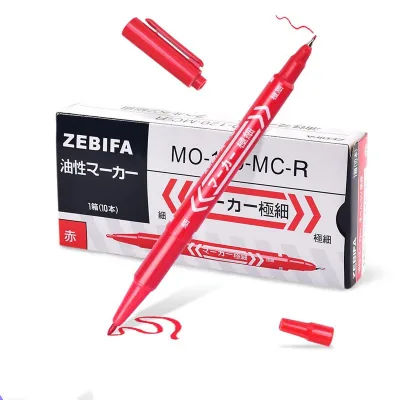


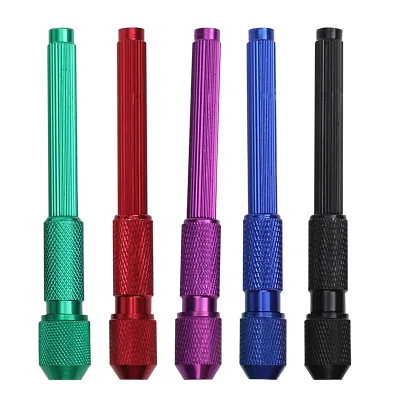


Hot Sale Wireless Tattoo Pen with Batteries Professional Tattoo Machine
$79.00 - $130.00
MOQ: 1 Pieces


Comprehensive Sourcing Guide
Strategic Sourcing Guide for Air Erasable Tattoo Markers
The procurement of Air Erasable Tattoo Markers represents a specialized segment within the broader body art and medical supply chain. Buyers seeking these specific tools must navigate a market where product attributes vary significantly between surgical applications and cosmetic tattooing. The core keyword "Air Erasable Tattoo Markers" implies a need for temporary marking solutions that can be removed without harsh solvents, a feature critical for both pre-procedure planning and post-procedure cleanup. This guide synthesizes available product data to provide a disciplined framework for evaluating suppliers, verifying technical specifications, and managing procurement risks.
Technical Specifications and Material Composition
When sourcing tattoo markers, the first step is to rigorously define the technical requirements based on the intended application. The market data indicates a divergence in product types, ranging from "Surgical Skin Marker Pens" to "Tattoo Skin Markers" and "Art Markers." A critical distinction lies in the tip geometry and ink permanence. Suppliers list specific tip configurations including flat, oblique, and round toe options. For precise line work in tattooing, the oblique or round toe tips are often preferred, whereas flat tips may be utilized for broader area shading or marking.
The material composition of the marker body is another vital specification. Observed data points to the use of Polypropylene (PP) and general plastic materials for the housing. The durability of the marker is often cited as a key advantage, with descriptions noting that the products are "durable." However, a notable contradiction exists in the feature set where some listings describe the markers as both "Disposable" and "Reusable." In a professional procurement context, this ambiguity requires immediate clarification. If the application involves high-volume clinical settings, a disposable design minimizes cross-contamination risks. Conversely, if the tool is intended for repeated use in a studio, the "Reusable" claim must be substantiated by the manufacturer's cleaning protocols and ink refill capabilities.
Ink characteristics are paramount for air-erasable products. The observed color palette typically includes black, red, blue, and white. The specific requirement for "air erasable" functionality suggests that the ink is designed to fade or wash away with air exposure or mild cleaning, distinguishing it from permanent tattoo inks. Buyers must verify the drying time and the specific mechanism of erasure, as "Permanent Marker" is also listed as a feature in some product descriptions, which directly conflicts with the "air erasable" search intent. This discrepancy highlights the necessity of requesting physical samples to confirm the ink's actual behavior before placing a bulk order.
Compliance, Certification, and Safety Standards
Regulatory compliance is non-negotiable when sourcing products intended for skin contact, particularly in medical or cosmetic contexts. The observed product data includes several certification claims. High-confidence facts indicate that some suppliers provide ISOCE certification, while others list CE and SGS certifications. These certifications are essential for validating that the materials meet international safety standards for medical devices or cosmetic tools.
The presence of Ethylene Oxide Sterilization as a listed attribute is a significant indicator of medical-grade readiness. If the markers are intended for hospital use or surgical preparation, the sterilization method must be explicitly confirmed. Ethylene Oxide (EtO) is a standard sterilization process that ensures the product is free from viable microorganisms. However, buyers must verify that the sterilization is applied to the finished product and not just the packaging, and that the supplier provides valid sterilization certificates.
It is crucial to note that while EN71 is mentioned in background data, it is not a high-confidence fact for the specific products listed. EN71 is a European standard for toy safety, which may not be directly applicable to medical or professional tattoo markers unless the product is marketed specifically as a toy or for children. Buyers should not assume EN71 compliance based on background data alone. Instead, the procurement strategy should focus on verifying CE and SGS certifications, which are explicitly linked to the product attributes in the provided facts. The supplier must provide documentation proving that the ink and materials are non-toxic and safe for dermal application.
Cost Drivers and Pricing Dynamics
Understanding the cost structure of tattoo markers is essential for budgeting and negotiation. The observed price range in the market spans from $0.04 to $130 USD. This wide variance suggests a significant difference in product quality, packaging, and intended market positioning. The lower end of the spectrum likely corresponds to basic, single-use plastic markers with standard packaging, while the higher end may include specialized surgical markers with advanced features, sterile packaging, or bulk industrial-grade supplies.
The Minimum Order Quantity (MOQ) is a primary driver of unit cost. The data shows an MOQ range from 10 pieces to 10,000 pieces. Suppliers with an MOQ of 10,000 pieces typically offer the lowest unit price, leveraging economies of scale. Conversely, suppliers accepting orders as low as 10 pieces cater to small studios or trial orders but command a higher per-unit cost. The "Selling Units" are often listed as "Single item," which can complicate bulk pricing calculations if the supplier does not offer tiered pricing structures.
Packaging costs also influence the final price. Listings indicate various packaging types, including "Carton Box," "PE" (polyethylene) bags, and "PaperBox." The choice of packaging affects both the unit price and the logistics cost. For instance, "PE" packaging is generally cheaper but offers less protection than a "Carton Box." Buyers must weigh the cost of packaging against the risk of damage during transit. Additionally, the inclusion of logo printing is a value-added service that may increase the unit cost. If branding is a requirement, the MOQ for custom logo printing should be clarified, as it often differs from the standard MOQ.
Typical Applications and Usage Scenarios
The application of Air Erasable Tattoo Markers varies significantly between medical and cosmetic sectors. The product data explicitly lists "Hospital" and "Tattoo" as primary application areas. In a hospital setting, these markers are used for surgical site marking, vein identification, or incision planning. The requirement for "Ethylene Oxide Sterilization" and "Disposable" features strongly supports this medical application. The "Surgical Skin Marker Pen" model (TJSMP01) and similar specifications align with clinical needs where hygiene and precision are paramount.
In the cosmetic and body art sector, the application shifts to tattooing, permanent makeup, and skin care. The "Tattoo Skin Markers" and "Tattoo accesories" categories are designed for artists to map out designs on the skin before the actual tattooing process begins. The "Air Erasable" feature is particularly valuable here, allowing artists to correct mistakes or remove guidelines without leaving permanent stains on the client's skin. The "Waterproof Marker Pen" attribute suggests that the ink must remain visible during the procedure but can be removed afterward, likely with air or a specific cleanser.
The "Usage" field also mentions "Body Art" and "Cosmetic," indicating versatility. However, the "Product Name" variations, such as "Cheap and Durable Tattoo Skin Dual Marker," suggest that some products are marketed as multi-functional tools. Buyers must ensure that the specific marker selected matches the intended use case. A marker designed for hospital sterilization may be over-engineered and costly for a tattoo studio, while a standard tattoo marker may lack the necessary sterility for surgical use.
Supplier Evaluation and Quality Assurance
Evaluating suppliers requires a systematic approach to verify the claims made in product listings. The "Quality Assurance" attribute is listed as "Excellent," but this is a subjective claim that must be validated through objective means. Buyers should request quality control reports, batch testing records, and proof of the "Durable" claims. The "Lead Time" is another critical factor, with observed ranges from 1-3 days to 20-25 days. A lead time of 1-3 days may indicate a ready-to-ship inventory, while 20-25 days suggests a production cycle that includes manufacturing and quality checks.
The "Place of Origin" is consistently listed as China, with specific locations including Shanghai and Zhejiang. While this provides geographical context, it does not guarantee quality. Buyers should verify the supplier's manufacturing capabilities, such as whether they own the factory or act as a trading company. The "Single gross weight" and "Single package size" data (e.g., 14X1X1 cm, 0.015 kg) are useful for calculating shipping costs and storage requirements.
When evaluating suppliers, buyers should prioritize those who provide clear, high-confidence certifications like CE and SGS. The presence of "ISOCE" certification is also a positive indicator, but the specific scope of the certification should be confirmed. Suppliers that offer "Customization" services, such as logo printing, should be assessed on their ability to maintain quality during the customization process. The "Feature" of "With Logo Printing" implies that the supplier has the capability for branding, but the durability of the print and the alignment accuracy should be verified.
Long-Term Procurement Considerations
Sourcing tattoo markers is not a one-time transaction but a long-term partnership that requires careful management of supply chain variables. The "Set" attribute is listed as "Not Set," which implies that the products are typically sold individually rather than in kits. This can affect inventory management, as buyers may need to order multiple units to create a complete set of tools for their operations.
The "Model Number" variations, such as TJSMP01, TSMED-TMU, and JY-01718, indicate that different suppliers offer distinct product lines. Buyers should standardize their procurement to a specific model number to ensure consistency in quality and performance. Switching between models can lead to variations in ink flow, tip durability, and erasability, which can disrupt workflow in a professional setting.
Sustainability and waste management are also emerging considerations. The "Disposable" nature of many markers generates waste, and buyers should inquire about the recyclability of the plastic components. If the supplier offers "Reusable" options, the environmental impact may be lower, provided the markers can be effectively cleaned and refilled.
Finally, the "Advantages" of the product, such as "Durable," should be monitored over time. Buyers should establish a feedback loop with their suppliers to track product performance and address any quality issues promptly. The "Delivery" lead time of 20-25 days suggests that supply chain disruptions could impact inventory levels, so maintaining a safety stock is advisable. By focusing on these long-term factors, buyers can ensure a stable and reliable supply of Air Erasable Tattoo Markers that meet their operational needs.
Comparative Analysis of Product Attributes
To facilitate decision-making, the following table summarizes the key attributes observed in the product data, highlighting the variations that buyers must consider.
| Attribute | Observation 1 (Surgical Focus) | Observation 2 (Tattoo/Cosmetic Focus) | Procurement Implication |
|---|---|---|---|
| Product Name | Surgical Skin Marker Pen | Tattoo Skin Markers | Verify intended use (Medical vs. Art). |
| Material | PP (Polypropylene) | Plastic | Both are durable; check for medical-grade PP. |
| Sterilization | Ethylene Oxide Sterilization | Not explicitly listed | Critical for hospital use; optional for studios. |
| Certification | ISOCE | CE, SGS | Ensure certification matches local regulations. |
| MOQ | 10,000 Pieces | 10 Pieces | High MOQ for surgical; low MOQ for testing. |
| Feature | Disposable | Reusable, Disposable | Clarify if the product is single-use or multi-use. |
| Tip Type | Flat, Oblique, Round Toe | Flat, Oblique, Round Toe | Select based on line precision needs. |
| Lead Time | 20-25 Days | 1-3 Days | Plan inventory accordingly based on urgency. |
| Packaging | Carton Box | PE, PaperBox | Balance protection vs. cost. |
This comparison underscores the importance of aligning product specifications with the specific needs of the buyer's operation. Whether sourcing for a hospital or a tattoo studio, the distinction in features, certifications, and order volumes dictates the procurement strategy. By adhering to these evidence-based guidelines, buyers can navigate the complexities of the market and secure high-quality Air Erasable Tattoo Markers that meet their professional standards.
FAQs
What certifications do Air Erasable Tattoo Markers have?
Products often carry ISOCE, CE, and SGS certifications. These validate safety for skin contact and medical use. Buyers must verify that sterilization claims like Ethylene Oxide apply to the finished product before purchasing.
Which tip types are available for surgical skin markers?
Suppliers offer flat, oblique, and round toe tip configurations. Oblique or round toe tips suit precise line work, while flat tips cover broader areas. Select the geometry based on the specific marking requirement.
Can I get custom logo printing on these markers?
Custom logo printing is available for many listings. This service allows branding but may require a higher Minimum Order Quantity. Confirm the specific MOQ and pricing for customizations before placing a bulk order.
How long is the delivery time for these products?
Lead times range from 1-3 days for ready stock to 20-25 days for production. Shorter times indicate inventory availability, while longer periods reflect manufacturing cycles. Plan procurement schedules accordingly to avoid delays.
What materials are used to construct these marker pens?
The bodies are typically made from Polypropylene or general plastic. These materials provide durability and resistance. Verify the specific material grade if the application requires high chemical or physical resistance.
Which MOQ levels are common for tattoo skin markers?
Minimum Order Quantities vary from 10 pieces to 10,000 pieces. Lower MOQs suit small studios, while higher volumes reduce unit costs. Check the specific supplier requirements to match your order size.
Are these markers designed for hospital or tattoo use?
Products serve both hospital surgical applications and tattoo body art. Medical versions often include Ethylene Oxide sterilization. Ensure the selected marker matches the intended hygiene and usage environment.