Source Air Impact Wrench for Auto Repair, Assembly, and Maintenance
Explore 30 available Air Impact Wrench options from verified Chinese manufacturers. Buyers can compare torque ranges, drive sizes, and pneumatic specifications to find the right tool for industrial or automotive applications.
Key considerations
Products List
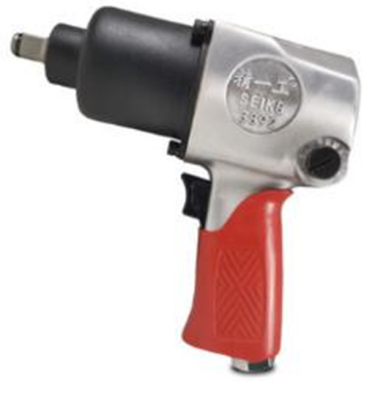


1/2inch Heavyduty Air Impact Wrench 9500rpm
$30.00 - $150.00
MOQ: 1 Pieces
Dongguan Karlux Precision Machinery Science and Technology Co., Ltd.


Comprehensive Sourcing Guide
Strategic Sourcing Guide for Industrial Air Impact Wrenches
Procuring industrial air impact wrenches requires a disciplined approach that balances technical performance with supply chain reliability. The market offers a diverse array of pneumatic tools, ranging from compact units for general assembly to heavy-duty models designed for high-torque applications in automotive and construction sectors. This guide synthesizes available product data and industry standards to assist buyers in navigating the selection, evaluation, and procurement of these critical power tools.
Technical Specifications and Performance Metrics
The core functionality of an Air Impact Wrench is defined by its mechanical specifications, which directly correlate to the intended application. When reviewing product listings, buyers must scrutinize the torque range, drive size, and air consumption to ensure the tool matches the workload. Based on observed market data, specific models exhibit distinct performance profiles. For instance, a model designated as GT-H101 or similar variants in the GT series demonstrates a torque range of 80 to 1550 Newton-meters (N.M). This range is suitable for medium-duty applications where precision and moderate power are required. In contrast, heavier industrial requirements are met by models such as the TPBR420-A16, which offers a significantly higher torque range of 500 to 3000 N.M.
The square drive size is another critical specification that dictates the size of the socket and the magnitude of the force the tool can apply. The data indicates the availability of both 1/2-inch and 1-inch square drives. A 1/2-inch drive, often paired with a 1-inch anvil length, is common for general maintenance tasks. Conversely, the 1-inch square drive, associated with the TPBR420-A16 model, supports a 9-inch anvil length, indicating a design for heavy bolting and large-scale assembly. The anvil length itself is a physical dimension that affects the leverage and reach of the tool, with observed lengths varying from 1 inch to 9 inches depending on the model.
Air consumption and inlet specifications are vital for determining the compatibility with existing compressed air systems. The observed data highlights a Load Air Consumption of 10.8 liters per second (L/S) for the lighter models and 16.5 L/S for the heavy-duty variants. The air inlet size also varies, with 1/4 PT (Pipe Thread) and 1/2 PT options available. Buyers must verify that their facility's air compressor can sustain the required flow rate without significant pressure drops. Additionally, the free speed, measured in revolutions per minute (R/Min), is a key indicator of operational efficiency. The lighter models operate at a free speed of 7000 R/Min, while the high-torque models operate at 3800 R/Min, reflecting the trade-off between speed and torque in pneumatic tool design.
Compliance, Standards, and Safety Verification
In the realm of industrial procurement, adherence to standards is non-negotiable. The product data explicitly references the "Metric" standard for certain specifications, which is essential for ensuring compatibility with metric fasteners widely used in global manufacturing. However, beyond the metric standard, buyers must independently verify compliance with safety and quality certifications. While specific certification bodies are not listed in the provided data, the industry generally expects compliance with ISO standards for pneumatic tools and local safety regulations regarding noise and vibration.
Noise levels are a significant health and safety consideration. The observed data lists noise levels of 90 dB(a) and 95 dB(a) for different models. These figures are critical for workplace safety assessments. Procurement teams must ensure that the selected tool aligns with occupational health limits, which often require the use of hearing protection when operating tools in this range. Furthermore, the working mode is identified as "Pneumatic," which implies the need for air filtration and drying systems to prevent moisture damage and ensure consistent performance. Buyers should verify that the tool's construction meets the necessary durability standards for the specific industrial environment, whether it is a clean assembly line or a dusty construction site.
Cost Drivers and Pricing Structure
The pricing of air impact wrenches is influenced by a complex interplay of factors, including torque capacity, build quality, brand reputation, and customization options. The observed price range in the market spans from 0.5 to 4000 USD, reflecting the vast difference between entry-level tools and heavy-duty industrial equipment. The lower end of this spectrum typically corresponds to smaller, lower-torque units, while the upper end includes high-performance models with advanced features.
Customization is a significant cost driver. The data confirms that customization is available for certain models, such as the TP50501B2-9. Custom orders often involve higher unit costs and longer lead times due to the need for specialized manufacturing processes. Additionally, the supply ability of the manufacturer, noted as 500 sets per month for some suppliers, can impact pricing. High-demand periods or limited production capacity may lead to price fluctuations. Buyers should also consider the packaging details, such as "Sea worth package" or "Carton" packaging, as these affect shipping costs and the condition of the goods upon arrival. The net weight (N.W) of the tools, ranging from 2.3 kg to 10.5 kg, is another factor that influences freight charges, particularly for international shipments.
Typical Applications and Operational Context
Understanding the application context is essential for selecting the right tool. The data indicates that these tools are designed for "Adult" use, implying a professional or industrial setting rather than a consumer DIY environment. The "Ordinary" feature classification suggests standard utility, suitable for general maintenance, assembly, and repair tasks. However, the specific torque and drive sizes point to specialized applications.
The 1/2-inch drive models with a torque range of 80-1550 N.M are ideal for automotive assembly, machinery maintenance, and general construction where bolts of various sizes need to be tightened or loosened efficiently. The 1-inch drive models, with their high torque output and large anvil length, are specifically suited for heavy industrial applications such as steel structure assembly, railway maintenance, and large-scale equipment repair. The "Folded: Unfolded" attribute suggests that some models may have ergonomic or storage considerations, though the primary focus remains on their utility in demanding environments. Buyers should match the tool's capabilities to the specific bolt capacities, such as M18 or M36, to ensure optimal performance and prevent tool damage.
Supplier Evaluation and Supply Chain Reliability
Evaluating suppliers requires a focus on their location, production capacity, and logistical capabilities. The product data identifies "Guangdong, China" and "Zhejiang, China (Mainland)" as primary places of origin. These regions are known for their robust manufacturing ecosystems, particularly in the production of power tools. However, buyers must verify the specific supplier's reputation and reliability beyond the generic location data.
Key metrics for supplier evaluation include the supply ability, which is listed as 500 sets per month for some entities. This figure helps buyers assess whether the supplier can meet their volume requirements without causing delays. The "Port of dispatch" is noted as "Guangzhou," which is a major logistics hub, facilitating efficient export. Buyers should confirm the shipping terms and the reliability of the port operations to avoid potential bottlenecks. Additionally, the "Selling Units" being listed as "Single item" indicates that the supplier is willing to sell individual units, which is beneficial for small orders or testing purposes. However, for larger procurement needs, buyers should negotiate volume discounts and ensure the supplier has the capacity to scale production.
Quality Control and Long-Term Procurement Considerations
Quality control is paramount in the procurement of pneumatic tools. The "Condition: New" attribute confirms that the tools are intended for immediate use, but buyers must implement their own quality assurance protocols upon receipt. This includes inspecting the packaging for damage, verifying the completeness of the air hose and fittings, and testing the tool's performance against the specified torque and speed ranges. The "Customized" attribute for some models suggests that buyers should have clear specifications and acceptance criteria before production begins to avoid discrepancies.
Long-term procurement considerations involve the availability of spare parts, maintenance requirements, and the tool's durability. The "Air Hose" specifications, such as 10mm and 13mm diameters, indicate the need for compatible hoses and fittings. Buyers should ensure that the supplier offers a reliable supply of replacement parts to minimize downtime. The "Working Mode: Pneumatic" implies that regular maintenance of the air system is necessary to prevent wear and tear. Additionally, the noise levels and air consumption rates should be factored into the total cost of ownership, as they impact energy efficiency and worker comfort over time.
Comparative Analysis of Key Models
To facilitate decision-making, the following table summarizes the key specifications of the observed models. This comparison highlights the distinct differences in performance and application suitability.
| Specification | Model GT-H101 (Series) | Model TPBR420-A16 | Model TP50501B2-9 |
|---|---|---|---|
| Square Drive | 1/2" | 1" | Not Specified |
| Torque Range | 80-1550 N.M | 500-3000 N.M | Not Specified |
| Bolt Capacity | M18 | M36 | Not Specified |
| Free Speed | 7000 R/Min | 3800 R/Min | Not Specified |
| Anvil Length | 1" | 9" | Not Specified |
| Air Inlet | 1/4 PT | 1/2 PT | Not Specified |
| Air Hose | 10mm D | 13mm D | Not Specified |
| Net Weight | 2.3 kg | 10.5 kg | Not Specified |
| Load Air Consumption | 10.8 L/S | 16.5 L/S | Not Specified |
| Noise Level | 90 dB(a) | 95 dB(a) | Not Specified |
| Standard | Metric | TPBR420-A16 | TP50501B2-9 |
| Origin | Guangdong / Zhejiang | Zhejiang | Not Specified |
This table underscores the necessity of matching the tool's specifications to the specific job requirements. The GT-H101 series is optimized for speed and lighter loads, while the TPBR420-A16 is engineered for maximum torque and heavy-duty applications. Buyers must carefully evaluate these differences to ensure the selected tool delivers the required performance without unnecessary over-specification or under-performance. By adhering to these guidelines and leveraging the provided data, procurement teams can make informed decisions that optimize operational efficiency and cost-effectiveness.
FAQs
What torque range is available for the GT-H101 model?
The GT-H101 model offers a torque range of 80 to 1550 Newton-meters. This specification suits medium-duty applications requiring precision and moderate power for general assembly tasks.
Can I customize the Air Impact Wrench specifications?
Yes, customization is available for specific models like the TP50501B2-9. Buyers should provide clear specifications before production to ensure the final product meets their exact operational needs.
Which square drive sizes are offered for these tools?
Available square drive sizes include 1/2 inch and 1 inch options. The 1/2 inch drive is common for general maintenance, while the 1 inch drive supports heavy bolting and large-scale assembly.
How does the noise level affect workplace safety?
Observed noise levels range from 90 to 95 decibels, which requires hearing protection for operators. Procurement teams must ensure selected tools align with occupational health limits for safe long-term use.
What is the maximum bolt capacity for the TPBR420-A16?
The TPBR420-A16 model supports a maximum bolt capacity of M36. This high-torque capability makes it suitable for heavy industrial applications like steel structure assembly and railway maintenance.
Where are these air impact wrenches manufactured?
Products originate from Guangdong and Zhejiang provinces in China. These regions host robust manufacturing ecosystems known for producing reliable pneumatic power tools for global export.
What is the supply ability for monthly orders?
Some suppliers list a supply ability of 500 sets per month. Buyers should verify this capacity against their volume requirements to avoid potential delays during high-demand periods.